Electrical Copper Wires: Key Specs That Affect Power Loss
Time
Click Count
Power loss in low-voltage and distribution systems often looks like a system issue, yet it frequently starts with wire specification. In electricalcopperwires, small differences in conductivity, size, stranding, insulation, and thermal rating can shift resistance, heat buildup, voltage drop, and service life in measurable ways.
That matters across commercial interiors, smart retail hardware, lighting networks, equipment harnesses, and consumer product supply chains. For organizations comparing global components, the quality of electricalcopperwires is not a purchasing detail. It is a benchmarking variable tied to energy efficiency, compliance, and reliability.
Why wire specification deserves closer attention
In many projects, wire is treated as a commodity. The assumption is simple: copper is copper. In practice, electricalcopperwires can vary enough to affect losses, installation behavior, and long-term stability.
This is especially relevant in the G-BCE context, where commercial environments rely on integrated hardware. A POS terminal, illuminated signage system, modular fixture, or charging unit may perform well on paper but still waste energy through poor conductor selection.
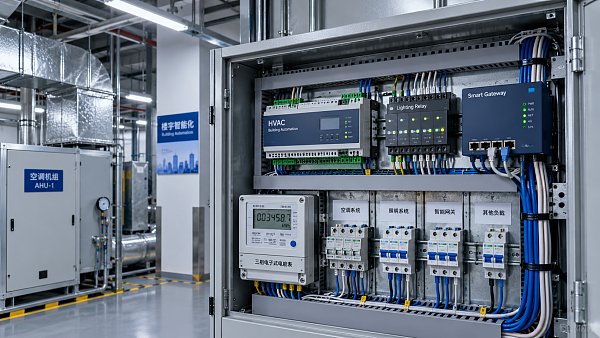
The visual benchmark below relates conductor design to resistance and heat concerns.
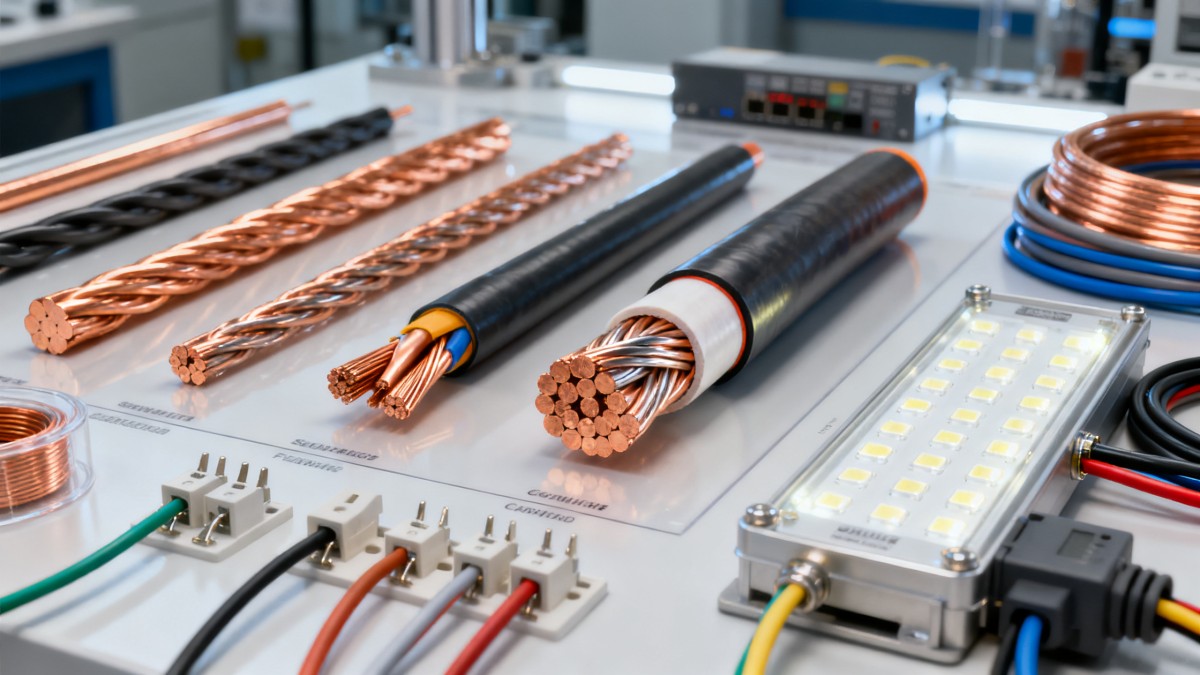
When systems scale across stores, offices, or distributed installations, even modest inefficiency becomes material. More heat means more derating, tighter enclosure limits, and higher stress on connectors and electronics.
The basic relationship between copper wire and power loss
Power loss in a conductor is mainly resistive loss. The familiar expression is I²R. Current rises, resistance rises, or both, and heat output increases quickly.
For electricalcopperwires, resistance depends on conductor material quality, cross-sectional area, length, and temperature. The insulation does not carry current, but it strongly affects thermal behavior and allowable ampacity.
Voltage drop is the parallel concern. Even when heating remains acceptable, excessive drop can reduce device performance, especially in LED systems, controls, sensors, and digitally connected retail hardware.
Key specs that most directly affect loss
Conductor purity and conductivity
High-conductivity copper lowers resistance at the same size. Technical documentation may reference conductivity against IACS or state oxygen content, alloying condition, or temper.
A wire labeled as copper is not always equal to electrolytic tough pitch copper used in higher-performance electrical applications. Lower conductivity raises loss and heat, especially in compact installations.
Cross-sectional area
This is often the first screening parameter. Larger area reduces resistance and usually improves current capacity. However, nominal gauge alone is not enough.
Actual copper area should match specification. In global sourcing, evaluators often check whether AWG, mm², and measured conductor diameter align. Undersized electricalcopperwires are a direct power-loss risk.
Operating temperature
Copper resistance increases with temperature. A wire performing well in laboratory conditions may lose efficiency inside a crowded raceway, sealed lightbox, or warm equipment compartment.
This is why thermal environment and conductor temperature rating must be reviewed together. Hotter wires waste more energy and accelerate insulation aging.
Stranding and construction
Solid and stranded conductors can share the same nominal area, yet behave differently in termination quality and flexing applications. Poorly compacted stranding may increase contact issues at connectors.
In movable fixtures, modular furniture electrification, or device harnesses, repeated bending can degrade strand integrity. That raises localized resistance long before total failure appears.
Insulation and jacket performance
Insulation does not change copper resistivity, but it influences how efficiently heat escapes. Materials with better temperature stability help preserve conductor performance under load.
Thickness consistency also matters. Uneven insulation can complicate crimping, bend radius, and routing density, all of which affect real operating temperature.
How these specs show up in real commercial systems
Across G-BCE benchmark categories, electricalcopperwires influence more than electrical safety. They shape user experience, maintenance frequency, and total operating cost.
In all of these settings, wire efficiency affects adjacent components. A hotter conductor can force connector derating, reduce PCB margin, and increase cooling demand in sealed products.
What to verify during technical evaluation
A useful review goes beyond the catalog line. Datasheets should be checked against measured samples, especially when electricalcopperwires are sourced across multiple factories or private-label channels.
- Confirm nominal and actual conductor area, not only gauge labeling.
- Review copper conductivity or material grade where loss is critical.
- Check temperature rating under the intended bundle, enclosure, and ambient conditions.
- Inspect strand count, strand diameter, and termination compatibility.
- Verify UL, CE, or other relevant compliance marks against application scope.
- Test voltage drop over realistic run length rather than short bench samples.
- Look for consistency between lots, because variation creates unstable field performance.
In higher-volume programs, incoming inspection can include conductor diameter checks, resistance measurement per unit length, and crimp pull validation. Those steps catch hidden loss drivers early.
Compliance matters, but it is not the whole answer
Standards such as UL and CE support baseline safety and market access. They are essential, but they do not automatically identify the lowest-loss option for a given installation.
Two compliant sets of electricalcopperwires may perform differently once routed through the same fixture or device. One may run cooler, hold voltage better, and maintain more stable connector performance over time.
This is where benchmarking becomes valuable. G-BCE’s cross-sector perspective is useful because it frames wire selection as part of whole-system performance, not a stand-alone material decision.
A practical way to compare options
When comparing electricalcopperwires, a balanced matrix helps avoid overreliance on price or headline ampacity. The better approach is to weigh energy loss against installation conditions and product life.
- Start with current, length, acceptable voltage drop, and ambient temperature.
- Add enclosure density, bend frequency, connector type, and maintenance access.
- Compare measured resistance and thermal rise between candidate wires.
- Factor compliance, consistency, and total replacement risk.
This kind of comparison is particularly useful in rollouts involving multiple countries, multiple suppliers, and high repeatability requirements. A slightly better wire can reduce field corrections across an entire network.
Where to look next
Electrical performance is rarely isolated from material choice, assembly practice, and thermal design. Reviewing electricalcopperwires alongside connectors, power supplies, cable routing, and enclosure ventilation usually reveals the real efficiency picture.
The most useful next step is to define an internal checklist for wire benchmarking: conductivity, measured area, resistance per length, temperature behavior, certification, and lot consistency. With that baseline, specification decisions become easier to compare across suppliers and applications.
For projects tied to commercial modernization or global sourcing, treating electricalcopperwires as a performance component rather than a generic material creates a clearer path to lower loss, stronger compliance confidence, and more stable long-term operation.
News Recommendations
 How to assess supplier reliability in global supply chain sourcing
![51a6ab95581761cc26f4318be6520c15]()
Aris Katos
Future of Carbide Coatings
 Omdia Forecasts 11.6% CAGR for Global LED Video Display Market in 2026–2030
![51a6ab95581761cc26f4318be6520c15]()
Aris Katos
Future of Carbide Coatings
 How to verify an LFGB testing laboratory's accreditation scope
![51a6ab95581761cc26f4318be6520c15]()
Aris Katos
Future of Carbide Coatings
 How to assess a workplace interior supplier's installation scope
![51a6ab95581761cc26f4318be6520c15]()
Aris Katos
Future of Carbide Coatings
 What records are needed for an ISO 9001 furniture factory audit?
![51a6ab95581761cc26f4318be6520c15]()
Aris Katos
Future of Carbide Coatings
 How to choose AI marketing tools that work with your existing CRM
![51a6ab95581761cc26f4318be6520c15]()
Aris Katos
Future of Carbide Coatings
 Do freight costs erase savings when buying retail fixtures wholesale?
![51a6ab95581761cc26f4318be6520c15]()
Aris Katos
Future of Carbide Coatings
 How heat buildup affects OEM retail shelf LCD screen reliability
![51a6ab95581761cc26f4318be6520c15]()
Aris Katos
Future of Carbide Coatings
 How to check whether an OEM retail shelf screen fits existing shelving
![51a6ab95581761cc26f4318be6520c15]()
Aris Katos
Future of Carbide Coatings
 What brightness should an OEM shelf LCD screen have for retail use?
![51a6ab95581761cc26f4318be6520c15]()
Aris Katos
Future of Carbide Coatings
 Can smart retail IT solutions for CPG work with legacy POS systems?
![51a6ab95581761cc26f4318be6520c15]()
Aris Katos
Future of Carbide Coatings
 What permit approvals belong in a commercial fitout planning checklist?
![51a6ab95581761cc26f4318be6520c15]()
Aris Katos
Future of Carbide Coatings
 How Do You Apply Sustainability Standards to a Retail Renovation?
![51a6ab95581761cc26f4318be6520c15]()
Aris Katos
Future of Carbide Coatings
 Which Technical Factors Matter When Comparing Smart Retail Hardware?
![51a6ab95581761cc26f4318be6520c15]()
Aris Katos
Future of Carbide Coatings
 Does Data Transparency Matter When Selecting Consumer Goods Suppliers?
![51a6ab95581761cc26f4318be6520c15]()
Aris Katos
Future of Carbide Coatings
 How Does Commercial Design Differ from Interior Decoration?
![51a6ab95581761cc26f4318be6520c15]()
Aris Katos
Future of Carbide Coatings
 How Long Does It Take to Verify a Commercial Furniture Supplier?
![51a6ab95581761cc26f4318be6520c15]()
Aris Katos
Future of Carbide Coatings
 How to verify compostability claims from a bubble mailer manufacturer
![51a6ab95581761cc26f4318be6520c15]()
Aris Katos
Future of Carbide Coatings
 Will commercial smart infrastructure solutions work with legacy systems?
![51a6ab95581761cc26f4318be6520c15]()
Aris Katos
Future of Carbide Coatings
 How to verify a preschool furniture manufacturer's safety standards
![51a6ab95581761cc26f4318be6520c15]()
Aris Katos
Future of Carbide Coatings
 A technical comparison of semiconductor processes for power devices
![51a6ab95581761cc26f4318be6520c15]()
Aris Katos
Future of Carbide Coatings
 How to verify that a BIFMA ergonomic chair meets the standard
![51a6ab95581761cc26f4318be6520c15]()
Aris Katos
Future of Carbide Coatings
 How to use a CRI value chart when choosing LED lighting
![51a6ab95581761cc26f4318be6520c15]()
Aris Katos
Future of Carbide Coatings
 How to compare hotel aroma diffuser wholesale options by coverage area
![51a6ab95581761cc26f4318be6520c15]()
Aris Katos
Future of Carbide Coatings
 How to prevent O-rings and seals from failing in food equipment
![51a6ab95581761cc26f4318be6520c15]()
Aris Katos
Future of Carbide Coatings
 How to compare commercial linear light wholesale quotes accurately
![51a6ab95581761cc26f4318be6520c15]()
Aris Katos
Future of Carbide Coatings
 How to verify international standards compliance for Middle East exports
![51a6ab95581761cc26f4318be6520c15]()
Aris Katos
Future of Carbide Coatings
 How to select laboratory instruments for reproducible test results
![51a6ab95581761cc26f4318be6520c15]()
Aris Katos
Future of Carbide Coatings
 When does a sheet metal prototype reveal design flaws early?
![51a6ab95581761cc26f4318be6520c15]()
Aris Katos
Future of Carbide Coatings
 When PE air column bags reduce damage in e-commerce fulfillment
![51a6ab95581761cc26f4318be6520c15]()
Aris Katos
Future of Carbide Coatings
 How energy-efficient design reduces operating costs in retail lighting
![51a6ab95581761cc26f4318be6520c15]()
Aris Katos
Future of Carbide Coatings
 When commercial aluminum storefronts make sense for a retail renovation
![51a6ab95581761cc26f4318be6520c15]()
Aris Katos
Future of Carbide Coatings
 What makes LED lights durable in high-use commercial spaces?
![51a6ab95581761cc26f4318be6520c15]()
Aris Katos
Future of Carbide Coatings
 Which industry categories offer the strongest export potential in Latin America?
![51a6ab95581761cc26f4318be6520c15]()
Aris Katos
Future of Carbide Coatings
 How to choose an ultra bright waterproof window display for storefronts
![51a6ab95581761cc26f4318be6520c15]()
Aris Katos
Future of Carbide Coatings
 How to verify suppliers on a trade portal for global sourcing
![51a6ab95581761cc26f4318be6520c15]()
Aris Katos
Future of Carbide Coatings
 How RoHS requirements should be stated in product specifications
![51a6ab95581761cc26f4318be6520c15]()
Aris Katos
Future of Carbide Coatings
 What affects the lead time for custom retail counter displays?
![51a6ab95581761cc26f4318be6520c15]()
Aris Katos
Future of Carbide Coatings
 What consumer packaging USA importers need to verify before ordering
![51a6ab95581761cc26f4318be6520c15]()
Aris Katos
Future of Carbide Coatings