Starter Motors: Key Specs That Affect Replacement Reliability
Time
Click Count
Starter Motors: Key Specs That Affect Replacement Reliability
For aftermarket maintenance teams, replacing starter motors is rarely just a like-for-like swap. A visually similar unit can fail quickly if core specifications are mismatched.
The most reliable replacement is the one matched to electrical load, engine demand, mounting geometry, duty cycle, and the real environment around the vehicle or equipment.
Technicians usually search this topic because they want fewer repeat failures, faster fitment decisions, and stronger evidence when defending warranty or sourcing choices.
This guide focuses on the specifications that actually influence reliability, helping maintenance teams evaluate starter motors beyond part numbers and surface compatibility.
Start With the Real Failure Risk, Not Only the Part Number
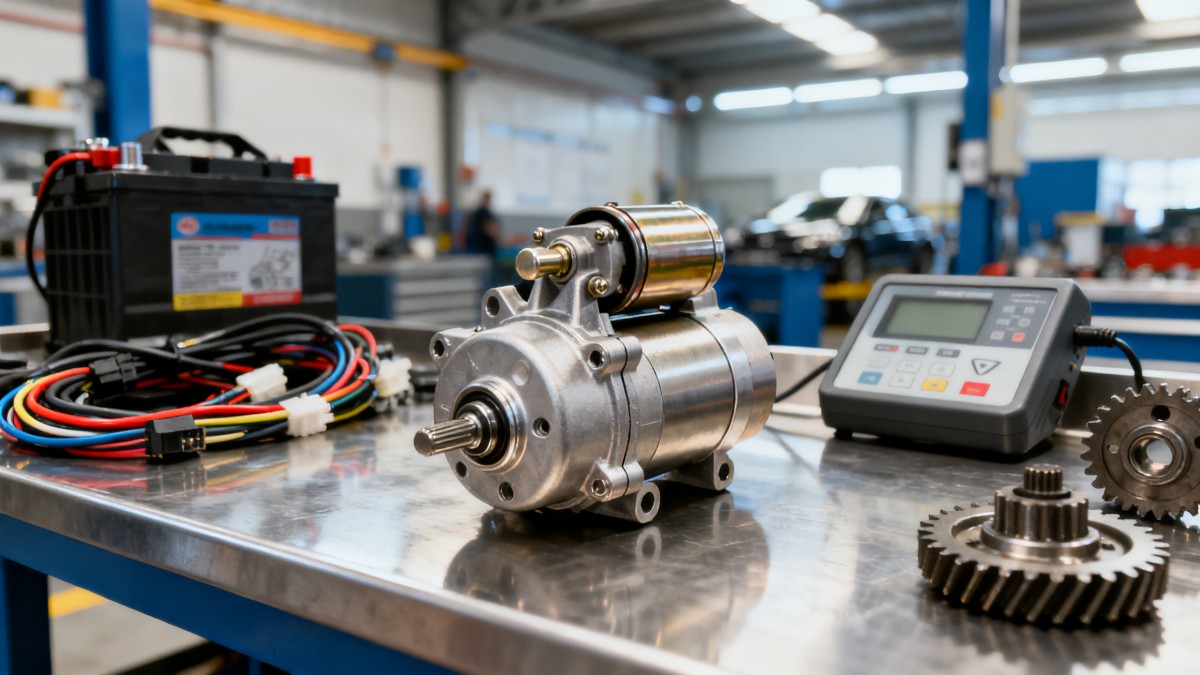
A replacement starter should not be selected only because the catalog says it fits. Catalog fitment is a starting point, not a reliability guarantee.
Aftermarket maintenance teams need to ask why the previous unit failed. Heat, voltage drop, oil contamination, poor grounding, and excessive cranking time all matter.
If the root cause remains, even a premium starter motor can return with the same complaint. Reliable replacement begins with system-level diagnosis.
The most useful specifications are those that connect the motor to real operating stress. These include voltage, torque, power, gear reduction, mounting, and sealing.
For fleets and service networks, the cost of a wrong replacement is rarely limited to the part. Downtime, labor, towing, and warranty handling multiply losses.
Voltage Rating and Electrical Compatibility
Voltage is the first specification to verify because it defines the electrical environment the starter is designed to survive and perform within.
Most light vehicles use 12-volt systems, while heavy-duty trucks, industrial equipment, and some commercial platforms may use 24-volt electrical architecture.
Installing a starter with the wrong voltage rating can cause weak cranking, overheating, solenoid damage, or immediate failure under load.
Technicians should also evaluate battery condition, cable size, ground integrity, and voltage drop during cranking. Starter motors cannot compensate for poor circuits.
A good replacement decision includes measured cranking voltage, not only static battery voltage. Low voltage under load increases current draw and heat.
For maintenance teams, documenting voltage-drop test results protects against incorrect warranty claims and helps identify harness or connection problems before installation.
Torque Output and Engine Cranking Demand
Torque determines whether the starter can rotate the engine reliably under compression, temperature variation, oil viscosity, and accessory load.
Engines with higher compression ratios, larger displacement, or diesel combustion typically require greater cranking torque than smaller gasoline engines.
Cold weather increases oil resistance and battery weakness, making adequate torque especially important for fleets operating in northern or high-altitude regions.
A low-torque replacement may work during a warm workshop test but fail during cold starts or after the vehicle sits overnight.
Maintenance teams should compare original equipment torque requirements, application notes, and cranking speed expectations rather than assuming physical fit means functional fit.
Where data is limited, field history is valuable. Repeated slow-crank complaints often indicate an underspecified starter, weak supply circuit, or excessive mechanical resistance.
Power Rating, Current Draw, and Heat Control
Starter motor power is usually expressed in kilowatts or horsepower, and it reflects the unit’s ability to convert electrical energy into cranking force.
Higher power is not always better. A replacement should match the application without overloading cables, relays, batteries, or control modules.
Excessive current draw can point to internal friction, incorrect specification, poor engine condition, or electrical resistance elsewhere in the starting circuit.
Heat is a major enemy of starter motors. Repeated long cranking cycles can overheat windings, brushes, commutators, bearings, and solenoid contacts.
Technicians should check manufacturer duty-cycle guidance, especially for commercial vehicles, delivery fleets, generators, agricultural machines, and stop-start intensive operations.
A reliable replacement must handle the expected crank duration and recovery time. Short workshop tests do not reveal all thermal weaknesses.
Gear Reduction Design and Cranking Efficiency
Many modern starter motors use gear reduction to deliver higher torque from a smaller, lighter, and more efficient motor assembly.
Gear reduction starters can improve cold-start performance and reduce current demand, but gear quality and lubrication become critical reliability factors.
Aftermarket teams should compare direct-drive and reduction-gear designs carefully when replacing older units or servicing mixed equipment fleets.
A compact replacement may be attractive, but it must maintain correct pinion engagement, rotational speed, and durability under repeated load cycles.
Poor-quality gear reduction assemblies can produce noise, premature wear, metal debris, or intermittent engagement problems that are difficult to diagnose later.
When sourcing starter motors, maintenance buyers should request design details, test standards, and application validation rather than relying only on size advantages.
Mounting Pattern, Clocking, and Physical Fit
Mounting compatibility is more than bolt-hole alignment. The starter must sit at the correct angle, depth, and distance from the flywheel ring gear.
Incorrect mounting geometry can cause grinding, incomplete engagement, housing stress, broken noses, or rapid damage to the ring gear.
Clocking matters when terminals, solenoids, or housings must clear exhaust components, chassis rails, hydraulic lines, or heat shields.
A starter that fits on the bench may be impractical in the vehicle if cable routing becomes strained or service access is blocked.
Technicians should compare flange type, nose cone length, bolt diameter, register diameter, pinion offset, and terminal orientation before approving replacement.
For high-volume maintenance operations, keeping a visual fitment checklist reduces installation mistakes and shortens technician training time across locations.
Pinion Gear Specifications and Ring Gear Engagement
The pinion gear is a small component with a major effect on starter reliability. Tooth count, pitch, diameter, and chamfer design must match.
If the pinion does not mesh correctly with the ring gear, the result may be grinding, kickback, incomplete engagement, or broken teeth.
Engagement depth is equally important. Too shallow causes slippage and tooth damage; too deep increases binding and mechanical stress.
Maintenance teams should inspect the ring gear before fitting a new starter. A damaged flywheel can quickly destroy the replacement unit.
Repeated starter failures on the same vehicle often trace back to ring gear wear, misalignment, or engine kickback rather than starter quality alone.
Reliable replacement requires treating the starter and flywheel interface as a matched mechanical system, not as isolated components.
Solenoid Performance and Control Circuit Requirements
The solenoid must move the pinion into engagement and close high-current contacts consistently, even under low-temperature or borderline voltage conditions.
A weak solenoid can create clicking, intermittent start complaints, burned contacts, or incomplete engagement that damages the drive mechanism.
Modern vehicles may use relays, immobilizers, body control modules, or engine control modules in the starter command path.
Replacement starter motors must be compatible with the control strategy, terminal layout, connector style, and current expectations of the original system.
Technicians should not assume every no-crank complaint is a starter defect. Command signal testing prevents unnecessary replacement and warranty disputes.
For aftermarket sourcing, consistent solenoid pull-in voltage and contact durability are important indicators of long-term field reliability.
Environmental Protection: Heat, Water, Dust, and Chemicals
Starter motors often operate in harsh locations near exhaust heat, road splash, dust, mud, oil, fuel, or cleaning chemicals.
Environmental protection should match the application. Industrial machinery, off-road vehicles, marine-adjacent equipment, and fleet trucks face very different exposure levels.
Sealing quality affects brush life, bearing condition, internal corrosion, and electrical insulation. A low-cost unit may fail early in wet or dirty conditions.
Heat shielding is another practical concern. Starters mounted near exhaust manifolds may need improved insulation or routing corrections during replacement.
Aftermarket teams should evaluate ingress protection claims, corrosion-resistant coatings, drain design, connector sealing, and terminal protection before purchasing at scale.
When failures show rust, moisture, or oil contamination, replacing the starter without correcting leaks or shields only postpones the next breakdown.
Duty Cycle and Application Severity
Starter motors used in passenger cars face different duty demands than delivery vehicles, taxis, emergency equipment, generators, or construction machines.
High-frequency starting increases thermal cycling, brush wear, contact erosion, and mechanical fatigue. These applications need stronger specification margins.
Maintenance teams should classify usage severity before choosing replacement parts. Mileage alone does not describe how often a starter is activated.
Urban fleets may accumulate many start events in fewer miles, while long-haul vehicles may show the opposite pattern.
Where downtime is expensive, selecting a higher-grade starter with validated duty-cycle performance may deliver better total cost than the cheapest option.
Service records can reveal patterns. Replacements clustered in specific routes, operators, or climates often indicate duty-cycle mismatch or environmental stress.
Build Quality Signals That Predict Field Reliability
Not every important quality factor is visible, but several clues help technicians and buyers judge replacement starter motors more confidently.
Look for stable housing machining, clean casting, solid terminal hardware, consistent brush material, quality bearings, and properly finished drive components.
Excessive play in the shaft, poor gear finishing, weak terminal studs, or inconsistent paint coverage can signal lower manufacturing discipline.
For remanufactured units, the testing process matters. Critical wear parts should be replaced, not only cleaned and repainted.
Ask whether the supplier tests no-load speed, current draw, solenoid pull-in, loaded torque, insulation resistance, and engagement behavior.
For maintenance organizations, supplier transparency reduces uncertainty and supports more consistent decisions across workshops, regions, and vehicle platforms.
Testing Before and After Installation
Reliable replacement is not complete when the unit is bolted in. Pre-installation and post-installation testing catch problems early.
Before installation, compare the old and new units for mounting, pinion, connector, terminal position, rotation direction, and housing clearance.
After installation, measure cranking voltage, current draw where possible, cranking speed, and recovery behavior after repeated starts.
Listen for abnormal grinding, delayed engagement, free-spinning, or harsh disengagement. These symptoms may reveal alignment or ring gear issues.
Technicians should also check cable heating after cranking. Warm cables or terminals often indicate resistance that shortens starter life.
Clear documentation helps separate installation errors, vehicle-side faults, and component defects when warranty review becomes necessary.
How Sourcing Teams Should Compare Replacement Options
Sourcing decisions should consider total reliability, not only purchase price. A cheaper unit that fails early increases labor and operational disruption.
Compare suppliers by application coverage, testing evidence, warranty handling, specification transparency, batch consistency, and technical support responsiveness.
For fleet maintenance, standardizing approved starter motors by vehicle family can reduce inventory confusion and installation errors.
However, standardization should not force one specification across applications with different voltage, duty cycle, or environmental requirements.
Buyers should request data sheets that include voltage, power, torque, rotation, tooth count, mounting dimensions, environmental features, and test procedures.
The best supplier relationship gives technicians enough technical information to prevent problems, not merely a replacement part after failure occurs.
Common Mistakes That Lead to Repeat Starter Failure
One common mistake is replacing the starter without testing batteries and cables. Weak supply circuits make good starter motors look defective.
Another mistake is ignoring oil leaks. Oil contamination can damage insulation, attract dirt, and accelerate internal wear.
Some teams overlook engine mechanical resistance. A seized accessory, incorrect oil, hydraulic lock, or internal engine issue increases starter load.
Improper tightening is also risky. Loose mounting bolts can cause misalignment, while over-tightening may damage housings or threads.
Using incorrect shims, omitting heat shields, or rerouting cables too close to exhaust components can create failures after a seemingly successful repair.
A disciplined replacement process prevents many repeat complaints that are wrongly assigned to part quality.
Conclusion: Reliable Replacement Depends on Specification Fit
Starter motors fail or succeed according to how well their specifications match the electrical, mechanical, thermal, and environmental reality of the application.
For aftermarket maintenance teams, the most important checks are voltage, torque, power, mounting geometry, pinion engagement, solenoid performance, and protection level.
Choosing the correct replacement also requires diagnosing the surrounding system. Batteries, cables, grounds, ring gears, leaks, and heat exposure must be verified.
The practical goal is not simply to install a working starter today, but to prevent avoidable downtime and repeat failure tomorrow.
When technicians and sourcing teams evaluate starter motors by real operating conditions, replacement reliability becomes measurable, defensible, and easier to improve.
News Recommendations
 What records are needed for an ISO 9001 furniture factory audit?
![51a6ab95581761cc26f4318be6520c15]()
Aris Katos
Future of Carbide Coatings
 How to choose AI marketing tools that work with your existing CRM
![51a6ab95581761cc26f4318be6520c15]()
Aris Katos
Future of Carbide Coatings
 Do freight costs erase savings when buying retail fixtures wholesale?
![51a6ab95581761cc26f4318be6520c15]()
Aris Katos
Future of Carbide Coatings
 Can smart retail IT solutions for CPG work with legacy POS systems?
![51a6ab95581761cc26f4318be6520c15]()
Aris Katos
Future of Carbide Coatings
 What permit approvals belong in a commercial fitout planning checklist?
![51a6ab95581761cc26f4318be6520c15]()
Aris Katos
Future of Carbide Coatings
 How Does Commercial Design Differ from Interior Decoration?
![51a6ab95581761cc26f4318be6520c15]()
Aris Katos
Future of Carbide Coatings
 How Long Does It Take to Verify a Commercial Furniture Supplier?
![51a6ab95581761cc26f4318be6520c15]()
Aris Katos
Future of Carbide Coatings
 How to verify compostability claims from a bubble mailer manufacturer
![51a6ab95581761cc26f4318be6520c15]()
Aris Katos
Future of Carbide Coatings
 Will commercial smart infrastructure solutions work with legacy systems?
![51a6ab95581761cc26f4318be6520c15]()
Aris Katos
Future of Carbide Coatings
 How to verify a preschool furniture manufacturer's safety standards
![51a6ab95581761cc26f4318be6520c15]()
Aris Katos
Future of Carbide Coatings
 A technical comparison of semiconductor processes for power devices
![51a6ab95581761cc26f4318be6520c15]()
Aris Katos
Future of Carbide Coatings
 How to verify that a BIFMA ergonomic chair meets the standard
![51a6ab95581761cc26f4318be6520c15]()
Aris Katos
Future of Carbide Coatings
 How to use a CRI value chart when choosing LED lighting
![51a6ab95581761cc26f4318be6520c15]()
Aris Katos
Future of Carbide Coatings
 How to compare hotel aroma diffuser wholesale options by coverage area
![51a6ab95581761cc26f4318be6520c15]()
Aris Katos
Future of Carbide Coatings
 How to prevent O-rings and seals from failing in food equipment
![51a6ab95581761cc26f4318be6520c15]()
Aris Katos
Future of Carbide Coatings
 How to compare commercial linear light wholesale quotes accurately
![51a6ab95581761cc26f4318be6520c15]()
Aris Katos
Future of Carbide Coatings
 How to verify international standards compliance for Middle East exports
![51a6ab95581761cc26f4318be6520c15]()
Aris Katos
Future of Carbide Coatings
 How to select laboratory instruments for reproducible test results
![51a6ab95581761cc26f4318be6520c15]()
Aris Katos
Future of Carbide Coatings
 When does a sheet metal prototype reveal design flaws early?
![51a6ab95581761cc26f4318be6520c15]()
Aris Katos
Future of Carbide Coatings
 When PE air column bags reduce damage in e-commerce fulfillment
![51a6ab95581761cc26f4318be6520c15]()
Aris Katos
Future of Carbide Coatings
 How energy-efficient design reduces operating costs in retail lighting
![51a6ab95581761cc26f4318be6520c15]()
Aris Katos
Future of Carbide Coatings
 When commercial aluminum storefronts make sense for a retail renovation
![51a6ab95581761cc26f4318be6520c15]()
Aris Katos
Future of Carbide Coatings
 What makes LED lights durable in high-use commercial spaces?
![51a6ab95581761cc26f4318be6520c15]()
Aris Katos
Future of Carbide Coatings
 Which industry categories offer the strongest export potential in Latin America?
![51a6ab95581761cc26f4318be6520c15]()
Aris Katos
Future of Carbide Coatings
 How to choose an ultra bright waterproof window display for storefronts
![51a6ab95581761cc26f4318be6520c15]()
Aris Katos
Future of Carbide Coatings
 How to verify suppliers on a trade portal for global sourcing
![51a6ab95581761cc26f4318be6520c15]()
Aris Katos
Future of Carbide Coatings
 How RoHS requirements should be stated in product specifications
![51a6ab95581761cc26f4318be6520c15]()
Aris Katos
Future of Carbide Coatings
 What affects the lead time for custom retail counter displays?
![51a6ab95581761cc26f4318be6520c15]()
Aris Katos
Future of Carbide Coatings
 What consumer packaging USA importers need to verify before ordering
![51a6ab95581761cc26f4318be6520c15]()
Aris Katos
Future of Carbide Coatings
 How commercial spaces interiors shape customer dwell time
![51a6ab95581761cc26f4318be6520c15]()
Aris Katos
Future of Carbide Coatings
 How LED commercial lighting design reduces glare in retail spaces
![51a6ab95581761cc26f4318be6520c15]()
Aris Katos
Future of Carbide Coatings
 How industrial technology information improves RFID inventory accuracy
![51a6ab95581761cc26f4318be6520c15]()
Aris Katos
Future of Carbide Coatings
 When drip garden watering systems make more sense than sprinklers
![51a6ab95581761cc26f4318be6520c15]()
Aris Katos
Future of Carbide Coatings
 When category comparison improves sourcing for industrial applications
![51a6ab95581761cc26f4318be6520c15]()
Aris Katos
Future of Carbide Coatings
 Industrial application guidance for selecting the right LED lighting
![51a6ab95581761cc26f4318be6520c15]()
Aris Katos
Future of Carbide Coatings
 Which commercial architecture standards apply to European retail fit-outs?
![51a6ab95581761cc26f4318be6520c15]()
Aris Katos
Future of Carbide Coatings
 How to verify FDA requirements for maternity care products
![51a6ab95581761cc26f4318be6520c15]()
Aris Katos
Future of Carbide Coatings
 How to verify BPA-free claims for food-contact products
![51a6ab95581761cc26f4318be6520c15]()
Aris Katos
Future of Carbide Coatings
 When does a European wholesale supplier suit modular office projects?
![51a6ab95581761cc26f4318be6520c15]()
Aris Katos
Future of Carbide Coatings