Laboratory Instruments: Accuracy Checks Before Purchase
Time
Click Count
Before investing in laboratory instruments, technical evaluators must verify more than specifications on a datasheet. Accuracy, calibration stability, compliance records, and real-world performance determine whether equipment can support reliable testing, regulatory confidence, and long-term operational value. This guide outlines the essential accuracy checks to perform before purchase, helping procurement teams compare instruments objectively, reduce measurement risk, and select solutions that align with modern laboratory quality standards.
For technical evaluators supporting commercial development, smart retail, consumer goods, packaging, lighting, and fixture supply chains, measurement integrity affects far more than laboratory reporting.
A faulty result can delay supplier qualification, distort benchmarking data, or create compliance risk across 3 to 5 downstream procurement decisions.
Why Accuracy Verification Matters Before Procurement

Laboratory instruments are often evaluated through brochures, quotation sheets, and performance claims, but purchase confidence requires independent accuracy checks.
For a benchmarking platform such as G-BCE, reliable measurement supports comparisons across materials, fixtures, electronic retail devices, packaging, and commercial lighting components.
Accuracy Is a Business Control, Not Only a Technical Metric
When laboratory instruments drift by even ±1% in critical tests, supplier rankings, failure analysis, and acceptance decisions may change significantly.
Technical evaluators should treat accuracy as a control point linked to sourcing risk, warranty exposure, regulatory documentation, and customer confidence.
In multi-category commercial ecosystems, a single laboratory may test tensile strength, luminance, package sealing, surface durability, and electronic safety indicators.
Key Risks When Accuracy Is Not Verified
- False acceptance of materials that later fail under load, heat, humidity, or repeated retail use.
- Rejected batches caused by measurement variation rather than actual product defects.
- Inconsistent benchmarking between Asian manufacturing sites and international buyer specifications.
- Higher recalibration cost when instruments require adjustment every 3 months instead of 12 months.
The pre-purchase phase is the lowest-cost moment to identify these risks, before installation, validation, training, and workflow dependency begin.
Core Accuracy Checks for Laboratory Instruments
A practical evaluation should combine document review, physical inspection, reference testing, software verification, and service capability assessment.
For most laboratory instruments, 6 checks provide a balanced view of measurement confidence before commercial commitment.
Pre-Purchase Accuracy Checklist
The following checklist helps technical evaluators compare laboratory instruments using consistent evidence rather than sales language or isolated performance claims.
The strongest laboratory instruments show consistent performance across several checkpoints, not just one impressive value near the center of range.
Reference Standards and Traceability
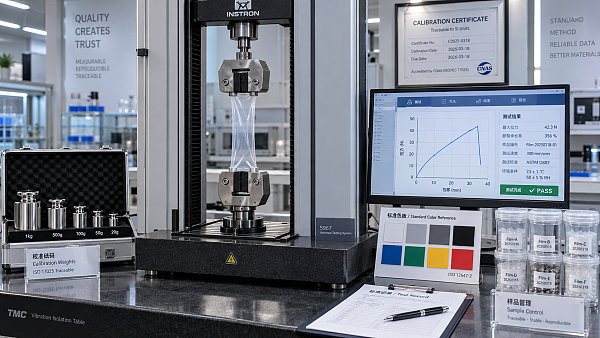
Traceability links the instrument reading to recognized reference standards through an unbroken calibration chain and documented uncertainty.
Technical evaluators should request certificates showing calibration method, reference equipment, uncertainty values, and the specific tested measurement ranges.
For commercial supply chain benchmarking, this evidence is essential when results support UL, CE, BIFMA, RoHS, or material safety documentation.
Practical Verification Tip
Ask suppliers to test the same reference sample 3 times during a demonstration, then compare results against documented tolerance and uncertainty.
Matching Instrument Accuracy to Application Risk
Not every laboratory requires the same tolerance level, but every purchase should match accuracy to the decision being made.
A screening test for packaging color consistency carries different risk from load testing commercial seating or validating electrical retail devices.
Define the Decision Before Selecting the Instrument
Before comparing laboratory instruments, evaluators should classify each test as screening, quality release, compliance support, or failure investigation.
This classification helps determine whether ±2%, ±1%, or tighter accuracy is necessary for operational confidence.
For example, a packaging compression tester may need repeatability across 5 load points, while a spectrophotometer may need tight color difference control.
Application-Based Evaluation Priorities
Different commercial categories place different demands on laboratory instruments, especially when results influence supplier qualification and product acceptance.
The table shows why one universal specification is rarely enough; laboratory instruments must be matched to material behavior and decision severity.
Tolerance, Resolution, and Uncertainty Are Different
Resolution is the smallest displayed increment, while accuracy describes closeness to the true value within stated conditions.
Uncertainty expresses the doubt around a measurement, often combining calibration, repeatability, environment, operator influence, and reference limitations.
A balance displaying 0.001 g is not automatically accurate to 0.001 g across its full measurement range.
Supplier Documentation and Compliance Review
Documentation quality often reveals whether a supplier understands regulated testing environments or only provides general-purpose equipment.
Before approving laboratory instruments, technical evaluators should review at least 8 document categories and identify missing evidence early.
Documents to Request Before Purchase
- Current calibration certificate with traceability and uncertainty information.
- User manual, maintenance schedule, and recommended verification intervals.
- Installation requirements covering power, environment, bench space, and ventilation.
- Software version history, data export format, and access control description.
- Relevant compliance declarations, such as CE conformity where applicable.
- Spare parts list and availability commitment for 3–5 years.
- Service response time, remote support process, and technician qualification.
- Factory acceptance test protocol or demonstration testing procedure.
Strong documentation reduces ambiguity during installation, qualification, audit preparation, and future troubleshooting across distributed laboratory networks.
Check Compliance Against Use Conditions
Compliance marks do not replace application validation, especially when laboratory instruments are used for buyer-specific qualification or export documentation.
A device may comply electrically but still lack the measurement stability needed for long-duration material aging tests.
Evaluators should map standards, test methods, acceptance limits, and reporting formats before issuing final approval.
Red Flags in Supplier Claims
- Accuracy stated without temperature range, load range, or calibration conditions.
- Certificates that omit serial numbers or measurement uncertainty.
- Software screenshots without audit trail, permission control, or export validation.
- Service promises without response targets, spare part terms, or escalation process.
These issues do not always disqualify a supplier, but they require clarification before purchase orders are released.
On-Site Demonstration and Acceptance Testing
A controlled demonstration is one of the most effective ways to evaluate laboratory instruments before purchase approval.
The test should use known reference materials, standard operating conditions, and a repeatable protocol agreed before the visit.
A 5-Step Demonstration Protocol
- Confirm environmental conditions, including temperature, humidity, vibration, and power stability.
- Inspect instrument serial number, firmware version, accessories, and calibration label.
- Run reference samples at 3 to 5 points across the intended operating range.
- Repeat selected measurements 10 times to check repeatability and operator influence.
- Export results, review audit trails, and confirm reporting format compatibility.
This process helps separate stable laboratory instruments from devices that perform well only under narrow demonstration conditions.
Factory Acceptance Versus Site Acceptance
Factory acceptance testing confirms basic performance before shipment, usually under controlled supplier conditions and known utilities.
Site acceptance testing confirms whether laboratory instruments maintain accuracy after transportation, installation, leveling, and user configuration.
For high-value equipment, buyers commonly separate these stages by 2–4 weeks, depending on customs, installation, and training schedule.
Acceptance Criteria Should Be Written
Acceptance documents should state pass and fail limits, sample identity, operator responsibilities, report format, and corrective action rules.
Without written criteria, procurement teams may approve laboratory instruments based on subjective demonstration impressions rather than measurable performance.
Lifecycle Cost, Calibration Stability, and Service Readiness
The purchase price of laboratory instruments is only one part of the total cost over 3 to 7 years.
Calibration frequency, consumables, spare parts, downtime, software licensing, and training can materially change lifecycle value.
Evaluate Calibration Stability Over Time
A stable instrument may hold calibration for 12 months, while a sensitive or heavily used device may require checks every 3–6 months.
Technical evaluators should ask suppliers for drift history, recommended verification intervals, and common causes of out-of-tolerance events.
If drift risk is high, internal check standards and weekly verification routines may be needed to protect data quality.
Service Capability Affects Measurement Continuity
Service readiness should include response time, technician access, spare part availability, remote diagnostics, and documented repair procedures.
For cross-border sourcing operations, a 48-hour technical response target can be more valuable than a small discount.
- Confirm whether critical spare parts are stocked locally or shipped internationally.
- Ask whether recalibration is available on-site or requires factory return.
- Check whether operators receive documented training within 1–2 days of installation.
- Review whether software updates preserve historical data and validated workflows.
Laboratory instruments with strong service support reduce downtime and help maintain comparable results across multiple supplier audits.
Common Evaluation Mistakes to Avoid
Even experienced evaluators can overlook hidden accuracy risks when procurement timelines are compressed or specifications appear similar.
A structured review prevents price, availability, or brand familiarity from dominating the final decision.
Mistake 1: Comparing Resolution Instead of Accuracy
A fine display increment may create confidence, but it does not confirm measurement truth, stability, or uncertainty.
Always compare laboratory instruments using accuracy statements, calibration uncertainty, repeatability, and operating condition limits together.
Mistake 2: Ignoring Operator and Environment Effects
Bench vibration, sample preparation, temperature variation, and user technique can shift results even when equipment specifications look strong.
For sensitive testing, buyers should budget for accessories, fixtures, climate control, or training rather than treating them as optional extras.
Mistake 3: Buying Without Data Workflow Review
Modern laboratory instruments increasingly generate digital records used in supplier scorecards, compliance folders, and executive dashboards.
If exports are inconsistent or audit trails are weak, technical teams may spend 5–10 extra minutes per test correcting records.
Building a Defensible Purchase Decision
A defensible purchase decision combines measurement evidence, application fit, supplier transparency, and lifecycle support into one evaluation file.
For G-BCE’s cross-sector perspective, this approach strengthens technical benchmarking across commercial furniture, smart retail, packaging, lighting, and consumer goods.
Recommended Decision Framework
- Score accuracy evidence, calibration traceability, and repeatability as mandatory technical factors.
- Score compliance documentation and data integrity as audit-readiness factors.
- Score service response, spare parts, and training as continuity factors.
- Score total lifecycle cost over at least 3 years, not only the initial quotation.
Procurement teams can assign weighted scores, such as 40% technical performance, 25% compliance, 20% service, and 15% cost.
When to Request Additional Validation
Additional validation is advisable when laboratory instruments support regulated claims, high-value sourcing decisions, or repeated supplier disputes.
It is also useful when new materials, sustainable substitutes, or smart devices introduce unfamiliar failure modes.
In these situations, independent sample testing or a pilot period of 30–60 days can reduce uncertainty before full deployment.
Final Guidance for Technical Evaluators
The best laboratory instruments are not simply those with the most impressive datasheet, but those proven accurate in the buyer’s real workflow.
Before purchase, technical evaluators should verify calibration evidence, repeatability, linearity, environmental stability, software integrity, and service readiness.
This disciplined approach reduces measurement risk, supports supplier transparency, and improves long-term value across global commercial and consumer supply chains.
G-BCE helps sourcing directors, technical teams, and commercial decision makers benchmark equipment choices against practical performance and international expectations.
To compare laboratory instruments with greater confidence, consult product details, request a tailored evaluation framework, or contact us for more solution guidance.
News Recommendations
 What records are needed for an ISO 9001 furniture factory audit?
![51a6ab95581761cc26f4318be6520c15]()
Aris Katos
Future of Carbide Coatings
 How to choose AI marketing tools that work with your existing CRM
![51a6ab95581761cc26f4318be6520c15]()
Aris Katos
Future of Carbide Coatings
 Do freight costs erase savings when buying retail fixtures wholesale?
![51a6ab95581761cc26f4318be6520c15]()
Aris Katos
Future of Carbide Coatings
 Can smart retail IT solutions for CPG work with legacy POS systems?
![51a6ab95581761cc26f4318be6520c15]()
Aris Katos
Future of Carbide Coatings
 What permit approvals belong in a commercial fitout planning checklist?
![51a6ab95581761cc26f4318be6520c15]()
Aris Katos
Future of Carbide Coatings
 How Does Commercial Design Differ from Interior Decoration?
![51a6ab95581761cc26f4318be6520c15]()
Aris Katos
Future of Carbide Coatings
 How Long Does It Take to Verify a Commercial Furniture Supplier?
![51a6ab95581761cc26f4318be6520c15]()
Aris Katos
Future of Carbide Coatings
 How to verify compostability claims from a bubble mailer manufacturer
![51a6ab95581761cc26f4318be6520c15]()
Aris Katos
Future of Carbide Coatings
 Will commercial smart infrastructure solutions work with legacy systems?
![51a6ab95581761cc26f4318be6520c15]()
Aris Katos
Future of Carbide Coatings
 How to verify a preschool furniture manufacturer's safety standards
![51a6ab95581761cc26f4318be6520c15]()
Aris Katos
Future of Carbide Coatings
 A technical comparison of semiconductor processes for power devices
![51a6ab95581761cc26f4318be6520c15]()
Aris Katos
Future of Carbide Coatings
 How to verify that a BIFMA ergonomic chair meets the standard
![51a6ab95581761cc26f4318be6520c15]()
Aris Katos
Future of Carbide Coatings
 How to use a CRI value chart when choosing LED lighting
![51a6ab95581761cc26f4318be6520c15]()
Aris Katos
Future of Carbide Coatings
 How to compare hotel aroma diffuser wholesale options by coverage area
![51a6ab95581761cc26f4318be6520c15]()
Aris Katos
Future of Carbide Coatings
 How to prevent O-rings and seals from failing in food equipment
![51a6ab95581761cc26f4318be6520c15]()
Aris Katos
Future of Carbide Coatings
 How to compare commercial linear light wholesale quotes accurately
![51a6ab95581761cc26f4318be6520c15]()
Aris Katos
Future of Carbide Coatings
 How to verify international standards compliance for Middle East exports
![51a6ab95581761cc26f4318be6520c15]()
Aris Katos
Future of Carbide Coatings
 How to select laboratory instruments for reproducible test results
![51a6ab95581761cc26f4318be6520c15]()
Aris Katos
Future of Carbide Coatings
 When does a sheet metal prototype reveal design flaws early?
![51a6ab95581761cc26f4318be6520c15]()
Aris Katos
Future of Carbide Coatings
 When PE air column bags reduce damage in e-commerce fulfillment
![51a6ab95581761cc26f4318be6520c15]()
Aris Katos
Future of Carbide Coatings
 How energy-efficient design reduces operating costs in retail lighting
![51a6ab95581761cc26f4318be6520c15]()
Aris Katos
Future of Carbide Coatings
 When commercial aluminum storefronts make sense for a retail renovation
![51a6ab95581761cc26f4318be6520c15]()
Aris Katos
Future of Carbide Coatings
 What makes LED lights durable in high-use commercial spaces?
![51a6ab95581761cc26f4318be6520c15]()
Aris Katos
Future of Carbide Coatings
 Which industry categories offer the strongest export potential in Latin America?
![51a6ab95581761cc26f4318be6520c15]()
Aris Katos
Future of Carbide Coatings
 How to choose an ultra bright waterproof window display for storefronts
![51a6ab95581761cc26f4318be6520c15]()
Aris Katos
Future of Carbide Coatings
 How to verify suppliers on a trade portal for global sourcing
![51a6ab95581761cc26f4318be6520c15]()
Aris Katos
Future of Carbide Coatings
 How RoHS requirements should be stated in product specifications
![51a6ab95581761cc26f4318be6520c15]()
Aris Katos
Future of Carbide Coatings
 What affects the lead time for custom retail counter displays?
![51a6ab95581761cc26f4318be6520c15]()
Aris Katos
Future of Carbide Coatings
 What consumer packaging USA importers need to verify before ordering
![51a6ab95581761cc26f4318be6520c15]()
Aris Katos
Future of Carbide Coatings
 How commercial spaces interiors shape customer dwell time
![51a6ab95581761cc26f4318be6520c15]()
Aris Katos
Future of Carbide Coatings
 How LED commercial lighting design reduces glare in retail spaces
![51a6ab95581761cc26f4318be6520c15]()
Aris Katos
Future of Carbide Coatings
 How industrial technology information improves RFID inventory accuracy
![51a6ab95581761cc26f4318be6520c15]()
Aris Katos
Future of Carbide Coatings
 When drip garden watering systems make more sense than sprinklers
![51a6ab95581761cc26f4318be6520c15]()
Aris Katos
Future of Carbide Coatings
 When category comparison improves sourcing for industrial applications
![51a6ab95581761cc26f4318be6520c15]()
Aris Katos
Future of Carbide Coatings
 Industrial application guidance for selecting the right LED lighting
![51a6ab95581761cc26f4318be6520c15]()
Aris Katos
Future of Carbide Coatings
 Which commercial architecture standards apply to European retail fit-outs?
![51a6ab95581761cc26f4318be6520c15]()
Aris Katos
Future of Carbide Coatings
 How to verify FDA requirements for maternity care products
![51a6ab95581761cc26f4318be6520c15]()
Aris Katos
Future of Carbide Coatings
 How to verify BPA-free claims for food-contact products
![51a6ab95581761cc26f4318be6520c15]()
Aris Katos
Future of Carbide Coatings
 When does a European wholesale supplier suit modular office projects?
![51a6ab95581761cc26f4318be6520c15]()
Aris Katos
Future of Carbide Coatings