Smart Irrigation ROI: Water Savings vs Setup Cost
Time
Click Count
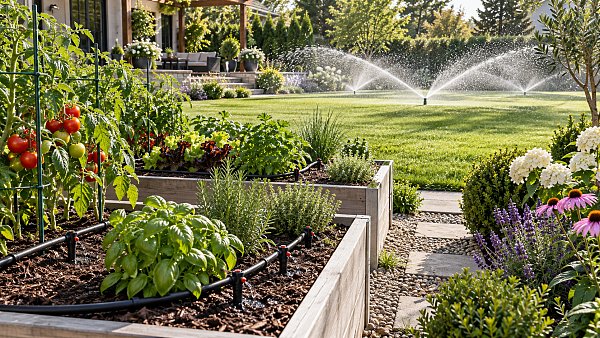
For finance teams, smart irrigation is not just a sustainability upgrade—it is a capital decision that must justify itself through measurable water savings, reduced labor, and long-term asset efficiency.
As commercial properties, retail campuses, and mixed-use developments face rising utility costs and ESG expectations, setup cost must be tested against operational value.
Smart Irrigation ROI: Water Savings vs Setup Cost
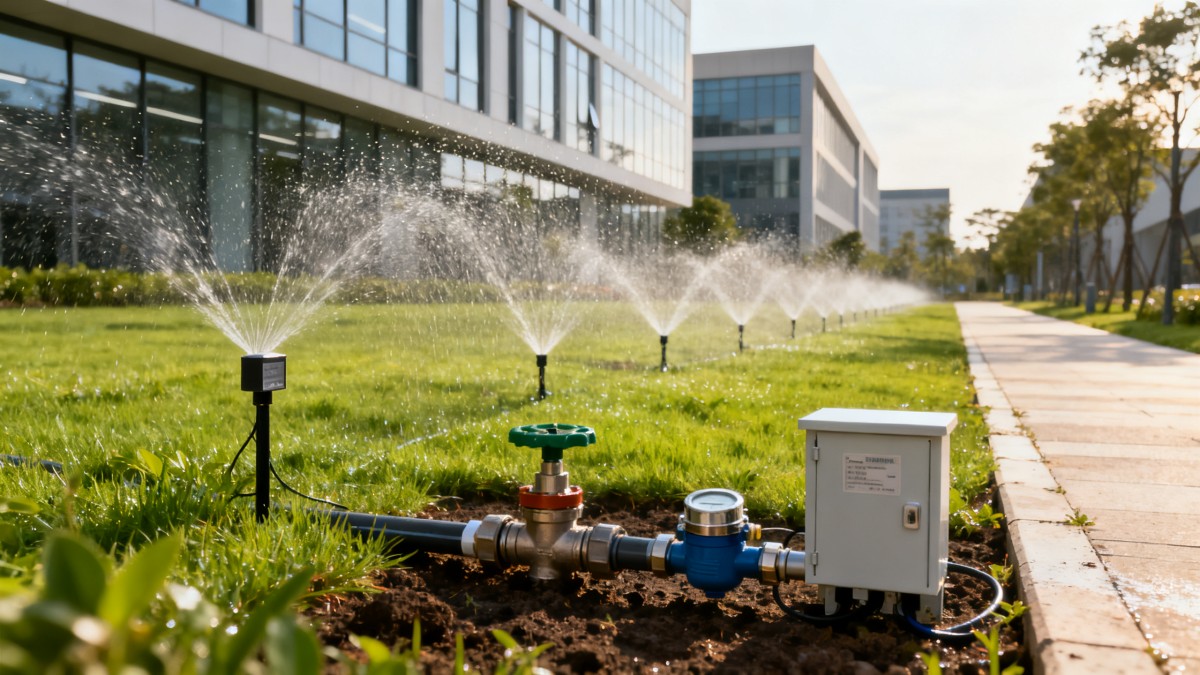
A smart irrigation investment becomes defensible when savings are traceable, assumptions are documented, and system performance remains measurable after installation.
The strongest ROI cases combine water reduction, labor efficiency, plant health, compliance support, and asset protection into one operating model.
Why a Checklist Is Needed Before Approval
Smart irrigation decisions often fail when evaluation starts with device pricing instead of site conditions, water tariffs, landscape risk, and maintenance practices.
A checklist prevents narrow cost comparison and helps quantify value across real estate, retail, hospitality, logistics, public facilities, and corporate campuses.
It also aligns capital approval with sustainability reporting, operational resilience, and lifecycle benchmarking across international commercial environments.
For G-BCE style benchmarking, smart irrigation should be reviewed like any performance hardware: by standards, integration, data quality, and service reliability.
Core Smart Irrigation ROI Checklist
- Establish baseline water use by zone, meter, and season before estimating smart irrigation savings or payback periods.
- Compare current watering schedules with evapotranspiration data, rainfall patterns, soil moisture, and landscape plant requirements.
- Separate unavoidable water demand from waste caused by overspray, leaks, pressure imbalance, and outdated controllers.
- Calculate setup cost by hardware, sensors, valves, controllers, gateways, software, installation labor, commissioning, and user training.
- Include recurring subscription, connectivity, maintenance, calibration, battery replacement, and technical support in total ownership cost.
- Estimate water savings under conservative, expected, and aggressive scenarios rather than using a single optimistic percentage.
- Assign financial value to avoided plant loss, reduced rework, lower manual inspection, and fewer emergency irrigation repairs.
- Check whether smart irrigation data can support ESG disclosure, tenant reporting, utility rebates, or green building documentation.
- Verify integration with BMS, facility dashboards, weather services, leak alerts, and existing maintenance workflows.
- Set measurable approval thresholds, including payback period, internal rate of return, net savings, and operational risk reduction.
How to Compare Water Savings with Setup Cost
The first calculation is simple: annual avoided water cost minus annual operating cost, divided into total setup cost.
However, smart irrigation ROI becomes clearer when hidden costs are added to the model.
A conservative model may assume 15% water savings where baseline waste is moderate.
Sites with poor scheduling, high tariffs, or large ornamental landscapes can show stronger smart irrigation payback.
Application Scenarios That Change the ROI
Retail Campuses and Commercial Plazas
Retail properties need consistent landscape quality because exterior conditions influence arrival experience, tenant perception, and brand environment.
Smart irrigation supports scheduled precision while reducing visible waste near walkways, parking edges, signage, and public seating areas.
Hospitality and Mixed-Use Developments
Hotels, resorts, and mixed-use districts often manage diverse zones, including lawns, planters, courtyards, rooftops, and decorative planting.
In these environments, smart irrigation improves guest-facing aesthetics while controlling water use during seasonal occupancy changes.
Logistics Parks and Industrial Facilities
Industrial sites usually prioritize reliability, low labor demand, and compliance with local water rules over premium landscape presentation.
Smart irrigation can reduce unnecessary truck-route overspray, prevent erosion near drainage areas, and simplify centralized monitoring.
Public Spaces and Institutional Properties
Public facilities face scrutiny over water stewardship, operating budgets, and visible maintenance standards.
Smart irrigation creates auditable performance data that supports budget planning, public reporting, and long-term resource management.
Commonly Missed Costs and Risk Factors
Ignoring hydraulic limitations. Smart irrigation cannot correct poor pressure, undersized pipes, clogged heads, or defective valves without physical repair.
Assuming sensors work without calibration. Soil moisture readings require placement discipline, seasonal verification, and practical thresholds for each planting zone.
Underestimating data management. Alerts, dashboards, and reports only create savings when responsibilities are assigned and response times are defined.
Overlooking connectivity gaps. Large campuses may need gateways, repeaters, cellular backup, or local control to maintain smart irrigation continuity.
Forgetting landscape maturity. Newly installed planting may need different watering logic than established areas, changing short-term savings expectations.
Execution Steps for a Defensible Business Case
- Audit irrigation assets, controllers, valves, meters, pressure conditions, landscape zones, and existing service routines before requesting quotations.
- Collect at least one full season of water billing data, or normalize available records against rainfall and temperature.
- Map high-waste zones where smart irrigation can deliver immediate savings through scheduling, leak detection, or sensor control.
- Request quotes that separate equipment, installation, software, support, replacement parts, and optional integrations.
- Run a pilot on representative zones before full rollout, especially when landscape types and microclimates vary significantly.
- Track monthly performance against baseline water use, maintenance hours, alert volume, plant health, and tenant-facing conditions.
- Review ROI after the first irrigation season and adjust schedules, sensor thresholds, and reporting frequency.
Benchmarking Questions Before Vendor Selection
Vendor evaluation should extend beyond controller intelligence and mobile app design.
A robust smart irrigation system must fit commercial operations, data governance, and long-term maintenance realities.
- Confirm whether controllers support weather-based scheduling, soil moisture input, flow monitoring, leak alerts, and remote zone control.
- Verify cybersecurity practices, user permissions, update policies, cloud availability, and ownership of irrigation performance data.
- Check compatibility with existing valves, master meters, pump systems, BMS platforms, and facility reporting dashboards.
- Demand service-level clarity for troubleshooting, replacement parts, firmware updates, training, and post-installation optimization.
This approach mirrors technical benchmarking used for commercial fixtures, smart retail systems, lighting, and sustainable infrastructure.
Practical ROI Formula for Smart Irrigation
Use a layered formula instead of treating smart irrigation as a simple controller replacement.
Annual net benefit equals water savings plus labor savings plus avoided damage minus software, connectivity, and maintenance costs.
Payback period equals total setup cost divided by annual net benefit.
For stronger approval confidence, calculate net present value over five to seven years.
This captures controller life, sensor replacement, tariff increases, and potential water restrictions.
Summary and Next Action
Smart irrigation delivers ROI when the project starts with measured waste, not generic sustainability claims.
The financial case should connect setup cost with verified water savings, labor reduction, risk control, and landscape asset performance.
Start with a zone-level audit, build a conservative savings model, and test smart irrigation in a representative pilot area.
Then approve expansion only when metered results, operating feedback, and lifecycle cost assumptions support the planned rollout.
News Recommendations
 What records are needed for an ISO 9001 furniture factory audit?
![51a6ab95581761cc26f4318be6520c15]()
Aris Katos
Future of Carbide Coatings
 How to choose AI marketing tools that work with your existing CRM
![51a6ab95581761cc26f4318be6520c15]()
Aris Katos
Future of Carbide Coatings
 Do freight costs erase savings when buying retail fixtures wholesale?
![51a6ab95581761cc26f4318be6520c15]()
Aris Katos
Future of Carbide Coatings
 Can smart retail IT solutions for CPG work with legacy POS systems?
![51a6ab95581761cc26f4318be6520c15]()
Aris Katos
Future of Carbide Coatings
 What permit approvals belong in a commercial fitout planning checklist?
![51a6ab95581761cc26f4318be6520c15]()
Aris Katos
Future of Carbide Coatings
 How Does Commercial Design Differ from Interior Decoration?
![51a6ab95581761cc26f4318be6520c15]()
Aris Katos
Future of Carbide Coatings
 How Long Does It Take to Verify a Commercial Furniture Supplier?
![51a6ab95581761cc26f4318be6520c15]()
Aris Katos
Future of Carbide Coatings
 How to verify compostability claims from a bubble mailer manufacturer
![51a6ab95581761cc26f4318be6520c15]()
Aris Katos
Future of Carbide Coatings
 Will commercial smart infrastructure solutions work with legacy systems?
![51a6ab95581761cc26f4318be6520c15]()
Aris Katos
Future of Carbide Coatings
 How to verify a preschool furniture manufacturer's safety standards
![51a6ab95581761cc26f4318be6520c15]()
Aris Katos
Future of Carbide Coatings
 A technical comparison of semiconductor processes for power devices
![51a6ab95581761cc26f4318be6520c15]()
Aris Katos
Future of Carbide Coatings
 How to verify that a BIFMA ergonomic chair meets the standard
![51a6ab95581761cc26f4318be6520c15]()
Aris Katos
Future of Carbide Coatings
 How to use a CRI value chart when choosing LED lighting
![51a6ab95581761cc26f4318be6520c15]()
Aris Katos
Future of Carbide Coatings
 How to compare hotel aroma diffuser wholesale options by coverage area
![51a6ab95581761cc26f4318be6520c15]()
Aris Katos
Future of Carbide Coatings
 How to prevent O-rings and seals from failing in food equipment
![51a6ab95581761cc26f4318be6520c15]()
Aris Katos
Future of Carbide Coatings
 How to compare commercial linear light wholesale quotes accurately
![51a6ab95581761cc26f4318be6520c15]()
Aris Katos
Future of Carbide Coatings
 How to verify international standards compliance for Middle East exports
![51a6ab95581761cc26f4318be6520c15]()
Aris Katos
Future of Carbide Coatings
 How to select laboratory instruments for reproducible test results
![51a6ab95581761cc26f4318be6520c15]()
Aris Katos
Future of Carbide Coatings
 When does a sheet metal prototype reveal design flaws early?
![51a6ab95581761cc26f4318be6520c15]()
Aris Katos
Future of Carbide Coatings
 When PE air column bags reduce damage in e-commerce fulfillment
![51a6ab95581761cc26f4318be6520c15]()
Aris Katos
Future of Carbide Coatings
 How energy-efficient design reduces operating costs in retail lighting
![51a6ab95581761cc26f4318be6520c15]()
Aris Katos
Future of Carbide Coatings
 When commercial aluminum storefronts make sense for a retail renovation
![51a6ab95581761cc26f4318be6520c15]()
Aris Katos
Future of Carbide Coatings
 What makes LED lights durable in high-use commercial spaces?
![51a6ab95581761cc26f4318be6520c15]()
Aris Katos
Future of Carbide Coatings
 Which industry categories offer the strongest export potential in Latin America?
![51a6ab95581761cc26f4318be6520c15]()
Aris Katos
Future of Carbide Coatings
 How to choose an ultra bright waterproof window display for storefronts
![51a6ab95581761cc26f4318be6520c15]()
Aris Katos
Future of Carbide Coatings
 How to verify suppliers on a trade portal for global sourcing
![51a6ab95581761cc26f4318be6520c15]()
Aris Katos
Future of Carbide Coatings
 How RoHS requirements should be stated in product specifications
![51a6ab95581761cc26f4318be6520c15]()
Aris Katos
Future of Carbide Coatings
 What affects the lead time for custom retail counter displays?
![51a6ab95581761cc26f4318be6520c15]()
Aris Katos
Future of Carbide Coatings
 What consumer packaging USA importers need to verify before ordering
![51a6ab95581761cc26f4318be6520c15]()
Aris Katos
Future of Carbide Coatings
 How commercial spaces interiors shape customer dwell time
![51a6ab95581761cc26f4318be6520c15]()
Aris Katos
Future of Carbide Coatings
 How LED commercial lighting design reduces glare in retail spaces
![51a6ab95581761cc26f4318be6520c15]()
Aris Katos
Future of Carbide Coatings
 How industrial technology information improves RFID inventory accuracy
![51a6ab95581761cc26f4318be6520c15]()
Aris Katos
Future of Carbide Coatings
 When drip garden watering systems make more sense than sprinklers
![51a6ab95581761cc26f4318be6520c15]()
Aris Katos
Future of Carbide Coatings
 When category comparison improves sourcing for industrial applications
![51a6ab95581761cc26f4318be6520c15]()
Aris Katos
Future of Carbide Coatings
 Industrial application guidance for selecting the right LED lighting
![51a6ab95581761cc26f4318be6520c15]()
Aris Katos
Future of Carbide Coatings
 Which commercial architecture standards apply to European retail fit-outs?
![51a6ab95581761cc26f4318be6520c15]()
Aris Katos
Future of Carbide Coatings
 How to verify FDA requirements for maternity care products
![51a6ab95581761cc26f4318be6520c15]()
Aris Katos
Future of Carbide Coatings
 How to verify BPA-free claims for food-contact products
![51a6ab95581761cc26f4318be6520c15]()
Aris Katos
Future of Carbide Coatings
 When does a European wholesale supplier suit modular office projects?
![51a6ab95581761cc26f4318be6520c15]()
Aris Katos
Future of Carbide Coatings