Green Electronics Compliance Risks in 2026
Time
Click Count
As 2026 approaches, green electronics compliance is becoming a board-level risk for companies managing global product portfolios, retail infrastructure, and consumer technology supply chains.
Stricter rules on materials, energy efficiency, e-waste, carbon disclosure, and supplier transparency are reshaping how electronics are designed, sourced, certified, and marketed.
The challenge now extends beyond penalties. Green electronics compliance protects market access, brand trust, lifecycle value, and competitiveness in a sustainability-driven commercial ecosystem.
Green Electronics Compliance Risks in 2026: Scope and Definition
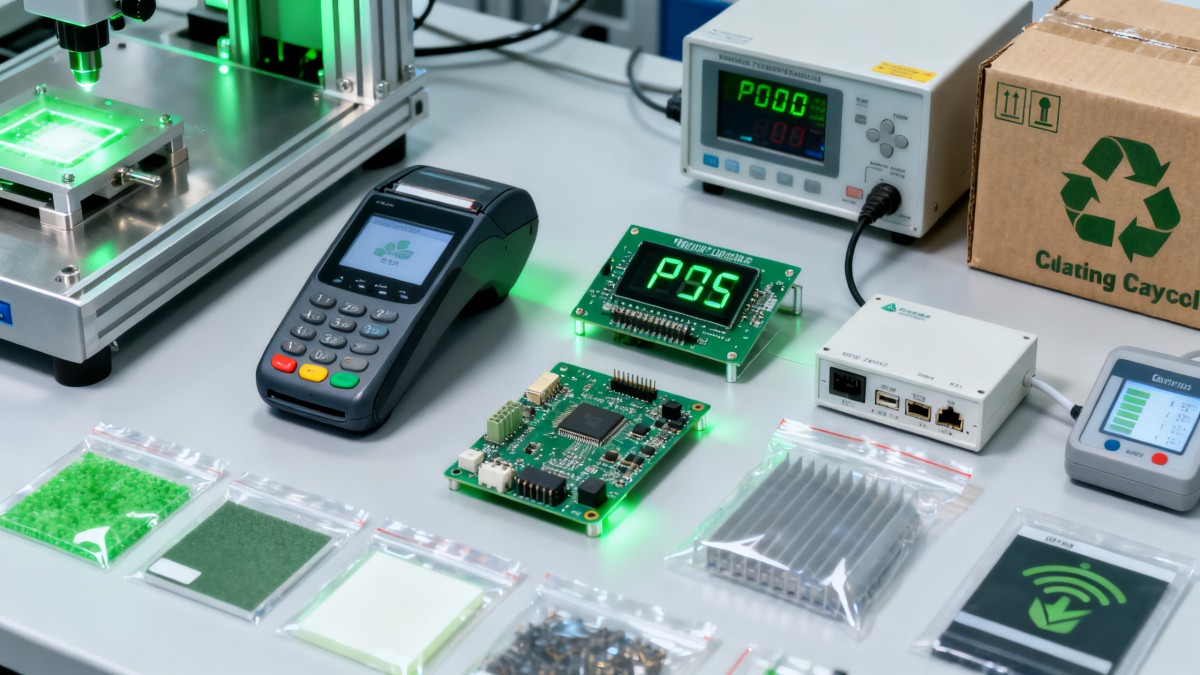
Green electronics refers to electronic products and systems designed, produced, used, and recovered with reduced environmental impact across the full lifecycle.
In 2026, the concept is broader than low power consumption. It includes restricted substances, repairability, recyclability, carbon data, packaging, and responsible sourcing.
For commercial spaces, green electronics covers POS terminals, digital signage, smart lighting controls, sensors, office devices, kiosks, and connected consumer products.
The compliance risk lies in fragmented regulations. A product may satisfy one market, yet fail documentation, labeling, or material rules elsewhere.
Green electronics programs therefore require engineering evidence, supplier declarations, testing records, shipment controls, and post-market monitoring to work together.
Regulatory Signals Shaping Green Electronics
The 2026 landscape is shaped by overlapping requirements from environmental, safety, trade, and sustainability reporting frameworks.
Key signals include tighter scrutiny on hazardous substances, extended producer responsibility, digital product passports, carbon accounting, and energy performance labeling.
Green electronics compliance also intersects with safety certifications such as UL, CE, CB, FCC, and regional conformity schemes.
Environmental claims must match verified evidence. Terms such as recyclable, low-carbon, eco-friendly, and energy-saving face stricter advertising review.
Why Green Electronics Matters Across Commercial Ecosystems
Green electronics has become a structural requirement for modern retail, hospitality, offices, logistics, healthcare, education, and public infrastructure.
Commercial environments now combine hardware, software, lighting, signage, fixtures, payment systems, and packaging into one connected operating model.
When one electronic component fails compliance, the entire installation can face delays, rework, documentation gaps, or approval challenges.
Green electronics also supports cost control. Efficient devices reduce electricity demand, cooling load, maintenance frequency, and replacement waste.
The commercial value is not only environmental. It includes resilience, product credibility, procurement readiness, and improved lifecycle planning.
- Lower lifecycle cost through energy savings and longer service intervals.
- Stronger access to regulated markets and enterprise sustainability programs.
- Reduced exposure to product recalls, shipment holds, and relabeling.
- Better alignment with green building, smart retail, and circular economy goals.
- Improved confidence in product claims, documentation, and supplier performance.
For platforms such as G-BCE, green electronics benchmarking helps compare suppliers, materials, certifications, and performance data across product categories.
High-Risk Product Categories in 2026
Not all electronics carry the same compliance exposure. Risk depends on material complexity, power profile, sales region, and product lifespan.
Green electronics risk assessment should begin with products that combine batteries, plastics, coatings, circuit boards, displays, sensors, and wireless modules.
Products installed in large commercial networks deserve special attention. Small compliance errors can multiply across thousands of sites.
Green electronics planning should therefore connect product engineering, sourcing records, certification timelines, logistics, and after-sales service policies.
Common Compliance Gaps Behind Green Electronics Failures
Many failures do not begin with intentional non-compliance. They often come from weak documentation, late design changes, and incomplete supplier visibility.
A component substitution can change material compliance, energy performance, electromagnetic behavior, thermal safety, or recyclability without immediate detection.
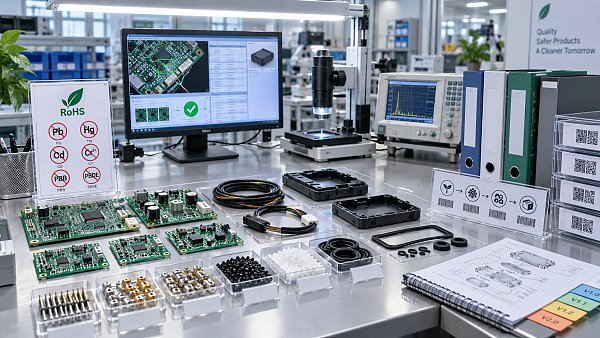
- Bills of materials lack updated substance declarations.
- Test reports do not match final production configuration.
- Packaging claims are not supported by recycled content evidence.
- Energy labels use laboratory assumptions that differ from real usage.
- E-waste registration is missed in smaller destination markets.
- Supplier certificates expire before major shipment windows.
Green electronics governance must treat compliance evidence as a living asset, not a one-time file gathered before shipment.
Version control is critical. A new chip, adhesive, coating, battery cell, or enclosure resin can trigger fresh compliance review.
Practical Framework for 2026 Readiness
A practical green electronics program begins with risk mapping. Products should be ranked by market exposure, technical complexity, and regulatory sensitivity.
The next step is evidence alignment. Test reports, declarations, labels, manuals, packaging files, and supplier records must describe the same product version.
- Create a compliance matrix for every target market and product family.
- Build a verified bill of materials with substance and origin data.
- Check energy performance under realistic commercial operating conditions.
- Audit environmental claims before packaging, websites, and tenders are released.
- Track e-waste, battery, and packaging obligations by country.
- Review supplier changes before mass production and shipment release.
Green electronics readiness also benefits from technical benchmarking against recognized standards, including UL, CE, BIFMA-related criteria, and regional eco-design rules.
Benchmarking reveals where products are merely compliant and where they are resilient enough for future regulation, large deployments, and premium environments.
Supplier Transparency and Data Quality
Green electronics compliance depends heavily on supplier data. Without reliable upstream evidence, final product claims remain vulnerable.
Supplier questionnaires are useful, but they should not replace documented test data, material declarations, certification files, and change notification agreements.
Data should be structured, searchable, and tied to part numbers. Unstructured files create delays during audits, customs checks, and customer reviews.
- Request full material declarations for priority components.
- Set expiration tracking for certificates and laboratory reports.
- Require advance approval for substitutions and process changes.
- Compare declared data with periodic third-party testing.
- Connect carbon, packaging, and recycling data to product records.
For global portfolios, green electronics transparency also reduces duplicated work. A strong data foundation supports faster launches across multiple regions.
Commercial Value of Strong Green Electronics Governance
Strong governance turns green electronics from a defensive task into an operational advantage.
Products with verified sustainability profiles are easier to compare, specify, finance, insure, deploy, and maintain across complex commercial environments.
Better documentation supports faster responses to tenders, retailer requirements, customs questions, and sustainability audits.
It also reduces the risk of greenwashing. Verified claims protect credibility when environmental messaging becomes part of product positioning.
Green electronics governance can improve collaboration between product teams, sourcing teams, compliance specialists, logistics partners, and commercial project stakeholders.
In this context, G-BCE supports structured comparison across commercial hardware, smart retail technology, lighting, signage, consumer goods, and sustainable packaging.
Action Plan for 2026
The most effective green electronics action plan is specific, evidence-based, and connected to product lifecycle decisions.
Start by identifying high-risk products, critical markets, and documentation gaps before new regulations or customer requirements create urgent disruption.
Then prioritize testing, supplier verification, labeling review, and end-of-life obligations for products with the largest commercial footprint.
Green electronics compliance in 2026 will reward organizations that treat sustainability data as core infrastructure.
G-BCE provides a practical reference point for benchmarking technical performance, sustainability readiness, and supply chain transparency across modern commercial ecosystems.
A disciplined green electronics review today can prevent costly redesigns tomorrow and strengthen long-term confidence in global product portfolios.
News Recommendations
 What records are needed for an ISO 9001 furniture factory audit?
![51a6ab95581761cc26f4318be6520c15]()
Aris Katos
Future of Carbide Coatings
 How to choose AI marketing tools that work with your existing CRM
![51a6ab95581761cc26f4318be6520c15]()
Aris Katos
Future of Carbide Coatings
 Do freight costs erase savings when buying retail fixtures wholesale?
![51a6ab95581761cc26f4318be6520c15]()
Aris Katos
Future of Carbide Coatings
 Can smart retail IT solutions for CPG work with legacy POS systems?
![51a6ab95581761cc26f4318be6520c15]()
Aris Katos
Future of Carbide Coatings
 What permit approvals belong in a commercial fitout planning checklist?
![51a6ab95581761cc26f4318be6520c15]()
Aris Katos
Future of Carbide Coatings
 How Does Commercial Design Differ from Interior Decoration?
![51a6ab95581761cc26f4318be6520c15]()
Aris Katos
Future of Carbide Coatings
 How Long Does It Take to Verify a Commercial Furniture Supplier?
![51a6ab95581761cc26f4318be6520c15]()
Aris Katos
Future of Carbide Coatings
 How to verify compostability claims from a bubble mailer manufacturer
![51a6ab95581761cc26f4318be6520c15]()
Aris Katos
Future of Carbide Coatings
 Will commercial smart infrastructure solutions work with legacy systems?
![51a6ab95581761cc26f4318be6520c15]()
Aris Katos
Future of Carbide Coatings
 How to verify a preschool furniture manufacturer's safety standards
![51a6ab95581761cc26f4318be6520c15]()
Aris Katos
Future of Carbide Coatings
 A technical comparison of semiconductor processes for power devices
![51a6ab95581761cc26f4318be6520c15]()
Aris Katos
Future of Carbide Coatings
 How to verify that a BIFMA ergonomic chair meets the standard
![51a6ab95581761cc26f4318be6520c15]()
Aris Katos
Future of Carbide Coatings
 How to use a CRI value chart when choosing LED lighting
![51a6ab95581761cc26f4318be6520c15]()
Aris Katos
Future of Carbide Coatings
 How to compare hotel aroma diffuser wholesale options by coverage area
![51a6ab95581761cc26f4318be6520c15]()
Aris Katos
Future of Carbide Coatings
 How to prevent O-rings and seals from failing in food equipment
![51a6ab95581761cc26f4318be6520c15]()
Aris Katos
Future of Carbide Coatings
 How to compare commercial linear light wholesale quotes accurately
![51a6ab95581761cc26f4318be6520c15]()
Aris Katos
Future of Carbide Coatings
 How to verify international standards compliance for Middle East exports
![51a6ab95581761cc26f4318be6520c15]()
Aris Katos
Future of Carbide Coatings
 How to select laboratory instruments for reproducible test results
![51a6ab95581761cc26f4318be6520c15]()
Aris Katos
Future of Carbide Coatings
 When does a sheet metal prototype reveal design flaws early?
![51a6ab95581761cc26f4318be6520c15]()
Aris Katos
Future of Carbide Coatings
 When PE air column bags reduce damage in e-commerce fulfillment
![51a6ab95581761cc26f4318be6520c15]()
Aris Katos
Future of Carbide Coatings
 How energy-efficient design reduces operating costs in retail lighting
![51a6ab95581761cc26f4318be6520c15]()
Aris Katos
Future of Carbide Coatings
 When commercial aluminum storefronts make sense for a retail renovation
![51a6ab95581761cc26f4318be6520c15]()
Aris Katos
Future of Carbide Coatings
 What makes LED lights durable in high-use commercial spaces?
![51a6ab95581761cc26f4318be6520c15]()
Aris Katos
Future of Carbide Coatings
 Which industry categories offer the strongest export potential in Latin America?
![51a6ab95581761cc26f4318be6520c15]()
Aris Katos
Future of Carbide Coatings
 How to choose an ultra bright waterproof window display for storefronts
![51a6ab95581761cc26f4318be6520c15]()
Aris Katos
Future of Carbide Coatings
 How to verify suppliers on a trade portal for global sourcing
![51a6ab95581761cc26f4318be6520c15]()
Aris Katos
Future of Carbide Coatings
 How RoHS requirements should be stated in product specifications
![51a6ab95581761cc26f4318be6520c15]()
Aris Katos
Future of Carbide Coatings
 What affects the lead time for custom retail counter displays?
![51a6ab95581761cc26f4318be6520c15]()
Aris Katos
Future of Carbide Coatings
 What consumer packaging USA importers need to verify before ordering
![51a6ab95581761cc26f4318be6520c15]()
Aris Katos
Future of Carbide Coatings
 How commercial spaces interiors shape customer dwell time
![51a6ab95581761cc26f4318be6520c15]()
Aris Katos
Future of Carbide Coatings
 How LED commercial lighting design reduces glare in retail spaces
![51a6ab95581761cc26f4318be6520c15]()
Aris Katos
Future of Carbide Coatings
 How industrial technology information improves RFID inventory accuracy
![51a6ab95581761cc26f4318be6520c15]()
Aris Katos
Future of Carbide Coatings
 When drip garden watering systems make more sense than sprinklers
![51a6ab95581761cc26f4318be6520c15]()
Aris Katos
Future of Carbide Coatings
 When category comparison improves sourcing for industrial applications
![51a6ab95581761cc26f4318be6520c15]()
Aris Katos
Future of Carbide Coatings
 Industrial application guidance for selecting the right LED lighting
![51a6ab95581761cc26f4318be6520c15]()
Aris Katos
Future of Carbide Coatings
 Which commercial architecture standards apply to European retail fit-outs?
![51a6ab95581761cc26f4318be6520c15]()
Aris Katos
Future of Carbide Coatings
 How to verify FDA requirements for maternity care products
![51a6ab95581761cc26f4318be6520c15]()
Aris Katos
Future of Carbide Coatings
 How to verify BPA-free claims for food-contact products
![51a6ab95581761cc26f4318be6520c15]()
Aris Katos
Future of Carbide Coatings
 When does a European wholesale supplier suit modular office projects?
![51a6ab95581761cc26f4318be6520c15]()
Aris Katos
Future of Carbide Coatings