Hydroponics vs Soil: Which Cuts Growing Costs in 2026?
Time
Click Count
Hydroponics vs soil in 2026: what cost question really matters?
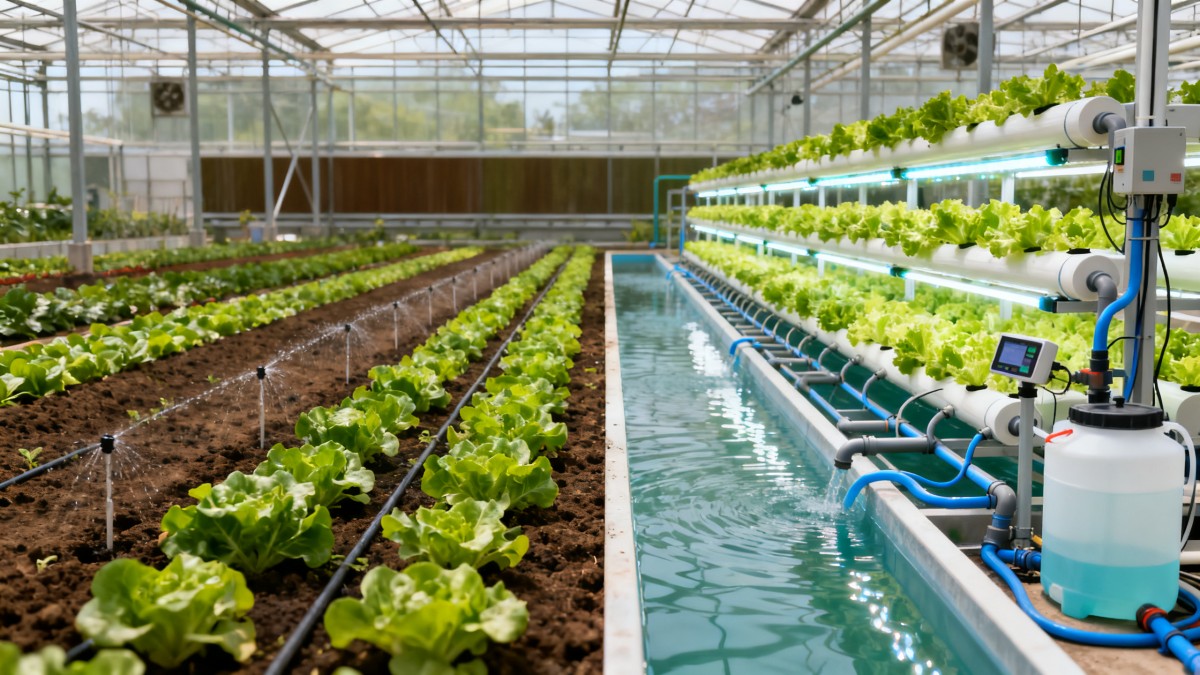
The 2026 debate is no longer about which method looks more advanced. It is about which system delivers lower total growing costs under real operating pressure.
That is why hydroponics keeps drawing attention across food retail, supply planning, and sustainability benchmarking.
A useful comparison starts with five variables: setup cost, labor, water, energy, and supply consistency.
In practice, hydroponics can cut waste and improve predictability. Soil often wins when capital budgets are tight and energy prices are volatile.
Across broader commercial ecosystems, cost analysis now also includes packaging flow, shelf-life impact, and digital traceability.
That wider lens aligns with the way G-BCE evaluates modern supply chains: not as isolated production units, but as connected commercial systems.
Does hydroponics actually reduce growing costs, or just move them?
The short answer is that hydroponics usually shifts costs before it reduces them.
Instead of paying more for land preparation, irrigation loss, and variable field labor, operators pay more upfront for equipment, controls, and monitoring.
If production runs at stable utilization, hydroponics often becomes cheaper per marketable unit.
If utilization is inconsistent, the savings may never fully appear.
This is where many cost comparisons go wrong. They compare yield potential, not cost per sellable output.
Hydroponics tends to lower hidden losses in three areas:
- Water waste from runoff or uneven absorption
- Crop loss from soil-borne disease and inconsistent growing conditions
- Labor time spent on weeding, soil handling, and cleanup
But hydroponics adds new cost lines too.
- Pumps, sensors, reservoirs, and replacement parts
- Power demand for circulation, climate control, and lighting
- Technical oversight and nutrient balancing
So the better question is not whether hydroponics is cheaper in theory.
It is whether hydroponics lowers total cost in a specific operating model.
Where does soil still hold a real cost advantage?
Soil remains financially strong in lower-intensity production and in regions where land and water remain affordable.
It also works well when crops are less sensitive to uniformity and when premium speed-to-market is not essential.
For many crops, soil has one immediate advantage: lower entry cost.
You do not need a dense equipment stack to start producing. That matters when financing costs stay elevated in 2026.
Soil may also outperform hydroponics when electricity pricing is uncertain.
A hydroponic system can be highly efficient with water, yet still lose its cost edge if power rates spike.
Another overlooked point is maintenance complexity.
When components fail in hydroponics, crop stress can appear quickly. Soil systems often absorb disruption more slowly.
That resilience has economic value, especially where technical service networks are limited.
Which cost categories most often decide the hydroponics vs soil comparison?
A simple side-by-side view helps separate visible costs from structural ones.
In actual budgeting, the winners are not always obvious from the first-year spreadsheet.
A hydroponics project can look expensive at launch, then outperform once spoilage, water loss, and missed delivery windows are priced in.
Soil can still win when energy, technical maintenance, and utilization risk are the larger burdens.
Is hydroponics more cost-effective for modern supply chains and retail-linked agriculture?
Often, yes, especially when consistency matters as much as raw volume.
Retail-linked agriculture is shaped by timing, freshness, packaging efficiency, and predictable replenishment.
Hydroponics fits that model because controlled production supports steadier harvest scheduling.
That can reduce emergency sourcing, overstock, and short shelf-life losses downstream.
This is where cross-sector intelligence becomes useful.
G-BCE’s broader approach to commercial ecosystems highlights a familiar pattern: production efficiency is strongest when hardware, logistics, compliance, and retail presentation are aligned.
Applied to hydroponics, that means the growing system should not be judged alone.
It should be evaluated alongside packaging compatibility, cold-chain flow, digital monitoring, and facility standards.
Hydroponics becomes more financially attractive when those linked systems are already mature.
If the surrounding supply chain is weak, the production advantage may be diluted.
What mistakes make hydroponics seem cheaper than it really is?
The most common mistake is underestimating utilization risk.
A hydroponics facility needs enough throughput to spread fixed costs. Idle capacity is expensive.
Another error is ignoring replacement cycles.
Pumps, emitters, filters, sensors, and lighting do not last forever. Lifecycle cost matters more than launch cost.
Some models also overstate water savings without pricing treatment, sanitation, and monitoring.
The water line may be lower, yet the system management line may rise.
A realistic check should include these questions:
- What is the cost per sellable kilogram, not just per harvested kilogram?
- How many cycles per year can be maintained at target quality?
- What happens to economics if energy rises by 15%?
- How quickly can technical failures be corrected?
- Does the crop mix justify the precision of hydroponics?
When these answers are weak, soil may remain the safer cost position.
So which model makes the stronger financial case in 2026?
For high-frequency, quality-sensitive, water-constrained production, hydroponics often has the stronger case.
For lower-tech production with flexible timing and cheap land, soil can still be more economical.
The decision usually turns on operating context, not ideology.
If a project depends on year-round consistency, cleaner inputs, and supply predictability, hydroponics deserves close financial review.
If resilience comes from low capital exposure and simple maintenance, soil may be the better answer.
A practical next step is to compare both methods using the same decision frame:
- Three-year total cost of ownership
- Energy and water sensitivity scenarios
- Quality rejection rate assumptions
- Service, parts, and maintenance availability
- Impact on packaging, shelf life, and delivery reliability
That kind of comparison reveals whether hydroponics is a genuine cost reducer or simply a different cost structure.
In 2026, the strongest decisions will come from integrated benchmarking, not single-metric comparisons.
Review the full supply chain, test assumptions against real operating data, and build the choice around cost stability as much as yield.
News Recommendations
 How to assess a workplace interior supplier's installation scope
![51a6ab95581761cc26f4318be6520c15]()
Aris Katos
Future of Carbide Coatings
 What records are needed for an ISO 9001 furniture factory audit?
![51a6ab95581761cc26f4318be6520c15]()
Aris Katos
Future of Carbide Coatings
 How to choose AI marketing tools that work with your existing CRM
![51a6ab95581761cc26f4318be6520c15]()
Aris Katos
Future of Carbide Coatings
 Do freight costs erase savings when buying retail fixtures wholesale?
![51a6ab95581761cc26f4318be6520c15]()
Aris Katos
Future of Carbide Coatings
 How to check whether an OEM retail shelf screen fits existing shelving
![51a6ab95581761cc26f4318be6520c15]()
Aris Katos
Future of Carbide Coatings
 What brightness should an OEM shelf LCD screen have for retail use?
![51a6ab95581761cc26f4318be6520c15]()
Aris Katos
Future of Carbide Coatings
 Can smart retail IT solutions for CPG work with legacy POS systems?
![51a6ab95581761cc26f4318be6520c15]()
Aris Katos
Future of Carbide Coatings
 What permit approvals belong in a commercial fitout planning checklist?
![51a6ab95581761cc26f4318be6520c15]()
Aris Katos
Future of Carbide Coatings
 Which Technical Factors Matter When Comparing Smart Retail Hardware?
![51a6ab95581761cc26f4318be6520c15]()
Aris Katos
Future of Carbide Coatings
 Does Data Transparency Matter When Selecting Consumer Goods Suppliers?
![51a6ab95581761cc26f4318be6520c15]()
Aris Katos
Future of Carbide Coatings
 How Does Commercial Design Differ from Interior Decoration?
![51a6ab95581761cc26f4318be6520c15]()
Aris Katos
Future of Carbide Coatings
 How Long Does It Take to Verify a Commercial Furniture Supplier?
![51a6ab95581761cc26f4318be6520c15]()
Aris Katos
Future of Carbide Coatings
 How to verify compostability claims from a bubble mailer manufacturer
![51a6ab95581761cc26f4318be6520c15]()
Aris Katos
Future of Carbide Coatings
 Will commercial smart infrastructure solutions work with legacy systems?
![51a6ab95581761cc26f4318be6520c15]()
Aris Katos
Future of Carbide Coatings
 How to verify a preschool furniture manufacturer's safety standards
![51a6ab95581761cc26f4318be6520c15]()
Aris Katos
Future of Carbide Coatings
 A technical comparison of semiconductor processes for power devices
![51a6ab95581761cc26f4318be6520c15]()
Aris Katos
Future of Carbide Coatings
 How to verify that a BIFMA ergonomic chair meets the standard
![51a6ab95581761cc26f4318be6520c15]()
Aris Katos
Future of Carbide Coatings
 How to use a CRI value chart when choosing LED lighting
![51a6ab95581761cc26f4318be6520c15]()
Aris Katos
Future of Carbide Coatings
 How to compare hotel aroma diffuser wholesale options by coverage area
![51a6ab95581761cc26f4318be6520c15]()
Aris Katos
Future of Carbide Coatings
 How to prevent O-rings and seals from failing in food equipment
![51a6ab95581761cc26f4318be6520c15]()
Aris Katos
Future of Carbide Coatings
 How to compare commercial linear light wholesale quotes accurately
![51a6ab95581761cc26f4318be6520c15]()
Aris Katos
Future of Carbide Coatings
 How to verify international standards compliance for Middle East exports
![51a6ab95581761cc26f4318be6520c15]()
Aris Katos
Future of Carbide Coatings
 How to select laboratory instruments for reproducible test results
![51a6ab95581761cc26f4318be6520c15]()
Aris Katos
Future of Carbide Coatings
 When does a sheet metal prototype reveal design flaws early?
![51a6ab95581761cc26f4318be6520c15]()
Aris Katos
Future of Carbide Coatings
 When PE air column bags reduce damage in e-commerce fulfillment
![51a6ab95581761cc26f4318be6520c15]()
Aris Katos
Future of Carbide Coatings
 How energy-efficient design reduces operating costs in retail lighting
![51a6ab95581761cc26f4318be6520c15]()
Aris Katos
Future of Carbide Coatings
 When commercial aluminum storefronts make sense for a retail renovation
![51a6ab95581761cc26f4318be6520c15]()
Aris Katos
Future of Carbide Coatings
 What makes LED lights durable in high-use commercial spaces?
![51a6ab95581761cc26f4318be6520c15]()
Aris Katos
Future of Carbide Coatings
 Which industry categories offer the strongest export potential in Latin America?
![51a6ab95581761cc26f4318be6520c15]()
Aris Katos
Future of Carbide Coatings
 How to choose an ultra bright waterproof window display for storefronts
![51a6ab95581761cc26f4318be6520c15]()
Aris Katos
Future of Carbide Coatings
 How to verify suppliers on a trade portal for global sourcing
![51a6ab95581761cc26f4318be6520c15]()
Aris Katos
Future of Carbide Coatings
 How RoHS requirements should be stated in product specifications
![51a6ab95581761cc26f4318be6520c15]()
Aris Katos
Future of Carbide Coatings
 What affects the lead time for custom retail counter displays?
![51a6ab95581761cc26f4318be6520c15]()
Aris Katos
Future of Carbide Coatings
 What consumer packaging USA importers need to verify before ordering
![51a6ab95581761cc26f4318be6520c15]()
Aris Katos
Future of Carbide Coatings
 How commercial spaces interiors shape customer dwell time
![51a6ab95581761cc26f4318be6520c15]()
Aris Katos
Future of Carbide Coatings
 How LED commercial lighting design reduces glare in retail spaces
![51a6ab95581761cc26f4318be6520c15]()
Aris Katos
Future of Carbide Coatings
 How industrial technology information improves RFID inventory accuracy
![51a6ab95581761cc26f4318be6520c15]()
Aris Katos
Future of Carbide Coatings
 When drip garden watering systems make more sense than sprinklers
![51a6ab95581761cc26f4318be6520c15]()
Aris Katos
Future of Carbide Coatings
 When category comparison improves sourcing for industrial applications
![51a6ab95581761cc26f4318be6520c15]()
Aris Katos
Future of Carbide Coatings