
EU Draft Rule: 30% Bio-based Content Mandatory for Food Contact Packaging from 2027
Time
Click Count
The European Commission published a draft revision of the Eco-design for Sustainable Packaging Regulation on 30 May 2026, introducing binding bio-based content requirements for food-grade plastic packaging placed on the EU market—including e-commerce fulfillment packs—starting 1 January 2027. This regulatory shift directly affects exporters of food packaging and fulfillment solutions from China, triggering urgent adjustments across material formulation, conformity testing, and traceability infrastructure.
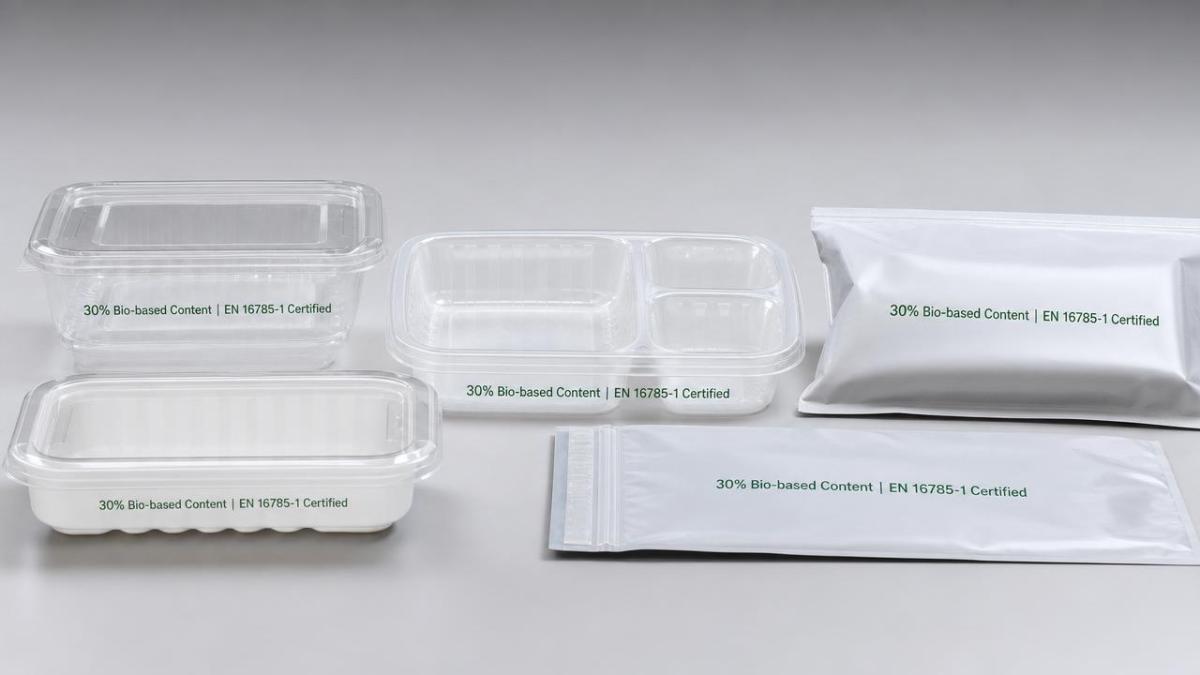
Confirmed Regulatory Requirements
On 30 May 2026, the European Commission released the draft amendment to the Eco-design for Sustainable Packaging Regulation. It proposes that, effective 1 January 2027, all food contact plastic packaging placed on the EU market—including packaging used in e-commerce fulfillment operations—must contain no less than 30% bio-based material by mass. Compliance requires certification to EN 16785-1, the harmonised standard for determining bio-based content in products.
Impact Across the Export Supply Chain
Direct Exporters
Manufacturers and traders exporting food packaging or fulfillment packs to the EU must revise product declarations, update technical documentation, and ensure batch-level compliance evidence is available for customs and market surveillance authorities. Failure to meet the 30% threshold—or lack of valid EN 16785-1 certification—may result in refusal of entry or withdrawal from the market.
Raw Material Suppliers
Suppliers of polymers, masterbatches, and additives face intensified demand for certified bio-based feedstocks (e.g., polylactic acid, bio-PET blends) with full chain-of-custody documentation. Traceability systems must now support mass balance verification aligned with EN 16785-1’s measurement methodology—not just supplier self-declarations.
Contract Packaging & Converter Firms
Companies engaged in printing, laminating, or assembling food contact packaging must validate that all layers—including adhesives, inks, and barrier coatings—contribute to—and do not dilute—the overall bio-based content. Process-related contamination or use of non-compliant ancillary materials may jeopardise final certification.
Logistics & Compliance Service Providers
Third-party labs, certification bodies, and regulatory consultants will see rising demand for EN 16785-1 testing, audit readiness support, and supply chain mapping services. Their role expands from verification to active co-development of compliant material specifications and documentation workflows.
Key Actions for Affected Enterprises
Align Testing Protocols with EN 16785-1
Confirm that current or prospective testing laboratories are accredited for EN 16785-1 (determination of bio-based carbon content via ASTM D6866 or ISO 16620-2). Internal R&D must adopt this standard—not generic ‘bio-content’ claims—as the sole benchmark for formulation validation.
Re-engineer Material Formulations & Sourcing
Assess existing formulations for bio-based substitution potential without compromising barrier performance, thermal stability, or food safety compliance (e.g., under Regulation (EC) No 1935/2004). Prioritise suppliers offering EN 16785-1–compatible raw materials with auditable origin documentation.
Build End-to-End Traceability Systems
Implement digital or paper-based traceability frameworks capable of tracking bio-based content mass balance from feedstock sourcing through manufacturing to final packaging unit. Systems must support audit requests from EU authorities or notified bodies within 72 hours.
Review Contractual & Delivery Terms
Update sales contracts, pro forma invoices, and certificates of conformity to explicitly reference EN 16785-1 compliance and declared bio-based percentage. Anticipate extended lead times for certification and testing—especially during initial rollout—when planning delivery schedules for Q4 2026 onward.
Industry Perspective: Beyond Compliance into Capability Building
Analysis shows this requirement functions less as a standalone environmental measure and more as a structural lever accelerating consolidation among packaging suppliers with integrated bio-materials expertise. From an industry perspective, the 30% threshold is not merely a compositional target—it signals a shift toward lifecycle accountability, where material origin, processing transparency, and third-party verifiability become core competitive differentiators. What deserves closer attention is the 18-month window between draft publication and enforcement: it is insufficient for greenfield bio-polymer capacity expansion, making strategic partnerships with certified upstream suppliers critical. Observably, firms treating this solely as a labelling or documentation exercise risk operational disruption—whereas those embedding EN 16785-1 alignment into R&D, procurement, and QA systems gain long-term regulatory agility.
Taking Stock: A Strategic Inflection Point
This draft regulation marks a decisive step in the EU’s broader strategy to decouple packaging sustainability from recycling rates alone and anchor it in renewable feedstock adoption. For Chinese exporters, it transforms bio-based content from a marketing attribute into a mandatory technical specification—requiring cross-functional coordination, not just compliance department action. The outcome hinges less on whether the 30% target is technically achievable, and more on whether enterprises treat the transition as a systemic upgrade rather than a point-in-time certification hurdle.
Source Information & Verification Notes
This article is generated exclusively from the user-provided title, event date (30 May 2026), and summary text. Specific official source links were not provided in the input and should be verified continuously. Stakeholders are advised to monitor the European Commission’s official register for the final adopted text, guidance documents on EN 16785-1 application, and updates from EU Member State market surveillance authorities regarding enforcement timelines and interpretation of ‘food contact’ scope—including composite and multi-layer structures.
News Recommendations
 Report: Global Kraft Paper Market Forecast to Reach $20.5 Billion by 2033
![51a6ab95581761cc26f4318be6520c15]()
Aris Katos
Future of Carbide Coatings
 How to verify Zigbee compatibility when sourcing lighting sensors
![51a6ab95581761cc26f4318be6520c15]()
Aris Katos
Future of Carbide Coatings
 How do packaging customization options affect minimum order quantities in Europe?
![51a6ab95581761cc26f4318be6520c15]()
Aris Katos
Future of Carbide Coatings
 Transom to Acquire Cree LED in Commercial Lighting Ownership Change
![51a6ab95581761cc26f4318be6520c15]()
Aris Katos
Future of Carbide Coatings
 How to plan customer flow in commercial design planning
![51a6ab95581761cc26f4318be6520c15]()
Aris Katos
Future of Carbide Coatings
 USTR Urged to Permanently Suspend Fees on China-Linked Ships
![51a6ab95581761cc26f4318be6520c15]()
Aris Katos
Future of Carbide Coatings
 How to choose comparable stores for retail benchmarking
![51a6ab95581761cc26f4318be6520c15]()
Aris Katos
Future of Carbide Coatings
 How does anchoring affect modular building wind load resistance?
![51a6ab95581761cc26f4318be6520c15]()
Aris Katos
Future of Carbide Coatings
 Amazon Raises European FBA Surcharge to 2% in Ten Markets From November 2
![51a6ab95581761cc26f4318be6520c15]()
Aris Katos
Future of Carbide Coatings
 How to verify a BPA-free test report for baby products
![51a6ab95581761cc26f4318be6520c15]()
Aris Katos
Future of Carbide Coatings
 China's Mandatory Classroom Lighting Standard GB 7793-2025 Takes Effect November 1
![51a6ab95581761cc26f4318be6520c15]()
Aris Katos
Future of Carbide Coatings
 How order volume affects the price of wholesale poly mailers
![51a6ab95581761cc26f4318be6520c15]()
Aris Katos
Future of Carbide Coatings
 US Imposes 50% Tariff on Certain Canadian PET Resin Imports
![51a6ab95581761cc26f4318be6520c15]()
Aris Katos
Future of Carbide Coatings
 How to read the maximum ratings in a semiconductor datasheet
![51a6ab95581761cc26f4318be6520c15]()
Aris Katos
Future of Carbide Coatings
 University of Maryland Develops Bio-Based Packaging to Extend Avocado and Cucumber Shelf Life
![51a6ab95581761cc26f4318be6520c15]()
Aris Katos
Future of Carbide Coatings
 How to verify a cookware manufacturer's induction compatibility claims
![51a6ab95581761cc26f4318be6520c15]()
Aris Katos
Future of Carbide Coatings
 Omdia Forecasts 11.6% Annual Growth in LED Display Revenue Through 2030
![51a6ab95581761cc26f4318be6520c15]()
Aris Katos
Future of Carbide Coatings
 How to verify a pulp molding packaging factory's production capacity
![51a6ab95581761cc26f4318be6520c15]()
Aris Katos
Future of Carbide Coatings
 Curion Survey: Half of Consumers Frustrated by Sustainable Packaging
![51a6ab95581761cc26f4318be6520c15]()
Aris Katos
Future of Carbide Coatings
 How to assess the credibility of market insight content
![51a6ab95581761cc26f4318be6520c15]()
Aris Katos
Future of Carbide Coatings
 US Removes 50% Additional Tariff on Selected Canadian Packaging Products
![51a6ab95581761cc26f4318be6520c15]()
Aris Katos
Future of Carbide Coatings
 Will a waterproof dimmable LED driver work with your existing dimmer?
![51a6ab95581761cc26f4318be6520c15]()
Aris Katos
Future of Carbide Coatings
 Charter Next Generation Raises Film PCR Use 30%, Advances Food-Grade Applications
![51a6ab95581761cc26f4318be6520c15]()
Aris Katos
Future of Carbide Coatings
 How to choose a dog harness and leash for a dog that pulls hard
![51a6ab95581761cc26f4318be6520c15]()
Aris Katos
Future of Carbide Coatings
 How to respect local customs when negotiating with overseas suppliers
![51a6ab95581761cc26f4318be6520c15]()
Aris Katos
Future of Carbide Coatings
 RFID Recycling Challenges Bring Paper-Based and Chipless Tags Into Focus
![51a6ab95581761cc26f4318be6520c15]()
Aris Katos
Future of Carbide Coatings
 How to choose commercial lighting for offices that reduces glare
![51a6ab95581761cc26f4318be6520c15]()
Aris Katos
Future of Carbide Coatings
 Queue Launches Fully Automated Robotic Pharmacy Kiosk for 30-Second Dispensing
![51a6ab95581761cc26f4318be6520c15]()
Aris Katos
Future of Carbide Coatings
 Can your supermarket store fixtures supplier meet your opening date?
![51a6ab95581761cc26f4318be6520c15]()
Aris Katos
Future of Carbide Coatings
 Shopify POS UI Extensions 2026-10 Adds Virtual Lists and Custom Row Templates
![51a6ab95581761cc26f4318be6520c15]()
Aris Katos
Future of Carbide Coatings
 How to assess smart office furniture suppliers’ North American support
![51a6ab95581761cc26f4318be6520c15]()
Aris Katos
Future of Carbide Coatings
 Aqara Launches Smart Lighting Range to Advance AI Spatial Intelligence
![51a6ab95581761cc26f4318be6520c15]()
Aris Katos
Future of Carbide Coatings
 How to assess demand forecasts in a lighting intelligence report
![51a6ab95581761cc26f4318be6520c15]()
Aris Katos
Future of Carbide Coatings
 Billerud推出PharmaKraft纤维基医药包装材料
![51a6ab95581761cc26f4318be6520c15]()
Aris Katos
Future of Carbide Coatings
 How to assess supplier reliability in global supply chain sourcing
![51a6ab95581761cc26f4318be6520c15]()
Aris Katos
Future of Carbide Coatings
 Omdia Forecasts 11.6% CAGR for Global LED Video Display Market in 2026–2030
![51a6ab95581761cc26f4318be6520c15]()
Aris Katos
Future of Carbide Coatings
 How to verify an LFGB testing laboratory's accreditation scope
![51a6ab95581761cc26f4318be6520c15]()
Aris Katos
Future of Carbide Coatings
 How to assess a workplace interior supplier's installation scope
![51a6ab95581761cc26f4318be6520c15]()
Aris Katos
Future of Carbide Coatings
 What records are needed for an ISO 9001 furniture factory audit?
![51a6ab95581761cc26f4318be6520c15]()
Aris Katos
Future of Carbide Coatings







































