Industrial Style Office Furniture Cost Guide
Time
Click Count
For procurement teams planning modern commercial interiors, understanding the true cost of industrial style office furniture goes far beyond comparing unit prices. Materials, finishes, ergonomics, compliance standards, lead times, and long-term durability all influence total value. This guide helps sourcing managers evaluate price drivers, benchmark supplier options, and make smarter purchasing decisions for offices that need a strong industrial aesthetic without compromising performance, safety, or lifecycle efficiency.
What Makes Industrial Style Office Furniture a Procurement Category, Not Just a Design Choice?
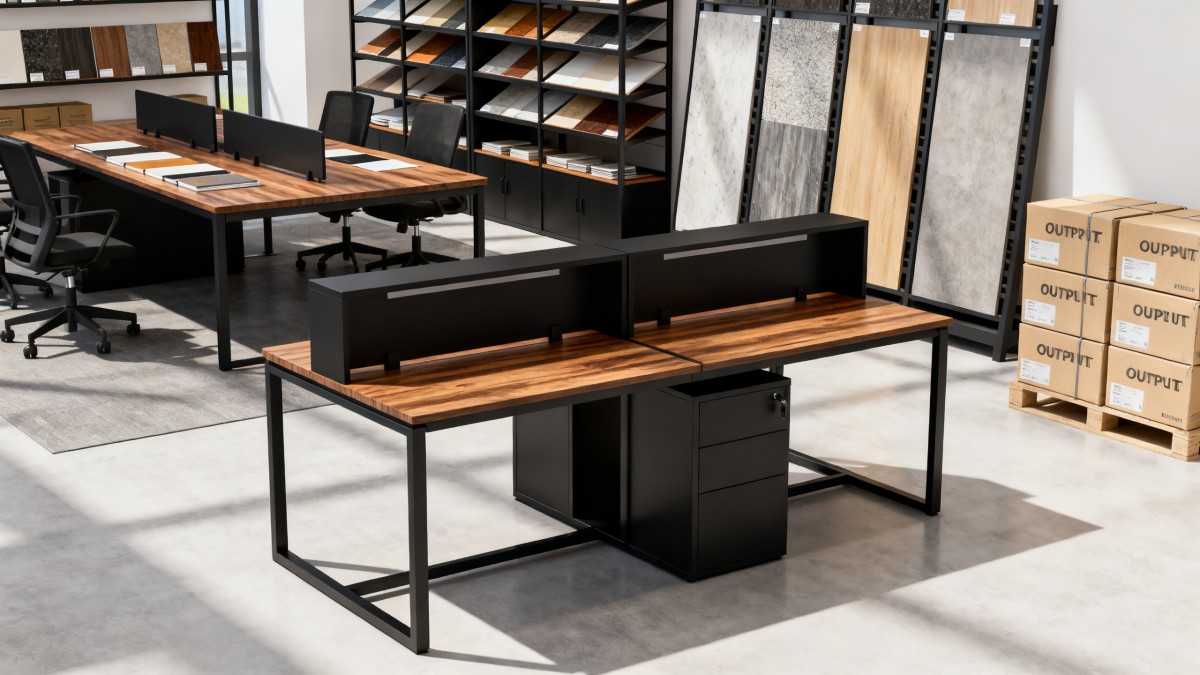
Industrial style office furniture usually combines exposed metal frames, engineered wood, reclaimed-look surfaces, visible hardware, matte finishes, and modular layouts. For buyers, the challenge is translating visual preference into measurable purchasing criteria.
A desk that looks industrial may still fail in commercial use if the steel gauge is thin, the powder coating chips, the tabletop warps, or cable management is ignored. The lowest quote can become expensive after installation delays, returns, or premature replacement.
In multi-site offices, retail headquarters, coworking spaces, and back-of-house commercial areas, industrial style office furniture must support branding, daily workflow, safety, maintenance, and lifecycle cost. This is why procurement teams should treat it as a performance category.
Core procurement questions to ask first
- Will the furniture be used by assigned staff, rotating teams, customers, contractors, or public-facing employees?
- Does the project require BIFMA-aligned performance, low-emission materials, fire safety documentation, or region-specific import compliance?
- Is the industrial aesthetic expected to match existing lighting, signage, flooring, retail fixtures, and smart workplace technology?
- Can the supplier maintain consistent finish color, packaging protection, replacement parts, and repeat-order availability?
Key Cost Drivers Behind Industrial Style Office Furniture
The price of industrial style office furniture is shaped by more than metal and wood. Cost is usually driven by structural strength, finishing process, ergonomic function, customization depth, order quantity, testing requirements, and shipping configuration.
Procurement teams should separate visible features from hidden cost variables. A thicker frame, better welding, anti-rust treatment, and durable edging may raise the purchase price but reduce replacement risk in high-use environments.
The table below summarizes common cost drivers for industrial style office furniture and explains how each one affects budget planning, supplier comparison, and long-term value.
This framework helps buyers avoid misleading comparisons. Two quotes for industrial style office furniture may look similar, but one may include stronger coatings, tested hardware, export-ready packaging, and clearer after-sales support.
Typical Price Bands and What Buyers Usually Get
Price bands vary by region, order volume, customization, and freight terms. Still, procurement teams can use indicative ranges to screen suppliers before requesting detailed samples, drawings, and compliance documentation.
For industrial style office furniture, lower prices often reflect simplified construction, thinner metal, limited finishes, or less robust packaging. Premium pricing may be justified when durability, brand alignment, and repeatability matter.
The following table provides practical cost positioning for common commercial furniture categories. It is intended for early budgeting, not as a fixed quotation standard.
A useful rule is to compare cost against expected usage intensity. A public-facing reception desk, for example, needs stronger surfaces and better installation planning than a decorative shelf in a low-traffic office.
Which Office Scenarios Justify a Higher Industrial Furniture Budget?
Not every space requires the same specification. Procurement managers should match industrial style office furniture to the operational pressure of each area instead of applying one price level across the whole project.
High-traffic reception and customer-facing zones
Reception counters, waiting benches, display storage, and consultation tables need finishes that resist scratches, stains, and repeated cleaning. These areas also influence brand perception, so finish consistency matters.
Open workstations and shared offices
Shared desks require stable frames, safe corners, cable control, and accessories compatible with monitors, task lighting, and charging equipment. Industrial style office furniture should look strong and function quietly.
Retail headquarters and hybrid commercial spaces
Brands that operate showrooms, stores, and offices often need furniture that coordinates with lighting, signage, packaging displays, and smart retail devices. This is where cross-category benchmarking becomes valuable.
- Use higher specifications where furniture carries customer interaction, technology, or brand identity.
- Use mid-range specifications for standard staff workstations with predictable daily use.
- Use budget specifications only in low-contact areas where replacement risk is acceptable.
Procurement Checklist: How to Compare Suppliers Without Relying on Price Alone
Supplier comparison is difficult when quotations use different materials, drawings, packaging assumptions, and freight terms. A structured checklist helps buyers normalize offers for industrial style office furniture.
Before awarding a contract, request technical drawings, finish samples, hardware details, packaging photos, assembly instructions, and compliance references. These items reveal whether the supplier understands commercial deployment.
- Define the user profile, traffic level, installation environment, cleaning method, and expected service life.
- Ask suppliers to quote against the same bill of materials, finish code, packing method, and delivery term.
- Review sample quality under realistic lighting, because black metal and wood-look finishes can vary significantly.
- Check whether replacement parts, extra hardware, touch-up guidance, and repeat-order control are available.
- Include installation time, damage rate risk, maintenance burden, and downtime cost in total cost evaluation.
Red flags procurement teams should not ignore
- A supplier cannot explain tabletop material, coating process, carton protection, or hardware specifications.
- The quotation excludes assembly hardware, spare parts, export packaging, or documentation needed for approval.
- The sample looks acceptable, but batch production tolerances, color control, and inspection checkpoints are unclear.
Compliance, Standards, and Documentation Buyers Should Request
For commercial interiors, compliance is not a formality. Industrial style office furniture may need documentation related to structural safety, emissions, electrical components, packaging materials, or regional import rules.
G-BCE benchmarks commercial furniture and fixtures against common international expectations such as BIFMA-oriented performance, CE considerations for powered components, UL-relevant electrical safety, and material transparency practices.
The table below outlines useful documentation categories. Requirements vary by market, so buyers should confirm the exact obligations for their destination country and project type.
Documentation does not replace inspection, but it improves accountability. It also helps procurement teams compare industrial style office furniture across suppliers using a common technical language.
Cost-Saving Alternatives That Do Not Undermine Commercial Performance
When budgets are tight, the goal is not to buy the cheapest industrial style office furniture. The better approach is to adjust specifications intelligently while preserving safety, durability, and brand consistency.
Use engineered surfaces where visual effect matters more than natural material
High-quality laminate or veneer alternatives can deliver a convincing industrial wood appearance with better stain resistance and lower maintenance than some solid wood options.
Standardize dimensions across sites
Custom sizes add drawing time, production complexity, and packaging variation. Standardized desks, tables, and storage modules improve purchasing leverage and simplify replacements.
Invest selectively in visible and high-use zones
Premium finishes can be reserved for reception, executive areas, and customer-facing rooms. Back-office workstations can use the same design language with more cost-efficient specifications.
- Avoid reducing frame stability, because wobbling desks create user complaints and shorten furniture life.
- Do not remove cable management from technology-heavy offices, coworking areas, or retail operation teams.
- Keep packaging quality high for international shipments, as damage costs can exceed small material savings.
Implementation Timeline: From Specification to Delivery
Lead time is a major concern for procurement teams. Industrial style office furniture can involve sampling, finish approval, pilot production, inspection, sea freight, customs, and site installation coordination.
A rushed order often causes avoidable problems, especially when multiple categories must align. Furniture may need to coordinate with lighting, signage, smart retail equipment, and sustainable packaging programs.
Recommended purchasing sequence
- Confirm floor plans, user count, workstation density, storage demand, and technology integration points.
- Create a technical specification sheet covering materials, finishes, dimensions, hardware, and compliance expectations.
- Approve samples before bulk production, especially for powder-coated metal and wood-look surfaces.
- Define inspection checkpoints for frame quality, surface defects, packaging strength, labels, and assembly hardware.
- Plan delivery batches according to site readiness, installer availability, and staged opening schedules.
For complex projects, procurement teams should add buffer time for sample revisions and documentation review. This reduces the risk of accepting a product that looks correct but fails operational requirements.
FAQ: Common Questions About Industrial Style Office Furniture Costs
Is industrial style office furniture more expensive than standard office furniture?
It can be more expensive when it uses heavier metal frames, special finishes, custom panels, or integrated technology. However, standardized industrial designs with engineered surfaces can be cost-competitive.
What should buyers prioritize when the budget is limited?
Prioritize structural stability, surface durability, safe edges, cable management, and packaging protection. Decorative upgrades can be simplified, but core commercial performance should not be compromised.
How can procurement teams compare overseas suppliers fairly?
Use the same specification sheet, request comparable samples, confirm freight terms, and evaluate documentation. A low FOB price may not include packaging, compliance support, or replacement parts.
Does industrial style office furniture work for sustainable office projects?
Yes, if buyers evaluate material emissions, recyclable packaging, replaceable components, and long service life. Sustainability is strongest when furniture avoids early disposal and supports efficient maintenance.
Why Work With G-BCE for Industrial Furniture Benchmarking and Sourcing Decisions?
G-BCE supports sourcing directors, commercial architects, and global operators that need clearer benchmarks across furniture, fixtures, smart retail technology, lighting, signage, supply chain, and sustainable packaging.
For industrial style office furniture, G-BCE helps procurement teams interpret supplier claims, compare technical specifications, align aesthetic expectations with commercial performance, and identify hidden lifecycle cost risks.
Our perspective connects Asian manufacturing precision with the functional and compliance demands of international commercial environments. This is especially useful when projects involve multi-category coordination and tight rollout schedules.
Consult us before finalizing your purchase order
- Parameter confirmation for desks, shelving, reception counters, storage systems, and meeting tables.
- Supplier comparison based on materials, finish process, documentation, packaging, and delivery readiness.
- Custom specification review for brand-matched industrial style office furniture in offices, showrooms, and hybrid retail spaces.
- Support for sample planning, quotation communication, certification questions, and lead-time risk assessment.
If your team is evaluating industrial style office furniture for a new build, renovation, or multi-site rollout, contact G-BCE to discuss specifications, cost assumptions, supplier benchmarking, samples, and delivery planning before committing budget.
News Recommendations
 What records are needed for an ISO 9001 furniture factory audit?
![51a6ab95581761cc26f4318be6520c15]()
Aris Katos
Future of Carbide Coatings
 How to choose AI marketing tools that work with your existing CRM
![51a6ab95581761cc26f4318be6520c15]()
Aris Katos
Future of Carbide Coatings
 Do freight costs erase savings when buying retail fixtures wholesale?
![51a6ab95581761cc26f4318be6520c15]()
Aris Katos
Future of Carbide Coatings
 Can smart retail IT solutions for CPG work with legacy POS systems?
![51a6ab95581761cc26f4318be6520c15]()
Aris Katos
Future of Carbide Coatings
 What permit approvals belong in a commercial fitout planning checklist?
![51a6ab95581761cc26f4318be6520c15]()
Aris Katos
Future of Carbide Coatings
 How Does Commercial Design Differ from Interior Decoration?
![51a6ab95581761cc26f4318be6520c15]()
Aris Katos
Future of Carbide Coatings
 How Long Does It Take to Verify a Commercial Furniture Supplier?
![51a6ab95581761cc26f4318be6520c15]()
Aris Katos
Future of Carbide Coatings
 How to verify compostability claims from a bubble mailer manufacturer
![51a6ab95581761cc26f4318be6520c15]()
Aris Katos
Future of Carbide Coatings
 Will commercial smart infrastructure solutions work with legacy systems?
![51a6ab95581761cc26f4318be6520c15]()
Aris Katos
Future of Carbide Coatings
 How to verify a preschool furniture manufacturer's safety standards
![51a6ab95581761cc26f4318be6520c15]()
Aris Katos
Future of Carbide Coatings
 A technical comparison of semiconductor processes for power devices
![51a6ab95581761cc26f4318be6520c15]()
Aris Katos
Future of Carbide Coatings
 How to verify that a BIFMA ergonomic chair meets the standard
![51a6ab95581761cc26f4318be6520c15]()
Aris Katos
Future of Carbide Coatings
 How to use a CRI value chart when choosing LED lighting
![51a6ab95581761cc26f4318be6520c15]()
Aris Katos
Future of Carbide Coatings
 How to compare hotel aroma diffuser wholesale options by coverage area
![51a6ab95581761cc26f4318be6520c15]()
Aris Katos
Future of Carbide Coatings
 How to prevent O-rings and seals from failing in food equipment
![51a6ab95581761cc26f4318be6520c15]()
Aris Katos
Future of Carbide Coatings
 How to compare commercial linear light wholesale quotes accurately
![51a6ab95581761cc26f4318be6520c15]()
Aris Katos
Future of Carbide Coatings
 How to verify international standards compliance for Middle East exports
![51a6ab95581761cc26f4318be6520c15]()
Aris Katos
Future of Carbide Coatings
 How to select laboratory instruments for reproducible test results
![51a6ab95581761cc26f4318be6520c15]()
Aris Katos
Future of Carbide Coatings
 When does a sheet metal prototype reveal design flaws early?
![51a6ab95581761cc26f4318be6520c15]()
Aris Katos
Future of Carbide Coatings
 When PE air column bags reduce damage in e-commerce fulfillment
![51a6ab95581761cc26f4318be6520c15]()
Aris Katos
Future of Carbide Coatings
 How energy-efficient design reduces operating costs in retail lighting
![51a6ab95581761cc26f4318be6520c15]()
Aris Katos
Future of Carbide Coatings
 When commercial aluminum storefronts make sense for a retail renovation
![51a6ab95581761cc26f4318be6520c15]()
Aris Katos
Future of Carbide Coatings
 What makes LED lights durable in high-use commercial spaces?
![51a6ab95581761cc26f4318be6520c15]()
Aris Katos
Future of Carbide Coatings
 Which industry categories offer the strongest export potential in Latin America?
![51a6ab95581761cc26f4318be6520c15]()
Aris Katos
Future of Carbide Coatings
 How to choose an ultra bright waterproof window display for storefronts
![51a6ab95581761cc26f4318be6520c15]()
Aris Katos
Future of Carbide Coatings
 How to verify suppliers on a trade portal for global sourcing
![51a6ab95581761cc26f4318be6520c15]()
Aris Katos
Future of Carbide Coatings
 How RoHS requirements should be stated in product specifications
![51a6ab95581761cc26f4318be6520c15]()
Aris Katos
Future of Carbide Coatings
 What affects the lead time for custom retail counter displays?
![51a6ab95581761cc26f4318be6520c15]()
Aris Katos
Future of Carbide Coatings
 What consumer packaging USA importers need to verify before ordering
![51a6ab95581761cc26f4318be6520c15]()
Aris Katos
Future of Carbide Coatings
 How commercial spaces interiors shape customer dwell time
![51a6ab95581761cc26f4318be6520c15]()
Aris Katos
Future of Carbide Coatings
 How LED commercial lighting design reduces glare in retail spaces
![51a6ab95581761cc26f4318be6520c15]()
Aris Katos
Future of Carbide Coatings
 How industrial technology information improves RFID inventory accuracy
![51a6ab95581761cc26f4318be6520c15]()
Aris Katos
Future of Carbide Coatings
 When drip garden watering systems make more sense than sprinklers
![51a6ab95581761cc26f4318be6520c15]()
Aris Katos
Future of Carbide Coatings
 When category comparison improves sourcing for industrial applications
![51a6ab95581761cc26f4318be6520c15]()
Aris Katos
Future of Carbide Coatings
 Industrial application guidance for selecting the right LED lighting
![51a6ab95581761cc26f4318be6520c15]()
Aris Katos
Future of Carbide Coatings
 Which commercial architecture standards apply to European retail fit-outs?
![51a6ab95581761cc26f4318be6520c15]()
Aris Katos
Future of Carbide Coatings
 How to verify FDA requirements for maternity care products
![51a6ab95581761cc26f4318be6520c15]()
Aris Katos
Future of Carbide Coatings
 How to verify BPA-free claims for food-contact products
![51a6ab95581761cc26f4318be6520c15]()
Aris Katos
Future of Carbide Coatings
 When does a European wholesale supplier suit modular office projects?
![51a6ab95581761cc26f4318be6520c15]()
Aris Katos
Future of Carbide Coatings