Sheet Metal Welding Defects: Causes, Checks, and Prevention
Time
Click Count
In commercial fixtures, consumer products, and structural hardware, sheet metal welding quality directly affects safety, durability, appearance, and compliance.
Even small defects, such as porosity, lack of fusion, burn-through, or distortion, can lead to failed inspections, costly rework, or field risks.
Understanding why these defects occur, how to detect them early, and how to prevent recurrence is essential in modern manufacturing and supply chain environments.
Why Sheet Metal Welding Needs a Checklist Approach
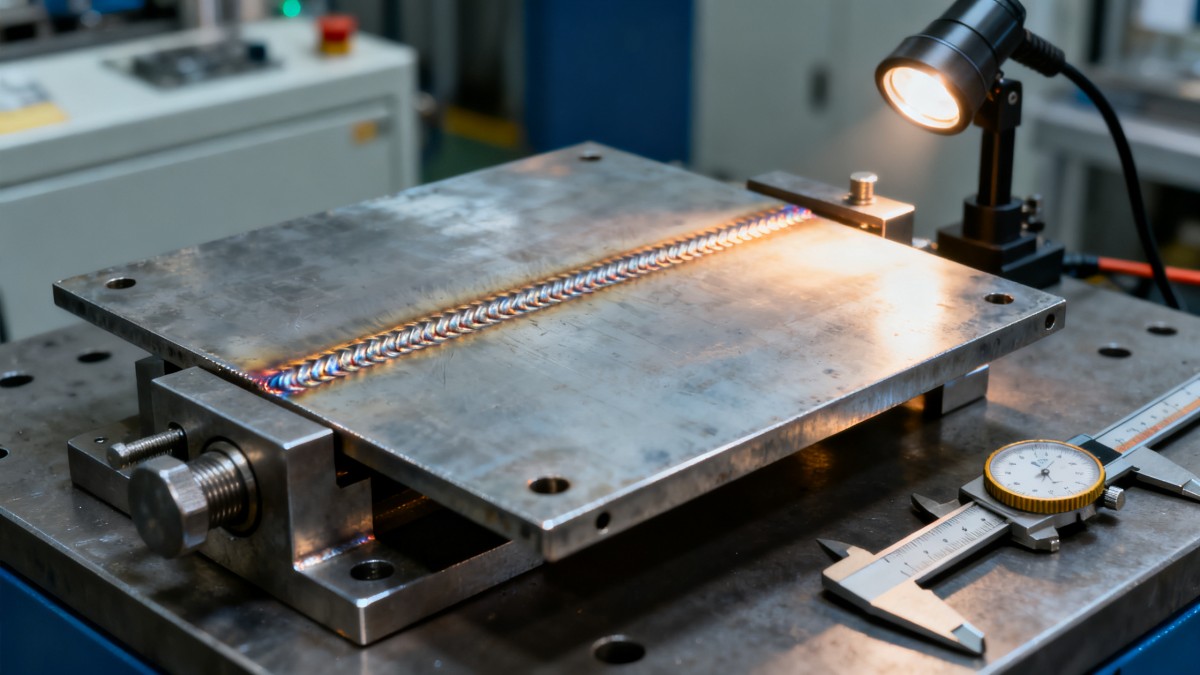
Sheet metal welding is sensitive because thin materials react quickly to heat, gaps, contamination, and fixture errors.
A checklist helps teams identify repeatable risks before they become cosmetic defects, structural failures, or shipment delays.
In commercial furniture, retail displays, lighting housings, signage frames, and consumer product shells, consistent weld quality supports both performance and appearance.
Checklist-based sheet metal welding control also improves supplier benchmarking against common standards, customer drawings, and internal acceptance criteria.
Core Sheet Metal Welding Defects to Check First
The most common sheet metal welding defects usually come from heat imbalance, poor preparation, unstable parameters, or weak process discipline.
- Check porosity by looking for pinholes, scattered surface pits, or gas pockets revealed during grinding, bending, or pressure-related inspection.
- Identify lack of fusion by examining weld toes, joint edges, and root areas where molten metal failed to bond properly.
- Inspect burn-through on thin panels where excess current, slow travel, or oversized gaps created holes or collapsed weld sections.
- Review undercut along weld edges, especially where aggressive travel speed or high heat reduced the base metal thickness.
- Measure distortion after welding because panel warping can affect assembly fit, visible alignment, and downstream coating quality.
- Confirm spatter levels around the joint, since heavy spatter may indicate unstable arc control, wrong gas settings, or contaminated material.
- Look for cracks near starts, stops, corners, and highly restrained areas where cooling stress concentrates after sheet metal welding.
Main Causes Behind Sheet Metal Welding Defects
Defects rarely appear randomly. Most sheet metal welding failures can be traced to a small group of process causes.
Poor Surface Preparation
Oil, zinc residue, paint, moisture, oxide, and cutting lubricant can create gas pockets and weak fusion zones.
Clean the joint area before welding, and verify that storage conditions do not reintroduce moisture or corrosion.
Incorrect Heat Input
Too much heat causes burn-through, excessive penetration, distortion, and brittle heat-affected zones on thin sheets.
Too little heat causes cold lap, lack of fusion, incomplete penetration, and fragile joints under repeated loading.
Unstable Fit-Up and Gaps
Sheet metal welding depends heavily on consistent joint fit-up because small gaps change penetration and puddle behavior.
Use reliable fixtures, consistent edge preparation, and defined gap tolerances before starting production welding.
Wrong Shielding Gas or Flow
Insufficient shielding allows air to enter the weld pool, causing porosity, oxidation, and rough bead appearance.
Excessive gas flow can also draw air into the arc, especially around corners or open workshop drafts.
Practical Inspection Checklist for Sheet Metal Welding
A strong inspection routine combines visual checks, dimensional checks, and targeted testing based on product risk.
- Verify material grade, thickness, coating status, and drawing requirements before welding begins, not after defects appear.
- Confirm joint cleaning by checking both sides of the weld zone for oil, oxide, moisture, and cutting residue.
- Measure fit-up gaps with gauges or visual standards, especially on lap joints, corners, brackets, and cabinet seams.
- Record welding current, voltage, travel speed, wire type, gas flow, and torch angle during first-piece approval.
- Inspect bead shape for uniform width, smooth transition, complete edge wetting, and absence of excessive reinforcement.
- Check distortion after cooling, since hot measurements may hide panel bowing, twist, or assembly mismatch.
- Perform bend, peel, macro, leak, or load tests when visual inspection cannot confirm internal weld integrity.
- Document defects with location, probable cause, corrective action, and recurrence status for supplier and process tracking.
Prevention Methods That Reduce Rework
Prevention is more reliable than sorting finished parts. Sheet metal welding control should start before the arc is struck.
- Standardize joint design so operators work with stable gaps, accessible weld paths, and practical torch angles.
- Use tack welds strategically to hold thin panels in position without creating hard points or visible distortion.
- Apply intermittent welding, back-step sequencing, or balanced welding patterns to reduce accumulated heat and panel warping.
- Select filler wire and shielding gas that match material thickness, corrosion requirements, and surface finish expectations.
- Maintain contact tips, nozzles, cables, clamps, and grounding points to prevent unstable arcs and inconsistent penetration.
- Train welding operators with defect samples, acceptance photos, and clear repair limits for each product category.
For repeat orders, keep a proven welding procedure record. Include parameters, fixture notes, inspection results, and repair history.
This makes sheet metal welding performance easier to compare across workshops, suppliers, production lines, and product revisions.
Scenario Notes for Commercial and Consumer Applications
Commercial Furniture and Fixtures
Welded brackets, frames, shelving, and display structures must carry loads while maintaining clean visible lines.
In these products, sheet metal welding defects can affect stability, powder coating coverage, and perceived build quality.
Retail Technology Housings
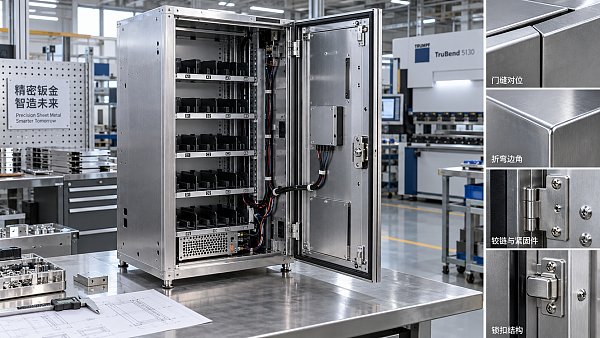
POS terminals, kiosks, sensor housings, and access control cabinets often require tight dimensions and controlled heat input.
Distortion may interfere with electronics installation, gasket sealing, screen alignment, or enclosure certification requirements.
Lighting, Signage, and Decorative Metalwork
Lighting boxes, channel letters, and decorative panels are highly sensitive to burn marks, spatter, and surface waviness.
For visible components, sheet metal welding prevention should include heat control, grinding limits, and coating compatibility checks.
Commonly Overlooked Risks
Hidden coating effects: Galvanized, aluminized, or pre-coated sheets can release fumes and create porosity if not prepared correctly.
Over-grinding repairs: Aggressive grinding may remove reinforcement, thin the base metal, and hide the real cause of the defect.
Fixture wear: Locating pins, clamps, and stops gradually loosen, changing fit-up and increasing sheet metal welding variation.
Uncontrolled repair welding: Repeated rework increases heat input, distortion, hardness changes, and the risk of secondary cracks.
Cosmetic-only inspection: A smooth bead does not always confirm penetration, fusion, or load-bearing reliability.
Execution Tips for Consistent Sheet Metal Welding Quality
Start with a first-piece weld review whenever material batch, operator, fixture, welding machine, or product revision changes.
Use defect boards that show acceptable and unacceptable examples for porosity, burn-through, undercut, cracks, and distortion.
Set repair limits before production. Define when parts may be repaired, downgraded, scrapped, or escalated for engineering review.
Track recurring defects by product, joint type, operator, machine, material batch, and shift to find process patterns.
Use supplier audits to compare welding procedures, inspection records, equipment maintenance, and acceptance criteria against product risk.
For global sourcing, connect sheet metal welding inspection requirements with UL, CE, BIFMA, corrosion, load, and appearance expectations where applicable.
Summary and Action Guide
Sheet metal welding defects are preventable when causes, checks, and corrective actions are managed as one system.
The highest-value actions are simple: clean the joint, control heat, stabilize fit-up, verify parameters, and document results.
For commercial fixtures, consumer goods, retail technology, lighting, and signage, weld quality influences safety and brand perception.
Build a checklist around real defects, not generic inspection language. Link every defect to cause, prevention, and verification.
The next step is to review current sheet metal welding records, identify the top three recurring defects, and update the inspection checklist accordingly.
News Recommendations
 What records are needed for an ISO 9001 furniture factory audit?
![51a6ab95581761cc26f4318be6520c15]()
Aris Katos
Future of Carbide Coatings
 How to choose AI marketing tools that work with your existing CRM
![51a6ab95581761cc26f4318be6520c15]()
Aris Katos
Future of Carbide Coatings
 Do freight costs erase savings when buying retail fixtures wholesale?
![51a6ab95581761cc26f4318be6520c15]()
Aris Katos
Future of Carbide Coatings
 Can smart retail IT solutions for CPG work with legacy POS systems?
![51a6ab95581761cc26f4318be6520c15]()
Aris Katos
Future of Carbide Coatings
 What permit approvals belong in a commercial fitout planning checklist?
![51a6ab95581761cc26f4318be6520c15]()
Aris Katos
Future of Carbide Coatings
 How Does Commercial Design Differ from Interior Decoration?
![51a6ab95581761cc26f4318be6520c15]()
Aris Katos
Future of Carbide Coatings
 How Long Does It Take to Verify a Commercial Furniture Supplier?
![51a6ab95581761cc26f4318be6520c15]()
Aris Katos
Future of Carbide Coatings
 How to verify compostability claims from a bubble mailer manufacturer
![51a6ab95581761cc26f4318be6520c15]()
Aris Katos
Future of Carbide Coatings
 Will commercial smart infrastructure solutions work with legacy systems?
![51a6ab95581761cc26f4318be6520c15]()
Aris Katos
Future of Carbide Coatings
 How to verify a preschool furniture manufacturer's safety standards
![51a6ab95581761cc26f4318be6520c15]()
Aris Katos
Future of Carbide Coatings
 A technical comparison of semiconductor processes for power devices
![51a6ab95581761cc26f4318be6520c15]()
Aris Katos
Future of Carbide Coatings
 How to verify that a BIFMA ergonomic chair meets the standard
![51a6ab95581761cc26f4318be6520c15]()
Aris Katos
Future of Carbide Coatings
 How to use a CRI value chart when choosing LED lighting
![51a6ab95581761cc26f4318be6520c15]()
Aris Katos
Future of Carbide Coatings
 How to compare hotel aroma diffuser wholesale options by coverage area
![51a6ab95581761cc26f4318be6520c15]()
Aris Katos
Future of Carbide Coatings
 How to prevent O-rings and seals from failing in food equipment
![51a6ab95581761cc26f4318be6520c15]()
Aris Katos
Future of Carbide Coatings
 How to compare commercial linear light wholesale quotes accurately
![51a6ab95581761cc26f4318be6520c15]()
Aris Katos
Future of Carbide Coatings
 How to verify international standards compliance for Middle East exports
![51a6ab95581761cc26f4318be6520c15]()
Aris Katos
Future of Carbide Coatings
 How to select laboratory instruments for reproducible test results
![51a6ab95581761cc26f4318be6520c15]()
Aris Katos
Future of Carbide Coatings
 When does a sheet metal prototype reveal design flaws early?
![51a6ab95581761cc26f4318be6520c15]()
Aris Katos
Future of Carbide Coatings
 When PE air column bags reduce damage in e-commerce fulfillment
![51a6ab95581761cc26f4318be6520c15]()
Aris Katos
Future of Carbide Coatings
 How energy-efficient design reduces operating costs in retail lighting
![51a6ab95581761cc26f4318be6520c15]()
Aris Katos
Future of Carbide Coatings
 When commercial aluminum storefronts make sense for a retail renovation
![51a6ab95581761cc26f4318be6520c15]()
Aris Katos
Future of Carbide Coatings
 What makes LED lights durable in high-use commercial spaces?
![51a6ab95581761cc26f4318be6520c15]()
Aris Katos
Future of Carbide Coatings
 Which industry categories offer the strongest export potential in Latin America?
![51a6ab95581761cc26f4318be6520c15]()
Aris Katos
Future of Carbide Coatings
 How to choose an ultra bright waterproof window display for storefronts
![51a6ab95581761cc26f4318be6520c15]()
Aris Katos
Future of Carbide Coatings
 How to verify suppliers on a trade portal for global sourcing
![51a6ab95581761cc26f4318be6520c15]()
Aris Katos
Future of Carbide Coatings
 How RoHS requirements should be stated in product specifications
![51a6ab95581761cc26f4318be6520c15]()
Aris Katos
Future of Carbide Coatings
 What affects the lead time for custom retail counter displays?
![51a6ab95581761cc26f4318be6520c15]()
Aris Katos
Future of Carbide Coatings
 What consumer packaging USA importers need to verify before ordering
![51a6ab95581761cc26f4318be6520c15]()
Aris Katos
Future of Carbide Coatings
 How commercial spaces interiors shape customer dwell time
![51a6ab95581761cc26f4318be6520c15]()
Aris Katos
Future of Carbide Coatings
 How LED commercial lighting design reduces glare in retail spaces
![51a6ab95581761cc26f4318be6520c15]()
Aris Katos
Future of Carbide Coatings
 How industrial technology information improves RFID inventory accuracy
![51a6ab95581761cc26f4318be6520c15]()
Aris Katos
Future of Carbide Coatings
 When drip garden watering systems make more sense than sprinklers
![51a6ab95581761cc26f4318be6520c15]()
Aris Katos
Future of Carbide Coatings
 When category comparison improves sourcing for industrial applications
![51a6ab95581761cc26f4318be6520c15]()
Aris Katos
Future of Carbide Coatings
 Industrial application guidance for selecting the right LED lighting
![51a6ab95581761cc26f4318be6520c15]()
Aris Katos
Future of Carbide Coatings
 Which commercial architecture standards apply to European retail fit-outs?
![51a6ab95581761cc26f4318be6520c15]()
Aris Katos
Future of Carbide Coatings
 How to verify FDA requirements for maternity care products
![51a6ab95581761cc26f4318be6520c15]()
Aris Katos
Future of Carbide Coatings
 How to verify BPA-free claims for food-contact products
![51a6ab95581761cc26f4318be6520c15]()
Aris Katos
Future of Carbide Coatings
 When does a European wholesale supplier suit modular office projects?
![51a6ab95581761cc26f4318be6520c15]()
Aris Katos
Future of Carbide Coatings