Japan's ¥11.7 Trillion FX Intervention Boosts Chinese LED Signage Exports
Time
Click Count
From May 28 to May 30, 2026, the Bank of Japan conducted intensive foreign exchange interventions, purchasing ¥11.7 trillion in yen—driving the JPY/CNY exchange rate up by over 4.2%. This monetary shift is reshaping procurement dynamics for architectural LED lighting and 3D channel letters & signs in the Japanese market, with direct implications for Chinese exporters.
Confirmed Intervention and Exchange Rate Movement
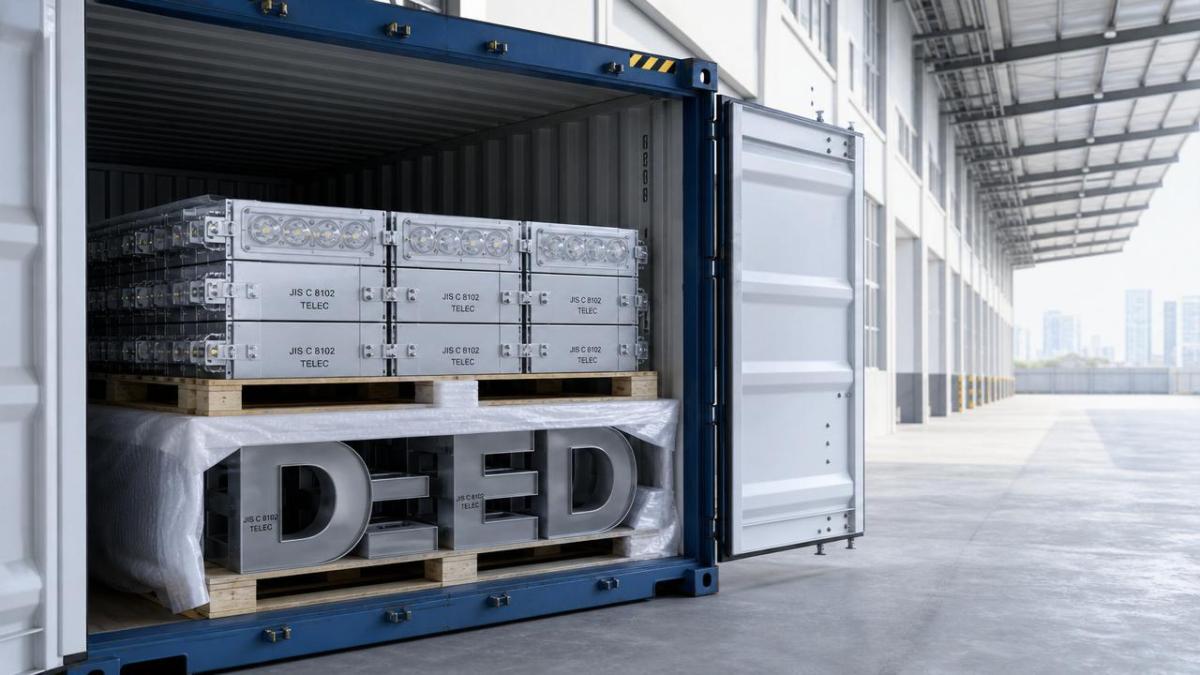
In late May 2026, the Bank of Japan executed consecutive large-scale foreign exchange interventions, acquiring a total of ¥11.7 trillion in yen during the month. As a result, the Japanese yen appreciated more than 4.2% against the Chinese yuan. This appreciation enhanced Japanese importers’ purchasing power for high-value commercial lighting and signage products manufactured in China—including Architectural LED Lighting and 3D Channel Letters & Signs—and increased their preference for shorter payment terms. The benefit particularly applies to Chinese suppliers holding valid JIS and TELEC certifications.
Impact Across Supply Chain Roles
Direct Exporters
Export-oriented enterprises face improved pricing leverage and stronger negotiation positions due to yen strength, but must respond rapidly to rising demand for faster order fulfillment and tighter credit terms. Quotation cycles and contract terms—especially payment schedules—are now under closer scrutiny.
Raw Material Procurement Firms
Suppliers of key components (e.g., drivers, aluminum extrusions, silicone seals) may experience accelerated order volumes from certified manufacturers preparing for Japanese tenders. However, they must ensure traceability and compliance documentation aligns with JIS/TELEC requirements for downstream certification validity.
Contract Manufacturers & OEMs
Firms producing under private labels or OEM agreements for Japanese clients are seeing renewed interest in higher-margin, specification-driven products. They need to verify that production batches meet JIS C 8102 (LED luminaires) and TELEC radio wave conformity criteria—not just at sample stage but across full production runs.
Supply Chain Service Providers
Logistics, customs brokerage, and technical documentation support providers must adapt to tighter delivery windows and heightened documentation rigor—particularly for pre-shipment verification reports, bilingual test certificates, and JIS-compliant labeling formats.
Key Priorities for Chinese Suppliers
Validate and Renew JIS/TELEC Certification Status
Only suppliers with current, scope-aligned JIS and TELEC certifications qualify for the immediate procurement advantage. Firms should confirm certificate validity, review scope coverage for specific product categories (e.g., outdoor-rated channel letters), and initiate renewal processes well ahead of anticipated order surges.
Align Technical Documentation with Japanese Market Requirements
Japanese buyers increasingly request Japanese-language technical manuals, safety warnings compliant with JIS Z 8141, and photometric test reports per JIS C 8150. Preparing these in advance shortens time-to-quote and supports faster tender responses.
Optimize Order Fulfillment and Payment Terms
With Japanese importers favoring shorter accounts receivable cycles, suppliers should assess working capital readiness, explore export factoring options, and revise standard Incoterms (e.g., shifting from DAP to DPU where feasible) to balance risk and responsiveness.
Industry Perspective: Beyond Short-Term Currency Gains
Analysis shows this intervention is not merely a cyclical FX event—it signals a structural recalibration in Japan’s import procurement strategy for energy-efficient commercial lighting. Observably, Japanese distributors and system integrators are prioritizing certified, ready-to-install solutions over custom-engineered imports, reducing technical bid alignment complexity but raising the bar for pre-qualification. What deserves closer attention is how quickly non-certified manufacturers can bridge the JIS/TELEC gap: typical certification timelines exceed 12 weeks, meaning only firms with active programs will capture near-term opportunities. It is more appropriate to understand this as a catalyst for compliance maturity—not just a pricing tailwind.
Strategic Takeaway for the Sector
This intervention underscores that regulatory preparedness—not just cost competitiveness—now defines export viability in premium Asian markets. For Chinese LED signage and architectural lighting manufacturers, sustained access to Japan hinges less on exchange-rate timing and more on embedded compliance capability, documentation discipline, and responsive supply chain design.
Source Attribution
This article was generated exclusively from the user-provided title, event timeframe (May 28–30, 2026), and summary. Specific official source links were not provided in the input and should be verified continuously. Ongoing monitoring is recommended for updates on JIS enforcement guidance, TELEC revision notices, Japanese public procurement announcements, and industry feedback on revised payment term expectations.
News Recommendations
 What records are needed for an ISO 9001 furniture factory audit?
![51a6ab95581761cc26f4318be6520c15]()
Aris Katos
Future of Carbide Coatings
 How to choose AI marketing tools that work with your existing CRM
![51a6ab95581761cc26f4318be6520c15]()
Aris Katos
Future of Carbide Coatings
 Do freight costs erase savings when buying retail fixtures wholesale?
![51a6ab95581761cc26f4318be6520c15]()
Aris Katos
Future of Carbide Coatings
 Can smart retail IT solutions for CPG work with legacy POS systems?
![51a6ab95581761cc26f4318be6520c15]()
Aris Katos
Future of Carbide Coatings
 What permit approvals belong in a commercial fitout planning checklist?
![51a6ab95581761cc26f4318be6520c15]()
Aris Katos
Future of Carbide Coatings
 How Does Commercial Design Differ from Interior Decoration?
![51a6ab95581761cc26f4318be6520c15]()
Aris Katos
Future of Carbide Coatings
 How Long Does It Take to Verify a Commercial Furniture Supplier?
![51a6ab95581761cc26f4318be6520c15]()
Aris Katos
Future of Carbide Coatings
 How to verify compostability claims from a bubble mailer manufacturer
![51a6ab95581761cc26f4318be6520c15]()
Aris Katos
Future of Carbide Coatings
 Will commercial smart infrastructure solutions work with legacy systems?
![51a6ab95581761cc26f4318be6520c15]()
Aris Katos
Future of Carbide Coatings
 How to verify a preschool furniture manufacturer's safety standards
![51a6ab95581761cc26f4318be6520c15]()
Aris Katos
Future of Carbide Coatings
 A technical comparison of semiconductor processes for power devices
![51a6ab95581761cc26f4318be6520c15]()
Aris Katos
Future of Carbide Coatings
 How to verify that a BIFMA ergonomic chair meets the standard
![51a6ab95581761cc26f4318be6520c15]()
Aris Katos
Future of Carbide Coatings
 How to use a CRI value chart when choosing LED lighting
![51a6ab95581761cc26f4318be6520c15]()
Aris Katos
Future of Carbide Coatings
 How to compare hotel aroma diffuser wholesale options by coverage area
![51a6ab95581761cc26f4318be6520c15]()
Aris Katos
Future of Carbide Coatings
 How to prevent O-rings and seals from failing in food equipment
![51a6ab95581761cc26f4318be6520c15]()
Aris Katos
Future of Carbide Coatings
 How to compare commercial linear light wholesale quotes accurately
![51a6ab95581761cc26f4318be6520c15]()
Aris Katos
Future of Carbide Coatings
 How to verify international standards compliance for Middle East exports
![51a6ab95581761cc26f4318be6520c15]()
Aris Katos
Future of Carbide Coatings
 How to select laboratory instruments for reproducible test results
![51a6ab95581761cc26f4318be6520c15]()
Aris Katos
Future of Carbide Coatings
 When does a sheet metal prototype reveal design flaws early?
![51a6ab95581761cc26f4318be6520c15]()
Aris Katos
Future of Carbide Coatings
 When PE air column bags reduce damage in e-commerce fulfillment
![51a6ab95581761cc26f4318be6520c15]()
Aris Katos
Future of Carbide Coatings
 How energy-efficient design reduces operating costs in retail lighting
![51a6ab95581761cc26f4318be6520c15]()
Aris Katos
Future of Carbide Coatings
 When commercial aluminum storefronts make sense for a retail renovation
![51a6ab95581761cc26f4318be6520c15]()
Aris Katos
Future of Carbide Coatings
 What makes LED lights durable in high-use commercial spaces?
![51a6ab95581761cc26f4318be6520c15]()
Aris Katos
Future of Carbide Coatings
 Which industry categories offer the strongest export potential in Latin America?
![51a6ab95581761cc26f4318be6520c15]()
Aris Katos
Future of Carbide Coatings
 How to choose an ultra bright waterproof window display for storefronts
![51a6ab95581761cc26f4318be6520c15]()
Aris Katos
Future of Carbide Coatings
 How to verify suppliers on a trade portal for global sourcing
![51a6ab95581761cc26f4318be6520c15]()
Aris Katos
Future of Carbide Coatings
 How RoHS requirements should be stated in product specifications
![51a6ab95581761cc26f4318be6520c15]()
Aris Katos
Future of Carbide Coatings
 What affects the lead time for custom retail counter displays?
![51a6ab95581761cc26f4318be6520c15]()
Aris Katos
Future of Carbide Coatings
 What consumer packaging USA importers need to verify before ordering
![51a6ab95581761cc26f4318be6520c15]()
Aris Katos
Future of Carbide Coatings
 How commercial spaces interiors shape customer dwell time
![51a6ab95581761cc26f4318be6520c15]()
Aris Katos
Future of Carbide Coatings
 How LED commercial lighting design reduces glare in retail spaces
![51a6ab95581761cc26f4318be6520c15]()
Aris Katos
Future of Carbide Coatings
 How industrial technology information improves RFID inventory accuracy
![51a6ab95581761cc26f4318be6520c15]()
Aris Katos
Future of Carbide Coatings
 When drip garden watering systems make more sense than sprinklers
![51a6ab95581761cc26f4318be6520c15]()
Aris Katos
Future of Carbide Coatings
 When category comparison improves sourcing for industrial applications
![51a6ab95581761cc26f4318be6520c15]()
Aris Katos
Future of Carbide Coatings
 Industrial application guidance for selecting the right LED lighting
![51a6ab95581761cc26f4318be6520c15]()
Aris Katos
Future of Carbide Coatings
 Which commercial architecture standards apply to European retail fit-outs?
![51a6ab95581761cc26f4318be6520c15]()
Aris Katos
Future of Carbide Coatings
 How to verify FDA requirements for maternity care products
![51a6ab95581761cc26f4318be6520c15]()
Aris Katos
Future of Carbide Coatings
 How to verify BPA-free claims for food-contact products
![51a6ab95581761cc26f4318be6520c15]()
Aris Katos
Future of Carbide Coatings
 When does a European wholesale supplier suit modular office projects?
![51a6ab95581761cc26f4318be6520c15]()
Aris Katos
Future of Carbide Coatings