Home Control Systems: Key Features Worth Comparing
Time
Click Count
Choosing the right home control system can make everyday living simpler, safer, and more energy efficient—but not all platforms offer the same experience. From smart lighting and climate automation to security integration, voice assistants, app usability, and device compatibility, consumers need to compare features that truly match their lifestyle. This guide highlights the key home control capabilities worth evaluating before investing, helping you understand what matters most for comfort, convenience, long-term value, and a connected home that works reliably for your needs.
What Does a Home Control System Actually Need to Manage?
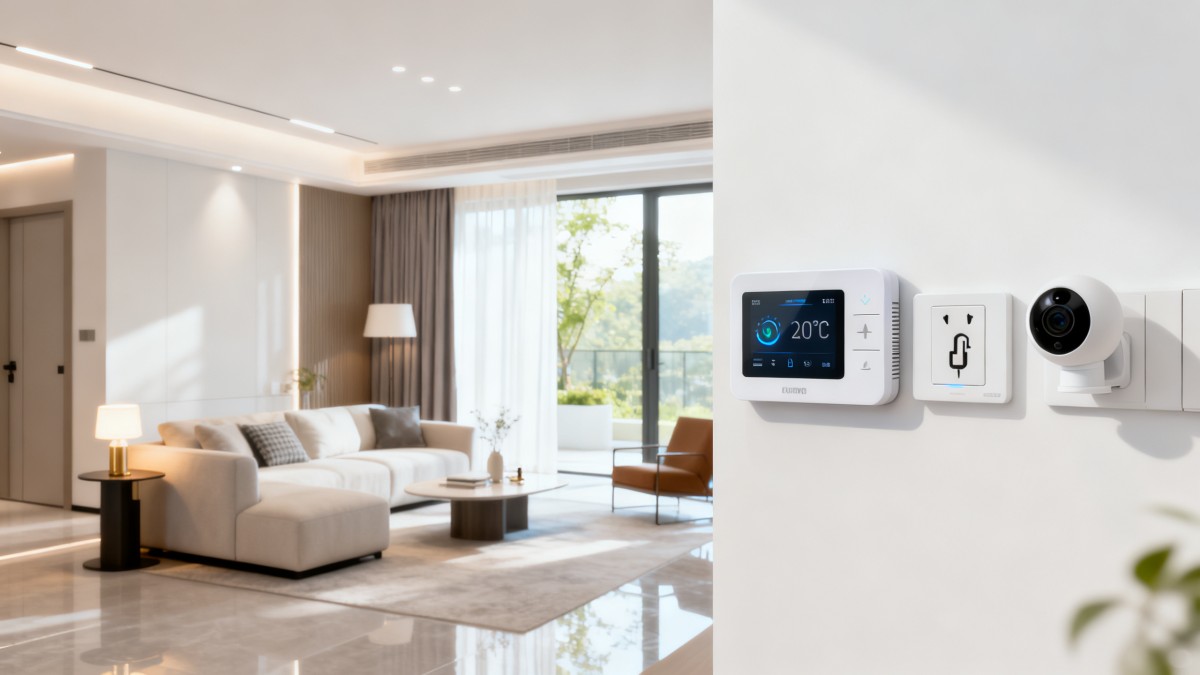
A modern home control system is not just a remote switch for lights. It is a connected layer that coordinates devices, sensors, user preferences, and daily routines through one interface.
For consumers, the main value of home control is reducing small daily decisions. The system should help your home respond automatically, not force you to manage another complicated app.
The challenge is that smart home products come from many categories. Lighting, HVAC, door locks, cameras, appliances, shades, speakers, and energy monitors may follow different communication protocols.
Core Areas Worth Connecting First
- Lighting control for dimming, schedules, motion response, scene presets, and lower standby waste in rooms used at different times.
- Climate control for thermostats, air conditioning, ventilation, humidity, and room-by-room comfort without constant manual adjustment.
- Security control for smart locks, cameras, contact sensors, alarms, video doorbells, and alerts during travel or nighttime hours.
- Entertainment control for speakers, displays, streaming devices, and media scenes that integrate with lighting or shades.
- Energy control for smart plugs, meters, solar integration, battery storage visibility, and alerts when usage exceeds normal patterns.
G-BCE evaluates smart retail technology, commercial lighting, fixtures, and connected hardware across global supply chains. That perspective is useful for home control because consumer systems increasingly borrow reliability expectations from commercial spaces.
Which Home Control Features Should Consumers Compare First?
Most shoppers start with device lists, but the better approach is to compare how each home control platform behaves in real life. Daily usability matters more than impressive packaging claims.
The table below organizes the main home control features by practical consumer decision points. Use it before comparing brands, bundles, or installer quotations.
A good home control platform should balance openness, stability, and ease of use. A system that supports many devices but creates confusing automations may disappoint quickly.
How Do Different Home Control Architectures Compare?
Home control systems generally fall into three practical categories: DIY app-based setups, hub-centered systems, and professionally integrated solutions. Each approach has strengths and trade-offs.
Consumers with small apartments may prioritize simple setup. Families in larger homes often need stronger networking, consistent scenes, and better device management over time.
The lowest-priced home control solution is not always the lowest-cost option over several years. Replacement devices, subscriptions, service visits, and compatibility gaps can change the total value.
When a Professional System Makes Sense
Professional integration becomes more attractive when home control affects safety, privacy, or permanent building systems. Hardwired lighting, motorized shades, and access control deserve careful planning.
G-BCE’s benchmarking mindset reflects the commercial world, where components are judged by lifecycle performance, compliance awareness, installation practicality, and user experience rather than features alone.
What Technical Performance Details Are Worth Checking?
Technical details can feel intimidating, yet a few performance factors strongly influence whether home control feels smooth or frustrating. Focus on reliability, latency, security, and support.
Connectivity and Response Time
A light that turns on two seconds late feels broken, even if the hardware is technically working. Local processing usually improves response for common home control scenes.
Wi-Fi devices are easy to install, but too many low-cost devices can overload a weak router. Mesh networking through Zigbee or Z-Wave may improve sensor coverage.
Privacy and Cybersecurity
- Check whether the home control app supports two-factor authentication and separate user permissions for family members, guests, or service providers.
- Review how video, audio, and occupancy data are stored, especially if cameras, microphones, or presence sensors are included.
- Prefer products that receive firmware updates and publish clear privacy policies rather than relying only on attractive device pricing.
Power, Backup, and Failure Behavior
Ask what happens during an internet outage, power cut, or app service disruption. Locks, lights, alarms, and thermostats should remain usable through physical controls.
For consumers in regions with unstable power, battery backup for hubs, routers, security panels, and selected sensors can be more valuable than adding extra features.
How Should You Match Home Control to Daily Scenarios?
The best home control choice depends on routines, property type, family size, and comfort priorities. A useful comparison begins with scenes, not product categories.
Below is a scenario-based view that helps consumers avoid overbuying. It also clarifies which features should be installed early and which can be added later.
Scenario matching prevents a common mistake: buying devices because they are popular, then discovering they do not solve the household’s actual inconvenience, safety concern, or energy issue.
What Budget and Long-Term Cost Factors Should You Consider?
Home control cost includes more than the first device purchase. Consumers should estimate hardware, installation, subscriptions, accessories, maintenance, and future expansion.
Cost Items That Are Easy to Miss
- Network upgrades may be needed when cameras, speakers, hubs, and many Wi-Fi devices compete for stable connectivity.
- Cloud storage fees can affect the long-term cost of security cameras, doorbells, event history, and advanced recognition features.
- Professional labor may be necessary for smart switches, electrical panels, motorized shades, or integrated HVAC control.
- Replacement batteries, bridge devices, mounting accessories, and extended warranties can make a budget system less inexpensive.
A staged approach often works best. Start with a stable platform, add high-impact devices, measure daily usefulness, then expand home control only where automation saves time or improves safety.
The most valuable home control investment is usually the one that remains understandable. If only one person can operate the system, the household experience is fragile.
Which Standards, Certifications, and Compliance Signals Matter?
Consumers do not need to become compliance experts, but certification awareness helps avoid unsafe power products, unreliable imports, or devices unsuitable for local electrical conditions.
G-BCE frequently references international benchmarks such as UL, CE, and BIFMA in commercial evaluation contexts. For home control, similar caution applies to electrical safety, wireless compliance, and product documentation.
Signals to Review Before Purchase
- Check whether plugs, switches, power supplies, and controllers carry applicable safety marks for your market.
- Confirm voltage, load rating, dimmer compatibility, and installation requirements before buying wall-mounted electrical devices.
- Look for clear manuals, update policies, privacy documentation, and accessible technical support channels.
- Avoid mixing products that cannot communicate reliably unless you accept separate apps and manual routines.
Certification does not guarantee perfect performance, but it reduces avoidable risk. It is especially important for devices connected to mains power, locks, cameras, and heating equipment.
Common Home Control Mistakes and FAQ
Many home control problems are not caused by bad products. They often come from unclear goals, weak networks, poor installation timing, or incompatible device choices.
How do I choose a home control system for a first smart home?
Start with three needs: lighting convenience, climate comfort, and basic security. Choose a platform that supports common protocols and can grow without replacing every device.
Is voice control enough for a connected home?
Voice control is convenient, but it is not a full home control strategy. Good systems also use schedules, sensors, wall controls, app dashboards, and backup manual operation.
What is the biggest mistake when buying smart home devices?
The biggest mistake is buying isolated devices before choosing an ecosystem. This can create duplicated apps, weak automations, and expensive compatibility issues later.
Can home control help reduce energy use?
Yes, when automation is practical. Smart thermostats, occupancy sensors, dimming schedules, and appliance monitoring can reduce waste, but savings depend on habits, climate, and equipment efficiency.
Should I install everything at once?
Not always. A phased plan lets you test usability, refine scenes, and avoid overspending. Full installation makes sense during renovation, new construction, or major electrical work.
Why Choose G-BCE for Home Control Decision Support?
Home control decisions now sit at the intersection of consumer electronics, building systems, lighting, security, supply chains, and user experience. That is where structured comparison becomes valuable.
G-BCE brings a cross-sector benchmarking view shaped by commercial fixtures, smart retail technology, lighting, sustainable materials, and international sourcing standards. This helps consumers ask better questions before committing.
What You Can Consult Before Buying
- Parameter confirmation for compatibility, load ratings, wireless protocols, network planning, power backup, and installation requirements.
- Product selection support for lighting control, climate automation, security devices, hubs, sensors, and staged upgrade planning.
- Delivery cycle and sourcing discussion when a project involves multiple device categories, renovation schedules, or coordinated procurement.
- Custom solution review for apartments, family homes, premium residences, mixed-use spaces, and connected consumer environments.
- Certification requirement checks for electrical products, connected hardware, documentation expectations, and market-specific compliance signals.
- Sample support and quotation communication when comparing suppliers, evaluating product consistency, or planning a phased home control rollout.
Before choosing a home control platform, define your rooms, routines, risks, and budget. Then compare systems by compatibility, reliability, privacy, compliance, and future expansion.
If you need help reviewing options, G-BCE can support structured product comparison, technical requirement clarification, sourcing communication, and practical decision guidance for a connected home that fits your real life.
News Recommendations
 What records are needed for an ISO 9001 furniture factory audit?
![51a6ab95581761cc26f4318be6520c15]()
Aris Katos
Future of Carbide Coatings
 How to choose AI marketing tools that work with your existing CRM
![51a6ab95581761cc26f4318be6520c15]()
Aris Katos
Future of Carbide Coatings
 Do freight costs erase savings when buying retail fixtures wholesale?
![51a6ab95581761cc26f4318be6520c15]()
Aris Katos
Future of Carbide Coatings
 Can smart retail IT solutions for CPG work with legacy POS systems?
![51a6ab95581761cc26f4318be6520c15]()
Aris Katos
Future of Carbide Coatings
 What permit approvals belong in a commercial fitout planning checklist?
![51a6ab95581761cc26f4318be6520c15]()
Aris Katos
Future of Carbide Coatings
 How Does Commercial Design Differ from Interior Decoration?
![51a6ab95581761cc26f4318be6520c15]()
Aris Katos
Future of Carbide Coatings
 How Long Does It Take to Verify a Commercial Furniture Supplier?
![51a6ab95581761cc26f4318be6520c15]()
Aris Katos
Future of Carbide Coatings
 How to verify compostability claims from a bubble mailer manufacturer
![51a6ab95581761cc26f4318be6520c15]()
Aris Katos
Future of Carbide Coatings
 Will commercial smart infrastructure solutions work with legacy systems?
![51a6ab95581761cc26f4318be6520c15]()
Aris Katos
Future of Carbide Coatings
 How to verify a preschool furniture manufacturer's safety standards
![51a6ab95581761cc26f4318be6520c15]()
Aris Katos
Future of Carbide Coatings
 A technical comparison of semiconductor processes for power devices
![51a6ab95581761cc26f4318be6520c15]()
Aris Katos
Future of Carbide Coatings
 How to verify that a BIFMA ergonomic chair meets the standard
![51a6ab95581761cc26f4318be6520c15]()
Aris Katos
Future of Carbide Coatings
 How to use a CRI value chart when choosing LED lighting
![51a6ab95581761cc26f4318be6520c15]()
Aris Katos
Future of Carbide Coatings
 How to compare hotel aroma diffuser wholesale options by coverage area
![51a6ab95581761cc26f4318be6520c15]()
Aris Katos
Future of Carbide Coatings
 How to prevent O-rings and seals from failing in food equipment
![51a6ab95581761cc26f4318be6520c15]()
Aris Katos
Future of Carbide Coatings
 How to compare commercial linear light wholesale quotes accurately
![51a6ab95581761cc26f4318be6520c15]()
Aris Katos
Future of Carbide Coatings
 How to verify international standards compliance for Middle East exports
![51a6ab95581761cc26f4318be6520c15]()
Aris Katos
Future of Carbide Coatings
 How to select laboratory instruments for reproducible test results
![51a6ab95581761cc26f4318be6520c15]()
Aris Katos
Future of Carbide Coatings
 When does a sheet metal prototype reveal design flaws early?
![51a6ab95581761cc26f4318be6520c15]()
Aris Katos
Future of Carbide Coatings
 When PE air column bags reduce damage in e-commerce fulfillment
![51a6ab95581761cc26f4318be6520c15]()
Aris Katos
Future of Carbide Coatings
 How energy-efficient design reduces operating costs in retail lighting
![51a6ab95581761cc26f4318be6520c15]()
Aris Katos
Future of Carbide Coatings
 When commercial aluminum storefronts make sense for a retail renovation
![51a6ab95581761cc26f4318be6520c15]()
Aris Katos
Future of Carbide Coatings
 What makes LED lights durable in high-use commercial spaces?
![51a6ab95581761cc26f4318be6520c15]()
Aris Katos
Future of Carbide Coatings
 Which industry categories offer the strongest export potential in Latin America?
![51a6ab95581761cc26f4318be6520c15]()
Aris Katos
Future of Carbide Coatings
 How to choose an ultra bright waterproof window display for storefronts
![51a6ab95581761cc26f4318be6520c15]()
Aris Katos
Future of Carbide Coatings
 How to verify suppliers on a trade portal for global sourcing
![51a6ab95581761cc26f4318be6520c15]()
Aris Katos
Future of Carbide Coatings
 How RoHS requirements should be stated in product specifications
![51a6ab95581761cc26f4318be6520c15]()
Aris Katos
Future of Carbide Coatings
 What affects the lead time for custom retail counter displays?
![51a6ab95581761cc26f4318be6520c15]()
Aris Katos
Future of Carbide Coatings
 What consumer packaging USA importers need to verify before ordering
![51a6ab95581761cc26f4318be6520c15]()
Aris Katos
Future of Carbide Coatings
 How commercial spaces interiors shape customer dwell time
![51a6ab95581761cc26f4318be6520c15]()
Aris Katos
Future of Carbide Coatings
 How LED commercial lighting design reduces glare in retail spaces
![51a6ab95581761cc26f4318be6520c15]()
Aris Katos
Future of Carbide Coatings
 How industrial technology information improves RFID inventory accuracy
![51a6ab95581761cc26f4318be6520c15]()
Aris Katos
Future of Carbide Coatings
 When drip garden watering systems make more sense than sprinklers
![51a6ab95581761cc26f4318be6520c15]()
Aris Katos
Future of Carbide Coatings
 When category comparison improves sourcing for industrial applications
![51a6ab95581761cc26f4318be6520c15]()
Aris Katos
Future of Carbide Coatings
 Industrial application guidance for selecting the right LED lighting
![51a6ab95581761cc26f4318be6520c15]()
Aris Katos
Future of Carbide Coatings
 Which commercial architecture standards apply to European retail fit-outs?
![51a6ab95581761cc26f4318be6520c15]()
Aris Katos
Future of Carbide Coatings
 How to verify FDA requirements for maternity care products
![51a6ab95581761cc26f4318be6520c15]()
Aris Katos
Future of Carbide Coatings
 How to verify BPA-free claims for food-contact products
![51a6ab95581761cc26f4318be6520c15]()
Aris Katos
Future of Carbide Coatings
 When does a European wholesale supplier suit modular office projects?
![51a6ab95581761cc26f4318be6520c15]()
Aris Katos
Future of Carbide Coatings