Height adjustable desk motor reliability under daily heavy use
Time
Click Count
For buyers, facility planners, and daily users, height adjustable desk motor reliability is not just a technical detail—it is one of the clearest predictors of lifecycle cost, user satisfaction, and operational continuity. When desks are raised and lowered many times a day, reliability depends on far more than advertised lift speed. The most dependable systems combine durable motor and gearbox design, stable powder coated steel frames, verified cycle testing, low VOC furniture materials, and compatibility with smart office furniture systems. For heavy-use environments, the right question is not “How fast does it move?” but “How consistently will it perform after thousands of cycles under real working conditions?”
That distinction matters in corporate offices, call centers, design studios, trading floors, healthcare administration, education spaces, and shared work environments, where desks may be used by multiple people across shifts. In these settings, a motor failure is rarely an isolated inconvenience. It can interrupt productivity, trigger maintenance requests, create ergonomic non-compliance, and increase replacement costs across entire furniture programs.
This guide focuses on the real decision criteria behind height adjustable desk motor reliability under daily heavy use. It is written for researchers comparing specifications, operators who depend on stable daily performance, procurement teams assessing long-term value, and commercial evaluators who must balance cost, compliance, and durability. Instead of repeating generic marketing claims, we will look at how to judge reliability in practical, measurable terms.
What does “reliable under daily heavy use” actually mean?

In commercial furniture, reliability means a desk continues to perform safely and consistently after repeated adjustment cycles, sustained loading, and years of routine use. For a height adjustable desk motor, that includes smooth travel, accurate synchronization between lifting columns, acceptable noise levels, stable stopping behavior, and no abnormal overheating or control failure. A desk that works well in a showroom for a few demonstrations may still underperform in a workplace where it is adjusted dozens of times every day.
Heavy use usually involves more than frequency alone. It often includes higher desktop loads, uneven loading from monitors or equipment arms, accidental impacts, longer duty cycles, and variable user behavior. In benching systems or shared desks, the risk is even greater because one workstation may be used continuously by different people with different height preferences. Under these conditions, the reliability of the lifting motor must be evaluated as part of a larger system, not as a standalone component.
For buyers and specifiers, a reliable desk is one that maintains function without frequent service calls. For users, it means the desk responds when needed, without hesitation, wobble, or annoying resets. For facility managers, it means fewer disruptions, less spare parts complexity, and a more predictable total cost of ownership. These perspectives are different, but they all point to the same conclusion: true reliability must be proven across motor, frame, electronics, finish, and material quality.
Why lift speed alone is a poor indicator of desk motor quality
One of the most common mistakes in sourcing is overvaluing lift speed. A fast-moving desk can appear premium, but speed on its own says very little about durability. In some cases, higher speed places greater stress on internal gear systems, synchronization controls, and moving structural parts. Unless the motor system has been designed and tested for that performance level, speed may actually hide long-term weaknesses rather than confirm quality.
What matters more is whether the desk moves at a controlled and repeatable pace under load, without drift, jerking, or imbalance between legs. Commercial users should ask how the desk performs at near-rated capacity, not only when unloaded. A motor that slows significantly, vibrates, or becomes noisy under realistic equipment weight may create service issues long before complete failure occurs.
It is also important to compare duty cycle specifications, thermal protection behavior, and reset frequency. A desk that must pause often to prevent overheating is less suitable for multi-user environments, even if its top speed looks attractive on paper. Procurement teams should treat speed as a secondary convenience feature. The primary benchmark should always be reliable cycle endurance under actual use conditions.
How to evaluate cycle durability in a meaningful way
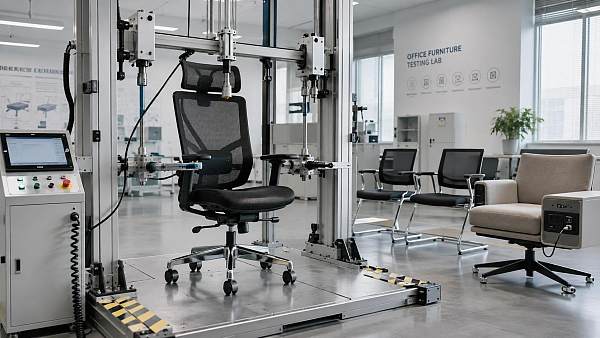
Cycle durability is one of the most useful indicators of height adjustable desk motor reliability, but only if buyers understand what the numbers mean. A “cycle” usually refers to one full up-and-down movement, yet test methods vary by manufacturer. Some tests are performed with light loads, others at rated loads, and some under ideal laboratory conditions that do not reflect commercial reality. That is why cycle claims should never be accepted without context.
Ask whether durability testing was conducted at maximum rated load, how many cycles were completed, what ambient conditions were used, and whether the test included pauses to simulate real duty patterns. A desk intended for heavy-use workplaces should demonstrate stable performance over a high number of cycles with no loss of synchronization, lifting accuracy, or motor responsiveness. If the supplier cannot explain the test method clearly, the headline number is of limited value.
Commercial evaluators should also look for broader evidence beyond a single durability claim. Independent certifications, warranty scope, installed project references, service records, and consistency across production batches all contribute to confidence. In many cases, a desk with slightly lower advertised performance but stronger validation data is the safer investment than one with impressive specifications but weak testing transparency.
Why the frame matters as much as the motor
A desk motor does not operate in isolation. Even a well-engineered motor can perform poorly if paired with a weak or unstable frame. Under daily heavy use, the frame absorbs dynamic load, controls lateral stability, and influences how evenly force is distributed during movement. If the structure flexes, twists, or amplifies vibration, the motor system must work harder and may wear faster over time.
This is where powder coated steel frames become especially important. Steel provides the rigidity needed for repeated lifting under load, while a quality powder coated finish improves corrosion resistance and long-term surface durability. In commercial environments where desks are moved, cleaned frequently, or exposed to changing humidity, a strong coated frame helps preserve structural integrity and appearance. That has direct implications for both perceived quality and service life.
Buyers should pay attention to column design, wall thickness, crossbeam configuration, foot geometry, and joint quality. A desk may use the same motor type as a competitor yet perform very differently because of frame engineering. Stability at standing height, resistance to racking, and consistent alignment between legs are all signs that the motor and frame have been designed as an integrated system rather than assembled from loosely matched parts.
What failure signs users and facility teams should watch for
Reliable desks rarely fail without warning. In many cases, early symptoms appear before a complete breakdown. Users may notice uneven lifting, delayed response from the control panel, new clicking sounds, reduced speed under normal load, or a desk that stops unexpectedly during travel. These signs should not be ignored, especially in heavy-use settings where a small issue can rapidly become a service problem across multiple units.
Facility managers should track recurring complaints by location, product batch, and usage pattern. If several desks in the same installation begin showing similar symptoms, the problem may relate to load distribution, power management, control box consistency, or environmental conditions rather than isolated user error. Early tracking allows teams to intervene before warranty periods expire or larger replacement programs become necessary.
For operators, proper use still matters. Repeated obstruction, overloading, cable interference, and forcing movement after an error state can shorten service life. Basic user guidance—such as keeping load balanced, avoiding impact during travel, and reporting unusual noise early—can significantly reduce avoidable stress on the motor system. Reliability is primarily a design issue, but user behavior can either support or undermine that design.
How smart office furniture integration affects long-term reliability
As workplaces become more connected, height adjustable desks are increasingly expected to work with smart office furniture platforms. Integration may include occupancy sensors, usage analytics, app control, memory presets, sit-stand reminders, and energy monitoring. These features can add real value, especially in large fleets where facility teams want visibility into utilization patterns and maintenance needs.
However, digital integration should not come at the expense of mechanical dependability. Every added interface introduces potential complexity through firmware, cabling, control modules, or interoperability issues. The most reliable smart desk systems are those in which connectivity supports core lifting performance rather than complicates it. Buyers should ask whether the electronics architecture has been validated for commercial deployment and whether updates can be managed without disrupting function.
When used well, smart integration can actually improve reliability management. Usage data can reveal which desks are approaching high cycle counts, which stations experience abnormal adjustment frequency, and where preventive maintenance may be justified. For procurement and workplace strategy teams, this transforms desks from passive furniture into measurable assets. But the technology only creates value if the mechanical platform underneath is already robust.
Why VOC emission levels in furniture belong in the same conversation
At first glance, VOC emission levels in furniture may seem unrelated to desk motor reliability. In reality, they are part of the same commercial quality assessment. Buyers evaluating long-term workplace wellness should not separate mechanical durability from environmental material performance. A desk that lasts mechanically but introduces poor indoor air quality outcomes is not a high-quality specification for modern offices.
Low VOC materials are especially important in enclosed workplaces, high-density offices, education environments, and wellness-focused corporate fit-outs. Desktops, edge materials, laminates, adhesives, cable accessories, and coatings all influence emissions. In parallel, powder coated steel frames can support both durability and lower-emission design strategies when compared with poorly finished alternatives that degrade faster or require more frequent replacement.
For business evaluators, this matters because sustainability, employee experience, and lifecycle value increasingly overlap. Products that combine durable motor systems, structural longevity, and low-emission material profiles support healthier spaces and reduce replacement frequency. That makes them more aligned with the expectations of global brands, architects, and commercial developers seeking resilient and responsible workplace infrastructure.
Procurement checklist: how to compare suppliers beyond the brochure
When comparing adjustable desk suppliers, procurement teams should request more than a standard specification sheet. Start with rated load, duty cycle, tested cycle count, warranty terms, noise level under load, and anti-collision performance. Then move deeper into frame construction, finish durability, control system stability, spare parts availability, and after-sales response capability. Reliability is a supply chain question as much as an engineering one.
It is also wise to ask where key components are sourced and how production consistency is controlled. Motor quality can vary significantly between batches if component tolerances, assembly standards, or testing protocols are inconsistent. For large commercial rollouts, sample approval should include not only visual inspection but also loaded movement tests, stability checks at full height, and review of compliance documentation such as UL, CE, or BIFMA-related benchmarks where applicable.
Finally, buyers should consider serviceability. Can the control box be replaced without removing the entire desk? Are lifting columns modular? Is technical support available in the deployment region? What is the realistic lead time for spare parts? A slightly higher purchase price may produce a lower operational cost if the desk is easier to maintain and less likely to create downtime. That is the difference between buying furniture and investing in workplace infrastructure.
Best-fit applications for high-reliability motorized desks
Not every environment needs the same level of performance. A lightly used private office may tolerate a simpler specification, while a shared workstation area or command center requires far more robust engineering. High-reliability height adjustable desks are best suited to spaces where desks are adjusted frequently, where equipment loads are substantial, or where downtime directly affects productivity and user satisfaction.
Examples include corporate hot-desking zones, customer support floors, education labs, media production teams, healthcare administration, engineering workstations, and premium co-working environments. In these scenarios, stronger motors, stable powder coated steel frames, better-tested electronics, and verified cycle durability are not luxury features. They are risk-control measures that protect operations and user experience.
For organizations planning international commercial projects, standardizing around reliable desk platforms can also simplify maintenance, compliance review, and user training across multiple sites. That consistency becomes valuable when scaling workplace concepts globally, especially for brands that care about ergonomic standards, design cohesion, and predictable operational performance.
Conclusion: the right benchmark is dependable performance over time
Under daily heavy use, height adjustable desk motor reliability should be judged by endurance, stability, frame quality, serviceability, and material health performance—not by lift speed alone. The best desks for commercial environments are those that keep working smoothly after thousands of cycles, remain stable under realistic loads, integrate sensibly with smart office furniture systems, and support broader workplace wellness through durable low-VOC construction.
For users, that means fewer interruptions and a better ergonomic experience. For facility teams, it means lower maintenance risk and more predictable support requirements. For procurement and business evaluators, it means stronger lifecycle value and more resilient commercial fit-outs. In short, reliable sit-stand desks are not defined by impressive marketing metrics, but by how well they perform when the novelty disappears and real daily use begins.
If you are selecting desks for demanding environments, prioritize tested cycle durability, powder coated steel frames, transparent supplier validation, and proven integration quality. Those factors will tell you far more about long-term reliability than any headline speed figure ever can.
News Recommendations
 How to select laboratory instruments for reproducible test results
![51a6ab95581761cc26f4318be6520c15]()
Aris Katos
Future of Carbide Coatings
 When does a sheet metal prototype reveal design flaws early?
![51a6ab95581761cc26f4318be6520c15]()
Aris Katos
Future of Carbide Coatings
 When PE air column bags reduce damage in e-commerce fulfillment
![51a6ab95581761cc26f4318be6520c15]()
Aris Katos
Future of Carbide Coatings
 How energy-efficient design reduces operating costs in retail lighting
![51a6ab95581761cc26f4318be6520c15]()
Aris Katos
Future of Carbide Coatings
 When commercial aluminum storefronts make sense for a retail renovation
![51a6ab95581761cc26f4318be6520c15]()
Aris Katos
Future of Carbide Coatings
 What makes LED lights durable in high-use commercial spaces?
![51a6ab95581761cc26f4318be6520c15]()
Aris Katos
Future of Carbide Coatings
 Which industry categories offer the strongest export potential in Latin America?
![51a6ab95581761cc26f4318be6520c15]()
Aris Katos
Future of Carbide Coatings
 How to choose an ultra bright waterproof window display for storefronts
![51a6ab95581761cc26f4318be6520c15]()
Aris Katos
Future of Carbide Coatings
 How to verify suppliers on a trade portal for global sourcing
![51a6ab95581761cc26f4318be6520c15]()
Aris Katos
Future of Carbide Coatings
 How RoHS requirements should be stated in product specifications
![51a6ab95581761cc26f4318be6520c15]()
Aris Katos
Future of Carbide Coatings
 What affects the lead time for custom retail counter displays?
![51a6ab95581761cc26f4318be6520c15]()
Aris Katos
Future of Carbide Coatings
 What consumer packaging USA importers need to verify before ordering
![51a6ab95581761cc26f4318be6520c15]()
Aris Katos
Future of Carbide Coatings
 How commercial spaces interiors shape customer dwell time
![51a6ab95581761cc26f4318be6520c15]()
Aris Katos
Future of Carbide Coatings
 How LED commercial lighting design reduces glare in retail spaces
![51a6ab95581761cc26f4318be6520c15]()
Aris Katos
Future of Carbide Coatings
 How industrial technology information improves RFID inventory accuracy
![51a6ab95581761cc26f4318be6520c15]()
Aris Katos
Future of Carbide Coatings
 When drip garden watering systems make more sense than sprinklers
![51a6ab95581761cc26f4318be6520c15]()
Aris Katos
Future of Carbide Coatings
 When category comparison improves sourcing for industrial applications
![51a6ab95581761cc26f4318be6520c15]()
Aris Katos
Future of Carbide Coatings
 Industrial application guidance for selecting the right LED lighting
![51a6ab95581761cc26f4318be6520c15]()
Aris Katos
Future of Carbide Coatings
 Which commercial architecture standards apply to European retail fit-outs?
![51a6ab95581761cc26f4318be6520c15]()
Aris Katos
Future of Carbide Coatings
 How to verify FDA requirements for maternity care products
![51a6ab95581761cc26f4318be6520c15]()
Aris Katos
Future of Carbide Coatings
 How to verify BPA-free claims for food-contact products
![51a6ab95581761cc26f4318be6520c15]()
Aris Katos
Future of Carbide Coatings
 When does a European wholesale supplier suit modular office projects?
![51a6ab95581761cc26f4318be6520c15]()
Aris Katos
Future of Carbide Coatings
 When consumer ecosystem solutions improve the in-store shopping journey
![51a6ab95581761cc26f4318be6520c15]()
Aris Katos
Future of Carbide Coatings
 How a commercial developers network can reduce site selection risk
![51a6ab95581761cc26f4318be6520c15]()
Aris Katos
Future of Carbide Coatings
 How clear purchasing specifications prevent costly supplier deviations
![51a6ab95581761cc26f4318be6520c15]()
Aris Katos
Future of Carbide Coatings
 What an ISTA drop test lab checks before your packaging ships
![51a6ab95581761cc26f4318be6520c15]()
Aris Katos
Future of Carbide Coatings
 Which commercial furniture standards apply to workplace seating?
![51a6ab95581761cc26f4318be6520c15]()
Aris Katos
Future of Carbide Coatings
 How to evaluate smart lighting module OEM compatibility before sampling
![51a6ab95581761cc26f4318be6520c15]()
Aris Katos
Future of Carbide Coatings
 How to assess whether sustainable technology delivers real impact
![51a6ab95581761cc26f4318be6520c15]()
Aris Katos
Future of Carbide Coatings
 How to assess an OEM supplier’s quality control before ordering
![51a6ab95581761cc26f4318be6520c15]()
Aris Katos
Future of Carbide Coatings
 How consumer ecosystem solutions data can improve retail personalization
![51a6ab95581761cc26f4318be6520c15]()
Aris Katos
Future of Carbide Coatings
 When does consumer packaging design justify a higher product price?
![51a6ab95581761cc26f4318be6520c15]()
Aris Katos
Future of Carbide Coatings
 Supermarket Fixture Installation: Planning Layouts, Wiring, and Handover
![51a6ab95581761cc26f4318be6520c15]()
Aris Katos
Future of Carbide Coatings
 Automated Lighting and Smart Lighting Control in Bergerac: Key Project Considerations
![51a6ab95581761cc26f4318be6520c15]()
Aris Katos
Future of Carbide Coatings
 Segment Streetlight Controllers: Choosing Control Modes for Urban Roads
![51a6ab95581761cc26f4318be6520c15]()
Aris Katos
Future of Carbide Coatings
 IEC 62471-2 Explained: How to Assess Photobiological Risks in LED Lighting
![51a6ab95581761cc26f4318be6520c15]()
Aris Katos
Future of Carbide Coatings
 Food Grade Packaging Requirements by Product Type, Temperature, and Contact Risk
![51a6ab95581761cc26f4318be6520c15]()
Aris Katos
Future of Carbide Coatings
 Food Packaging Compliance Checklist: Tests, Records, and Labeling Before Shipment
![51a6ab95581761cc26f4318be6520c15]()
Aris Katos
Future of Carbide Coatings
 NSF Food Packaging Standards: When Certification Matters for Commercial Food Use
![51a6ab95581761cc26f4318be6520c15]()
Aris Katos
Future of Carbide Coatings