Foldable conference tables wholesale: where damage often starts
Time
Click Count
In foldable conference tables wholesale, damage often starts long before installation—from weak powder coated steel frames and poor hardware tolerances to rough logistics handling and improper stacking beside stackable commercial chairs. For procurement teams and facility operators, understanding these early failure points is essential to sourcing conference room furniture wholesale that delivers durability, safety, and long-term value.
For most buyers, the key question is not simply which foldable conference table looks acceptable in a catalog. It is where hidden risk enters the product lifecycle and how to identify it before bulk purchase. In wholesale projects, early damage usually begins in five places: underbuilt frame design, low-grade hinges and locking parts, poor surface protection, packaging and transport mistakes, and operational misuse after delivery. If those issues are missed during sourcing, the result is often wobble, chipped edges, bent legs, unsafe folding action, rising replacement costs, and avoidable complaints from users.
This matters to several decision-makers at once. Procurement teams want fewer returns and more predictable total cost. Facility operators need tables that open, close, roll, and store safely every day. Commercial evaluators need confidence that a supplier can meet consistency standards across batches, not just send one acceptable sample. Researchers comparing conference room furniture wholesale options need a practical framework that separates marketing claims from structural reality.
The most useful way to evaluate foldable conference tables wholesale is to trace where damage often starts, then turn each failure point into a sourcing checklist. That approach gives buyers clearer acceptance criteria, better supplier conversations, and stronger protection against quality drift between sample approval and full shipment.
Why damage starts before the table ever reaches the conference room

Many wholesale buyers focus on the final visual inspection: surface scratches, color consistency, or whether the table folds. Those points matter, but most serious product failure starts earlier and deeper. A foldable conference table is a moving mechanical product, not just a flat worktop with legs. Every open-close cycle creates stress at the hinge line, locking points, wheel mounts, weld joints, and edge interfaces. If those stress points are underengineered, damage is built into the table from day one.
In large commercial orders, another problem appears: a table can pass showroom evaluation yet fail under real operational conditions. In a hotel, training center, school, or multi-use office, tables may be opened and closed several times per week, moved between floors, nested in storage, and handled by staff with different levels of training. A product that is merely “good enough” in static display conditions often breaks down quickly in high-turnover environments.
This is why buyers should think beyond unit price. In foldable conference tables wholesale, the real cost is usually the combined effect of repair time, service disruption, user injury risk, replacement purchases, and administrative effort. A lower upfront quote can become more expensive if hidden damage points were never investigated during the sourcing stage.
Weak frame construction is one of the earliest and most expensive failure points
The frame is where long-term durability begins. Many table failures that appear to be caused by rough use are actually rooted in insufficient material thickness, poor weld quality, or unstable leg geometry. In practical terms, if the powder coated steel frame is too thin, the table will be more likely to twist during movement, lose alignment in folding action, and develop wobble after repeated use. Once that happens, the table becomes harder to operate and more likely to suffer secondary damage at the top, hinges, and casters.
Procurement teams should pay attention to steel gauge, tube dimensions, reinforcement at high-stress points, and weld consistency. A supplier that cannot clearly explain frame construction details may also lack process control. Ask where extra reinforcement is added near caster brackets, pivot points, and leg junctions. These are common areas where low-cost manufacturing shortcuts first become visible under commercial use.
Powder coating quality also matters more than many buyers assume. A visually smooth finish is not enough. Weak pretreatment, thin coating application, or poor curing can lead to chipping, corrosion at weld zones, and abrasion during stacking or transport. Once the coating fails, exposed steel is more vulnerable to rust, especially in humid storage or mixed-use venues. For that reason, conference room furniture wholesale evaluation should include not just color matching, but adhesion, edge coverage, and resistance to impact and rubbing.
Hardware tolerances often decide whether a foldable table ages well or fails early
If the frame is the skeleton, the hardware is the operating system. Hinges, locking bars, fasteners, folding joints, release handles, and caster assemblies are frequent starting points for damage. In wholesale environments, low-cost hardware may look similar to higher-grade alternatives, but poor tolerances create friction, looseness, or uneven movement that quickly worsens over time. A table that does not fold smoothly on arrival may become unsafe after only a few months of active use.
One common issue is misalignment between the folding mechanism and the tabletop support structure. This can place uneven force on one side of the table, causing screws to back out, brackets to deform, or the top to shift slightly after repeated cycles. Another issue is inconsistent locking engagement. If one unit locks firmly but another in the same batch requires force, that is a warning sign of production variation that can become a large problem in volume orders.
Buyers should ask suppliers for cycle testing data, hardware specifications, and quality control methods for moving parts. It is also wise to inspect whether replacement hardware can be supplied later. For facility operators, maintainability matters. A foldable conference table that uses standardized, serviceable components is often a better long-term investment than one that appears sleek but becomes unusable when a small part fails.
Tabletop construction and edge protection are where cosmetic damage quickly becomes functional damage
In many projects, the first visible complaint is not about the mechanism but about chipped corners, swollen edges, laminate lifting, or impact marks. These problems usually begin with weak board selection, poor bonding, or inadequate edge protection. In conference room furniture wholesale, tabletops face repeated contact with doors, carts, walls, and other furniture during movement and storage. If edge design is fragile, damage can start almost immediately after deployment.
Commercial buyers should evaluate core material density, laminate quality, edge band adhesion, corner treatment, and moisture resistance. For example, a top with poor edge sealing may absorb humidity in storage rooms or during transit. Once swelling begins, the edge band can separate, exposing the substrate and accelerating wear. Likewise, thin decorative laminates may scratch or blister under cleaning chemicals or daily abrasion from equipment and bags.
Edge profile design also influences impact survival. Sharp edges may chip more easily, while properly designed impact-resistant edging can reduce damage from routine bumps. This is especially important in venues where foldable tables are stored close to stackable commercial chairs, carts, or mobile partitions. Dense storage conditions increase incidental collisions, so robust edge construction should be treated as a commercial durability requirement, not just a cosmetic upgrade.
Logistics and packaging are major sources of hidden damage in wholesale orders
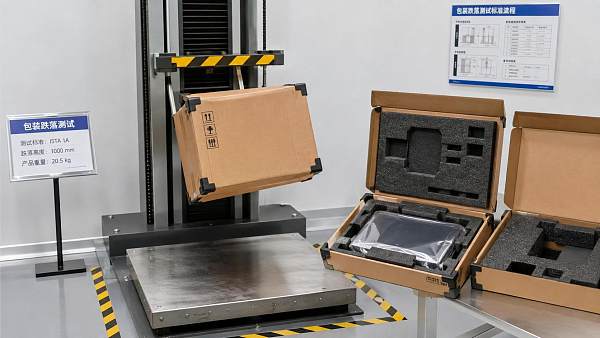
Even a well-made table can arrive compromised if logistics planning is weak. In international and regional wholesale distribution, damage often starts with insufficient internal packaging, poor carton strength, lack of corner protection, unstable palletization, or container loading that allows movement in transit. Because foldable conference tables include moving metal parts and broad flat surfaces, they are vulnerable to both concentrated impact and cumulative vibration.
Buyers should ask not only how the product is manufactured, but how it is packed, stacked, and tested for shipment. Does the supplier separate metal-to-surface contact points? Are casters immobilized during packing? Are edge protectors used? Is the table shipped assembled, semi-knocked down, or fully disassembled, and what does that mean for transit risk? These details often determine whether a container arrives with minor scuffs or with bent mechanisms and crushed corners.
Storage after arrival also matters. Damage can begin in the warehouse if tables are stacked incorrectly, placed under uneven load, or stored beside heavier products without spacing control. Facility teams should create handling procedures for unloading, staging, and temporary storage. In practice, many “factory defects” reported after installation are actually packaging or internal logistics failures that occurred between port delivery and final room setup.
Improper handling during daily use can reveal weaknesses that good sourcing should anticipate
Not all damage is caused by manufacturing, but good sourcing should account for real user behavior. In conference centers, training venues, educational settings, and flexible offices, staff may pull tables by the top edge, fold them one-handed, roll them across uneven thresholds, or push nested units too tightly together. If the product is poorly designed for real operation, these normal shortcuts expose weaknesses quickly.
This is why operators should test more than appearance and folding function. Check how the table behaves when turned in narrow corridors, parked in storage rows, or opened by one person. Is the center of gravity stable? Do casters track evenly? Is there hand clearance near pinch points? Can the locking action be confirmed visually or audibly? A product that performs well in these scenarios is more likely to survive routine commercial use.
For procurement teams, this means involving end users or facility staff in sample review. They often notice practical issues that management or sourcing teams miss, such as awkward release placement, excessive push force, or collision points during nesting. Their feedback can prevent expensive purchase decisions based only on dimensions, finish options, or quote comparisons.
How to evaluate foldable conference tables wholesale before placing a large order
A strong buying process combines technical review, physical testing, and supplier capability assessment. Start by requesting complete product specifications rather than brochure language. Confirm frame material, steel thickness, board type, edge construction, caster grade, hardware source, finish process, load guidance, and recommended use scenario. If a supplier avoids precision in these areas, that is a risk signal.
Next, inspect a sample under realistic handling conditions. Open and close it repeatedly. Roll it over typical flooring transitions. Store it beside other units. Check whether the top remains level, whether hardware loosens, and whether the finish marks easily. Also inspect hidden areas: underside brackets, weld continuity, fastener seating, wheel attachment, and coating inside corners. Hidden workmanship often predicts future field performance better than visible surfaces.
Finally, assess supplier consistency. Ask about batch inspection methods, quality records, packaging controls, and corrective action processes. In foldable conference tables wholesale, one good sample is not enough. Buyers need confidence that the 200th or 2,000th unit will match the approved standard. A supplier with documented controls, traceable components, and clear communication usually offers lower long-term risk than one competing only on headline pricing.
What procurement teams should ask suppliers to reduce early damage risk
The best supplier conversations are specific. Instead of asking whether a table is durable, ask where the frame is reinforced, what hardware cycle performance has been tested, how edge impact is managed, and what packaging prevents movement inside the carton. Ask for dimensions and tolerances, not just claims. Good suppliers should be able to answer directly and support those answers with drawings, photos, or test references.
It is also useful to ask how the product is expected to fail if misused. This may sound unusual, but it reveals engineering maturity. A thoughtful supplier understands the difference between acceptable wear, repairable damage, and safety-critical failure. That knowledge helps procurement and facility teams create realistic maintenance and handling protocols after installation.
Another important topic is after-sales support. Can replacement casters, locking parts, edge components, or hardware kits be supplied quickly? Is there a recommended inspection interval for high-use sites? If a buyer is furnishing multiple locations, serviceability can be just as important as initial build quality. A wholesale partner that supports product life after delivery adds measurable value, especially for organizations managing distributed commercial spaces.
Conclusion: the best wholesale choice is the one that controls damage at the source
In foldable conference tables wholesale, damage rarely begins with one dramatic failure. It usually starts with small weaknesses that are easy to overlook: thin steel, inconsistent hinges, poor edge sealing, weak packaging, or handling conditions the product was never truly designed to survive. Over time, those small weaknesses become wobble, breakage, safety concerns, and unplanned cost.
For researchers, operators, buyers, and commercial evaluators, the practical takeaway is clear. Do not evaluate foldable tables as static furniture alone. Evaluate them as mechanical, mobile, high-contact assets moving through a full commercial lifecycle—from factory production and packaging to transport, storage, daily use, and maintenance. That wider view is what reveals where damage often starts.
When conference room furniture wholesale decisions are grounded in frame integrity, hardware precision, surface resilience, packaging discipline, and realistic operational testing, buyers gain more than a compliant product. They gain lower lifecycle risk, better user safety, and stronger long-term value across the spaces they manage.
News Recommendations
 How to select laboratory instruments for reproducible test results
![51a6ab95581761cc26f4318be6520c15]()
Aris Katos
Future of Carbide Coatings
 When does a sheet metal prototype reveal design flaws early?
![51a6ab95581761cc26f4318be6520c15]()
Aris Katos
Future of Carbide Coatings
 When PE air column bags reduce damage in e-commerce fulfillment
![51a6ab95581761cc26f4318be6520c15]()
Aris Katos
Future of Carbide Coatings
 How energy-efficient design reduces operating costs in retail lighting
![51a6ab95581761cc26f4318be6520c15]()
Aris Katos
Future of Carbide Coatings
 When commercial aluminum storefronts make sense for a retail renovation
![51a6ab95581761cc26f4318be6520c15]()
Aris Katos
Future of Carbide Coatings
 What makes LED lights durable in high-use commercial spaces?
![51a6ab95581761cc26f4318be6520c15]()
Aris Katos
Future of Carbide Coatings
 Which industry categories offer the strongest export potential in Latin America?
![51a6ab95581761cc26f4318be6520c15]()
Aris Katos
Future of Carbide Coatings
 How to choose an ultra bright waterproof window display for storefronts
![51a6ab95581761cc26f4318be6520c15]()
Aris Katos
Future of Carbide Coatings
 How to verify suppliers on a trade portal for global sourcing
![51a6ab95581761cc26f4318be6520c15]()
Aris Katos
Future of Carbide Coatings
 How RoHS requirements should be stated in product specifications
![51a6ab95581761cc26f4318be6520c15]()
Aris Katos
Future of Carbide Coatings
 What affects the lead time for custom retail counter displays?
![51a6ab95581761cc26f4318be6520c15]()
Aris Katos
Future of Carbide Coatings
 What consumer packaging USA importers need to verify before ordering
![51a6ab95581761cc26f4318be6520c15]()
Aris Katos
Future of Carbide Coatings
 How commercial spaces interiors shape customer dwell time
![51a6ab95581761cc26f4318be6520c15]()
Aris Katos
Future of Carbide Coatings
 How LED commercial lighting design reduces glare in retail spaces
![51a6ab95581761cc26f4318be6520c15]()
Aris Katos
Future of Carbide Coatings
 How industrial technology information improves RFID inventory accuracy
![51a6ab95581761cc26f4318be6520c15]()
Aris Katos
Future of Carbide Coatings
 When drip garden watering systems make more sense than sprinklers
![51a6ab95581761cc26f4318be6520c15]()
Aris Katos
Future of Carbide Coatings
 When category comparison improves sourcing for industrial applications
![51a6ab95581761cc26f4318be6520c15]()
Aris Katos
Future of Carbide Coatings
 Industrial application guidance for selecting the right LED lighting
![51a6ab95581761cc26f4318be6520c15]()
Aris Katos
Future of Carbide Coatings
 Which commercial architecture standards apply to European retail fit-outs?
![51a6ab95581761cc26f4318be6520c15]()
Aris Katos
Future of Carbide Coatings
 How to verify FDA requirements for maternity care products
![51a6ab95581761cc26f4318be6520c15]()
Aris Katos
Future of Carbide Coatings
 How to verify BPA-free claims for food-contact products
![51a6ab95581761cc26f4318be6520c15]()
Aris Katos
Future of Carbide Coatings
 When does a European wholesale supplier suit modular office projects?
![51a6ab95581761cc26f4318be6520c15]()
Aris Katos
Future of Carbide Coatings
 When consumer ecosystem solutions improve the in-store shopping journey
![51a6ab95581761cc26f4318be6520c15]()
Aris Katos
Future of Carbide Coatings
 How a commercial developers network can reduce site selection risk
![51a6ab95581761cc26f4318be6520c15]()
Aris Katos
Future of Carbide Coatings
 How clear purchasing specifications prevent costly supplier deviations
![51a6ab95581761cc26f4318be6520c15]()
Aris Katos
Future of Carbide Coatings
 What an ISTA drop test lab checks before your packaging ships
![51a6ab95581761cc26f4318be6520c15]()
Aris Katos
Future of Carbide Coatings
 Which commercial furniture standards apply to workplace seating?
![51a6ab95581761cc26f4318be6520c15]()
Aris Katos
Future of Carbide Coatings
 How to evaluate smart lighting module OEM compatibility before sampling
![51a6ab95581761cc26f4318be6520c15]()
Aris Katos
Future of Carbide Coatings
 How to assess whether sustainable technology delivers real impact
![51a6ab95581761cc26f4318be6520c15]()
Aris Katos
Future of Carbide Coatings
 How to assess an OEM supplier’s quality control before ordering
![51a6ab95581761cc26f4318be6520c15]()
Aris Katos
Future of Carbide Coatings
 How consumer ecosystem solutions data can improve retail personalization
![51a6ab95581761cc26f4318be6520c15]()
Aris Katos
Future of Carbide Coatings
 When does consumer packaging design justify a higher product price?
![51a6ab95581761cc26f4318be6520c15]()
Aris Katos
Future of Carbide Coatings
 Supermarket Fixture Installation: Planning Layouts, Wiring, and Handover
![51a6ab95581761cc26f4318be6520c15]()
Aris Katos
Future of Carbide Coatings
 Automated Lighting and Smart Lighting Control in Bergerac: Key Project Considerations
![51a6ab95581761cc26f4318be6520c15]()
Aris Katos
Future of Carbide Coatings
 Segment Streetlight Controllers: Choosing Control Modes for Urban Roads
![51a6ab95581761cc26f4318be6520c15]()
Aris Katos
Future of Carbide Coatings
 IEC 62471-2 Explained: How to Assess Photobiological Risks in LED Lighting
![51a6ab95581761cc26f4318be6520c15]()
Aris Katos
Future of Carbide Coatings
 Food Grade Packaging Requirements by Product Type, Temperature, and Contact Risk
![51a6ab95581761cc26f4318be6520c15]()
Aris Katos
Future of Carbide Coatings
 Food Packaging Compliance Checklist: Tests, Records, and Labeling Before Shipment
![51a6ab95581761cc26f4318be6520c15]()
Aris Katos
Future of Carbide Coatings
 NSF Food Packaging Standards: When Certification Matters for Commercial Food Use
![51a6ab95581761cc26f4318be6520c15]()
Aris Katos
Future of Carbide Coatings