Bank counter design benchmarks that improve queue flow
Time
Click Count
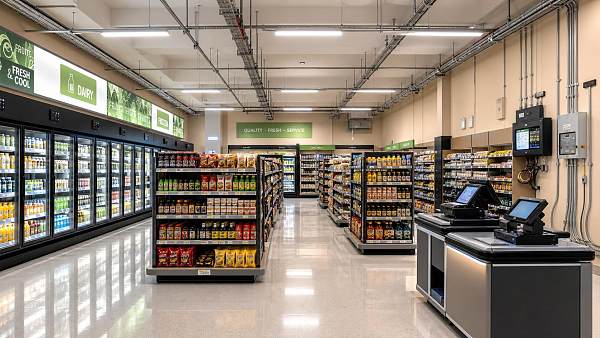
Efficient branch layouts start with clear bank counter design benchmarks that reduce bottlenecks, improve service visibility, and support secure transactions. For researchers, operators, and procurement teams evaluating modern service environments, this guide connects queue-flow strategy with practical fixture standards, from custom retail counters factory capabilities to store fixtures supplier selection, helping you compare performance, durability, and user experience in a data-driven way.
What actually improves queue flow at a bank counter?

Bank counter design is not only a furniture decision. It is a service-flow system that combines transaction zoning, customer guidance, staff ergonomics, privacy control, and fixture durability. In modern branches, queue flow usually improves when the counter line supports three linked stages: approach, service, and exit. If any one of these stages is compressed or visually unclear, customers hesitate, staff repeat instructions, and transaction time increases.
For operators, the most common friction points are easy to identify: unclear waiting positions, customer overlap near teller windows, insufficient writing or document space, and poor separation between quick transactions and longer advisory interactions. In many commercial fit-out projects, these issues appear not because the branch is too small, but because the counter layout was designed as a fixed object instead of a measurable workflow tool.
A practical benchmark starts with circulation width, transaction density, and visual guidance. In typical service environments, planners often review 3 core indicators: the number of simultaneous users per counter zone, the distance between queuing and service touchpoints, and the line of sight from entry to the first active service position. These are not decorative details. They shape customer confidence within the first 5–15 seconds after entry.
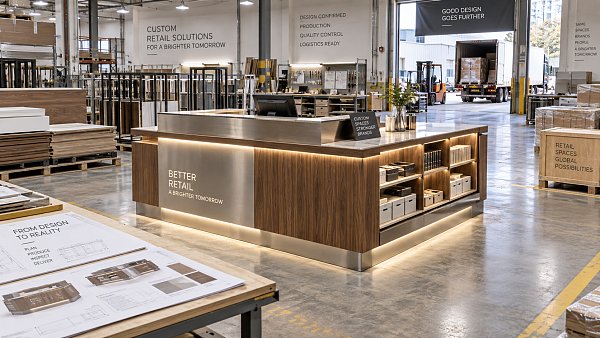
G-BCE approaches bank counter design benchmarks from a broader commercial ecosystem perspective. Instead of looking only at the front counter, we connect furniture and fixtures, smart retail technology, signage, and sourcing feasibility. That matters for procurement teams that must compare custom retail counters factory output, material consistency, integration readiness, and compliance pathways across multiple regions.
Key layout benchmarks that support smoother service
A branch that serves retail banking, document handling, account support, and cash transactions should not force every customer into one identical queue pattern. Better queue flow usually comes from differentiated counter roles. A fast-service point, a standard teller position, and a consultation station each require different frontage, privacy, and equipment allowances. Treating them as a single counter block often creates avoidable delays.
- Separate short-cycle transactions from advisory interactions so 2–5 minute services do not get blocked by 15–30 minute discussions.
- Maintain clear customer approach zones and visible service points so visitors can identify the next step without repeated staff intervention.
- Reserve integrated cable, device, and document paths within the counter body to reduce surface clutter and protect transaction security.
- Align fixture geometry with digital queue systems, signage sightlines, and accessibility needs rather than evaluating the counter in isolation.
For information researchers and business evaluators, the takeaway is clear: bank counter design benchmarks must be judged through operational outcomes, not only architectural appearance. A refined front-of-house counter may still underperform if the queue entry is ambiguous, if device placement forces staff twisting, or if materials show visible wear within 12–24 months of daily use.
Which technical and fixture benchmarks should buyers compare?
When procurement teams review bank counters, they usually compare finish, cost, and lead time first. That is necessary, but not sufficient. A better comparison framework combines structural performance, service functionality, maintenance practicality, and system compatibility. In banking and adjacent service sectors, counters are exposed to frequent contact, repeated cleaning, document handling, payment devices, and sometimes impact from bags, carts, or security accessories.
From a sourcing perspective, a custom retail counters factory should be able to clarify substrate options, edge construction, joinery method, cut-out accuracy, and tolerance control. For many commercial fixture programs, buyers also ask whether the supplier can coordinate lighting, signage, undercounter storage, and smart hardware interface points within one production workflow. This reduces field modification risk during the 2–4 week installation window.
The table below summarizes practical benchmark dimensions that researchers, operators, and sourcing teams can use when comparing bank counter design options across suppliers and branch formats.
This comparison shows why bank counter design benchmarks should never be reduced to front-panel appearance. Even a visually premium counter can slow queue flow if technology retrofits are exposed, if storage interrupts legroom, or if one service module is forced to handle two conflicting tasks. G-BCE’s benchmarking value lies in connecting these fixture choices to broader commercial hardware and operational design standards.
Materials, tolerances, and integration details that matter
In high-use service areas, materials should be reviewed for scratch visibility, edge resilience, cleanability, and replacement practicality. Common options include laminate systems, engineered stone tops, compact surfaces, metal trims, and glass privacy elements. The right combination depends on transaction type and maintenance frequency. For example, a document-heavy counter may prioritize durable worktops and clean transfer edges more than decorative surface layering.
Tolerance control is another hidden benchmark. In modular commercial fixtures, even a ±0.5 mm to ±2 mm fabrication variation can matter when integrating power boxes, transaction trays, privacy screens, or POS brackets. If the custom retail counters factory cannot document cut-out consistency or mock-up approval steps, site adjustments may delay opening or compromise final appearance.
Buyers should also confirm whether the store fixtures supplier can support phased rollouts. Many branch networks do not install 100 units at once. They may start with a pilot batch, revise one or two features after operator feedback, and then release regional production in medium-volume runs. Suppliers familiar with commercial chain programs are usually better prepared for this 3-stage deployment pattern.
How should procurement teams compare suppliers, costs, and delivery risk?
For procurement personnel and business assessment teams, the challenge is rarely just finding a counter supplier. The real challenge is filtering proposals that look similar on paper but differ significantly in lifecycle performance and delivery control. In bank counter design projects, the cheapest quote may exclude mock-up review, hardware integration, packaging protection, or on-site adjustment support. Those omissions often reappear later as project friction.
A strong sourcing process typically reviews 5 decision layers: design intent clarity, bill-of-material transparency, production capability, compliance readiness, and installation coordination. This is especially important when global buyers source from Asia for projects in Europe, North America, the Middle East, or multi-country retail environments. The interface between manufacturing precision and local commercial fit-out expectations must be managed early.
The table below can help teams evaluate whether a custom retail counters factory or store fixtures supplier is suitable for bank queue-flow projects with moderate to high operational complexity.
This evaluation method helps teams compare more than unit cost. It captures operational risk, installation efficiency, and post-delivery correction burden. In many commercial environments, a modest difference in factory preparation can save multiple site visits, reduce punch-list items, and protect branch opening schedules.
A practical procurement checklist for branch fixture programs
Before issuing a purchase order, procurement teams should ask whether the supplier understands the branch’s service logic. If the conversation stays limited to color and dimensions, the sourcing process is still incomplete. The best-performing suppliers usually ask about transaction mix, queue technology, customer volume peaks, and cleaning protocols because these factors shape design viability.
- Confirm 4 essential documents: general layout, counter elevation details, material schedule, and equipment interface plan.
- Review 5 key checkpoints: traffic flow, staff ergonomics, privacy barriers, maintenance access, and replacement part strategy.
- Request a sample or mock-up when the project includes custom finishes, unusual joinery, or integrated digital devices.
- Validate lead time by phase, including drawing approval, sample confirmation, production, packing, shipment, and installation preparation.
G-BCE supports this process by translating commercial fixture sourcing into comparable technical benchmarks. For buyers managing multiple categories, this cross-sector visibility is valuable because counters often interact with lighting, digital touchpoints, signage, and packaging workflows in the same customer-facing environment.
What compliance, usability, and implementation risks are often overlooked?
In bank counter design, obvious issues are usually addressed early. Hidden risks are more damaging because they appear after fabrication starts or after installation. Examples include inaccessible cable maintenance zones, poor glare control on customer-facing screens, insufficient durability at bag contact points, and privacy elements that interrupt verbal communication instead of supporting it. Each problem may look small, but together they slow service and increase corrective work.
Compliance review should also be handled with care. Depending on project location and scope, buyers may need to consider general commercial safety expectations, electrical integration requirements, material fire behavior, accessibility expectations, and furniture-related performance references. In international sourcing discussions, common benchmark language may include UL, CE, or BIFMA-related alignment where relevant, but the exact requirement should always be confirmed against the final market and application.
Implementation planning typically works best in 3 stages: prototype validation, pilot installation, and scaled rollout. This sequence allows operators to test teller reach, customer writing space, and queue visibility before committing to a larger order. For branch networks, even a 1-unit or 2-unit pilot can reveal details that are difficult to see in drawings alone.
Common misconceptions that weaken branch performance
“A wider counter always means better customer service”
Not necessarily. Oversized counter fronts can reduce approachable service points, waste circulation space, and make queue direction less obvious. Service effectiveness depends on the relationship between frontage, transaction function, and customer decision points, not only physical size.
“One standard module works across all branches”
Standardization helps procurement, but over-standardization can create operational mismatch. Urban express branches, advisory-led flagship sites, and mixed-service community branches often need different ratios of quick service, secure handling, and consultation space. A modular family is usually more effective than a single rigid module.
“Appearance matters more than maintainability”
In daily operation, maintainability is part of customer experience. If surfaces stain easily, edge bands chip, or cable access requires disassembly, the branch will show wear quickly. Durable detailing is not a back-office issue. It affects brand perception at every transaction.
FAQ and next-step guidance for researchers, operators, and buyers
Teams comparing bank counter design benchmarks often ask similar questions during early planning, especially when balancing queue flow, budget discipline, and commercial fixture quality. The answers below focus on decision-ready guidance rather than abstract design theory.
How do I know if a bank counter layout is too crowded?
Look for repeated service interruption rather than only physical proximity. If customers cannot identify where to wait, if staff must pause to redirect traffic several times per hour, or if quick transactions regularly queue behind long consultations, the layout is functionally crowded. A review should examine at least 3 things: approach path clarity, service point differentiation, and exit separation.
What should procurement prioritize when comparing a custom retail counters factory?
Prioritize production transparency and integration capability. Ask for material breakdowns, shop drawings, sample approval timing, and evidence of handling cable routes, hardware cut-outs, or privacy accessories in a controlled factory process. A realistic delivery plan often includes 7–15 days for technical confirmation and several additional weeks depending on project volume and shipping mode.
Are store fixtures suppliers enough, or do I need a more specialized partner?
It depends on project complexity. For basic service counters, an experienced store fixtures supplier may be sufficient. For branch networks involving digital queue tools, integrated lighting or signage, custom security interfaces, or multi-market compliance review, a more benchmark-driven partner adds value. The difference is usually seen in coordination depth, not only manufacturing capacity.
Why choose us for benchmarking and sourcing support?
G-BCE helps decision-makers move beyond isolated product quotes. We connect bank counter design benchmarks with the broader realities of commercial furniture and fixtures, smart retail technology, lighting and signage, and supply-chain execution. This lets researchers compare structure, usability, compliance language, and sourcing feasibility in one framework instead of chasing fragmented inputs from multiple categories.
If you are evaluating a new branch concept, a regional rollout, or a refurbishment project, you can consult us on parameter confirmation, fixture selection logic, typical delivery stages, custom counter options, applicable standards, sample review planning, and quotation alignment. This is especially useful when your team needs to bridge Asian manufacturing execution with global commercial design expectations.
Contact us when you need a structured comparison of counter configurations, support in assessing a custom retail counters factory, or a clearer shortlist of store fixtures suppliers for banking and adjacent service environments. A focused early review can save time in design revisions, reduce installation surprises, and improve queue flow before the branch opens to customers.
News Recommendations
 How to select laboratory instruments for reproducible test results
![51a6ab95581761cc26f4318be6520c15]()
Aris Katos
Future of Carbide Coatings
 When does a sheet metal prototype reveal design flaws early?
![51a6ab95581761cc26f4318be6520c15]()
Aris Katos
Future of Carbide Coatings
 When PE air column bags reduce damage in e-commerce fulfillment
![51a6ab95581761cc26f4318be6520c15]()
Aris Katos
Future of Carbide Coatings
 How energy-efficient design reduces operating costs in retail lighting
![51a6ab95581761cc26f4318be6520c15]()
Aris Katos
Future of Carbide Coatings
 When commercial aluminum storefronts make sense for a retail renovation
![51a6ab95581761cc26f4318be6520c15]()
Aris Katos
Future of Carbide Coatings
 What makes LED lights durable in high-use commercial spaces?
![51a6ab95581761cc26f4318be6520c15]()
Aris Katos
Future of Carbide Coatings
 Which industry categories offer the strongest export potential in Latin America?
![51a6ab95581761cc26f4318be6520c15]()
Aris Katos
Future of Carbide Coatings
 How to choose an ultra bright waterproof window display for storefronts
![51a6ab95581761cc26f4318be6520c15]()
Aris Katos
Future of Carbide Coatings
 How to verify suppliers on a trade portal for global sourcing
![51a6ab95581761cc26f4318be6520c15]()
Aris Katos
Future of Carbide Coatings
 How RoHS requirements should be stated in product specifications
![51a6ab95581761cc26f4318be6520c15]()
Aris Katos
Future of Carbide Coatings
 What affects the lead time for custom retail counter displays?
![51a6ab95581761cc26f4318be6520c15]()
Aris Katos
Future of Carbide Coatings
 What consumer packaging USA importers need to verify before ordering
![51a6ab95581761cc26f4318be6520c15]()
Aris Katos
Future of Carbide Coatings
 How commercial spaces interiors shape customer dwell time
![51a6ab95581761cc26f4318be6520c15]()
Aris Katos
Future of Carbide Coatings
 How LED commercial lighting design reduces glare in retail spaces
![51a6ab95581761cc26f4318be6520c15]()
Aris Katos
Future of Carbide Coatings
 How industrial technology information improves RFID inventory accuracy
![51a6ab95581761cc26f4318be6520c15]()
Aris Katos
Future of Carbide Coatings
 When drip garden watering systems make more sense than sprinklers
![51a6ab95581761cc26f4318be6520c15]()
Aris Katos
Future of Carbide Coatings
 When category comparison improves sourcing for industrial applications
![51a6ab95581761cc26f4318be6520c15]()
Aris Katos
Future of Carbide Coatings
 Industrial application guidance for selecting the right LED lighting
![51a6ab95581761cc26f4318be6520c15]()
Aris Katos
Future of Carbide Coatings
 Which commercial architecture standards apply to European retail fit-outs?
![51a6ab95581761cc26f4318be6520c15]()
Aris Katos
Future of Carbide Coatings
 How to verify FDA requirements for maternity care products
![51a6ab95581761cc26f4318be6520c15]()
Aris Katos
Future of Carbide Coatings
 How to verify BPA-free claims for food-contact products
![51a6ab95581761cc26f4318be6520c15]()
Aris Katos
Future of Carbide Coatings
 When does a European wholesale supplier suit modular office projects?
![51a6ab95581761cc26f4318be6520c15]()
Aris Katos
Future of Carbide Coatings
 When consumer ecosystem solutions improve the in-store shopping journey
![51a6ab95581761cc26f4318be6520c15]()
Aris Katos
Future of Carbide Coatings
 How a commercial developers network can reduce site selection risk
![51a6ab95581761cc26f4318be6520c15]()
Aris Katos
Future of Carbide Coatings
 How clear purchasing specifications prevent costly supplier deviations
![51a6ab95581761cc26f4318be6520c15]()
Aris Katos
Future of Carbide Coatings
 What an ISTA drop test lab checks before your packaging ships
![51a6ab95581761cc26f4318be6520c15]()
Aris Katos
Future of Carbide Coatings
 Which commercial furniture standards apply to workplace seating?
![51a6ab95581761cc26f4318be6520c15]()
Aris Katos
Future of Carbide Coatings
 How to evaluate smart lighting module OEM compatibility before sampling
![51a6ab95581761cc26f4318be6520c15]()
Aris Katos
Future of Carbide Coatings
 How to assess whether sustainable technology delivers real impact
![51a6ab95581761cc26f4318be6520c15]()
Aris Katos
Future of Carbide Coatings
 How to assess an OEM supplier’s quality control before ordering
![51a6ab95581761cc26f4318be6520c15]()
Aris Katos
Future of Carbide Coatings
 How consumer ecosystem solutions data can improve retail personalization
![51a6ab95581761cc26f4318be6520c15]()
Aris Katos
Future of Carbide Coatings
 When does consumer packaging design justify a higher product price?
![51a6ab95581761cc26f4318be6520c15]()
Aris Katos
Future of Carbide Coatings
 Supermarket Fixture Installation: Planning Layouts, Wiring, and Handover
![51a6ab95581761cc26f4318be6520c15]()
Aris Katos
Future of Carbide Coatings
 Automated Lighting and Smart Lighting Control in Bergerac: Key Project Considerations
![51a6ab95581761cc26f4318be6520c15]()
Aris Katos
Future of Carbide Coatings
 Segment Streetlight Controllers: Choosing Control Modes for Urban Roads
![51a6ab95581761cc26f4318be6520c15]()
Aris Katos
Future of Carbide Coatings
 IEC 62471-2 Explained: How to Assess Photobiological Risks in LED Lighting
![51a6ab95581761cc26f4318be6520c15]()
Aris Katos
Future of Carbide Coatings
 Food Grade Packaging Requirements by Product Type, Temperature, and Contact Risk
![51a6ab95581761cc26f4318be6520c15]()
Aris Katos
Future of Carbide Coatings
 Food Packaging Compliance Checklist: Tests, Records, and Labeling Before Shipment
![51a6ab95581761cc26f4318be6520c15]()
Aris Katos
Future of Carbide Coatings
 NSF Food Packaging Standards: When Certification Matters for Commercial Food Use
![51a6ab95581761cc26f4318be6520c15]()
Aris Katos
Future of Carbide Coatings