Global Sourcing Compliance Audit: Red Flags That Delay Orders
Time
Click Count
A global sourcing compliance audit can expose operational weaknesses before they become delayed approvals, missed vessel cutoffs, or rejected market entries. In cross-border sourcing, small documentation gaps often signal larger control failures. When product categories, testing requirements, and supplier networks span multiple regions, early detection of red flags becomes a practical way to protect timelines, landed cost, and brand reputation.
For commercial hardware, retail technology, consumer goods, lighting systems, and sustainable packaging, a structured global sourcing compliance audit helps verify whether a supplier can meet both technical and regulatory expectations. It also clarifies whether production readiness matches what is claimed in quotations, audit reports, and sample submissions.
Why a Checklist-Based Global Sourcing Compliance Audit Matters
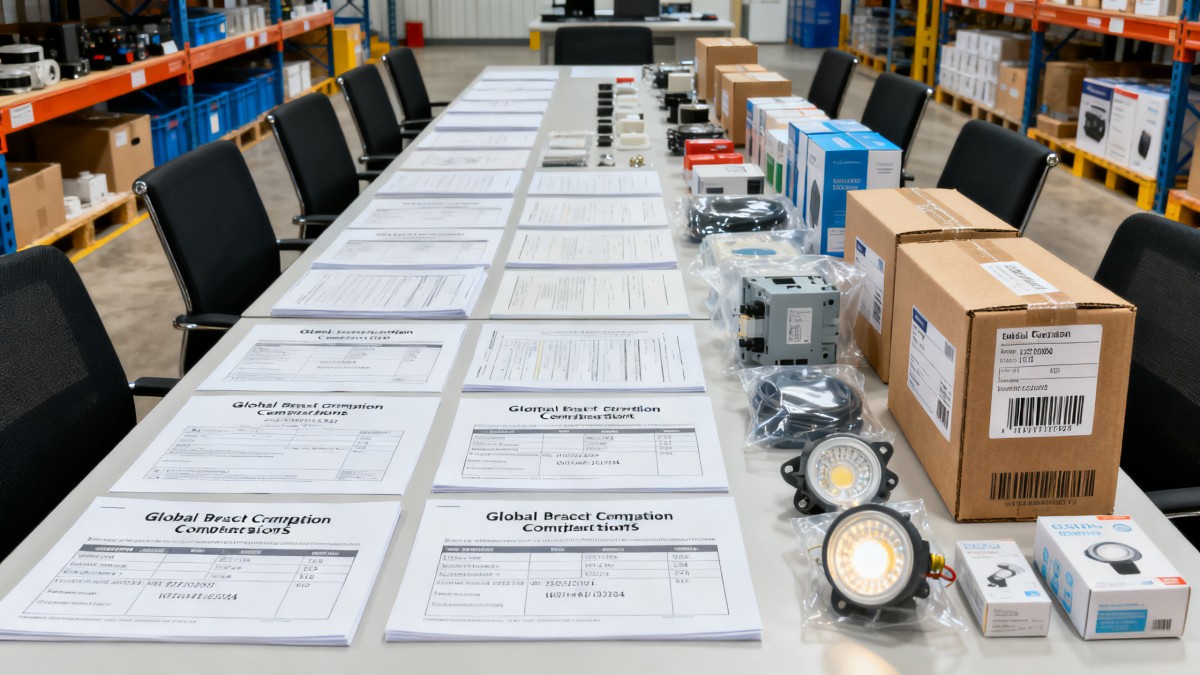
Order delays rarely come from one dramatic failure. They usually start with unnoticed inconsistencies. A missing test report, an expired factory license, or a mismatch between artwork and declaration files can stop production faster than a pricing dispute.
A checklist converts a broad global sourcing compliance audit into verifiable control points. It reduces subjective judgment, improves comparison across suppliers, and supports faster escalation when a red flag appears. This approach is especially useful in multi-category sourcing, where compliance obligations differ by product, destination market, and material profile.
Core Checklist: Red Flags That Commonly Delay Orders
Use the following checklist to structure a global sourcing compliance audit before purchase order release, tooling approval, or shipment booking.
- Verify certificate validity against issuing bodies, expiration dates, factory names, and product scope instead of accepting attached PDF files at face value.
- Check whether test reports match the exact bill of materials, model number, voltage rating, packaging format, and destination market labeling rules.
- Confirm the audited production site is the actual manufacturing location, not a trading address or a different plant listed for convenience.
- Review social compliance, environmental records, and subcontracting controls to identify hidden outsourcing that can break traceability and delay approvals.
- Compare quotation lead times with real process capacity, including tooling, component sourcing, aging tests, rework cycles, and peak-season loading constraints.
- Inspect labeling artwork, manuals, carton marks, and warning statements for legal consistency with certification files and customs declarations.
- Validate raw material declarations for restricted substances, recycled content claims, timber legality, and packaging compliance before production starts.
- Request process control records for incoming inspection, in-line quality checks, final testing, and corrective actions linked to recent defect history.
- Review engineering change management to ensure design updates, component substitutions, and software revisions are formally logged and approved.
- Assess document responsiveness by tracking how quickly the supplier provides complete, consistent, and revision-controlled files during the audit window.
How to Read These Red Flags Correctly
One issue alone may not justify stopping an order. However, several small issues together often indicate weak management discipline. In a global sourcing compliance audit, pattern recognition matters more than isolated defects.
For example, an expired report plus vague revision history plus inconsistent carton labeling suggests a high probability of shipment holds. These combined signals often predict delays better than factory tour impressions or sample quality alone.
Scenario Notes Across Product and Supply Chain Types
Commercial Furniture and Fixtures
A global sourcing compliance audit for furniture should focus on structural test scope, material consistency, surface treatment records, and packaging protection. BIFMA references, load performance, and emissions claims must align with the final product configuration.
Delays often arise when sample units use one hardware specification while mass production uses another. Fastener substitutions, foam density changes, or laminate sourcing shifts can invalidate prior test assumptions.
Smart Retail Technology
For POS terminals, kiosks, displays, and connected devices, the global sourcing compliance audit must include EMC, electrical safety, firmware control, and adapter certification mapping. Hardware compliance can fail if software versions change core functional behavior.
Another delay point is component traceability. Chip shortages, alternate screens, and power module substitutions may solve supply problems while creating new certification gaps. Engineering changes need immediate compliance review, not post-production explanation.
Consumer Goods and Packaging
In consumer products, a global sourcing compliance audit should test claims around food contact, recycled content, restricted substances, and destination-specific labeling. Packaging regulations can block shipment even when the product itself is acceptable.
Sustainable packaging adds another layer. Compostability, recyclability, and fiber-source claims require evidence chains. Marketing language that moves faster than verification is a common cause of relabeling and export delay.
Commonly Overlooked Issues That Trigger Delays
Uncontrolled Subcontracting
A factory may pass the global sourcing compliance audit on paper while sending critical operations elsewhere. Secondary paint shops, packaging contractors, or cable assemblers can introduce undocumented risk and break approval continuity.
Mismatch Between Sample and Production Reality
Golden samples often receive special attention. If the audited controls do not reflect real batch conditions, the order can fail later at inspection, loading, or destination testing. Sample acceptance is not proof of system capability.
Weak Revision Control
Old manuals, outdated labels, and mixed test reports create confusion during customs clearance and customer onboarding. In a global sourcing compliance audit, revision discipline is a strong predictor of execution reliability.
Incomplete Regulatory Mapping
Products moving across the EU, North America, the Middle East, and Asia may require different marks, declarations, and language content. Missing one destination rule can force repacking, document correction, or shipment hold.
Practical Execution Tips for a Stronger Audit Process
- Build a pre-audit file matrix covering certifications, BOM, drawings, labels, declarations, and test reports for each SKU and market.
- Score each global sourcing compliance audit finding by severity, timing impact, and ease of correction, not by document count alone.
- Link compliance review to sourcing milestones such as sampling, pilot run, packaging signoff, and booking release.
- Escalate any site mismatch, certificate inconsistency, or undocumented material change before deposit payment or tooling launch.
- Re-audit when there is ownership change, capacity expansion, new subcontracting, or a major engineering revision.
It also helps to compare declared capability with observable evidence. If a supplier claims fast lead times but cannot show stable incoming inspection data or component reservation plans, the risk is operational, not theoretical.
The most effective global sourcing compliance audit is cross-functional. Technical files, factory controls, packaging specifications, and shipment documents must be reviewed as one connected system. That is where hidden delay risks usually appear.
Conclusion and Next-Step Action Guide
A disciplined global sourcing compliance audit does more than confirm paperwork. It reveals whether product claims, factory controls, and export readiness actually align. Red flags such as invalid certificates, weak revision control, hidden subcontracting, and material mismatches are early warnings of delayed orders.
Start with a checklist, verify every document against the real product, and map findings to timeline risk. Then prioritize corrective actions before mass production begins. When the audit is evidence-based and scenario-specific, order flow becomes more predictable, compliance exposure drops, and supply chain resilience improves.
News Recommendations
 How to select laboratory instruments for reproducible test results
![51a6ab95581761cc26f4318be6520c15]()
Aris Katos
Future of Carbide Coatings
 When does a sheet metal prototype reveal design flaws early?
![51a6ab95581761cc26f4318be6520c15]()
Aris Katos
Future of Carbide Coatings
 When PE air column bags reduce damage in e-commerce fulfillment
![51a6ab95581761cc26f4318be6520c15]()
Aris Katos
Future of Carbide Coatings
 How energy-efficient design reduces operating costs in retail lighting
![51a6ab95581761cc26f4318be6520c15]()
Aris Katos
Future of Carbide Coatings
 When commercial aluminum storefronts make sense for a retail renovation
![51a6ab95581761cc26f4318be6520c15]()
Aris Katos
Future of Carbide Coatings
 What makes LED lights durable in high-use commercial spaces?
![51a6ab95581761cc26f4318be6520c15]()
Aris Katos
Future of Carbide Coatings
 Which industry categories offer the strongest export potential in Latin America?
![51a6ab95581761cc26f4318be6520c15]()
Aris Katos
Future of Carbide Coatings
 How to choose an ultra bright waterproof window display for storefronts
![51a6ab95581761cc26f4318be6520c15]()
Aris Katos
Future of Carbide Coatings
 How to verify suppliers on a trade portal for global sourcing
![51a6ab95581761cc26f4318be6520c15]()
Aris Katos
Future of Carbide Coatings
 How RoHS requirements should be stated in product specifications
![51a6ab95581761cc26f4318be6520c15]()
Aris Katos
Future of Carbide Coatings
 What affects the lead time for custom retail counter displays?
![51a6ab95581761cc26f4318be6520c15]()
Aris Katos
Future of Carbide Coatings
 What consumer packaging USA importers need to verify before ordering
![51a6ab95581761cc26f4318be6520c15]()
Aris Katos
Future of Carbide Coatings
 How commercial spaces interiors shape customer dwell time
![51a6ab95581761cc26f4318be6520c15]()
Aris Katos
Future of Carbide Coatings
 How LED commercial lighting design reduces glare in retail spaces
![51a6ab95581761cc26f4318be6520c15]()
Aris Katos
Future of Carbide Coatings
 How industrial technology information improves RFID inventory accuracy
![51a6ab95581761cc26f4318be6520c15]()
Aris Katos
Future of Carbide Coatings
 When drip garden watering systems make more sense than sprinklers
![51a6ab95581761cc26f4318be6520c15]()
Aris Katos
Future of Carbide Coatings
 When category comparison improves sourcing for industrial applications
![51a6ab95581761cc26f4318be6520c15]()
Aris Katos
Future of Carbide Coatings
 Industrial application guidance for selecting the right LED lighting
![51a6ab95581761cc26f4318be6520c15]()
Aris Katos
Future of Carbide Coatings
 Which commercial architecture standards apply to European retail fit-outs?
![51a6ab95581761cc26f4318be6520c15]()
Aris Katos
Future of Carbide Coatings
 How to verify FDA requirements for maternity care products
![51a6ab95581761cc26f4318be6520c15]()
Aris Katos
Future of Carbide Coatings
 How to verify BPA-free claims for food-contact products
![51a6ab95581761cc26f4318be6520c15]()
Aris Katos
Future of Carbide Coatings
 When does a European wholesale supplier suit modular office projects?
![51a6ab95581761cc26f4318be6520c15]()
Aris Katos
Future of Carbide Coatings
 When consumer ecosystem solutions improve the in-store shopping journey
![51a6ab95581761cc26f4318be6520c15]()
Aris Katos
Future of Carbide Coatings
 How a commercial developers network can reduce site selection risk
![51a6ab95581761cc26f4318be6520c15]()
Aris Katos
Future of Carbide Coatings
 How clear purchasing specifications prevent costly supplier deviations
![51a6ab95581761cc26f4318be6520c15]()
Aris Katos
Future of Carbide Coatings
 What an ISTA drop test lab checks before your packaging ships
![51a6ab95581761cc26f4318be6520c15]()
Aris Katos
Future of Carbide Coatings
 Which commercial furniture standards apply to workplace seating?
![51a6ab95581761cc26f4318be6520c15]()
Aris Katos
Future of Carbide Coatings
 How to evaluate smart lighting module OEM compatibility before sampling
![51a6ab95581761cc26f4318be6520c15]()
Aris Katos
Future of Carbide Coatings
 How to assess whether sustainable technology delivers real impact
![51a6ab95581761cc26f4318be6520c15]()
Aris Katos
Future of Carbide Coatings
 How to assess an OEM supplier’s quality control before ordering
![51a6ab95581761cc26f4318be6520c15]()
Aris Katos
Future of Carbide Coatings
 How consumer ecosystem solutions data can improve retail personalization
![51a6ab95581761cc26f4318be6520c15]()
Aris Katos
Future of Carbide Coatings
 When does consumer packaging design justify a higher product price?
![51a6ab95581761cc26f4318be6520c15]()
Aris Katos
Future of Carbide Coatings
 Supermarket Fixture Installation: Planning Layouts, Wiring, and Handover
![51a6ab95581761cc26f4318be6520c15]()
Aris Katos
Future of Carbide Coatings
 Automated Lighting and Smart Lighting Control in Bergerac: Key Project Considerations
![51a6ab95581761cc26f4318be6520c15]()
Aris Katos
Future of Carbide Coatings
 Segment Streetlight Controllers: Choosing Control Modes for Urban Roads
![51a6ab95581761cc26f4318be6520c15]()
Aris Katos
Future of Carbide Coatings
 IEC 62471-2 Explained: How to Assess Photobiological Risks in LED Lighting
![51a6ab95581761cc26f4318be6520c15]()
Aris Katos
Future of Carbide Coatings
 Food Grade Packaging Requirements by Product Type, Temperature, and Contact Risk
![51a6ab95581761cc26f4318be6520c15]()
Aris Katos
Future of Carbide Coatings
 Food Packaging Compliance Checklist: Tests, Records, and Labeling Before Shipment
![51a6ab95581761cc26f4318be6520c15]()
Aris Katos
Future of Carbide Coatings
 NSF Food Packaging Standards: When Certification Matters for Commercial Food Use
![51a6ab95581761cc26f4318be6520c15]()
Aris Katos
Future of Carbide Coatings