Germany Launches Sustainable Office Hardware Acceleration Program
Time
Click Count
On May 18, 2026, Germany’s Federal Ministry for Economic Affairs and Climate Action (BMWK) launched the ‘Sustainable Office Hardware Acceleration Program’ — a targeted subsidy initiative for ergonomic office equipment meeting stringent sustainability criteria. The program directly impacts exporters of ergonomic chairs, sit-stand desks, and related hardware from China, as well as EU-based importers, certification providers, and supply chain service firms supporting cross-border compliance.
Event Overview
The BMWK officially initiated the ‘Nachhaltige Bürohardware Beschleunigungsprogramm’ on May 18, 2026. Under the program, German companies purchasing ergonomic office gear certified to EN 1335-3:2026 and EPD Level III are eligible for cash subsidies of up to €500,000 — covering up to 40% of procurement value. To qualify, suppliers based in China must provide a carbon footprint declaration and proof of renewable material content, both verified by TÜV SÜD or SGS. The program’s initial budget is €230 million, with an estimated 22% export growth projected for Chinese ergonomic chairs and height-adjustable desks.
Industries Affected
Direct Exporters (China-based manufacturers)
Chinese manufacturers exporting ergonomic office furniture to Germany face new documentation and verification requirements. Impact arises not from product redesign, but from mandatory third-party validation of carbon footprint and renewable material share — adding lead time and cost to each qualified shipment.
Certification & Verification Service Providers
Firms offering EPD registration, carbon accounting, or material traceability services — particularly those accredited by TÜV SÜD or SGS — may see increased demand for standardized reporting packages aligned with EN 1335-3:2026 and EPD Level III. This affects both EU-based verifiers and Chinese labs operating under mutual recognition frameworks.
Importers & Distributors (Germany-based)
German importers must now verify upstream documentation before claiming subsidies. Their procurement workflows need integration of sustainability data checks — shifting part of compliance responsibility upstream to Chinese suppliers, with potential delays if documentation is incomplete or non-conforming.
Supply Chain Logistics & Documentation Specialists
Freight forwarders, customs brokers, and trade documentation platforms handling German-bound ergonomic hardware may need to support structured submission of carbon and material declarations — especially where digital customs interfaces begin requiring embedded sustainability metadata.
What Relevant Companies or Practitioners Should Focus On Now
Monitor official BMWK guidance on application procedures and document templates
The subsidy claim process — including format requirements for carbon footprint statements and renewable material proofs — has not yet been published in full detail. Companies should track updates via the BMWK’s dedicated program portal and registered notifications, rather than relying on early summaries or third-party interpretations.
Prioritize verification readiness for top-selling SKUs targeting Germany
Not all ergonomic products will be equally affected. Firms should identify which models (e.g., specific chair lines or desk frames) account for the largest share of German-bound shipments, and initiate verification only for those — avoiding blanket certification across entire portfolios until scope and cost implications are clearer.
Distinguish between policy signal and operational eligibility
This is a national subsidy program, not a regulatory mandate. Non-compliant products remain legally importable and sellable in Germany; the incentive applies only to buyers seeking reimbursement. Exporters should avoid conflating subsidy eligibility with market access requirements — the latter remain unchanged under current CE and EN standards.
Align internal documentation workflows with TÜV SÜD/SGS reporting expectations
Chinese manufacturers should engage early with their chosen verifier to clarify required data fields (e.g., cradle-to-gate boundary, allocation methodology for multi-product facilities, definition of ‘renewable material’ per EPD III). Pre-submission alignment reduces rework and avoids rejection during buyer subsidy applications.
Editorial Perspective / Industry Observation
Observably, this program functions primarily as a demand-side incentive — stimulating uptake of already-available sustainable hardware, rather than driving R&D or material innovation. Analysis shows it reflects Germany’s broader shift toward embedding environmental performance into public procurement incentives, not just regulatory thresholds. It is more accurately understood as a near-term commercial signal than an immediate compliance requirement. From an industry standpoint, its significance lies less in scale (€230M is modest relative to total EU office furniture imports) and more in its precedent-setting structure: tying subsidy access directly to supplier-provided, third-party-verified sustainability data. That linkage — between importer benefit and exporter documentation — marks a notable evolution in how sustainability is being operationalized across EU supply chains.
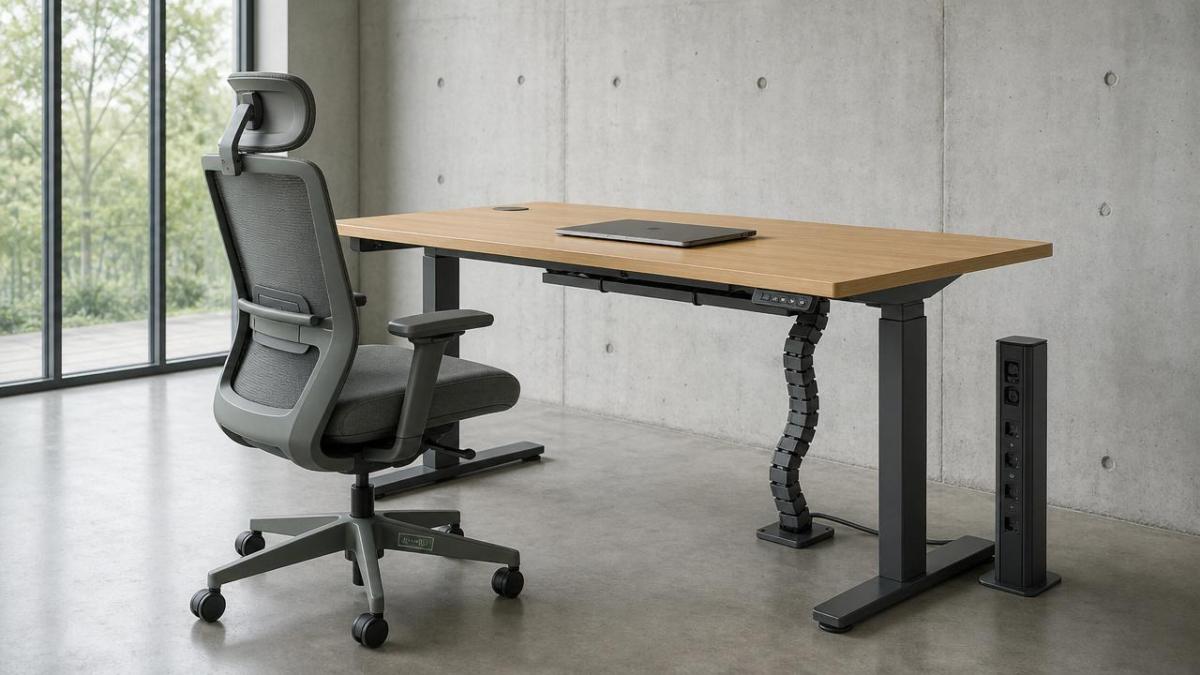
Conclusion: The Sustainable Office Hardware Acceleration Program introduces a new, conditional layer of commercial opportunity for Chinese ergonomic hardware exporters — contingent on verifiable environmental data, not product redesign. Its immediate impact is procedural and documentary, not technical or regulatory. It is best understood not as a market barrier, but as an emerging transactional requirement for accessing a specific, subsidized customer segment in Germany. Ongoing attention should focus on how consistently — and scalably — the verification process can be implemented across diverse manufacturing environments, rather than on anticipated shifts in product specifications.
Source: Official announcement by the German Federal Ministry for Economic Affairs and Climate Action (BMWK), dated May 18, 2026. Details confirmed via BMWK press release and program fact sheet (reference ID: BMWK-NBHP-2026-001). Note: Application guidelines, document templates, and verifier submission protocols remain pending publication and are subject to update — continued observation is recommended.
News Recommendations
 How to select laboratory instruments for reproducible test results
![51a6ab95581761cc26f4318be6520c15]()
Aris Katos
Future of Carbide Coatings
 When does a sheet metal prototype reveal design flaws early?
![51a6ab95581761cc26f4318be6520c15]()
Aris Katos
Future of Carbide Coatings
 When PE air column bags reduce damage in e-commerce fulfillment
![51a6ab95581761cc26f4318be6520c15]()
Aris Katos
Future of Carbide Coatings
 How energy-efficient design reduces operating costs in retail lighting
![51a6ab95581761cc26f4318be6520c15]()
Aris Katos
Future of Carbide Coatings
 When commercial aluminum storefronts make sense for a retail renovation
![51a6ab95581761cc26f4318be6520c15]()
Aris Katos
Future of Carbide Coatings
 What makes LED lights durable in high-use commercial spaces?
![51a6ab95581761cc26f4318be6520c15]()
Aris Katos
Future of Carbide Coatings
 Which industry categories offer the strongest export potential in Latin America?
![51a6ab95581761cc26f4318be6520c15]()
Aris Katos
Future of Carbide Coatings
 How to choose an ultra bright waterproof window display for storefronts
![51a6ab95581761cc26f4318be6520c15]()
Aris Katos
Future of Carbide Coatings
 How to verify suppliers on a trade portal for global sourcing
![51a6ab95581761cc26f4318be6520c15]()
Aris Katos
Future of Carbide Coatings
 How RoHS requirements should be stated in product specifications
![51a6ab95581761cc26f4318be6520c15]()
Aris Katos
Future of Carbide Coatings
 What affects the lead time for custom retail counter displays?
![51a6ab95581761cc26f4318be6520c15]()
Aris Katos
Future of Carbide Coatings
 What consumer packaging USA importers need to verify before ordering
![51a6ab95581761cc26f4318be6520c15]()
Aris Katos
Future of Carbide Coatings
 How commercial spaces interiors shape customer dwell time
![51a6ab95581761cc26f4318be6520c15]()
Aris Katos
Future of Carbide Coatings
 How LED commercial lighting design reduces glare in retail spaces
![51a6ab95581761cc26f4318be6520c15]()
Aris Katos
Future of Carbide Coatings
 How industrial technology information improves RFID inventory accuracy
![51a6ab95581761cc26f4318be6520c15]()
Aris Katos
Future of Carbide Coatings
 When drip garden watering systems make more sense than sprinklers
![51a6ab95581761cc26f4318be6520c15]()
Aris Katos
Future of Carbide Coatings
 When category comparison improves sourcing for industrial applications
![51a6ab95581761cc26f4318be6520c15]()
Aris Katos
Future of Carbide Coatings
 Industrial application guidance for selecting the right LED lighting
![51a6ab95581761cc26f4318be6520c15]()
Aris Katos
Future of Carbide Coatings
 Which commercial architecture standards apply to European retail fit-outs?
![51a6ab95581761cc26f4318be6520c15]()
Aris Katos
Future of Carbide Coatings
 How to verify FDA requirements for maternity care products
![51a6ab95581761cc26f4318be6520c15]()
Aris Katos
Future of Carbide Coatings
 How to verify BPA-free claims for food-contact products
![51a6ab95581761cc26f4318be6520c15]()
Aris Katos
Future of Carbide Coatings
 When does a European wholesale supplier suit modular office projects?
![51a6ab95581761cc26f4318be6520c15]()
Aris Katos
Future of Carbide Coatings
 When consumer ecosystem solutions improve the in-store shopping journey
![51a6ab95581761cc26f4318be6520c15]()
Aris Katos
Future of Carbide Coatings
 How a commercial developers network can reduce site selection risk
![51a6ab95581761cc26f4318be6520c15]()
Aris Katos
Future of Carbide Coatings
 How clear purchasing specifications prevent costly supplier deviations
![51a6ab95581761cc26f4318be6520c15]()
Aris Katos
Future of Carbide Coatings
 What an ISTA drop test lab checks before your packaging ships
![51a6ab95581761cc26f4318be6520c15]()
Aris Katos
Future of Carbide Coatings
 Which commercial furniture standards apply to workplace seating?
![51a6ab95581761cc26f4318be6520c15]()
Aris Katos
Future of Carbide Coatings
 How to evaluate smart lighting module OEM compatibility before sampling
![51a6ab95581761cc26f4318be6520c15]()
Aris Katos
Future of Carbide Coatings
 How to assess whether sustainable technology delivers real impact
![51a6ab95581761cc26f4318be6520c15]()
Aris Katos
Future of Carbide Coatings
 How to assess an OEM supplier’s quality control before ordering
![51a6ab95581761cc26f4318be6520c15]()
Aris Katos
Future of Carbide Coatings
 How consumer ecosystem solutions data can improve retail personalization
![51a6ab95581761cc26f4318be6520c15]()
Aris Katos
Future of Carbide Coatings
 When does consumer packaging design justify a higher product price?
![51a6ab95581761cc26f4318be6520c15]()
Aris Katos
Future of Carbide Coatings
 Supermarket Fixture Installation: Planning Layouts, Wiring, and Handover
![51a6ab95581761cc26f4318be6520c15]()
Aris Katos
Future of Carbide Coatings
 Automated Lighting and Smart Lighting Control in Bergerac: Key Project Considerations
![51a6ab95581761cc26f4318be6520c15]()
Aris Katos
Future of Carbide Coatings
 Segment Streetlight Controllers: Choosing Control Modes for Urban Roads
![51a6ab95581761cc26f4318be6520c15]()
Aris Katos
Future of Carbide Coatings
 IEC 62471-2 Explained: How to Assess Photobiological Risks in LED Lighting
![51a6ab95581761cc26f4318be6520c15]()
Aris Katos
Future of Carbide Coatings
 Food Grade Packaging Requirements by Product Type, Temperature, and Contact Risk
![51a6ab95581761cc26f4318be6520c15]()
Aris Katos
Future of Carbide Coatings
 Food Packaging Compliance Checklist: Tests, Records, and Labeling Before Shipment
![51a6ab95581761cc26f4318be6520c15]()
Aris Katos
Future of Carbide Coatings
 NSF Food Packaging Standards: When Certification Matters for Commercial Food Use
![51a6ab95581761cc26f4318be6520c15]()
Aris Katos
Future of Carbide Coatings