POS Terminals: Cost, Uptime, and Integration Tradeoffs
Time
Click Count
For technical evaluators, selecting POS terminals is less about finding the lowest purchase price and more about managing the tradeoffs between reliability, integration effort, and lifecycle cost. In most commercial environments, the best-fit terminal is not the cheapest unit or the most advanced spec sheet. It is the one that maintains stable uptime, fits existing software and peripherals, and reduces operational friction over years of deployment.
When users search for POS terminals in the context of cost, uptime, and integration tradeoffs, the core intent is usually evaluative. They want practical guidance for comparing options, understanding hidden risks, and making a defensible sourcing or technical recommendation. For this audience, broad product descriptions are less useful than clear decision criteria, deployment implications, and methods for estimating total cost and operational resilience.
Technical evaluators are typically most concerned with a few issues: whether terminals can remain stable in demanding retail conditions, whether they integrate cleanly with current retail software and payment infrastructure, how support and replacement will work at scale, and where hidden costs may emerge after rollout. They also want to understand which specifications matter in practice and which premium features may not justify their cost.
The most helpful content, therefore, focuses on real-world decision factors. That includes lifecycle cost rather than headline price, component durability rather than marketing claims, software and peripheral compatibility rather than isolated hardware performance, and support models rather than only warranty length. The discussion should emphasize structured evaluation, risk reduction, and fit with existing retail environments rather than generic explanations of what POS terminals are.
In that context, this article prioritizes four questions. What really drives the total cost of POS terminals? How much is uptime worth in commercial operations? Where do integration projects usually become expensive or slow? And how should technical teams compare vendors when balancing sourcing efficiency with deployment reliability?
Why the Lowest POS Terminal Price Often Becomes the Highest Operational Cost
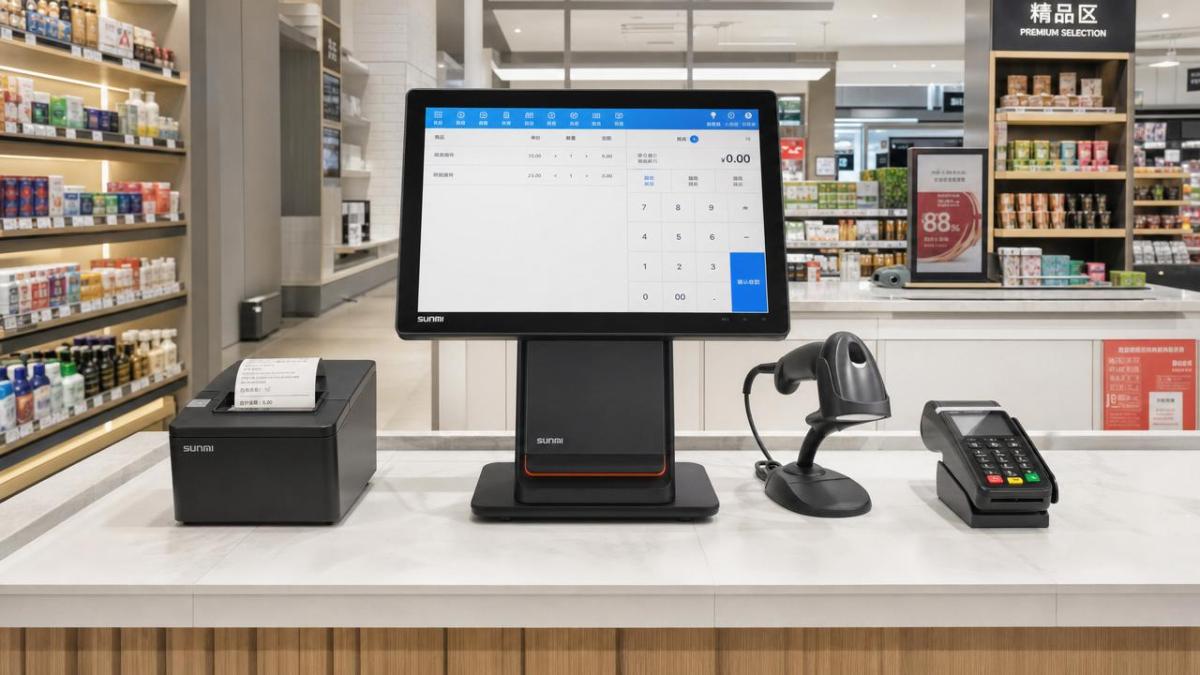
Upfront hardware pricing is the easiest number to compare, but it is rarely the most important one. A lower purchase price can look attractive during procurement, yet technical evaluators know that retail hardware creates costs long after the first order is placed. Installation time, image management, peripheral configuration, software certification, field support, and replacement cycles all shape actual value.
For POS terminals, total cost of ownership usually includes six layers. The first is acquisition cost: terminal, display, payment device compatibility, mounting accessories, and cabling. The second is deployment cost: staging, operating system configuration, application loading, and device enrollment. The third is integration cost: adapting middleware, drivers, APIs, and payment workflows. The fourth is support cost: remote management, warranty handling, spare stock, and technician visits. The fifth is downtime cost: lost transactions, queue build-up, manual workarounds, and customer dissatisfaction. The sixth is refresh cost: future upgrades, migration effort, and disposal or redeployment planning.
In many sourcing exercises, hidden deployment and support costs exceed the savings gained from choosing a cheaper terminal. A device that requires custom drivers, irregular firmware updates, or manual troubleshooting across stores can erode procurement gains very quickly. Even small inefficiencies matter at scale. Five extra minutes of setup per device is negligible in a pilot, but expensive in a national rollout.
Technical evaluators should therefore compare vendors using a lifecycle framework rather than a unit-price spreadsheet. A more expensive POS terminal may still be the lower-cost option if it shortens installation, improves serviceability, or reduces failure frequency. The evaluation question is not “Which terminal is cheapest to buy?” but “Which terminal is cheapest to operate reliably in our environment?”
How Much Uptime Is Really Worth in Modern Retail Environments?
Uptime is one of the most underestimated variables in POS terminal selection. A terminal outage affects more than a single workstation. It can interrupt payment acceptance, slow line movement, create reconciliation issues, and place immediate stress on staff. In high-volume stores, a short disruption at checkout can produce a visible customer experience failure within minutes.
For technical teams, uptime should be translated into business impact. If a terminal fails during peak hours, the cost is not limited to repair. There may be abandoned baskets, reduced throughput, staff intervention, ticket escalation, and delayed end-of-day processes. In sectors with omnichannel workflows, outages can also disrupt click-and-collect, loyalty validation, digital receipts, or inventory synchronization.
That is why raw hardware specifications do not tell the whole reliability story. Uptime depends on component quality, thermal design, power stability, storage endurance, operating system control, and the maturity of firmware support. Fanless design, solid-state storage, sealed surfaces, and stable I/O architecture are often more meaningful than headline processor speed, especially in retail settings where terminals run long hours with limited maintenance windows.
Environmental fit also matters. A POS terminal in a climate-controlled boutique faces different stress conditions than one in a quick-service restaurant, transit kiosk, or grocery lane. Heat, dust, spills, vibration, and repeated peripheral use can all influence failure rates. A device that performs well in a showroom demo may behave differently after twelve months on a busy floor.
For evaluators, the practical task is to identify which uptime claims are measurable. Ask vendors for field failure rates, RMA trends, mean time between failure assumptions, service turnaround times, and examples of deployments comparable in scale and operating conditions. Reliability claims become more credible when they are supported by data from similar commercial environments rather than by generalized marketing language.
Where Integration Tradeoffs Usually Appear First
Integration is often where POS terminal projects become slower, more expensive, or unexpectedly risky. In many organizations, the terminal must operate within an existing ecosystem that includes POS software, payment middleware, barcode scanners, receipt printers, cash drawers, customer displays, back-office tools, device management platforms, and security controls. Hardware that looks flexible on paper may still create friction if compatibility is incomplete or poorly documented.
The first integration tradeoff is openness versus standardization. A highly open hardware platform may support broad customization, but that flexibility can increase testing scope and configuration complexity. A more standardized terminal can simplify deployment, yet it may limit future changes or require compromises in peripheral selection. Technical evaluators need to decide which constraint is more manageable in their architecture.
The second tradeoff is legacy compatibility versus future readiness. Many retailers still rely on older applications, serial peripherals, or established payment certifications. A modern POS terminal may offer cleaner design and better processing efficiency, but if it requires substantial adaptation to legacy software, the migration cost may be too high. On the other hand, preserving compatibility with outdated infrastructure can delay modernization and create a different form of long-term risk.
The third tradeoff is integration speed versus optimization depth. Some vendors can provide reference images, validated peripheral bundles, and pre-tested software stacks that accelerate rollout. Others may offer more modularity, but require more internal testing. The right choice depends on whether the organization values faster implementation or deeper custom control.
Integration risk should be evaluated across several layers. Hardware ports and peripheral support are only the starting point. Teams also need to assess operating system versions, payment application support, driver stability, patching models, remote management tools, security hardening requirements, and the vendor’s release discipline. A terminal that integrates today but creates maintenance uncertainty tomorrow may not be a strong long-term choice.
What Technical Evaluators Should Verify Before Approving a Vendor
A strong POS terminal evaluation combines lab testing, operational modeling, and supplier due diligence. Rather than relying on feature lists, evaluators should build a structured checklist that reflects actual deployment conditions. This allows competing options to be compared consistently and reduces the chance that an important constraint is discovered after procurement.
Start with platform fit. Confirm processor performance for your application load, memory headroom for future updates, display quality for cashier use, and touch responsiveness under expected usage patterns. Then review I/O requirements carefully. Number and type of USB ports, serial support, network options, audio needs, and display outputs can affect accessory compatibility more than many buyers expect.
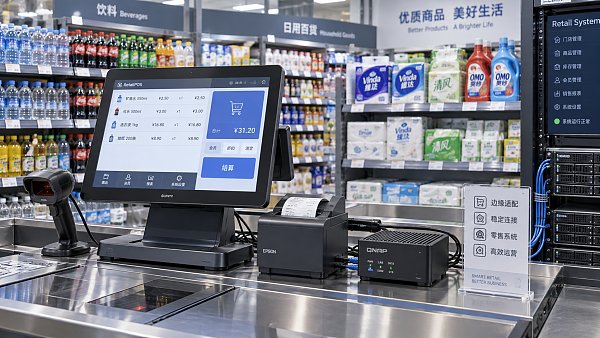
Next, test peripheral interoperability. Barcode scanners, printers, scales, payment devices, kitchen printers, customer-facing displays, and cash drawers often expose real integration weaknesses. Verify not only that devices connect, but that they remain stable during long sessions, restart correctly after power events, and behave consistently after firmware or OS updates.
Security and manageability should receive equal attention. Ask whether the terminal supports secure boot, controlled BIOS settings, operating system lockdown, centralized patching, and remote diagnostics. A technically capable terminal can still become costly if it cannot be managed efficiently across many locations. For chain operators and distributed fleets, remote support capability often has direct cost implications.
Supplier capability matters as much as product capability. Evaluate roadmap stability, regional support coverage, spare parts availability, service SLAs, compliance documentation, and engineering responsiveness. If your commercial environment spans multiple countries, verify certifications, localization support, and service consistency by market. A terminal that is technically excellent but weakly supported can become a sourcing liability.
How to Compare POS Terminals by Use Case Instead of by Spec Sheet
Spec sheets encourage side-by-side comparisons, but they do not always reveal the best operational fit. Technical evaluators should classify POS terminals according to use case and transaction environment. The right benchmark is not “best hardware overall” but “best hardware for this workflow, support model, and deployment scale.”
In high-volume checkout environments, durability, peripheral stability, thermal control, and serviceability tend to matter more than premium design features. In assisted luxury retail, aesthetics, compact form factor, customer-facing interaction, and cable management may carry more weight. In foodservice, sealed surfaces and spill resistance become more important. In semi-unattended spaces, remote monitoring and recovery options may dominate the evaluation.
This use-case approach helps teams avoid overbuying and underbuying. Overbuying happens when organizations pay for processing power, display features, or modular options they will never use. Underbuying happens when they select a lower-cost terminal that cannot handle future software requirements, added peripherals, or continuous operation. Both errors create avoidable cost.
A practical scoring model can improve decisions. Assign weighted values to lifecycle cost, uptime risk, integration effort, serviceability, environmental suitability, and supplier support. Then test finalists against real scenarios such as peak-hour transaction load, power recovery, network interruption, peripheral swap-out, and software patch deployment. These scenario tests often reveal meaningful differences that standard technical comparisons miss.
The Sourcing View: Balancing Standardization, Flexibility, and Global Deployment
For organizations sourcing across regions, POS terminal evaluation is not only a technical exercise but also a standardization strategy. A globally scalable platform can reduce training burden, simplify spares management, and improve software consistency. At the same time, too much standardization can limit adaptation to local payment methods, regulatory requirements, store formats, or service ecosystems.
The best sourcing decisions usually preserve a controlled level of flexibility. That may mean selecting one primary POS terminal family with approved variations for different store formats. It may also mean defining a common software image, peripheral policy, and management framework while allowing limited local adjustments. This approach supports scale without ignoring operational realities.
For technical evaluators working with sourcing teams, vendor transparency is especially valuable. Clear documentation on component changes, lifecycle notices, certification status, and firmware policy reduces downstream risk. In large programs, even minor hardware revisions can affect qualification, compatibility, or replacement planning. Stability in the supply and engineering process is therefore part of the product value.
International projects should also consider manufacturing quality, compliance readiness, and design alignment with commercial environments. As retail spaces increasingly combine digital intelligence, visual consistency, and sustainability expectations, the terminal is no longer an isolated device. It is part of a broader commercial ecosystem that must function reliably, integrate cleanly, and support a cohesive customer experience.
Conclusion: The Best POS Terminal Is the One That Reduces Risk Across the Full Deployment Lifecycle
For technical evaluators, POS terminals should be judged as operational platforms, not commodity endpoints. Cost matters, but the most important cost is the one created over time through failures, support burden, integration delays, and forced workarounds. Uptime matters because every interruption affects revenue flow and service quality. Integration matters because hardware only creates value when it fits the larger retail stack without excessive maintenance effort.
The most effective evaluation process therefore looks beyond purchase price and beyond feature marketing. It examines real deployment conditions, lifecycle economics, support readiness, and ecosystem compatibility. When these factors are assessed together, the tradeoffs become clearer. A terminal with a higher initial price may still be the smarter choice if it lowers risk, accelerates rollout, and delivers stable performance across diverse commercial settings.
In practical terms, the strongest decision framework asks three simple questions. Will this POS terminal stay reliable in our operating environment? Will it integrate with our current and planned systems without disproportionate effort? And will the vendor support this platform well enough to protect uptime and control long-term cost? If the answer to all three is yes, the terminal is likely a good fit regardless of whether it is the lowest-priced option on the shortlist.
News Recommendations
 What records are needed for an ISO 9001 furniture factory audit?
![51a6ab95581761cc26f4318be6520c15]()
Aris Katos
Future of Carbide Coatings
 How to choose AI marketing tools that work with your existing CRM
![51a6ab95581761cc26f4318be6520c15]()
Aris Katos
Future of Carbide Coatings
 Do freight costs erase savings when buying retail fixtures wholesale?
![51a6ab95581761cc26f4318be6520c15]()
Aris Katos
Future of Carbide Coatings
 What brightness should an OEM shelf LCD screen have for retail use?
![51a6ab95581761cc26f4318be6520c15]()
Aris Katos
Future of Carbide Coatings
 Can smart retail IT solutions for CPG work with legacy POS systems?
![51a6ab95581761cc26f4318be6520c15]()
Aris Katos
Future of Carbide Coatings
 What permit approvals belong in a commercial fitout planning checklist?
![51a6ab95581761cc26f4318be6520c15]()
Aris Katos
Future of Carbide Coatings
 Does Data Transparency Matter When Selecting Consumer Goods Suppliers?
![51a6ab95581761cc26f4318be6520c15]()
Aris Katos
Future of Carbide Coatings
 How Does Commercial Design Differ from Interior Decoration?
![51a6ab95581761cc26f4318be6520c15]()
Aris Katos
Future of Carbide Coatings
 How Long Does It Take to Verify a Commercial Furniture Supplier?
![51a6ab95581761cc26f4318be6520c15]()
Aris Katos
Future of Carbide Coatings
 How to verify compostability claims from a bubble mailer manufacturer
![51a6ab95581761cc26f4318be6520c15]()
Aris Katos
Future of Carbide Coatings
 Will commercial smart infrastructure solutions work with legacy systems?
![51a6ab95581761cc26f4318be6520c15]()
Aris Katos
Future of Carbide Coatings
 How to verify a preschool furniture manufacturer's safety standards
![51a6ab95581761cc26f4318be6520c15]()
Aris Katos
Future of Carbide Coatings
 A technical comparison of semiconductor processes for power devices
![51a6ab95581761cc26f4318be6520c15]()
Aris Katos
Future of Carbide Coatings
 How to verify that a BIFMA ergonomic chair meets the standard
![51a6ab95581761cc26f4318be6520c15]()
Aris Katos
Future of Carbide Coatings
 How to use a CRI value chart when choosing LED lighting
![51a6ab95581761cc26f4318be6520c15]()
Aris Katos
Future of Carbide Coatings
 How to compare hotel aroma diffuser wholesale options by coverage area
![51a6ab95581761cc26f4318be6520c15]()
Aris Katos
Future of Carbide Coatings
 How to prevent O-rings and seals from failing in food equipment
![51a6ab95581761cc26f4318be6520c15]()
Aris Katos
Future of Carbide Coatings
 How to compare commercial linear light wholesale quotes accurately
![51a6ab95581761cc26f4318be6520c15]()
Aris Katos
Future of Carbide Coatings
 How to verify international standards compliance for Middle East exports
![51a6ab95581761cc26f4318be6520c15]()
Aris Katos
Future of Carbide Coatings
 How to select laboratory instruments for reproducible test results
![51a6ab95581761cc26f4318be6520c15]()
Aris Katos
Future of Carbide Coatings
 When does a sheet metal prototype reveal design flaws early?
![51a6ab95581761cc26f4318be6520c15]()
Aris Katos
Future of Carbide Coatings
 When PE air column bags reduce damage in e-commerce fulfillment
![51a6ab95581761cc26f4318be6520c15]()
Aris Katos
Future of Carbide Coatings
 How energy-efficient design reduces operating costs in retail lighting
![51a6ab95581761cc26f4318be6520c15]()
Aris Katos
Future of Carbide Coatings
 When commercial aluminum storefronts make sense for a retail renovation
![51a6ab95581761cc26f4318be6520c15]()
Aris Katos
Future of Carbide Coatings
 What makes LED lights durable in high-use commercial spaces?
![51a6ab95581761cc26f4318be6520c15]()
Aris Katos
Future of Carbide Coatings
 Which industry categories offer the strongest export potential in Latin America?
![51a6ab95581761cc26f4318be6520c15]()
Aris Katos
Future of Carbide Coatings
 How to choose an ultra bright waterproof window display for storefronts
![51a6ab95581761cc26f4318be6520c15]()
Aris Katos
Future of Carbide Coatings
 How to verify suppliers on a trade portal for global sourcing
![51a6ab95581761cc26f4318be6520c15]()
Aris Katos
Future of Carbide Coatings
 How RoHS requirements should be stated in product specifications
![51a6ab95581761cc26f4318be6520c15]()
Aris Katos
Future of Carbide Coatings
 What affects the lead time for custom retail counter displays?
![51a6ab95581761cc26f4318be6520c15]()
Aris Katos
Future of Carbide Coatings
 What consumer packaging USA importers need to verify before ordering
![51a6ab95581761cc26f4318be6520c15]()
Aris Katos
Future of Carbide Coatings
 How commercial spaces interiors shape customer dwell time
![51a6ab95581761cc26f4318be6520c15]()
Aris Katos
Future of Carbide Coatings
 How LED commercial lighting design reduces glare in retail spaces
![51a6ab95581761cc26f4318be6520c15]()
Aris Katos
Future of Carbide Coatings
 How industrial technology information improves RFID inventory accuracy
![51a6ab95581761cc26f4318be6520c15]()
Aris Katos
Future of Carbide Coatings
 When drip garden watering systems make more sense than sprinklers
![51a6ab95581761cc26f4318be6520c15]()
Aris Katos
Future of Carbide Coatings
 When category comparison improves sourcing for industrial applications
![51a6ab95581761cc26f4318be6520c15]()
Aris Katos
Future of Carbide Coatings
 Industrial application guidance for selecting the right LED lighting
![51a6ab95581761cc26f4318be6520c15]()
Aris Katos
Future of Carbide Coatings
 Which commercial architecture standards apply to European retail fit-outs?
![51a6ab95581761cc26f4318be6520c15]()
Aris Katos
Future of Carbide Coatings
 How to verify FDA requirements for maternity care products
![51a6ab95581761cc26f4318be6520c15]()
Aris Katos
Future of Carbide Coatings