
EV Tech Trends Shaping Fleet Charging Decisions in 2026
Time
Click Count
As electrification moves from pilot programs to enterprise-wide deployment, EV Tech is becoming a decisive factor in how businesses plan, finance, and scale fleet charging in 2026. From smart load management and battery analytics to interoperable charging infrastructure and sustainability reporting, decision makers must evaluate more than hardware costs. The right technology strategy can reduce downtime, control energy demand, support compliance, and strengthen long-term operational resilience across commercial mobility networks.
For enterprise leaders, fleet charging is no longer a facilities upgrade managed in isolation. It is a cross-functional investment involving real estate, energy procurement, finance, operations, sustainability, and digital infrastructure. The companies that make better decisions in 2026 will evaluate EV Tech as part of a broader commercial ecosystem, not as a standalone charger purchase.
Why EV Tech Is Moving Fleet Charging Beyond Hardware Procurement
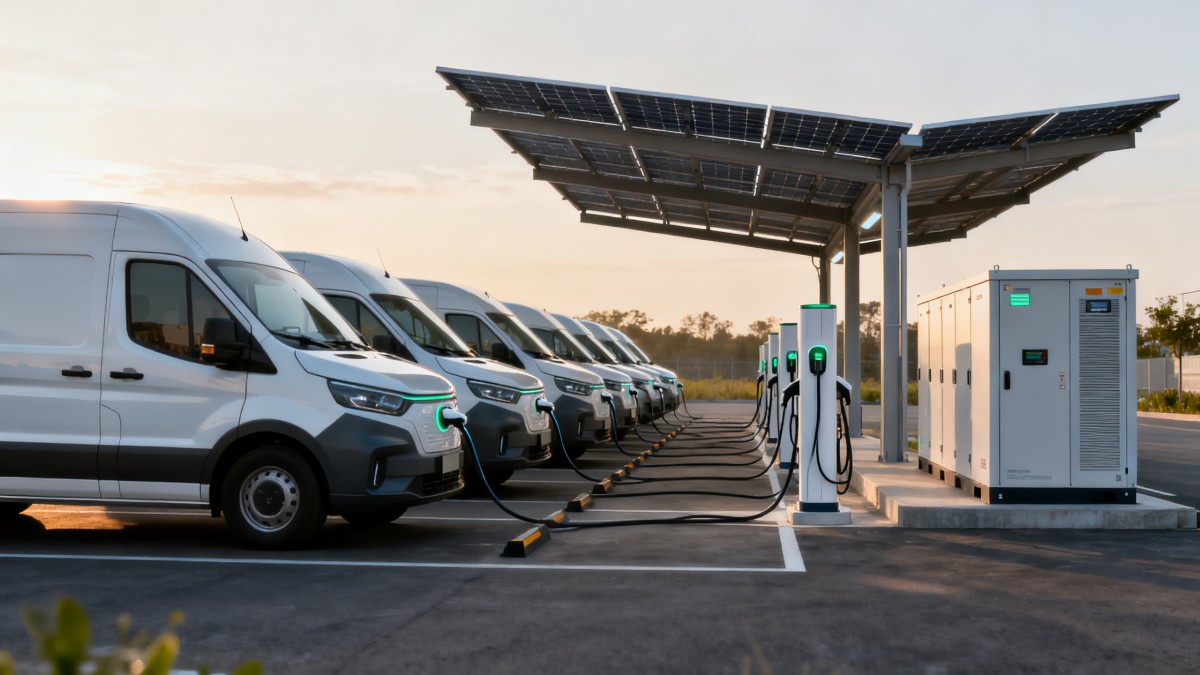
In early fleet pilots, many organizations focused on charger count, installation cost, and vehicle compatibility. In 2026, the decision model is shifting toward uptime, data visibility, energy control, and site-level scalability across 3 to 10 years.
A commercial depot may start with 10 to 30 vehicles, but expansion planning often requires electrical pathways for 2 to 4 times that capacity. EV Tech helps decision makers avoid stranded assets and repeated construction cycles.
The new decision environment for enterprise fleets
Fleet electrification now touches delivery operations, employee mobility, retail logistics, service vehicles, and customer-facing parking. For chain operators and commercial developers, charging infrastructure can influence site productivity, tenant value, and brand perception.
The role of EV Tech is to connect assets that were previously managed separately: chargers, vehicles, meters, building systems, payment platforms, maintenance workflows, and sustainability reporting tools.
Key pressures shaping 2026 investments
- Higher charger utilization targets, often moving from 20% pilot use toward 50% or more during operating windows.
- Energy demand charges that may rise sharply when several 50kW to 350kW chargers operate simultaneously.
- More complex vehicle mixes, including vans, buses, service cars, forklifts, and last-mile delivery units.
- Increasing demand for auditable carbon, cost, and charging session data across monthly or quarterly reporting cycles.
These pressures explain why purchasing teams must compare more than nameplate power. A 150kW charger with weak software integration may create more operational risk than a lower-power system connected to robust load management and diagnostics.
Smart Load Management and Energy Cost Control
Smart load management is one of the most important EV Tech trends for 2026 because it directly affects grid connection size, peak demand, and charging reliability. It can delay or reduce costly utility upgrades.
For many commercial sites, the practical question is not whether chargers can deliver 100kW or 300kW. The question is whether the site can safely allocate available power across vehicles within fixed operating windows.
Dynamic allocation becomes the operating standard
Dynamic load management distributes energy based on vehicle priority, state of charge, departure schedule, tariff period, and site capacity. A depot with 20 chargers may not need all units drawing maximum power at once.
For example, a mixed fleet can assign higher charging priority to vehicles leaving within 2 hours, while slower overnight charging supports vehicles parked for 8 to 10 hours.
The table below outlines how decision makers can compare common charging strategies before committing capital to infrastructure, electrical upgrades, and software subscriptions.
The strongest conclusion is clear: power flexibility is now a procurement requirement. Fleet operators should request scenario modeling for peak days, partial outages, seasonal demand, and vehicle growth before finalizing hardware.
Energy dashboards must support financial decisions
Finance teams need more than monthly electricity bills. Modern EV Tech platforms should provide charger-level cost allocation, site-level consumption trends, and exception alerts when energy usage exceeds planned thresholds.
Useful dashboards often include 15-minute interval data, peak demand tracking, charger fault history, and vehicle charging completion rates. These metrics support both operational control and future capital planning.
Interoperability, Standards, and Commercial Site Integration
Interoperability is becoming a board-level issue because fleet charging assets must remain useful through vehicle changes, software upgrades, and regional compliance requirements. Closed systems can increase switching costs over time.
For commercial environments, charging infrastructure may need to interact with building management systems, smart parking controls, payment terminals, access control, signage, and retail analytics platforms.
Open protocols reduce procurement risk
Decision makers should ask whether chargers support widely used communication protocols, remote diagnostics, firmware updates, and multi-vendor management. This reduces dependence on one supplier over a 7-year asset cycle.
EV Tech procurement should also examine physical standards, safety expectations, and environmental ratings. Outdoor sites may require higher ingress protection, impact resistance, and cable management planning.
Commercial integration checklist
- Confirm charger-to-network communication and remote monitoring capability before purchase approval.
- Review electrical design for current capacity, future conduit paths, and 20% to 30% expansion headroom.
- Assess site layout for vehicle turning radius, cable reach, lighting, safety barriers, and signage visibility.
- Define service response expectations, including fault triage within 24 hours for mission-critical depots.
- Map charging data into fleet, finance, and sustainability reporting systems.
For global chain operators, the same checklist should be adapted by region. Utility rules, connector preferences, permitting timelines, and commercial space constraints can vary across countries and cities.
Why benchmarking matters for sourcing teams
G-BCE’s perspective is especially relevant where commercial hardware, smart retail technology, lighting, signage, and sustainable operations intersect. Fleet charging is becoming part of the built commercial experience.
Sourcing directors should benchmark suppliers across safety documentation, installation support, software reliability, spare parts availability, and compatibility with international operating requirements such as CE, UL, or equivalent local standards.
Battery Analytics and Predictive Maintenance for Fleet Uptime
Uptime is a financial metric. If vehicles miss routes because charging sessions fail, the impact can include labor disruption, delivery penalties, emergency fuel use, and customer dissatisfaction.
Battery analytics is a fast-growing EV Tech category because it connects charging behavior with vehicle health. It helps operators understand degradation, charging speed limits, temperature effects, and recurring fault patterns.
From reactive service to predictive operations
Traditional maintenance depends on scheduled inspections or driver complaints. Predictive systems analyze charger faults, cable temperatures, session interruptions, battery state of health, and energy delivered per vehicle.
A mature fleet program may review exception reports daily, maintenance tickets weekly, and lifecycle battery trends quarterly. This rhythm helps teams identify problems before they affect route readiness.
The following table shows practical metrics enterprise teams can request from EV Tech vendors when comparing platforms for operational visibility and service planning.
The key insight is that uptime depends on measurable service behavior. A lower hardware quote may be less attractive if diagnostics, parts logistics, or response commitments are unclear.
Battery data supports procurement and resale strategy
Battery health data can support vehicle rotation, route assignment, leasing decisions, and residual value management. Heavy-duty routes may require different charging rules than light urban service cycles.
In practice, fleets may set operating rules such as limiting routine charging to 80% when routes allow, reserving 100% charges for high-mileage days, and reviewing exceptions after 5 repeated alerts.
Sustainability Reporting, Compliance, and Executive Visibility
Sustainability reporting is no longer a marketing appendix. Many enterprise buyers must track emissions reduction, electricity sourcing, asset efficiency, and supply chain responsibility with greater discipline.
EV Tech platforms can simplify reporting by connecting charging energy, vehicle usage, renewable energy certificates where applicable, and site-level operating data into repeatable monthly dashboards.
What executives should expect from charging data
Executives need concise indicators, not raw technical logs. Useful reporting often includes total kWh consumed, charging cost per vehicle, avoided fuel consumption estimates, uptime percentage, and emissions methodology notes.
A practical reporting framework may include 4 layers: site performance, fleet performance, financial impact, and sustainability contribution. Each layer should be traceable to source data.
Common reporting gaps to avoid
- Using estimated charging data when charger-level metering is available.
- Reporting energy consumption without separating fleet, employee, visitor, and public charging use cases.
- Ignoring regional grid mix differences when comparing sites across multiple markets.
- Failing to document methodology changes after software migration or supplier replacement.
For commercial developers, verified charging data can also support tenant engagement. For retailers, it may strengthen customer experience, logistics transparency, and sustainability communication at the store level.
How Enterprise Buyers Should Select EV Tech Partners in 2026
Choosing an EV Tech partner requires a structured procurement process. The cheapest bid may not deliver the lowest lifecycle cost if it creates software lock-in, weak support, or limited expansion capacity.
A robust evaluation should compare technology architecture, physical product quality, deployment capability, data governance, service network, and commercial flexibility across at least 3 qualified vendors.
A 5-step selection framework
- Define fleet needs by vehicle type, route length, parking dwell time, and operating shifts.
- Model electrical capacity for current demand and 3-year growth scenarios.
- Compare charger hardware, software features, interoperability, and service terms.
- Run a site validation phase covering civil works, permits, utility coordination, and safety layout.
- Set measurable success criteria such as uptime, energy cost, reporting accuracy, and user adoption.
This framework helps procurement teams align technical specifications with business outcomes. It also gives finance teams a clearer view of capital expenditure, operating cost, and risk exposure.
Questions to ask before signing a contract
Enterprise buyers should ask how the platform handles multi-site management, data ownership, cybersecurity practices, remote updates, spare parts, and escalation procedures for high-priority faults.
They should also request documentation for installation requirements, environmental ratings, preventive maintenance intervals, and software service levels. A 2-hour depot outage can be more expensive than a modest subscription difference.
Procurement signals that deserve caution
- No clear roadmap for protocol updates, API access, or integration with fleet management systems.
- Limited documentation on fault handling, firmware updates, or cybersecurity controls.
- Hardware specifications that omit operating temperature range, cable durability, or enclosure protection.
- Service commitments that depend only on best effort rather than defined response categories.
The best partners will not only quote equipment. They will help map the full operating model, including staff training, site phasing, monitoring governance, and lifecycle asset planning.
Building a Resilient Charging Roadmap
Fleet electrification is a multi-year transformation, not a single installation event. The most resilient organizations plan in phases, typically moving from pilot validation to regional rollout and then enterprise standardization.
A realistic roadmap may cover 6 to 12 months for first-site deployment, 12 to 24 months for multi-site scaling, and 3 to 5 years for fleet-wide optimization.
Align technology with commercial space strategy
For G-BCE’s audience, the charging roadmap should connect with broader commercial modernization. Smart lighting, signage, parking, POS systems, furniture layouts, and sustainable packaging all contribute to the customer and operator ecosystem.
EV Tech fits this ecosystem when it improves site intelligence, resource efficiency, and operational resilience. It should be specified with the same discipline applied to commercial fixtures, digital retail systems, and supply chain infrastructure.
Practical roadmap priorities
- Standardize technical requirements across sites while allowing regional adaptation for utilities and permits.
- Create governance for data quality, access permissions, reporting cadence, and vendor accountability.
- Reserve electrical and physical expansion space before vehicle growth forces emergency retrofits.
- Use benchmarking to compare lifecycle value, not only upfront equipment price.
By 2026, fleet charging decisions will increasingly determine how efficiently enterprises move goods, serve customers, manage energy, and meet sustainability expectations. EV Tech is the connective layer that turns charging assets into an intelligent operating network.
G-BCE helps decision makers evaluate this landscape with cross-sector benchmarking, supplier transparency, and practical insight into commercial environments. To plan a scalable fleet charging strategy, explore more solutions, consult product details, or contact us to obtain a tailored decision framework for your organization.
News Recommendations
 What records are needed for an ISO 9001 furniture factory audit?
![51a6ab95581761cc26f4318be6520c15]()
Aris Katos
Future of Carbide Coatings
 How to choose AI marketing tools that work with your existing CRM
![51a6ab95581761cc26f4318be6520c15]()
Aris Katos
Future of Carbide Coatings
 Do freight costs erase savings when buying retail fixtures wholesale?
![51a6ab95581761cc26f4318be6520c15]()
Aris Katos
Future of Carbide Coatings
 Can smart retail IT solutions for CPG work with legacy POS systems?
![51a6ab95581761cc26f4318be6520c15]()
Aris Katos
Future of Carbide Coatings
 What permit approvals belong in a commercial fitout planning checklist?
![51a6ab95581761cc26f4318be6520c15]()
Aris Katos
Future of Carbide Coatings
 How Does Commercial Design Differ from Interior Decoration?
![51a6ab95581761cc26f4318be6520c15]()
Aris Katos
Future of Carbide Coatings
 How Long Does It Take to Verify a Commercial Furniture Supplier?
![51a6ab95581761cc26f4318be6520c15]()
Aris Katos
Future of Carbide Coatings
 How to verify compostability claims from a bubble mailer manufacturer
![51a6ab95581761cc26f4318be6520c15]()
Aris Katos
Future of Carbide Coatings
 Will commercial smart infrastructure solutions work with legacy systems?
![51a6ab95581761cc26f4318be6520c15]()
Aris Katos
Future of Carbide Coatings
 How to verify a preschool furniture manufacturer's safety standards
![51a6ab95581761cc26f4318be6520c15]()
Aris Katos
Future of Carbide Coatings
 A technical comparison of semiconductor processes for power devices
![51a6ab95581761cc26f4318be6520c15]()
Aris Katos
Future of Carbide Coatings
 How to verify that a BIFMA ergonomic chair meets the standard
![51a6ab95581761cc26f4318be6520c15]()
Aris Katos
Future of Carbide Coatings
 How to use a CRI value chart when choosing LED lighting
![51a6ab95581761cc26f4318be6520c15]()
Aris Katos
Future of Carbide Coatings
 How to compare hotel aroma diffuser wholesale options by coverage area
![51a6ab95581761cc26f4318be6520c15]()
Aris Katos
Future of Carbide Coatings
 How to prevent O-rings and seals from failing in food equipment
![51a6ab95581761cc26f4318be6520c15]()
Aris Katos
Future of Carbide Coatings
 How to compare commercial linear light wholesale quotes accurately
![51a6ab95581761cc26f4318be6520c15]()
Aris Katos
Future of Carbide Coatings
 How to verify international standards compliance for Middle East exports
![51a6ab95581761cc26f4318be6520c15]()
Aris Katos
Future of Carbide Coatings
 How to select laboratory instruments for reproducible test results
![51a6ab95581761cc26f4318be6520c15]()
Aris Katos
Future of Carbide Coatings
 When does a sheet metal prototype reveal design flaws early?
![51a6ab95581761cc26f4318be6520c15]()
Aris Katos
Future of Carbide Coatings
 When PE air column bags reduce damage in e-commerce fulfillment
![51a6ab95581761cc26f4318be6520c15]()
Aris Katos
Future of Carbide Coatings
 How energy-efficient design reduces operating costs in retail lighting
![51a6ab95581761cc26f4318be6520c15]()
Aris Katos
Future of Carbide Coatings
 When commercial aluminum storefronts make sense for a retail renovation
![51a6ab95581761cc26f4318be6520c15]()
Aris Katos
Future of Carbide Coatings
 What makes LED lights durable in high-use commercial spaces?
![51a6ab95581761cc26f4318be6520c15]()
Aris Katos
Future of Carbide Coatings
 Which industry categories offer the strongest export potential in Latin America?
![51a6ab95581761cc26f4318be6520c15]()
Aris Katos
Future of Carbide Coatings
 How to choose an ultra bright waterproof window display for storefronts
![51a6ab95581761cc26f4318be6520c15]()
Aris Katos
Future of Carbide Coatings
 How to verify suppliers on a trade portal for global sourcing
![51a6ab95581761cc26f4318be6520c15]()
Aris Katos
Future of Carbide Coatings
 How RoHS requirements should be stated in product specifications
![51a6ab95581761cc26f4318be6520c15]()
Aris Katos
Future of Carbide Coatings
 What affects the lead time for custom retail counter displays?
![51a6ab95581761cc26f4318be6520c15]()
Aris Katos
Future of Carbide Coatings
 What consumer packaging USA importers need to verify before ordering
![51a6ab95581761cc26f4318be6520c15]()
Aris Katos
Future of Carbide Coatings
 How commercial spaces interiors shape customer dwell time
![51a6ab95581761cc26f4318be6520c15]()
Aris Katos
Future of Carbide Coatings
 How LED commercial lighting design reduces glare in retail spaces
![51a6ab95581761cc26f4318be6520c15]()
Aris Katos
Future of Carbide Coatings
 How industrial technology information improves RFID inventory accuracy
![51a6ab95581761cc26f4318be6520c15]()
Aris Katos
Future of Carbide Coatings
 When drip garden watering systems make more sense than sprinklers
![51a6ab95581761cc26f4318be6520c15]()
Aris Katos
Future of Carbide Coatings
 When category comparison improves sourcing for industrial applications
![51a6ab95581761cc26f4318be6520c15]()
Aris Katos
Future of Carbide Coatings
 Industrial application guidance for selecting the right LED lighting
![51a6ab95581761cc26f4318be6520c15]()
Aris Katos
Future of Carbide Coatings
 Which commercial architecture standards apply to European retail fit-outs?
![51a6ab95581761cc26f4318be6520c15]()
Aris Katos
Future of Carbide Coatings
 How to verify FDA requirements for maternity care products
![51a6ab95581761cc26f4318be6520c15]()
Aris Katos
Future of Carbide Coatings
 How to verify BPA-free claims for food-contact products
![51a6ab95581761cc26f4318be6520c15]()
Aris Katos
Future of Carbide Coatings
 When does a European wholesale supplier suit modular office projects?
![51a6ab95581761cc26f4318be6520c15]()
Aris Katos
Future of Carbide Coatings