Retail Intelligence Software: What to Compare Before Deployment
Time
Click Count
Choosing the right retail intelligence software requires more than a feature checklist. For technical evaluators, the real comparison lies in data accuracy, system integration, scalability, compliance, and long-term deployment value. This article outlines the critical factors to assess before rollout, helping commercial teams reduce risk, align technology with operational goals, and build smarter, more resilient retail environments.
In modern commercial ecosystems, software decisions affect far more than dashboards. They influence replenishment speed, labor allocation, shelf execution, customer analytics, store network visibility, and supplier coordination across regions. For teams working with large-format retail, branded environments, smart fixtures, AI-enabled POS, and cross-border sourcing, the evaluation process must connect technical architecture with operational reality.
For that reason, retail intelligence software should be assessed as an infrastructure layer rather than a standalone application. A strong platform must support data from stores, devices, merchandising systems, and supply chain nodes, while remaining usable for commercial developers, sourcing managers, IT administrators, and analytics teams at the same time.
Core Comparison Criteria Before Deployment
Before comparing vendors, technical evaluators should define 4 to 6 decision pillars. In most multi-site retail environments, the most important ones are data quality, integration depth, scalability, security, workflow fit, and total lifecycle cost. If one of these pillars is weak, deployment delays often appear within the first 90 to 180 days.
This matters even more for organizations operating across commercial furniture, store technology, packaging, signage, and consumer goods supply chains. In these settings, retail intelligence software must unify data from physical and digital sources instead of creating another disconnected reporting layer.
Data Accuracy and Source Reliability
Data quality should be tested first, because every forecast, alert, and recommendation depends on it. A platform that claims real-time visibility but processes updates every 6 to 12 hours may be acceptable for weekly planning, yet insufficient for high-turnover categories, fast store replenishment, or promotional execution monitoring.
Ask vendors how they handle duplicate records, missing SKU attributes, mismatched store IDs, delayed feeds, and exception logic. In many deployments, a practical benchmark is to keep critical master data consistency above 98% and exception reconciliation within 24 hours for priority feeds.
What to validate during a pilot
- How many source systems can be connected in phase 1, phase 2, and phase 3
- Whether item, location, and transaction records follow a shared taxonomy
- How often data refresh cycles run: near real time, hourly, daily, or batch-based
- Whether anomaly alerts are rule-based, statistical, or machine-learning assisted
Integration with Retail and Commercial Systems
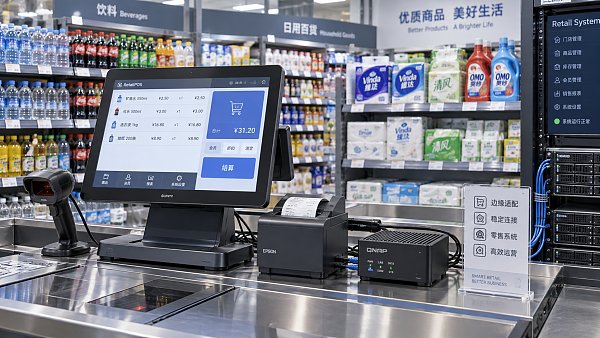
The second comparison area is integration. Retail intelligence software rarely creates value in isolation. It should connect with ERP, POS, CRM, WMS, e-commerce, planogram tools, digital signage controls, IoT gateways, and supplier reporting systems. In technically mature environments, 8 to 15 integrations are common for a full deployment.
Technical teams should examine API documentation, webhook support, batch import options, middleware compatibility, authentication methods, and data model flexibility. A visually polished interface cannot compensate for weak interoperability, especially when stores operate in multiple countries or when fixture, packaging, and merchandising decisions depend on shared operational data.
The table below summarizes practical comparison factors that help technical evaluators score retail intelligence software before commercial rollout.
A useful takeaway is that technical fit is measurable. If a vendor cannot define refresh intervals, integration limits, or access controls in concrete terms, the deployment risk is usually higher than the demo suggests.
Scalability Across Formats, Regions, and Hardware Layers
Retail networks are rarely uniform. One chain may operate flagship stores, kiosks, franchised outlets, and showroom-based environments at the same time. Retail intelligence software should therefore support multiple store models, tax structures, currencies, languages, and device standards without forcing duplicate configurations.
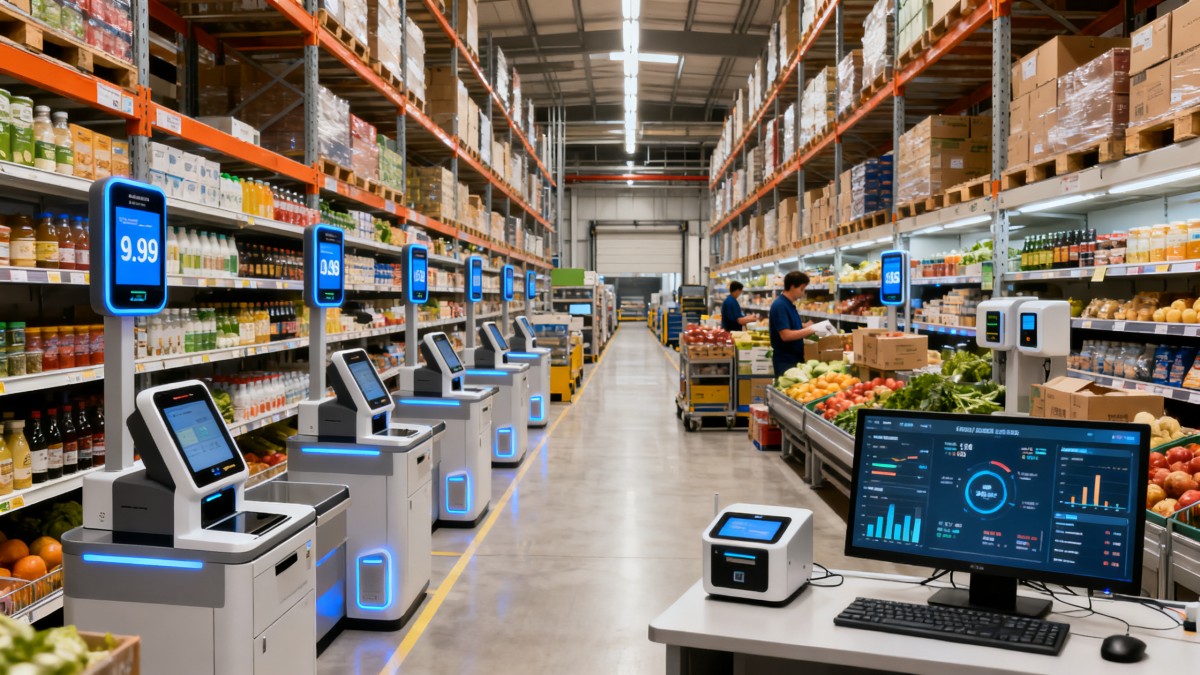
Scalability also matters when commercial environments include smart shelves, self-checkout units, digital displays, occupancy sensors, or AI-driven POS terminals. If the platform can only ingest standard transaction logs, it may fail to support future benchmarking across physical assets and customer experience touchpoints.
Security, Compliance, and Operational Governance
Once the technical baseline is clear, the next step is governance. Retail intelligence software often handles transactional records, workforce metrics, product performance, vendor data, and customer behavior indicators. That means security controls should be evaluated at the same level as analytics features.
Compliance Readiness in Global Deployments
For international operators, compliance is not a box-ticking exercise. Data residency rules, cross-border transfer restrictions, consent management, and audit logging can affect rollout plans in 2 to 5 jurisdictions at once. A platform that works in one market may require additional controls before use in another.
Technical evaluators should ask where data is stored, how logs are retained, whether sensitive fields can be masked, and how permissions are segmented by region. Retention settings often need configurable periods such as 30 days, 12 months, or 7 years depending on internal policy and market rules.
Common governance checks
- Verify role-based access for store, regional, and global teams
- Confirm audit trails for report changes, imports, and user actions
- Review encryption in transit and at rest
- Check backup frequency and recovery targets such as 4-hour or 24-hour windows
Workflow Control and Exception Management
A technically capable solution can still fail if workflows are poorly governed. Retail intelligence software should support exception queues, alert prioritization, approval routing, and issue ownership. Otherwise, teams may see the same KPI gaps repeatedly without a clear action path.
For example, if stock anomalies, display compliance failures, or pricing mismatches are flagged but not assigned, the software becomes a monitoring tool rather than an operational engine. In mature deployments, exception response rules are usually mapped into 3 levels: immediate, same-day, and scheduled review.
The next table highlights governance items that are often overlooked during procurement but become critical after deployment begins.
These governance controls may not be the most visible part of a vendor presentation, but they often determine whether a platform remains reliable after expansion to new stores, countries, and business units.
Deployment Planning, Cost Logic, and Long-Term Fit
Even well-designed retail intelligence software can underperform if deployment planning is rushed. Technical evaluators should compare not only licensing structure, but also onboarding effort, implementation sequence, internal resource requirements, and change-management burden over the first 6 to 12 months.
Pilot Design and Rollout Sequence
A controlled pilot is usually the safest path. For many organizations, a 3-stage model works well: stage 1 for data mapping, stage 2 for process validation, and stage 3 for scaled adoption. Pilot scope often starts with 10 to 20 stores, 2 to 3 source systems, and a limited KPI set such as availability, sell-through, promotion compliance, and stock variance.
The goal is not to prove every feature. It is to confirm that the software can deliver trustworthy outputs under real operational conditions. That includes incomplete data, store-level exceptions, network latency, inconsistent supplier inputs, and varying hardware conditions across commercial sites.
Recommended rollout checklist
- Define 5 to 8 KPIs that directly support business decisions
- Assign data owners for every source feed before integration begins
- Set pass or fail criteria for latency, accuracy, and user adoption
- Schedule weekly reviews during the first 8 to 10 weeks
Comparing Total Cost Beyond License Fees
Price comparisons become misleading when they focus only on annual subscriptions. Technical evaluators should model at least 5 cost layers: software license, implementation, integration, support, and internal operating effort. In some enterprise projects, integration and data preparation can represent 30% to 50% of first-year total cost.
It is also important to evaluate whether the platform reduces manual reporting, accelerates issue resolution, or improves sell-through decisions enough to justify deployment. Cost should be linked to measurable business outcomes such as lower stockout frequency, faster store response cycles, or better visibility into supplier and merchandising performance.
Fit for Cross-Sector Commercial Intelligence
For organizations operating within broader commercial modernization programs, the best retail intelligence software is the one that can evolve beyond standard retail metrics. It should help connect store operations with fixture performance, smart device uptime, packaging compliance, signage execution, and sourcing benchmarks where relevant.
This broader view is increasingly valuable for global commercial architects, sourcing directors, and retail technology teams that need one decision layer across multiple asset categories. A platform that supports cross-functional visibility can reduce duplicated reporting tools and improve consistency between procurement, operations, and brand execution.
Common Evaluation Mistakes to Avoid
Several mistakes appear repeatedly during software selection. The first is overvaluing front-end visuals while underestimating integration complexity. The second is testing with clean sample data instead of real operational records. The third is assuming one global template will fit every region, store format, and supplier process from day 1.
Another common issue is unclear ownership after go-live. If no team is responsible for rule tuning, data stewardship, and user enablement, value declines quickly after the first quarter. Strong retail intelligence software still needs governance, review cycles, and practical operating discipline to remain effective.
How Technical Evaluators Can Make a Better Final Decision
A better decision framework usually combines technical scoring and operational scoring. One practical method is to assign 60% weight to core architecture, data controls, integration, and security, then 40% to usability, reporting relevance, vendor responsiveness, and implementation readiness. This keeps software selection anchored in deployment reality.
When comparing retail intelligence software, the most reliable choice is rarely the one with the longest feature list. It is the one that can support actual retail workflows, scale with commercial growth, and maintain trustworthy data across systems, regions, and physical environments.
For businesses modernizing stores, sourcing infrastructure, and consumer-facing environments, a disciplined evaluation process reduces risk and creates stronger long-term value. If you are reviewing platforms for chain retail, smart commercial spaces, or cross-border supply ecosystems, G-BCE can help you benchmark technical fit, compare deployment factors, and align software decisions with broader commercial performance goals.
Contact us to discuss your evaluation criteria, request a tailored comparison framework, or explore more solutions for data-driven retail and commercial ecosystem modernization.
News Recommendations
 What records are needed for an ISO 9001 furniture factory audit?
![51a6ab95581761cc26f4318be6520c15]()
Aris Katos
Future of Carbide Coatings
 How to choose AI marketing tools that work with your existing CRM
![51a6ab95581761cc26f4318be6520c15]()
Aris Katos
Future of Carbide Coatings
 Do freight costs erase savings when buying retail fixtures wholesale?
![51a6ab95581761cc26f4318be6520c15]()
Aris Katos
Future of Carbide Coatings
 Can smart retail IT solutions for CPG work with legacy POS systems?
![51a6ab95581761cc26f4318be6520c15]()
Aris Katos
Future of Carbide Coatings
 What permit approvals belong in a commercial fitout planning checklist?
![51a6ab95581761cc26f4318be6520c15]()
Aris Katos
Future of Carbide Coatings
 How Does Commercial Design Differ from Interior Decoration?
![51a6ab95581761cc26f4318be6520c15]()
Aris Katos
Future of Carbide Coatings
 How Long Does It Take to Verify a Commercial Furniture Supplier?
![51a6ab95581761cc26f4318be6520c15]()
Aris Katos
Future of Carbide Coatings
 How to verify compostability claims from a bubble mailer manufacturer
![51a6ab95581761cc26f4318be6520c15]()
Aris Katos
Future of Carbide Coatings
 Will commercial smart infrastructure solutions work with legacy systems?
![51a6ab95581761cc26f4318be6520c15]()
Aris Katos
Future of Carbide Coatings
 How to verify a preschool furniture manufacturer's safety standards
![51a6ab95581761cc26f4318be6520c15]()
Aris Katos
Future of Carbide Coatings
 A technical comparison of semiconductor processes for power devices
![51a6ab95581761cc26f4318be6520c15]()
Aris Katos
Future of Carbide Coatings
 How to verify that a BIFMA ergonomic chair meets the standard
![51a6ab95581761cc26f4318be6520c15]()
Aris Katos
Future of Carbide Coatings
 How to use a CRI value chart when choosing LED lighting
![51a6ab95581761cc26f4318be6520c15]()
Aris Katos
Future of Carbide Coatings
 How to compare hotel aroma diffuser wholesale options by coverage area
![51a6ab95581761cc26f4318be6520c15]()
Aris Katos
Future of Carbide Coatings
 How to prevent O-rings and seals from failing in food equipment
![51a6ab95581761cc26f4318be6520c15]()
Aris Katos
Future of Carbide Coatings
 How to compare commercial linear light wholesale quotes accurately
![51a6ab95581761cc26f4318be6520c15]()
Aris Katos
Future of Carbide Coatings
 How to verify international standards compliance for Middle East exports
![51a6ab95581761cc26f4318be6520c15]()
Aris Katos
Future of Carbide Coatings
 How to select laboratory instruments for reproducible test results
![51a6ab95581761cc26f4318be6520c15]()
Aris Katos
Future of Carbide Coatings
 When does a sheet metal prototype reveal design flaws early?
![51a6ab95581761cc26f4318be6520c15]()
Aris Katos
Future of Carbide Coatings
 When PE air column bags reduce damage in e-commerce fulfillment
![51a6ab95581761cc26f4318be6520c15]()
Aris Katos
Future of Carbide Coatings
 How energy-efficient design reduces operating costs in retail lighting
![51a6ab95581761cc26f4318be6520c15]()
Aris Katos
Future of Carbide Coatings
 When commercial aluminum storefronts make sense for a retail renovation
![51a6ab95581761cc26f4318be6520c15]()
Aris Katos
Future of Carbide Coatings
 What makes LED lights durable in high-use commercial spaces?
![51a6ab95581761cc26f4318be6520c15]()
Aris Katos
Future of Carbide Coatings
 Which industry categories offer the strongest export potential in Latin America?
![51a6ab95581761cc26f4318be6520c15]()
Aris Katos
Future of Carbide Coatings
 How to choose an ultra bright waterproof window display for storefronts
![51a6ab95581761cc26f4318be6520c15]()
Aris Katos
Future of Carbide Coatings
 How to verify suppliers on a trade portal for global sourcing
![51a6ab95581761cc26f4318be6520c15]()
Aris Katos
Future of Carbide Coatings
 How RoHS requirements should be stated in product specifications
![51a6ab95581761cc26f4318be6520c15]()
Aris Katos
Future of Carbide Coatings
 What affects the lead time for custom retail counter displays?
![51a6ab95581761cc26f4318be6520c15]()
Aris Katos
Future of Carbide Coatings
 What consumer packaging USA importers need to verify before ordering
![51a6ab95581761cc26f4318be6520c15]()
Aris Katos
Future of Carbide Coatings
 How commercial spaces interiors shape customer dwell time
![51a6ab95581761cc26f4318be6520c15]()
Aris Katos
Future of Carbide Coatings
 How LED commercial lighting design reduces glare in retail spaces
![51a6ab95581761cc26f4318be6520c15]()
Aris Katos
Future of Carbide Coatings
 How industrial technology information improves RFID inventory accuracy
![51a6ab95581761cc26f4318be6520c15]()
Aris Katos
Future of Carbide Coatings
 When drip garden watering systems make more sense than sprinklers
![51a6ab95581761cc26f4318be6520c15]()
Aris Katos
Future of Carbide Coatings
 When category comparison improves sourcing for industrial applications
![51a6ab95581761cc26f4318be6520c15]()
Aris Katos
Future of Carbide Coatings
 Industrial application guidance for selecting the right LED lighting
![51a6ab95581761cc26f4318be6520c15]()
Aris Katos
Future of Carbide Coatings
 Which commercial architecture standards apply to European retail fit-outs?
![51a6ab95581761cc26f4318be6520c15]()
Aris Katos
Future of Carbide Coatings
 How to verify FDA requirements for maternity care products
![51a6ab95581761cc26f4318be6520c15]()
Aris Katos
Future of Carbide Coatings
 How to verify BPA-free claims for food-contact products
![51a6ab95581761cc26f4318be6520c15]()
Aris Katos
Future of Carbide Coatings
 When does a European wholesale supplier suit modular office projects?
![51a6ab95581761cc26f4318be6520c15]()
Aris Katos
Future of Carbide Coatings