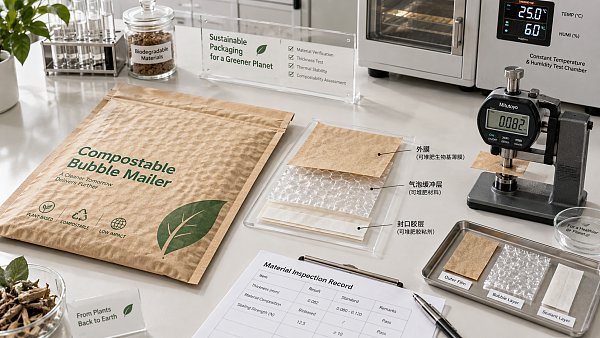
Consumer Packaging Trends in 2026: Which Formats Gain Trust?
Time
Click Count
As brands compete for credibility in a more transparent and sustainability-driven market, consumer packaging trends in 2026 are becoming a decisive factor in buyer trust. From recyclable materials and smart labeling to premium protective formats, the right packaging now signals quality, compliance, and brand accountability. For business decision-makers, understanding which formats gain trust is essential to strengthening supply chains, improving customer perception, and staying ahead in global consumer markets.
Why consumer packaging trends now require a checklist approach

Trust in packaging is no longer built by appearance alone. It is created through material clarity, product protection, disposal ease, labeling accuracy, and visible compliance.
That shift makes consumer packaging trends harder to judge by instinct. A format may look sustainable, yet fail in barrier performance, recyclability infrastructure, or retail handling.
A checklist helps compare formats across the full value chain. It reduces guesswork and supports better alignment between branding, logistics, regulation, and consumer expectations.
Checklist: which packaging formats gain trust in 2026
The most trusted consumer packaging trends share one trait: they make performance and accountability easy to see. Use the checklist below to evaluate any format.
- Prioritize mono-material formats that simplify recycling streams, reduce sorting confusion, and improve the credibility of sustainability claims across regional waste systems.
- Choose protective structures that prevent leakage, crushing, moisture damage, and tampering, because visible product failure destroys trust faster than weak brand messaging.
- Add clear disposal instructions on-pack, using recognized icons and plain language, so end users understand whether the pack is recyclable, refillable, or compostable.
- Use tamper-evident closures or seals for food, beauty, and health products, since security features increasingly influence trust in both physical retail and e-commerce delivery.
- Integrate digital labeling such as QR codes that verify sourcing, material data, batch traceability, and compliance records without overcrowding the primary package surface.
- Reduce excess packaging volume, because right-sized packs signal efficiency, lower freight waste, and show that sustainability is operational rather than decorative.
- Select finishes that look premium but remain practical, avoiding coatings or laminations that complicate recycling or create doubt about environmental claims.
- Validate shelf durability and transport performance through testing, since trusted consumer packaging trends must survive warehouses, store handling, and last-mile delivery.
- Favor refill-ready or reusable packaging where return systems are realistic, especially in categories where long-term loyalty depends on convenience and waste reduction.
- Document compliance against relevant standards and market requirements, because trust rises when packaging decisions can be supported by measurable technical evidence.
Formats that are winning confidence across categories
Paper-based rigid and semi-rigid formats
Fiber-based cartons, molded pulp trays, and paper tubes are among the strongest consumer packaging trends for visible sustainability. They communicate simplicity and easier end-of-life handling.
Trust increases when these formats avoid unnecessary plastic windows and use water-based inks or recyclable barrier layers. Performance claims must match actual moisture and impact requirements.
Mono-material flexible packaging
Flexible pouches remain attractive because they lower transport weight and material use. In 2026, trust grows when pouch structures are simplified for recycling instead of mixed-material complexity.
Formats with clear resealability, strong barrier performance, and transparent disposal guidance outperform generic flexible packs that still feel difficult to process after use.
Glass and aluminum for premium assurance
Glass jars and aluminum containers continue to gain trust where purity, safety, and premium positioning matter. They are especially persuasive in food, beverage, personal care, and wellness lines.
These formats align with consumer packaging trends focused on durability and recyclability. However, freight weight and breakage risk must be managed through smarter secondary packaging.
Refill and return systems
Refill packs, durable primary containers, and closed-loop return formats are becoming trust builders when they are convenient, hygienic, and supported by clear instructions.
These consumer packaging trends succeed best where repeat purchase is common. If the return path is unclear, the sustainability promise quickly loses credibility.
How trust-building formats vary by application
Retail shelf presentation
On the shelf, packaging must communicate trust within seconds. Structural neatness, stable stacking, readable labeling, and tactile quality influence whether a format feels reliable or disposable.
For shelf-first products, consumer packaging trends favor simple graphics, authentic material textures, and visible certification cues over excessive visual noise.
E-commerce and direct delivery
Delivery environments demand stronger packaging logic. Buyers judge brands by unboxing condition, tamper evidence, and whether protective layers feel efficient rather than wasteful.
Here, consumer packaging trends reward right-sized mailers, curbside-recyclable cushioning, and structural designs that combine protection with easy disposal.
Premium and regulated products
In beauty, nutraceutical, medical-adjacent, and high-value consumer goods, trusted packaging formats must balance elegance with documentation, traceability, and safety controls.
Smart labels, serialized coding, and tamper-evident construction are central consumer packaging trends in these segments because they turn compliance into a visible trust signal.
Common blind spots that weaken packaging trust
Overclaiming sustainability is a major risk. If recyclability depends on facilities unavailable in key markets, the format may trigger skepticism instead of confidence.
Ignoring secondary packaging is another mistake. A recyclable primary pack can lose trust if shipping damage rates rise or return handling becomes inefficient.
Poor label hierarchy also creates friction. When disposal guidance, ingredients, or compliance marks are hard to find, consumer packaging trends lose practical value.
Finally, treating premium appearance as equal to premium performance leads to failure. Trust is built when the pack works consistently, not when it only looks advanced.
Practical execution steps for 2026 packaging decisions
- Audit current formats by material type, recycling pathway, damage rate, and packaging-to-product ratio.
- Map trust signals needed for each category, including security, sustainability, convenience, and premium feel.
- Run side-by-side trials on two or three candidate formats under retail, transport, and digital commerce conditions.
- Verify claims with supplier documentation, test reports, and applicable standards before updating artwork or communications.
- Add measurable feedback loops using return data, complaint tracking, and unboxing reviews to refine future packaging choices.
This process turns consumer packaging trends into a decision framework rather than a design trend watchlist. It also helps balance brand ambition with operational reality.
Conclusion: trust the format that proves its value
The most important consumer packaging trends in 2026 are not the most novel formats. They are the formats that clearly prove safety, sustainability, usability, and consistency.
Start with a checklist, compare each format across the full supply chain, and prioritize evidence over packaging claims. Trust grows when packaging performs visibly and responsibly.
For the next step, review one existing package against the checklist above, identify the weakest trust signal, and test a replacement format with clearer technical and consumer value.
News Recommendations
 What records are needed for an ISO 9001 furniture factory audit?
![51a6ab95581761cc26f4318be6520c15]()
Aris Katos
Future of Carbide Coatings
 How to choose AI marketing tools that work with your existing CRM
![51a6ab95581761cc26f4318be6520c15]()
Aris Katos
Future of Carbide Coatings
 Do freight costs erase savings when buying retail fixtures wholesale?
![51a6ab95581761cc26f4318be6520c15]()
Aris Katos
Future of Carbide Coatings
 Can smart retail IT solutions for CPG work with legacy POS systems?
![51a6ab95581761cc26f4318be6520c15]()
Aris Katos
Future of Carbide Coatings
 What permit approvals belong in a commercial fitout planning checklist?
![51a6ab95581761cc26f4318be6520c15]()
Aris Katos
Future of Carbide Coatings
 How Does Commercial Design Differ from Interior Decoration?
![51a6ab95581761cc26f4318be6520c15]()
Aris Katos
Future of Carbide Coatings
 How Long Does It Take to Verify a Commercial Furniture Supplier?
![51a6ab95581761cc26f4318be6520c15]()
Aris Katos
Future of Carbide Coatings
 How to verify compostability claims from a bubble mailer manufacturer
![51a6ab95581761cc26f4318be6520c15]()
Aris Katos
Future of Carbide Coatings
 Will commercial smart infrastructure solutions work with legacy systems?
![51a6ab95581761cc26f4318be6520c15]()
Aris Katos
Future of Carbide Coatings
 How to verify a preschool furniture manufacturer's safety standards
![51a6ab95581761cc26f4318be6520c15]()
Aris Katos
Future of Carbide Coatings
 A technical comparison of semiconductor processes for power devices
![51a6ab95581761cc26f4318be6520c15]()
Aris Katos
Future of Carbide Coatings
 How to verify that a BIFMA ergonomic chair meets the standard
![51a6ab95581761cc26f4318be6520c15]()
Aris Katos
Future of Carbide Coatings
 How to use a CRI value chart when choosing LED lighting
![51a6ab95581761cc26f4318be6520c15]()
Aris Katos
Future of Carbide Coatings
 How to compare hotel aroma diffuser wholesale options by coverage area
![51a6ab95581761cc26f4318be6520c15]()
Aris Katos
Future of Carbide Coatings
 How to prevent O-rings and seals from failing in food equipment
![51a6ab95581761cc26f4318be6520c15]()
Aris Katos
Future of Carbide Coatings
 How to compare commercial linear light wholesale quotes accurately
![51a6ab95581761cc26f4318be6520c15]()
Aris Katos
Future of Carbide Coatings
 How to verify international standards compliance for Middle East exports
![51a6ab95581761cc26f4318be6520c15]()
Aris Katos
Future of Carbide Coatings
 How to select laboratory instruments for reproducible test results
![51a6ab95581761cc26f4318be6520c15]()
Aris Katos
Future of Carbide Coatings
 When does a sheet metal prototype reveal design flaws early?
![51a6ab95581761cc26f4318be6520c15]()
Aris Katos
Future of Carbide Coatings
 When PE air column bags reduce damage in e-commerce fulfillment
![51a6ab95581761cc26f4318be6520c15]()
Aris Katos
Future of Carbide Coatings
 How energy-efficient design reduces operating costs in retail lighting
![51a6ab95581761cc26f4318be6520c15]()
Aris Katos
Future of Carbide Coatings
 When commercial aluminum storefronts make sense for a retail renovation
![51a6ab95581761cc26f4318be6520c15]()
Aris Katos
Future of Carbide Coatings
 What makes LED lights durable in high-use commercial spaces?
![51a6ab95581761cc26f4318be6520c15]()
Aris Katos
Future of Carbide Coatings
 Which industry categories offer the strongest export potential in Latin America?
![51a6ab95581761cc26f4318be6520c15]()
Aris Katos
Future of Carbide Coatings
 How to choose an ultra bright waterproof window display for storefronts
![51a6ab95581761cc26f4318be6520c15]()
Aris Katos
Future of Carbide Coatings
 How to verify suppliers on a trade portal for global sourcing
![51a6ab95581761cc26f4318be6520c15]()
Aris Katos
Future of Carbide Coatings
 How RoHS requirements should be stated in product specifications
![51a6ab95581761cc26f4318be6520c15]()
Aris Katos
Future of Carbide Coatings
 What affects the lead time for custom retail counter displays?
![51a6ab95581761cc26f4318be6520c15]()
Aris Katos
Future of Carbide Coatings
 What consumer packaging USA importers need to verify before ordering
![51a6ab95581761cc26f4318be6520c15]()
Aris Katos
Future of Carbide Coatings
 How commercial spaces interiors shape customer dwell time
![51a6ab95581761cc26f4318be6520c15]()
Aris Katos
Future of Carbide Coatings
 How LED commercial lighting design reduces glare in retail spaces
![51a6ab95581761cc26f4318be6520c15]()
Aris Katos
Future of Carbide Coatings
 How industrial technology information improves RFID inventory accuracy
![51a6ab95581761cc26f4318be6520c15]()
Aris Katos
Future of Carbide Coatings
 When drip garden watering systems make more sense than sprinklers
![51a6ab95581761cc26f4318be6520c15]()
Aris Katos
Future of Carbide Coatings
 When category comparison improves sourcing for industrial applications
![51a6ab95581761cc26f4318be6520c15]()
Aris Katos
Future of Carbide Coatings
 Industrial application guidance for selecting the right LED lighting
![51a6ab95581761cc26f4318be6520c15]()
Aris Katos
Future of Carbide Coatings
 Which commercial architecture standards apply to European retail fit-outs?
![51a6ab95581761cc26f4318be6520c15]()
Aris Katos
Future of Carbide Coatings
 How to verify FDA requirements for maternity care products
![51a6ab95581761cc26f4318be6520c15]()
Aris Katos
Future of Carbide Coatings
 How to verify BPA-free claims for food-contact products
![51a6ab95581761cc26f4318be6520c15]()
Aris Katos
Future of Carbide Coatings
 When does a European wholesale supplier suit modular office projects?
![51a6ab95581761cc26f4318be6520c15]()
Aris Katos
Future of Carbide Coatings