Fabric Sourcing Guide: Quality, Lead Time, and MOQ
Time
Click Count
Why does fabric sourcing shape more than material cost?
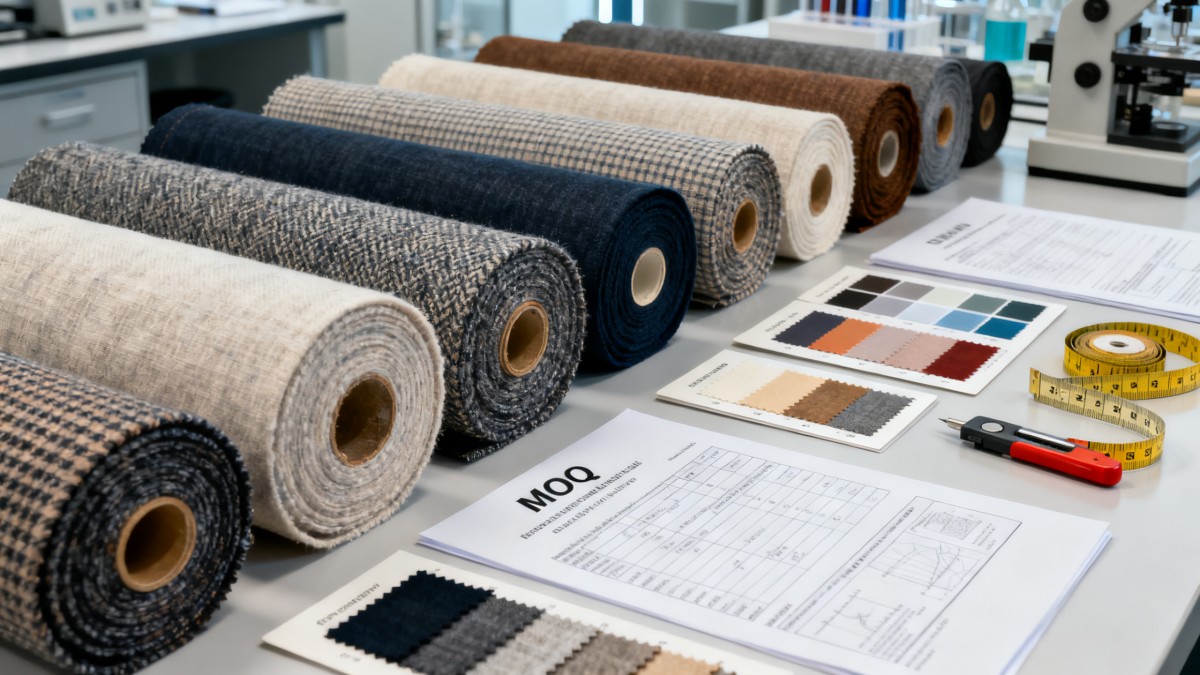
Fabric sourcing often looks simple at the sample stage. In real projects, it influences schedule stability, product consistency, compliance exposure, and margin protection.
That is why fabric sourcing deserves the same discipline used for hardware, packaging, or lighting benchmarks. A fabric decision affects the full commercial environment, not only the bill of materials.
For retail fixtures, soft seating, branded displays, and packaged consumer items, the right textile must perform visually and functionally. It also needs to move through supply chains without surprise delays.
In practice, strong fabric sourcing means balancing aesthetics, durability, lead time, and MOQ before production pressure builds. Waiting until approval week usually creates rushed substitutions and uneven quality.
A useful starting point is to treat fabric sourcing as a technical selection process. Sample appeal matters, but measurable data matters more when multiple regions and delivery windows are involved.
What should be checked first when comparing fabric suppliers?
The first check is not price. It is fit between the fabric specification and the end-use environment.
A fabric that works for decorative packaging may fail on abrasion, flammability, or colorfastness in a public interior. A low-cost option becomes expensive when replacement, claims, or rework follow.
More reliable fabric sourcing usually starts with five filters:
- Fiber composition and construction, including weave, knit, backing, and finish.
- Performance data, such as abrasion resistance, pilling, tear strength, and colorfastness.
- Compliance requirements, especially fire ratings, chemical restrictions, and regional labeling rules.
- Production capability, including dye lot control and repeat order consistency.
- Communication reliability, because approval delays often start with incomplete technical answers.
This is where a benchmarking mindset helps. Platforms focused on cross-sector transparency, such as G-BCE, are useful because they frame sourcing choices against performance standards rather than appearance alone.
When fabrics sit alongside commercial furniture, smart retail installations, or sustainable packaging, the sourcing decision becomes part of a wider system. That wider view reduces isolated decisions that create downstream friction.
A quick comparison table for early screening
Before moving into sampling rounds, it helps to compare suppliers with the same questions. That keeps fabric sourcing aligned with delivery and performance goals.
How do lead time and MOQ change the sourcing decision?
Lead time and MOQ are often treated as commercial terms. In reality, they are risk signals.
A short lead time can still be fragile if it depends on open mill capacity, imported yarn, or an unconfirmed finishing slot. A generous MOQ can also hide cash pressure if demand is uncertain.
The better question is not, “What is your lead time?” It is, “What stages make up that lead time?”
Useful fabric sourcing discussions usually break timing into lab dip approval, greige preparation, dyeing, finishing, inspection, and shipment booking. That detail shows where delays are most likely.
MOQ should be reviewed the same way. Some suppliers quote one number, but actual minimums vary by color, print screen, coating recipe, or custom treatment.
In commercial rollouts, this matters because pilot stores, phased launches, and regional variants rarely consume fabric evenly. A low headline MOQ may still create excess stock in non-core colors.
A practical approach is to separate three scenarios:
- Standard stock fabric for urgent deployment.
- Semi-custom fabric with controlled color adaptation.
- Fully custom fabric for long-cycle branded programs.
Each route changes the balance between speed, uniqueness, and inventory risk. Strong fabric sourcing avoids mixing these routes under one expectation.
When does quality mean more than hand feel and appearance?
Almost always. Hand feel and visual appeal matter, but they rarely predict real-life performance on their own.
For fabric sourcing in commercial and consumer settings, quality should be read in layers. Surface appeal is one layer. Functional durability is another. Compliance and consistency complete the picture.
A fabric may photograph beautifully yet fail after repeated cleaning. Another may pass abrasion tests but show unstable shade from lot to lot. Both outcomes disrupt installation and brand presentation.
In actual review meetings, these are the questions worth raising:
- Will the fabric face sunlight, friction, moisture, or chemical cleaning?
- Does the installation require flame resistance or other public-space standards?
- Can the supplier match future replenishment orders within acceptable shade tolerance?
- Are test reports tied to the exact construction and finish being quoted?
This is especially relevant when fabric sourcing supports integrated spaces. Upholstery, acoustic elements, soft signage, and packaging inserts may all need different performance profiles, even when the visual concept is shared.
That broader systems perspective reflects the value of technical repositories like G-BCE. The point is not to overcomplicate textile buying, but to connect it with how modern commercial environments actually operate.
What are the most common fabric sourcing mistakes?
Most sourcing failures do not begin with bad intent. They begin with assumptions that go untested.
One common mistake is approving from a hanger sample only. Small swatches rarely show backing stiffness, seam behavior, or finish variation clearly.
Another is using one specification across unrelated applications. A decorative fabric for a gift set is not automatically suitable for waiting-area seating or wall panel systems.
There is also a documentation gap that appears often in fabric sourcing. A quotation may mention “similar quality,” while the approved sample reflects a different finish or treatment level.
The safer move is to document every approved detail:
- Reference code and color standard.
- Weight, width, composition, and finish.
- Required test methods and minimum results.
- Acceptable shade tolerance and inspection method.
- Packing format and transport protection.
A final mistake is treating sustainability claims as self-evident. Recycled content, low-impact dyeing, or restricted substance compliance should be verified with the same discipline used for performance claims.
That matters more now because fabric sourcing increasingly sits beside broader material decisions, from eco-conscious packaging to durable retail interiors. Sustainability only helps if it is traceable and operationally realistic.
How can teams make fabric sourcing decisions with fewer surprises?
The best way is to build a simple decision framework before supplier negotiations move too far. That keeps urgency from replacing judgment.
Start by defining the application clearly. Then rank the non-negotiables: performance, appearance, lead time, compliance, MOQ, and replenishment needs.
After that, request comparable data from each source instead of open-ended marketing materials. Fabric sourcing becomes easier when every option is measured on the same grid.
A workable review process often includes these steps:
- Create an end-use brief with environmental and visual requirements.
- Shortlist fabrics only after checking technical data and regional compliance.
- Test a larger sample or prototype where seam, cleaning, and installation can be reviewed.
- Confirm lead time by stage, not as one total number.
- Record MOQ, reorder terms, and lot-control rules in writing.
If multiple project categories are involved, it also helps to align textile choices with adjacent procurement standards. That is especially true in ecosystems where furnishings, technology, signage, and packaging must work together visually and operationally.
Fabric sourcing is rarely just a textile task. It is part of how a project protects consistency across suppliers, regions, and future replenishment cycles.
So what is the smartest next step before locking a fabric source?
Pause long enough to turn preferences into criteria. That single step improves almost every sourcing conversation.
A good fabric sourcing decision usually comes from three things working together: a clear technical brief, realistic timing logic, and documented acceptance standards.
If the project includes public-facing interiors or consumer products, compare fabrics not only on look and price, but also on lifecycle fit. Ask whether the material supports the environment it will actually serve.
For the next step, review current fabric options against performance requirements, lead-time stages, and MOQ structure. Then narrow the list to sources that can prove consistency, not just promise it.
That approach keeps fabric sourcing practical, defensible, and easier to scale across modern commercial and consumer ecosystems.
News Recommendations
 How to choose commercial lighting for offices that reduces glare
![51a6ab95581761cc26f4318be6520c15]()
Aris Katos
Future of Carbide Coatings
 Queue Launches Fully Automated Robotic Pharmacy Kiosk for 30-Second Dispensing
![51a6ab95581761cc26f4318be6520c15]()
Aris Katos
Future of Carbide Coatings
 Can your supermarket store fixtures supplier meet your opening date?
![51a6ab95581761cc26f4318be6520c15]()
Aris Katos
Future of Carbide Coatings
 Shopify POS UI Extensions 2026-10 Adds Virtual Lists and Custom Row Templates
![51a6ab95581761cc26f4318be6520c15]()
Aris Katos
Future of Carbide Coatings
 How to assess smart office furniture suppliers’ North American support
![51a6ab95581761cc26f4318be6520c15]()
Aris Katos
Future of Carbide Coatings
 Aqara Launches Smart Lighting Range to Advance AI Spatial Intelligence
![51a6ab95581761cc26f4318be6520c15]()
Aris Katos
Future of Carbide Coatings
 How to assess demand forecasts in a lighting intelligence report
![51a6ab95581761cc26f4318be6520c15]()
Aris Katos
Future of Carbide Coatings
 Billerud推出PharmaKraft纤维基医药包装材料
![51a6ab95581761cc26f4318be6520c15]()
Aris Katos
Future of Carbide Coatings
 How to assess supplier reliability in global supply chain sourcing
![51a6ab95581761cc26f4318be6520c15]()
Aris Katos
Future of Carbide Coatings
 Omdia Forecasts 11.6% CAGR for Global LED Video Display Market in 2026–2030
![51a6ab95581761cc26f4318be6520c15]()
Aris Katos
Future of Carbide Coatings
 How to verify an LFGB testing laboratory's accreditation scope
![51a6ab95581761cc26f4318be6520c15]()
Aris Katos
Future of Carbide Coatings
 How to assess a workplace interior supplier's installation scope
![51a6ab95581761cc26f4318be6520c15]()
Aris Katos
Future of Carbide Coatings
 What records are needed for an ISO 9001 furniture factory audit?
![51a6ab95581761cc26f4318be6520c15]()
Aris Katos
Future of Carbide Coatings
 How to choose AI marketing tools that work with your existing CRM
![51a6ab95581761cc26f4318be6520c15]()
Aris Katos
Future of Carbide Coatings
 Do freight costs erase savings when buying retail fixtures wholesale?
![51a6ab95581761cc26f4318be6520c15]()
Aris Katos
Future of Carbide Coatings
 Who handles firmware updates for an OEM retail shelf screen?
![51a6ab95581761cc26f4318be6520c15]()
Aris Katos
Future of Carbide Coatings
 How to assess burn-in testing at an OEM retail shelf screen factory
![51a6ab95581761cc26f4318be6520c15]()
Aris Katos
Future of Carbide Coatings
 How custom tooling affects the cost of an OEM shelf LCD screen
![51a6ab95581761cc26f4318be6520c15]()
Aris Katos
Future of Carbide Coatings
 Can OEM retail shelf display screens work with your existing CMS?
![51a6ab95581761cc26f4318be6520c15]()
Aris Katos
Future of Carbide Coatings
 How heat buildup affects OEM retail shelf LCD screen reliability
![51a6ab95581761cc26f4318be6520c15]()
Aris Katos
Future of Carbide Coatings
 How to check whether an OEM retail shelf screen fits existing shelving
![51a6ab95581761cc26f4318be6520c15]()
Aris Katos
Future of Carbide Coatings
 What brightness should an OEM shelf LCD screen have for retail use?
![51a6ab95581761cc26f4318be6520c15]()
Aris Katos
Future of Carbide Coatings
 Can smart retail IT solutions for CPG work with legacy POS systems?
![51a6ab95581761cc26f4318be6520c15]()
Aris Katos
Future of Carbide Coatings
 What permit approvals belong in a commercial fitout planning checklist?
![51a6ab95581761cc26f4318be6520c15]()
Aris Katos
Future of Carbide Coatings
 How Can You Ensure Commercial Furniture Meets Local Safety Regulations?
![51a6ab95581761cc26f4318be6520c15]()
Aris Katos
Future of Carbide Coatings
 What Are the Most Common Mistakes When Sourcing Wholesale Office Furniture?
![51a6ab95581761cc26f4318be6520c15]()
Aris Katos
Future of Carbide Coatings
 Can You Trust G-BCE Supplier Ratings Without Independent Verification?
![51a6ab95581761cc26f4318be6520c15]()
Aris Katos
Future of Carbide Coatings
 What Selection Criteria Matter Most for Commercial Lighting?
![51a6ab95581761cc26f4318be6520c15]()
Aris Katos
Future of Carbide Coatings
 How Do You Apply Sustainability Standards to a Retail Renovation?
![51a6ab95581761cc26f4318be6520c15]()
Aris Katos
Future of Carbide Coatings
 Which Technical Factors Matter When Comparing Smart Retail Hardware?
![51a6ab95581761cc26f4318be6520c15]()
Aris Katos
Future of Carbide Coatings
 Does Data Transparency Matter When Selecting Consumer Goods Suppliers?
![51a6ab95581761cc26f4318be6520c15]()
Aris Katos
Future of Carbide Coatings
 How Does Commercial Design Differ from Interior Decoration?
![51a6ab95581761cc26f4318be6520c15]()
Aris Katos
Future of Carbide Coatings
 How Long Does It Take to Verify a Commercial Furniture Supplier?
![51a6ab95581761cc26f4318be6520c15]()
Aris Katos
Future of Carbide Coatings
 How to verify compostability claims from a bubble mailer manufacturer
![51a6ab95581761cc26f4318be6520c15]()
Aris Katos
Future of Carbide Coatings
 Will commercial smart infrastructure solutions work with legacy systems?
![51a6ab95581761cc26f4318be6520c15]()
Aris Katos
Future of Carbide Coatings
 How to verify a preschool furniture manufacturer's safety standards
![51a6ab95581761cc26f4318be6520c15]()
Aris Katos
Future of Carbide Coatings
 A technical comparison of semiconductor processes for power devices
![51a6ab95581761cc26f4318be6520c15]()
Aris Katos
Future of Carbide Coatings
 How to verify that a BIFMA ergonomic chair meets the standard
![51a6ab95581761cc26f4318be6520c15]()
Aris Katos
Future of Carbide Coatings
 How to use a CRI value chart when choosing LED lighting
![51a6ab95581761cc26f4318be6520c15]()
Aris Katos
Future of Carbide Coatings