How to Compare Wholesale Wood Restaurant Seating for Durability and Cost
Time
Click Count
Comparing restaurant seating wholesale wood options is rarely a simple price exercise. In commercial dining environments, seating affects operating cost, guest perception, maintenance labor, and replacement cycles at the same time.
That is why a better comparison starts with durability and total cost, not quotation sheets alone. Wood chairs, bar stools, and banquettes may look similar online, yet their performance can differ sharply after months of daily use.
Across hospitality and broader commercial fit-out projects, this issue has gained more attention. Platforms such as G-BCE have pushed buyers toward benchmark-driven evaluation, especially where Asian manufacturing capability meets global standards and design expectations.
Why wholesale wood seating deserves closer comparison

Restaurant seating is a working asset. It is touched, moved, cleaned, stacked, and sometimes misused every day. Because of that, small construction differences become major cost differences over time.
In a restaurant, wood seating must support both brand presentation and repetitive commercial stress. A chair that saves a small amount upfront can become expensive once repairs, wobble complaints, finish wear, and early replacement appear.
The phrase restaurant seating wholesale wood often suggests volume pricing. In practice, the smarter question is whether a seating line can keep its structure, finish, and appearance across a demanding service life.
This matters in quick-service dining, upscale casual concepts, hotel restaurants, mixed-use developments, and food halls. Each setting places different pressure on joints, surfaces, and maintenance routines.
What durability really means in wood restaurant seating
Durability is not one feature. It is the combined result of wood species, moisture control, joinery method, finish quality, hardware stability, and production consistency.
A durable product should resist loosening, surface damage, staining, and visual fatigue. It should also remain serviceable after frequent cleaning and repeated guest turnover.
Wood species changes the baseline
Not all hardwood performs equally in restaurant use. Oak, ash, beech, and rubberwood are common in restaurant seating wholesale wood programs, but they differ in grain, hardness, machining behavior, and finish response.
Oak and ash often offer strong structural confidence and visible grain character. Beech is widely used for bentwood formats and consistent finishing. Rubberwood can support value-oriented sourcing, but quality control matters more.
Joinery often predicts service life
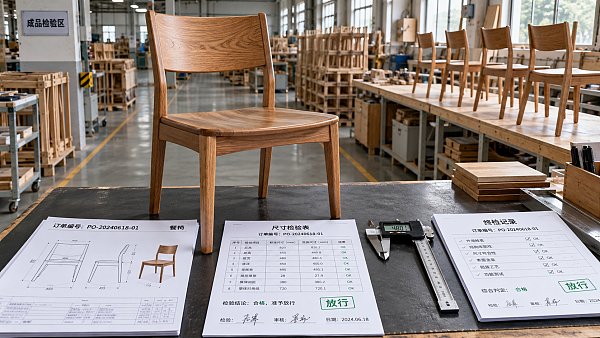
A chair usually fails at the joints before the wood itself fails. Mortise-and-tenon construction, reinforced corner blocks, dowel accuracy, and well-controlled adhesives deserve more attention than decorative details.
If a sample feels rigid and balanced, that is useful. Still, the real test is repeated loading, side stress, dragging, and cleaning exposure over time.
Finish performance is part of durability
Restaurant wood seating faces spills, sanitizers, friction, and UV exposure. A weak coating can quickly show whitening, scratches, chips, or edge wear, especially on seat rails and backrest contact points.
Commercial buyers should ask about coating systems, sheen consistency, touch-up options, and stain resistance. An attractive finish that cannot survive cleaning chemicals will distort total ownership cost.
Where cost comparisons usually go wrong
The most common mistake is comparing unit price without matching construction details. Two chairs may share dimensions and a similar visual profile while using very different materials, hardware, and finishing processes.
Another issue is treating freight-efficient flat packing as a pure advantage. It can reduce logistics cost, but it also shifts part of the risk into field assembly, hardware stability, and post-installation inconsistency.
Low quotations may also exclude performance testing, packaging protection, spare parts planning, or finish matching across batches. Those gaps only become visible when replacement orders arrive months later.
In restaurant seating wholesale wood sourcing, a realistic cost model should include maintenance labor, expected breakage, finish repair frequency, storage conditions, and reorder compatibility.
A practical framework for evaluating durability and cost
A structured comparison makes supplier discussions more useful. It also reduces the chance of choosing a chair that performs well in a showroom but poorly in service.
This type of matrix reflects the broader benchmarking mindset seen across G-BCE categories. It turns furniture selection into a measured commercial decision rather than a visual preference contest.
How usage scenarios reshape the right choice
The best restaurant seating wholesale wood specification depends on traffic pattern, guest dwell time, service style, and brand positioning. One format rarely fits every location in a chain.
High-turn quick service
Here, chairs face constant movement and frequent cleaning. Simpler frames, resilient finishes, replaceable glides, and easy stacking or repositioning usually matter more than decorative complexity.
Casual dining and hospitality-led spaces
These settings need a stronger balance between comfort and durability. Upholstered seats, sculpted backs, and warm wood tones can support guest experience, but they also raise maintenance sensitivity.
Premium concepts and design-driven projects
Custom stains, mixed materials, and signature silhouettes may justify higher pricing. Even then, the structure should remain commercially disciplined, especially when multi-site consistency is expected.
That is where cross-border sourcing becomes more strategic. Precision manufacturing can support sophisticated aesthetics, but only if sample approval, finish control, and technical communication stay tight.
Questions worth asking suppliers before approval
Good sourcing decisions often come from better questions. The goal is not to collect more brochures. The goal is to expose hidden cost drivers early.
- What wood species and moisture range are used in production?
- Which joints carry the highest load, and how are they reinforced?
- What testing has been completed, and under which standards or internal protocols?
- How does the finish perform against alcohol, detergents, and food stains?
- Can replacement units match original color and sheen after six to twelve months?
- Are glides, hardware, and spare parts available for ongoing service support?
- What packaging method is used to reduce transit damage in export shipments?
These questions are especially useful when comparing restaurant seating wholesale wood across several factories. They make quotations more comparable and reduce reliance on assumptions.
Reading value through lifecycle, not just purchase price
A lower initial cost can still be the wrong financial decision. If seating fails early, labor and disruption quickly erase any savings, especially when dining operations cannot pause for repeated repairs.
Lifecycle value comes from longer structural stability, slower visual aging, cleaner replacements, and fewer complaints from operations teams. That is the real benchmark behind durable restaurant seating wholesale wood programs.
It also aligns with current interest in sustainable materials and more responsible asset planning. Extending useful life is often more meaningful than choosing the cheapest unit and replacing it too soon.
A disciplined comparison should end with a short list built around evidence: tested samples, construction details, finish data, reorder reliability, and projected service cost. That gives the next decision a firmer base and keeps restaurant seating wholesale wood sourcing aligned with long-term commercial performance.
News Recommendations
 How do packaging customization options affect minimum order quantities in Europe?
![51a6ab95581761cc26f4318be6520c15]()
Aris Katos
Future of Carbide Coatings
 Transom to Acquire Cree LED in Commercial Lighting Ownership Change
![51a6ab95581761cc26f4318be6520c15]()
Aris Katos
Future of Carbide Coatings
 How to plan customer flow in commercial design planning
![51a6ab95581761cc26f4318be6520c15]()
Aris Katos
Future of Carbide Coatings
 USTR Urged to Permanently Suspend Fees on China-Linked Ships
![51a6ab95581761cc26f4318be6520c15]()
Aris Katos
Future of Carbide Coatings
 How to choose comparable stores for retail benchmarking
![51a6ab95581761cc26f4318be6520c15]()
Aris Katos
Future of Carbide Coatings
 How does anchoring affect modular building wind load resistance?
![51a6ab95581761cc26f4318be6520c15]()
Aris Katos
Future of Carbide Coatings
 Amazon Raises European FBA Surcharge to 2% in Ten Markets From November 2
![51a6ab95581761cc26f4318be6520c15]()
Aris Katos
Future of Carbide Coatings
 How to verify a BPA-free test report for baby products
![51a6ab95581761cc26f4318be6520c15]()
Aris Katos
Future of Carbide Coatings
 China's Mandatory Classroom Lighting Standard GB 7793-2025 Takes Effect November 1
![51a6ab95581761cc26f4318be6520c15]()
Aris Katos
Future of Carbide Coatings
 How order volume affects the price of wholesale poly mailers
![51a6ab95581761cc26f4318be6520c15]()
Aris Katos
Future of Carbide Coatings
 US Imposes 50% Tariff on Certain Canadian PET Resin Imports
![51a6ab95581761cc26f4318be6520c15]()
Aris Katos
Future of Carbide Coatings
 How to read the maximum ratings in a semiconductor datasheet
![51a6ab95581761cc26f4318be6520c15]()
Aris Katos
Future of Carbide Coatings
 University of Maryland Develops Bio-Based Packaging to Extend Avocado and Cucumber Shelf Life
![51a6ab95581761cc26f4318be6520c15]()
Aris Katos
Future of Carbide Coatings
 How to verify a cookware manufacturer's induction compatibility claims
![51a6ab95581761cc26f4318be6520c15]()
Aris Katos
Future of Carbide Coatings
 Omdia Forecasts 11.6% Annual Growth in LED Display Revenue Through 2030
![51a6ab95581761cc26f4318be6520c15]()
Aris Katos
Future of Carbide Coatings
 How to verify a pulp molding packaging factory's production capacity
![51a6ab95581761cc26f4318be6520c15]()
Aris Katos
Future of Carbide Coatings
 Curion Survey: Half of Consumers Frustrated by Sustainable Packaging
![51a6ab95581761cc26f4318be6520c15]()
Aris Katos
Future of Carbide Coatings
 How to assess the credibility of market insight content
![51a6ab95581761cc26f4318be6520c15]()
Aris Katos
Future of Carbide Coatings
 US Removes 50% Additional Tariff on Selected Canadian Packaging Products
![51a6ab95581761cc26f4318be6520c15]()
Aris Katos
Future of Carbide Coatings
 Will a waterproof dimmable LED driver work with your existing dimmer?
![51a6ab95581761cc26f4318be6520c15]()
Aris Katos
Future of Carbide Coatings
 Charter Next Generation Raises Film PCR Use 30%, Advances Food-Grade Applications
![51a6ab95581761cc26f4318be6520c15]()
Aris Katos
Future of Carbide Coatings
 How to choose a dog harness and leash for a dog that pulls hard
![51a6ab95581761cc26f4318be6520c15]()
Aris Katos
Future of Carbide Coatings
 How to respect local customs when negotiating with overseas suppliers
![51a6ab95581761cc26f4318be6520c15]()
Aris Katos
Future of Carbide Coatings
 RFID Recycling Challenges Bring Paper-Based and Chipless Tags Into Focus
![51a6ab95581761cc26f4318be6520c15]()
Aris Katos
Future of Carbide Coatings
 How to choose commercial lighting for offices that reduces glare
![51a6ab95581761cc26f4318be6520c15]()
Aris Katos
Future of Carbide Coatings
 Queue Launches Fully Automated Robotic Pharmacy Kiosk for 30-Second Dispensing
![51a6ab95581761cc26f4318be6520c15]()
Aris Katos
Future of Carbide Coatings
 Can your supermarket store fixtures supplier meet your opening date?
![51a6ab95581761cc26f4318be6520c15]()
Aris Katos
Future of Carbide Coatings
 Shopify POS UI Extensions 2026-10 Adds Virtual Lists and Custom Row Templates
![51a6ab95581761cc26f4318be6520c15]()
Aris Katos
Future of Carbide Coatings
 How to assess smart office furniture suppliers’ North American support
![51a6ab95581761cc26f4318be6520c15]()
Aris Katos
Future of Carbide Coatings
 Aqara Launches Smart Lighting Range to Advance AI Spatial Intelligence
![51a6ab95581761cc26f4318be6520c15]()
Aris Katos
Future of Carbide Coatings
 How to assess demand forecasts in a lighting intelligence report
![51a6ab95581761cc26f4318be6520c15]()
Aris Katos
Future of Carbide Coatings
 Billerud推出PharmaKraft纤维基医药包装材料
![51a6ab95581761cc26f4318be6520c15]()
Aris Katos
Future of Carbide Coatings
 How to assess supplier reliability in global supply chain sourcing
![51a6ab95581761cc26f4318be6520c15]()
Aris Katos
Future of Carbide Coatings
 Omdia Forecasts 11.6% CAGR for Global LED Video Display Market in 2026–2030
![51a6ab95581761cc26f4318be6520c15]()
Aris Katos
Future of Carbide Coatings
 How to verify an LFGB testing laboratory's accreditation scope
![51a6ab95581761cc26f4318be6520c15]()
Aris Katos
Future of Carbide Coatings
 How to assess a workplace interior supplier's installation scope
![51a6ab95581761cc26f4318be6520c15]()
Aris Katos
Future of Carbide Coatings
 What records are needed for an ISO 9001 furniture factory audit?
![51a6ab95581761cc26f4318be6520c15]()
Aris Katos
Future of Carbide Coatings
 How to choose AI marketing tools that work with your existing CRM
![51a6ab95581761cc26f4318be6520c15]()
Aris Katos
Future of Carbide Coatings
 Do freight costs erase savings when buying retail fixtures wholesale?
![51a6ab95581761cc26f4318be6520c15]()
Aris Katos
Future of Carbide Coatings