How to Evaluate Industrial NDT Equipment for Field Accuracy
Time
Click Count
How to Evaluate Industrial NDT Equipment for Field Accuracy
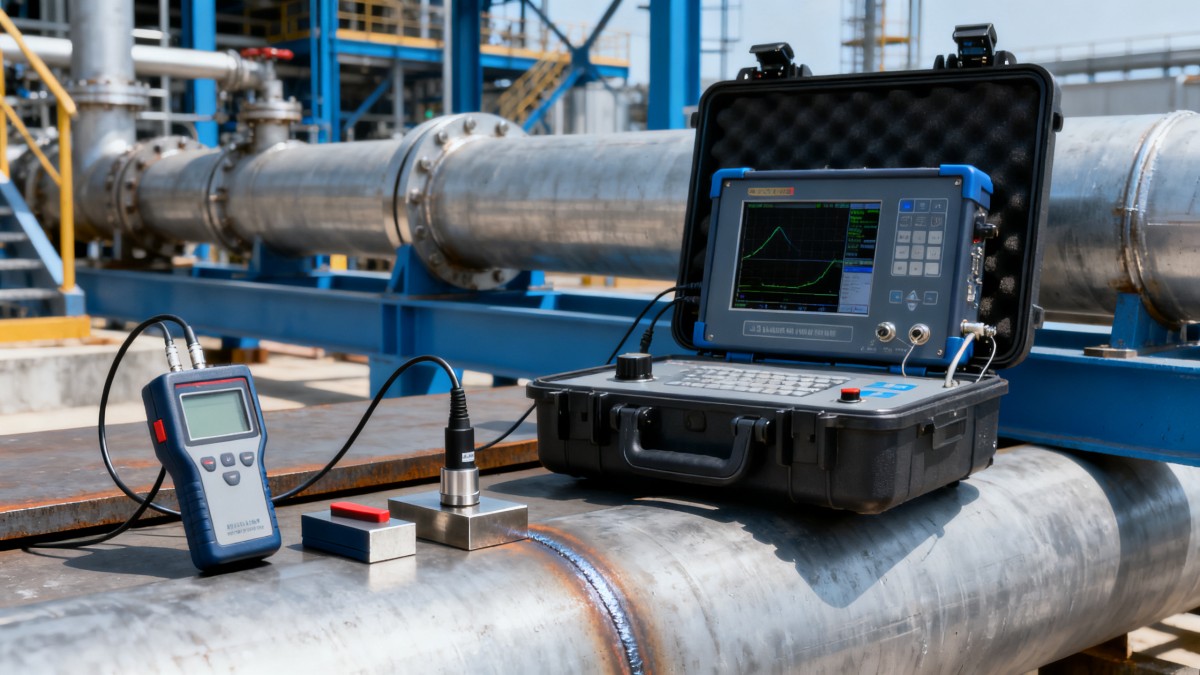
Choosing industrialNDTequipment for field work is rarely a desk-only task.
A strong datasheet can still hide weak repeatability, unstable calibration, or poor usability outdoors.
That matters because field accuracy depends on conditions, not just laboratory claims.
In practice, technical evaluation should connect measurement capability with workload, environment, and compliance risk.
This is where industrialNDTequipment selection becomes a decision framework rather than a simple product comparison.
The goal is simple: verify whether the device stays accurate when surfaces are dirty, temperatures drift, and operators move fast.
If your benchmarking process reflects real field stress, procurement decisions become more defensible and less reactive.
Start with the Real Use Case
Before comparing brands, define what the equipment must inspect and under which conditions.
Different industrialNDTequipment categories solve different problems, even when vendors use similar accuracy language.
A portable ultrasonic flaw detector, coating thickness gauge, or digital radiography unit should not share the same scorecard.
More importantly, field accuracy changes with material type, geometry, access limits, and defect expectations.
Build the evaluation brief around:
- Target materials such as carbon steel, stainless steel, composites, or coated parts
- Expected flaw types, including cracks, voids, corrosion, delamination, or wall loss
- Inspection location, whether elevated, confined, wet, dusty, or exposed to vibration
- Required speed for scanning, reporting, and operator turnover
- Applicable standards, customer specifications, and documentation needs
This early definition reduces the risk of buying industrialNDTequipment that performs well in demos but poorly in production.
It also makes side-by-side benchmarking much cleaner because the decision criteria stay tied to actual inspection outcomes.
Check Accuracy Beyond Stated Specifications
Published accuracy figures are useful, but they are only the starting point.
What matters more is whether industrialNDTequipment stays consistent across multiple operators, surfaces, and time periods.
A realistic evaluation should measure repeatability, reproducibility, sensitivity, and drift.
Use a structured test plan that includes:
- Known reference blocks or certified samples with traceable defect dimensions
- Repeated scans by different operators using the same procedure
- Readings collected at different times during the same shift
- Comparison between nominal readings and actual measured values
One useful benchmark is error stability rather than one perfect reading.
If industrialNDTequipment gives small but predictable deviation, correction workflows can often control the risk.
If readings shift unpredictably, the equipment becomes much harder to trust in the field.
That is usually the clearer warning sign during supplier evaluation.
Simulate Real Field Conditions
Laboratory-like trials often overstate performance.
For industrialNDTequipment, the more useful question is how accuracy changes when conditions become less controlled.
From recent procurement trends, buyers increasingly ask for scenario-based validation rather than showroom demonstrations.
Test the device under variables such as:
- Surface contamination from rust, oil, paint, scale, or moisture
- Temperature changes during morning, midday, and evening use
- Limited access angles or awkward body position
- Battery decline after extended operating time
- Ambient light, dust, or background electrical noise
This also reveals whether industrialNDTequipment requires excessive surface preparation before every reliable reading.
If a tool only works on ideal surfaces, field productivity will drop quickly.
A slightly lower sensitivity device may still be the better choice if it stays usable across more conditions.
Evaluate Calibration Control and Data Integrity
Accurate readings are impossible without stable calibration behavior.
When reviewing industrialNDTequipment, check how calibration is created, saved, restored, and audited.
This matters even more when multiple teams share the same equipment across sites.
Key checks should include:
- Calibration lock features and user permission levels
- Automatic compensation for probe, material, or temperature changes
- Clear reminders for recalibration intervals
- Traceable logs for settings, firmware, and measurement history
- Export quality for reports, raw signals, and audit records
In real operations, weak data handling can undermine good sensor performance.
If industrialNDTequipment cannot prove how a result was generated, compliance teams may reject the inspection record.
That creates rework costs and delays that rarely appear in the initial purchase price.
Review Ergonomics, Software, and Operator Dependence
Field accuracy is partly human accuracy.
Even advanced industrialNDTequipment can generate inconsistent results if the interface is confusing or physically tiring.
This is why usability should be treated as a performance variable, not a comfort feature.
Look closely at:
- Screen readability in sunlight or low light
- Menu depth and speed of setup changes
- Glove-friendly controls and one-hand operation
- Signal interpretation support, alarms, and guided workflows
- Training time needed to reach stable performance
A more obvious signal during trials is how fast new users reach repeatable results.
If industrialNDTequipment depends too heavily on one expert operator, scale-up risk increases.
That also affects staffing flexibility, onboarding cost, and inspection consistency across regions.
Confirm Compliance, Service Support, and Lifecycle Value
Buying industrialNDTequipment is not only about today’s reading accuracy.
It is also about long-term support, standard alignment, and cost control over the equipment lifecycle.
This is where benchmarking against recognized frameworks becomes valuable.
Check whether the supplier can document:
- Conformity with relevant UL, CE, or sector-specific requirements
- Calibration service network and turnaround time
- Firmware update policy and cybersecurity handling
- Probe, accessory, and spare-part availability
- Local technical support for troubleshooting and retraining
A low upfront quote can become expensive if downtime, delayed recalibration, or software lock-in disrupt operations.
For that reason, the best industrialNDTequipment decision usually balances technical fit, support resilience, and reporting credibility.
That broader view aligns equipment sourcing with measurable business continuity.
Use a Practical Scoring Matrix Before Purchase
Once testing is complete, convert observations into a weighted evaluation matrix.
This makes industrialNDTequipment selection more transparent and easier to defend internally.
It also helps separate critical decision factors from nice-to-have features.
A weighted matrix keeps discussions anchored in evidence rather than preference.
That is especially useful when several industrialNDTequipment options appear similar on paper.
The better choice often becomes clear once field data is scored consistently.
Final Decision Checklist
A solid decision on industrialNDTequipment should answer a few direct questions.
- Does the device stay accurate across your actual field conditions?
- Can multiple operators achieve similar results without excessive retraining?
- Are calibration and reporting processes strong enough for audits and customer review?
- Will service support protect uptime over the full ownership period?
- Does the supplier provide evidence, not just claims?
When those answers are clear, industrialNDTequipment evaluation becomes much less subjective.
That also means fewer surprises after deployment.
The most reliable purchase decision is usually built on structured trials, realistic conditions, and traceable scoring.
If you treat field accuracy as a system issue, not just a device feature, better outcomes follow naturally.
Use that approach to shortlist industrialNDTequipment with confidence and move procurement forward on verified evidence.
News Recommendations
 What consumer packaging USA importers need to verify before ordering
![51a6ab95581761cc26f4318be6520c15]()
Aris Katos
Future of Carbide Coatings
 How commercial spaces interiors shape customer dwell time
![51a6ab95581761cc26f4318be6520c15]()
Aris Katos
Future of Carbide Coatings
 How LED commercial lighting design reduces glare in retail spaces
![51a6ab95581761cc26f4318be6520c15]()
Aris Katos
Future of Carbide Coatings
 How industrial technology information improves RFID inventory accuracy
![51a6ab95581761cc26f4318be6520c15]()
Aris Katos
Future of Carbide Coatings
 When drip garden watering systems make more sense than sprinklers
![51a6ab95581761cc26f4318be6520c15]()
Aris Katos
Future of Carbide Coatings
 When category comparison improves sourcing for industrial applications
![51a6ab95581761cc26f4318be6520c15]()
Aris Katos
Future of Carbide Coatings
 Industrial application guidance for selecting the right LED lighting
![51a6ab95581761cc26f4318be6520c15]()
Aris Katos
Future of Carbide Coatings
 Which commercial architecture standards apply to European retail fit-outs?
![51a6ab95581761cc26f4318be6520c15]()
Aris Katos
Future of Carbide Coatings
 How to verify FDA requirements for maternity care products
![51a6ab95581761cc26f4318be6520c15]()
Aris Katos
Future of Carbide Coatings
 How to verify BPA-free claims for food-contact products
![51a6ab95581761cc26f4318be6520c15]()
Aris Katos
Future of Carbide Coatings
 When does a European wholesale supplier suit modular office projects?
![51a6ab95581761cc26f4318be6520c15]()
Aris Katos
Future of Carbide Coatings
 When consumer ecosystem solutions improve the in-store shopping journey
![51a6ab95581761cc26f4318be6520c15]()
Aris Katos
Future of Carbide Coatings
 How a commercial developers network can reduce site selection risk
![51a6ab95581761cc26f4318be6520c15]()
Aris Katos
Future of Carbide Coatings
 How clear purchasing specifications prevent costly supplier deviations
![51a6ab95581761cc26f4318be6520c15]()
Aris Katos
Future of Carbide Coatings
 What an ISTA drop test lab checks before your packaging ships
![51a6ab95581761cc26f4318be6520c15]()
Aris Katos
Future of Carbide Coatings
 Which commercial furniture standards apply to workplace seating?
![51a6ab95581761cc26f4318be6520c15]()
Aris Katos
Future of Carbide Coatings
 How to evaluate smart lighting module OEM compatibility before sampling
![51a6ab95581761cc26f4318be6520c15]()
Aris Katos
Future of Carbide Coatings
 How to assess whether sustainable technology delivers real impact
![51a6ab95581761cc26f4318be6520c15]()
Aris Katos
Future of Carbide Coatings
 How to assess an OEM supplier’s quality control before ordering
![51a6ab95581761cc26f4318be6520c15]()
Aris Katos
Future of Carbide Coatings
 How consumer ecosystem solutions data can improve retail personalization
![51a6ab95581761cc26f4318be6520c15]()
Aris Katos
Future of Carbide Coatings
 When does consumer packaging design justify a higher product price?
![51a6ab95581761cc26f4318be6520c15]()
Aris Katos
Future of Carbide Coatings
 Supermarket Fixture Installation: Planning Layouts, Wiring, and Handover
![51a6ab95581761cc26f4318be6520c15]()
Aris Katos
Future of Carbide Coatings
 Automated Lighting and Smart Lighting Control in Bergerac: Key Project Considerations
![51a6ab95581761cc26f4318be6520c15]()
Aris Katos
Future of Carbide Coatings
 Segment Streetlight Controllers: Choosing Control Modes for Urban Roads
![51a6ab95581761cc26f4318be6520c15]()
Aris Katos
Future of Carbide Coatings
 IEC 62471-2 Explained: How to Assess Photobiological Risks in LED Lighting
![51a6ab95581761cc26f4318be6520c15]()
Aris Katos
Future of Carbide Coatings
 Food Grade Packaging Requirements by Product Type, Temperature, and Contact Risk
![51a6ab95581761cc26f4318be6520c15]()
Aris Katos
Future of Carbide Coatings
 Food Packaging Compliance Checklist: Tests, Records, and Labeling Before Shipment
![51a6ab95581761cc26f4318be6520c15]()
Aris Katos
Future of Carbide Coatings
 NSF Food Packaging Standards: When Certification Matters for Commercial Food Use
![51a6ab95581761cc26f4318be6520c15]()
Aris Katos
Future of Carbide Coatings
 FDA Food Grade Compliance: Which Materials and Documents Do Buyers Need?
![51a6ab95581761cc26f4318be6520c15]()
Aris Katos
Future of Carbide Coatings
 What Should a Food Grade Declaration Include for Packaging Compliance?
![51a6ab95581761cc26f4318be6520c15]()
Aris Katos
Future of Carbide Coatings
 Housewares Importing: How to Evaluate Suppliers, Costs, and Compliance Risks
![51a6ab95581761cc26f4318be6520c15]()
Aris Katos
Future of Carbide Coatings
 Why Freeze-Dried Fruit Ingredients Lose Crispness—and How to Prevent It
![51a6ab95581761cc26f4318be6520c15]()
Aris Katos
Future of Carbide Coatings
 What industry veterans look for before choosing a new supplier
![51a6ab95581761cc26f4318be6520c15]()
Aris Katos
Future of Carbide Coatings
 How material fatigue can shorten the service life of retail shelving
![51a6ab95581761cc26f4318be6520c15]()
Aris Katos
Future of Carbide Coatings
 What makes a global sourcing platform reliable for supplier verification?
![51a6ab95581761cc26f4318be6520c15]()
Aris Katos
Future of Carbide Coatings
 When are double platinum spark plugs a better choice than iridium?
![51a6ab95581761cc26f4318be6520c15]()
Aris Katos
Future of Carbide Coatings
 How to assess a POS terminal manufacturer in Europe for long-term support
![51a6ab95581761cc26f4318be6520c15]()
Aris Katos
Future of Carbide Coatings
 How data transparency in retail helps prevent inventory discrepancies
![51a6ab95581761cc26f4318be6520c15]()
Aris Katos
Future of Carbide Coatings
 What makes a product comparison guide actually useful for buying decisions
![51a6ab95581761cc26f4318be6520c15]()
Aris Katos
Future of Carbide Coatings