How to Evaluate a CNC Machines Manufacturer
Time
Click Count
Choosing a CNC machines manufacturer is rarely a simple price exercise. It shapes product quality, delivery reliability, compliance readiness, and the resilience of a wider supply chain. In commercial environments where fixtures, branded hardware, retail technology housings, and precision components must meet both functional and aesthetic standards, evaluation needs to go deeper. A credible decision comes from understanding manufacturing capability, process control, certification discipline, and service performance in real operating conditions.
Why this decision carries broader business weight
A CNC machines manufacturer does not work in isolation. Its output affects upstream material planning and downstream assembly, installation, and after-sales performance.
That matters across a general industry landscape. Precision parts support store fixtures, equipment frames, signage systems, display hardware, packaging tools, and smart retail enclosures.
For platforms such as G-BCE, this is especially relevant. Cross-sector benchmarking only becomes useful when component quality can be traced back to stable manufacturing systems.

When commercial developers compare suppliers across Asia and global markets, they are often comparing risk profiles as much as machining capability.
What a strong CNC machines manufacturer actually demonstrates
The term can cover very different businesses. Some focus on standard machines. Others specialize in custom equipment, contract machining, or integrated production cells.
A reliable CNC machines manufacturer usually shows strength in four connected areas: engineering depth, process repeatability, documentation quality, and support responsiveness.
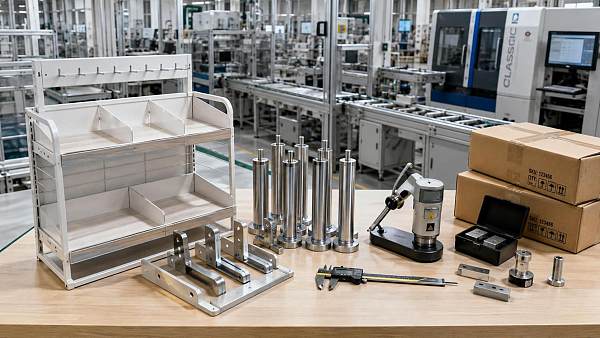
Engineering depth means more than owning advanced equipment. It includes fixture design, tooling strategy, material behavior knowledge, and the ability to optimize tolerances without inflating cost.
Process repeatability is equally important. A factory that produces one good sample but struggles with batch consistency creates hidden risk for every later stage.
Documentation quality often reveals maturity. Clear drawings, revision control, inspection records, and change management are signs of a manufacturer prepared for global business.
The first layer of evaluation: capability beyond the brochure
Machine lists look impressive, but equipment count alone says very little. The more useful question is whether the production setup matches the intended part complexity and volume.
For example, a CNC machines manufacturer serving commercial furniture hardware may need stable milling, drilling, surface finishing, and assembly coordination.
A supplier supporting smart retail devices may need tighter dimensional control, cleaner finishing, and better traceability for electronics-related housings.
Usually, the most telling evidence comes from similar project history, not generic claims about precision.
- Check material range, including aluminum, stainless steel, engineered plastics, or mixed assemblies.
- Review achievable tolerances in mass production, not only prototype runs.
- Ask how fixtures, tooling, and programming are standardized across repeat orders.
- Confirm whether finishing, coating, engraving, or sub-assembly is handled internally or outsourced.
Quality systems often matter more than headline speed
Lead time pressure is common, yet fast output without process discipline often creates rework, delays, and claims. A better evaluation looks at how quality is built into the workflow.
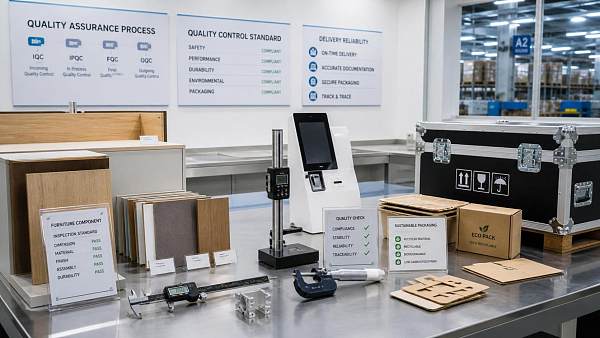
The most dependable CNC machines manufacturer usually has incoming material checks, in-process inspection, final verification, and nonconformance handling with clear records.
Certifications can support confidence, but they should not replace operational evidence. ISO 9001 may indicate structure. Product-specific compliance may still require separate validation.
In markets tied to UL, CE, or BIFMA expectations, manufactured components must fit broader system requirements. That is where a benchmarking mindset becomes useful.
Cost analysis should include hidden operational variables
A lower unit price can be misleading when scrap, delays, packaging damage, communication gaps, or compliance failures are likely.
That is why evaluating a CNC machines manufacturer requires a total cost view. The real comparison is cost-to-land, cost-to-qualify, and cost-to-maintain over time.
This approach is especially useful in international sourcing. Freight mode, export packaging, customs documentation, and spare-part availability can shift the economics materially.
A supplier that appears more expensive may still be the safer financial choice if its defect rate and response time are consistently stronger.
Questions that clarify total value
- How often do production schedules slip during peak months?
- What percentage of orders require rework or sorting?
- How are urgent engineering changes handled after approval?
- What service support exists for international customers after shipment?
Where sector context changes the evaluation
Not every CNC machines manufacturer is suitable for every application. Sector fit matters because priorities shift across commercial use cases.
In commercial fixtures, finish quality and visual consistency may be as important as dimensional precision. In lighting and signage, mounting accuracy and outdoor durability become more significant.
For consumer product supply chains, repeatability at volume often takes priority. For smart retail equipment, enclosure precision, EMI-sensitive integration, and maintenance access may shape supplier choice.
This is where G-BCE’s cross-sector view adds practical value. It encourages decision-makers to compare manufacturing performance against actual commercial deployment requirements, not just factory claims.
Signs of a manufacturer that can support long-term programs
Long-term reliability usually appears in small operational details. The strongest CNC machines manufacturer tends to be transparent about constraints, lead times, and achievable tolerances.
It also invests in communication structure. Fast quotation alone is not enough. Clear technical feedback, revision discipline, and escalation paths matter more over multi-order programs.
Another positive sign is willingness to discuss corrective actions with evidence. Mature suppliers do not hide defects; they show how recurrence is prevented.
In practice, this is often what separates a workable source from a strategic manufacturing partner.
Useful proof points during review
- Recent audit findings and how they were closed
- Sample inspection reports with measurable tolerances
- Packaging standards for export and multi-site distribution
- Service metrics for complaint response and replacement timing
A practical path to a better decision
A structured review usually starts with demand clarity. Part complexity, annual volume, finish expectations, compliance needs, and logistics conditions should be defined before supplier comparison.
From there, shortlist each CNC machines manufacturer against technical fit, quality controls, sector relevance, and service readiness. Sample validation should test both product and process.
It helps to score suppliers against consistent criteria rather than relying on impression-based discussion. Even simple weighted scoring can expose hidden trade-offs.
The next step is not to rush toward the cheapest quote. It is to build a clear evaluation framework, compare evidence, and align the manufacturer with the commercial environment the finished product must serve.
When that framework is informed by benchmarking, certification awareness, and real supply chain conditions, the decision becomes more durable and easier to defend.
News Recommendations
 What consumer packaging USA importers need to verify before ordering
![51a6ab95581761cc26f4318be6520c15]()
Aris Katos
Future of Carbide Coatings
 How commercial spaces interiors shape customer dwell time
![51a6ab95581761cc26f4318be6520c15]()
Aris Katos
Future of Carbide Coatings
 How LED commercial lighting design reduces glare in retail spaces
![51a6ab95581761cc26f4318be6520c15]()
Aris Katos
Future of Carbide Coatings
 How industrial technology information improves RFID inventory accuracy
![51a6ab95581761cc26f4318be6520c15]()
Aris Katos
Future of Carbide Coatings
 When drip garden watering systems make more sense than sprinklers
![51a6ab95581761cc26f4318be6520c15]()
Aris Katos
Future of Carbide Coatings
 When category comparison improves sourcing for industrial applications
![51a6ab95581761cc26f4318be6520c15]()
Aris Katos
Future of Carbide Coatings
 Industrial application guidance for selecting the right LED lighting
![51a6ab95581761cc26f4318be6520c15]()
Aris Katos
Future of Carbide Coatings
 Which commercial architecture standards apply to European retail fit-outs?
![51a6ab95581761cc26f4318be6520c15]()
Aris Katos
Future of Carbide Coatings
 How to verify FDA requirements for maternity care products
![51a6ab95581761cc26f4318be6520c15]()
Aris Katos
Future of Carbide Coatings
 How to verify BPA-free claims for food-contact products
![51a6ab95581761cc26f4318be6520c15]()
Aris Katos
Future of Carbide Coatings
 When does a European wholesale supplier suit modular office projects?
![51a6ab95581761cc26f4318be6520c15]()
Aris Katos
Future of Carbide Coatings
 When consumer ecosystem solutions improve the in-store shopping journey
![51a6ab95581761cc26f4318be6520c15]()
Aris Katos
Future of Carbide Coatings
 How a commercial developers network can reduce site selection risk
![51a6ab95581761cc26f4318be6520c15]()
Aris Katos
Future of Carbide Coatings
 How clear purchasing specifications prevent costly supplier deviations
![51a6ab95581761cc26f4318be6520c15]()
Aris Katos
Future of Carbide Coatings
 What an ISTA drop test lab checks before your packaging ships
![51a6ab95581761cc26f4318be6520c15]()
Aris Katos
Future of Carbide Coatings
 Which commercial furniture standards apply to workplace seating?
![51a6ab95581761cc26f4318be6520c15]()
Aris Katos
Future of Carbide Coatings
 How to evaluate smart lighting module OEM compatibility before sampling
![51a6ab95581761cc26f4318be6520c15]()
Aris Katos
Future of Carbide Coatings
 How to assess whether sustainable technology delivers real impact
![51a6ab95581761cc26f4318be6520c15]()
Aris Katos
Future of Carbide Coatings
 How to assess an OEM supplier’s quality control before ordering
![51a6ab95581761cc26f4318be6520c15]()
Aris Katos
Future of Carbide Coatings
 How consumer ecosystem solutions data can improve retail personalization
![51a6ab95581761cc26f4318be6520c15]()
Aris Katos
Future of Carbide Coatings
 When does consumer packaging design justify a higher product price?
![51a6ab95581761cc26f4318be6520c15]()
Aris Katos
Future of Carbide Coatings
 Supermarket Fixture Installation: Planning Layouts, Wiring, and Handover
![51a6ab95581761cc26f4318be6520c15]()
Aris Katos
Future of Carbide Coatings
 Automated Lighting and Smart Lighting Control in Bergerac: Key Project Considerations
![51a6ab95581761cc26f4318be6520c15]()
Aris Katos
Future of Carbide Coatings
 Segment Streetlight Controllers: Choosing Control Modes for Urban Roads
![51a6ab95581761cc26f4318be6520c15]()
Aris Katos
Future of Carbide Coatings
 IEC 62471-2 Explained: How to Assess Photobiological Risks in LED Lighting
![51a6ab95581761cc26f4318be6520c15]()
Aris Katos
Future of Carbide Coatings
 Food Grade Packaging Requirements by Product Type, Temperature, and Contact Risk
![51a6ab95581761cc26f4318be6520c15]()
Aris Katos
Future of Carbide Coatings
 Food Packaging Compliance Checklist: Tests, Records, and Labeling Before Shipment
![51a6ab95581761cc26f4318be6520c15]()
Aris Katos
Future of Carbide Coatings
 NSF Food Packaging Standards: When Certification Matters for Commercial Food Use
![51a6ab95581761cc26f4318be6520c15]()
Aris Katos
Future of Carbide Coatings
 FDA Food Grade Compliance: Which Materials and Documents Do Buyers Need?
![51a6ab95581761cc26f4318be6520c15]()
Aris Katos
Future of Carbide Coatings
 What Should a Food Grade Declaration Include for Packaging Compliance?
![51a6ab95581761cc26f4318be6520c15]()
Aris Katos
Future of Carbide Coatings
 Housewares Importing: How to Evaluate Suppliers, Costs, and Compliance Risks
![51a6ab95581761cc26f4318be6520c15]()
Aris Katos
Future of Carbide Coatings
 Why Freeze-Dried Fruit Ingredients Lose Crispness—and How to Prevent It
![51a6ab95581761cc26f4318be6520c15]()
Aris Katos
Future of Carbide Coatings
 What industry veterans look for before choosing a new supplier
![51a6ab95581761cc26f4318be6520c15]()
Aris Katos
Future of Carbide Coatings
 How material fatigue can shorten the service life of retail shelving
![51a6ab95581761cc26f4318be6520c15]()
Aris Katos
Future of Carbide Coatings
 What makes a global sourcing platform reliable for supplier verification?
![51a6ab95581761cc26f4318be6520c15]()
Aris Katos
Future of Carbide Coatings
 When are double platinum spark plugs a better choice than iridium?
![51a6ab95581761cc26f4318be6520c15]()
Aris Katos
Future of Carbide Coatings
 How to assess a POS terminal manufacturer in Europe for long-term support
![51a6ab95581761cc26f4318be6520c15]()
Aris Katos
Future of Carbide Coatings
 How data transparency in retail helps prevent inventory discrepancies
![51a6ab95581761cc26f4318be6520c15]()
Aris Katos
Future of Carbide Coatings
 What makes a product comparison guide actually useful for buying decisions
![51a6ab95581761cc26f4318be6520c15]()
Aris Katos
Future of Carbide Coatings