Semiconductor Benchmarking Metrics That Actually Matter
Time
Click Count
Not every semiconductor metric deserves the same attention. In practical evaluation, Semiconductor benchmarking is most useful when it reveals how a device behaves under load, across temperature ranges, through production variation, and over a realistic service life.
That matters well beyond chip design. In smart retail terminals, connected lighting, sensing modules, and supply chain devices, weak benchmarking can distort sourcing choices, inflate maintenance risk, and undermine long-term platform consistency.
For ecosystems shaped by performance standards and cross-border manufacturing, the real task is not collecting more numbers. It is identifying which numbers predict stable deployment, efficient integration, and scalable commercial value.
Why the right metrics matter now
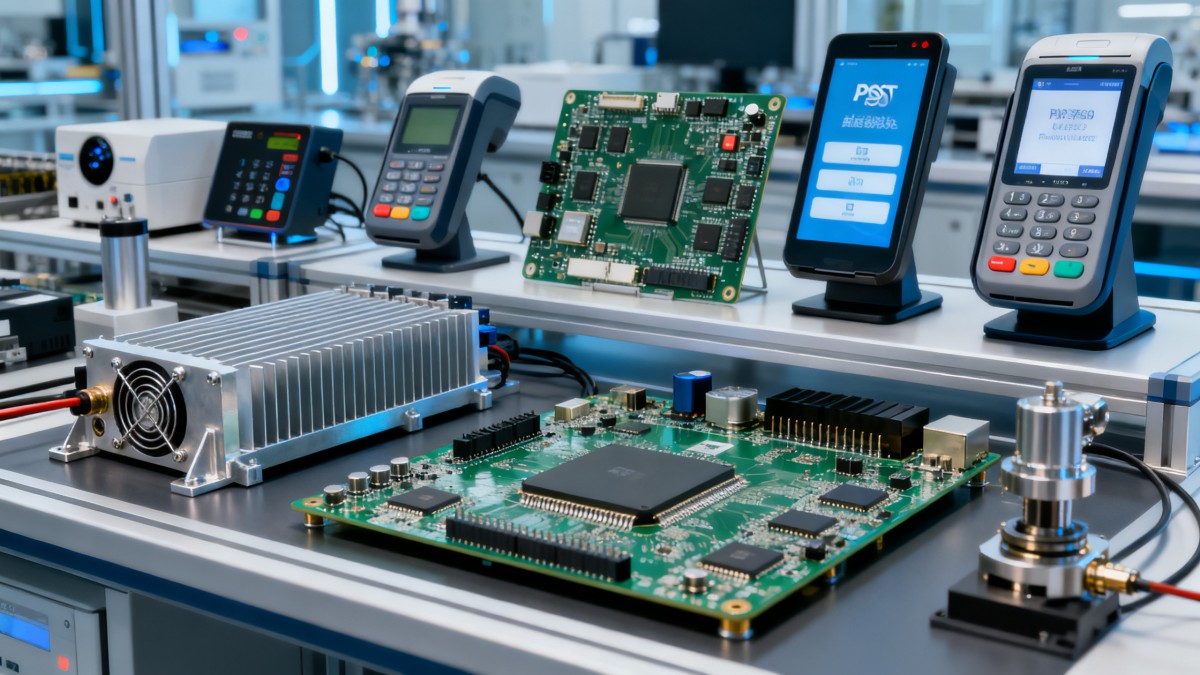
Semiconductor selection now affects more business layers than before. A processor inside a POS terminal, a controller in digital signage, or a sensor hub in packaging automation influences responsiveness, heat, uptime, and replacement cycles.
In that context, Semiconductor benchmarking supports technical comparison, but also operational planning. It helps connect laboratory behavior with installation realities, especially where devices must meet global compliance expectations and work across mixed hardware environments.
This is where platforms such as G-BCE add context. Cross-sector benchmarking becomes more valuable when semiconductor data is interpreted alongside commercial hardware standards, sourcing constraints, and the performance demands of modern retail and consumer infrastructure.
What Semiconductor benchmarking should actually measure
A benchmark is not just a speed score. Useful Semiconductor benchmarking builds a profile of capability, efficiency, consistency, and tolerance under expected conditions.
The most reliable metrics tend to fall into five groups.
1. Real-world performance
Peak throughput is easy to promote and easy to misuse. Sustained workload performance is often more meaningful, especially for always-on devices in kiosks, smart shelves, payment systems, and embedded control boards.
Clock speed alone says little without workload context. Instruction efficiency, memory access behavior, input latency, and task completion under continuous demand usually tell a clearer story.
2. Power efficiency
Performance per watt is one of the most practical measures in Semiconductor benchmarking. It influences battery life, enclosure design, energy cost, and thermal management requirements.
For distributed commercial deployments, a moderately faster chip may be a poorer choice if efficiency losses increase cooling needs or shorten service intervals.
3. Thermal behavior
A device that performs well in a short test can still fail in a sealed housing. Thermal throttling curves, junction temperature stability, and behavior under repeated heat cycles are more useful than single-point temperature claims.
This becomes critical in dense retail hardware, signage modules, and edge devices where airflow is limited and ambient temperatures shift by region.
4. Yield and process consistency
Semiconductor benchmarking should not ignore manufacturing variation. Yield stability, process maturity, and batch-to-batch consistency often shape long-term supply reliability more than top-line performance claims.
This is especially important when supply chains connect Asian fabrication strength with global commercial deployment schedules. A strong sample result means little if later lots drift in thermal or power behavior.
5. Scalability and lifecycle fit
Some components benchmark well today but create migration problems later. Interface support, software ecosystem maturity, roadmap continuity, and replacement availability all belong in a serious evaluation.
In practical terms, Semiconductor benchmarking should help answer whether a part can scale from pilot deployment to regional or global rollout without major redesign.
Which metrics deserve priority in different scenarios
Not every use case ranks metrics the same way. The benchmark framework should reflect deployment conditions, maintenance tolerance, and service expectations.
The point is simple. The best Semiconductor benchmarking program is not universal. It is calibrated to the cost of failure in each environment.
Common distortions in benchmark interpretation
A surprising amount of poor decision-making comes from valid data used in the wrong way. Several distortions appear repeatedly in semiconductor assessment.
- Using synthetic scores without mapping them to actual workloads.
- Comparing parts tested under different cooling conditions.
- Ignoring variance across lots, firmware revisions, or board designs.
- Treating peak performance as more important than sustained behavior.
- Excluding compliance, supply continuity, or integration effort from the benchmark conclusion.
These issues matter because semiconductor decisions rarely stay inside the lab. They affect enclosure geometry, certification pathways, maintenance budgets, and product refresh timing.
For organizations working across commercial fixtures, smart retail technology, and consumer product supply chains, benchmark data must remain connected to the final operating context.
How to build a more useful benchmarking framework
Better Semiconductor benchmarking starts with a narrower question. Instead of asking which chip is best, ask which metrics predict success in the target deployment.
Start with workload realism
Test using workloads that resemble actual software stacks, duty cycles, and ambient conditions. A commercial edge device should not be judged only by desktop-style benchmarks.
Track variance, not only averages
Average performance can hide instability. Recording deviation across samples helps identify sourcing risk before volume deployment.
Include system-level constraints
The semiconductor is only one part of the outcome. Board layout, memory design, enclosure cooling, and firmware maturity influence the benchmark result and the field result.
Connect metrics to standards and lifecycle expectations
In cross-border commercial programs, performance data is more actionable when read beside certification targets, replacement planning, and platform longevity goals.
This broader view reflects the value of repositories like G-BCE. Technical benchmarking becomes stronger when it is aligned with commercial deployment logic, international standards, and supply chain resilience.
What to examine before making a final comparison
Before locking a device into a design or sourcing plan, it helps to review a short list of decision filters.
- Does the benchmark reflect continuous operating conditions?
- Does efficiency remain acceptable as temperature rises?
- Is the data consistent across samples and board configurations?
- Can the part support future feature growth without power or thermal penalties?
- Are supply continuity and standards alignment visible in the evaluation?
These questions do not replace detailed testing. They make Semiconductor benchmarking more decision-ready by linking technical evidence with commercial deployment realities.
A practical next step
The most effective Semiconductor benchmarking programs are selective, contextual, and repeatable. They focus less on headline scores and more on indicators that forecast reliability, efficiency, manufacturability, and system fit.
A useful next move is to build a comparison matrix around the operating environment, not the marketing sheet. Rank performance stability, power behavior, thermal tolerance, yield consistency, and lifecycle support against the actual use case.
When those metrics are reviewed in a broader benchmarking ecosystem, sourcing and design decisions become easier to defend, easier to scale, and far less exposed to avoidable risk.
News Recommendations
 How to choose commercial lighting for offices that reduces glare
![51a6ab95581761cc26f4318be6520c15]()
Aris Katos
Future of Carbide Coatings
 Queue Launches Fully Automated Robotic Pharmacy Kiosk for 30-Second Dispensing
![51a6ab95581761cc26f4318be6520c15]()
Aris Katos
Future of Carbide Coatings
 Can your supermarket store fixtures supplier meet your opening date?
![51a6ab95581761cc26f4318be6520c15]()
Aris Katos
Future of Carbide Coatings
 Shopify POS UI Extensions 2026-10 Adds Virtual Lists and Custom Row Templates
![51a6ab95581761cc26f4318be6520c15]()
Aris Katos
Future of Carbide Coatings
 How to assess smart office furniture suppliers’ North American support
![51a6ab95581761cc26f4318be6520c15]()
Aris Katos
Future of Carbide Coatings
 Aqara Launches Smart Lighting Range to Advance AI Spatial Intelligence
![51a6ab95581761cc26f4318be6520c15]()
Aris Katos
Future of Carbide Coatings
 How to assess demand forecasts in a lighting intelligence report
![51a6ab95581761cc26f4318be6520c15]()
Aris Katos
Future of Carbide Coatings
 Billerud推出PharmaKraft纤维基医药包装材料
![51a6ab95581761cc26f4318be6520c15]()
Aris Katos
Future of Carbide Coatings
 How to assess supplier reliability in global supply chain sourcing
![51a6ab95581761cc26f4318be6520c15]()
Aris Katos
Future of Carbide Coatings
 Omdia Forecasts 11.6% CAGR for Global LED Video Display Market in 2026–2030
![51a6ab95581761cc26f4318be6520c15]()
Aris Katos
Future of Carbide Coatings
 How to verify an LFGB testing laboratory's accreditation scope
![51a6ab95581761cc26f4318be6520c15]()
Aris Katos
Future of Carbide Coatings
 How to assess a workplace interior supplier's installation scope
![51a6ab95581761cc26f4318be6520c15]()
Aris Katos
Future of Carbide Coatings
 What records are needed for an ISO 9001 furniture factory audit?
![51a6ab95581761cc26f4318be6520c15]()
Aris Katos
Future of Carbide Coatings
 How to choose AI marketing tools that work with your existing CRM
![51a6ab95581761cc26f4318be6520c15]()
Aris Katos
Future of Carbide Coatings
 Do freight costs erase savings when buying retail fixtures wholesale?
![51a6ab95581761cc26f4318be6520c15]()
Aris Katos
Future of Carbide Coatings
 Who handles firmware updates for an OEM retail shelf screen?
![51a6ab95581761cc26f4318be6520c15]()
Aris Katos
Future of Carbide Coatings
 How to assess burn-in testing at an OEM retail shelf screen factory
![51a6ab95581761cc26f4318be6520c15]()
Aris Katos
Future of Carbide Coatings
 How custom tooling affects the cost of an OEM shelf LCD screen
![51a6ab95581761cc26f4318be6520c15]()
Aris Katos
Future of Carbide Coatings
 Can OEM retail shelf display screens work with your existing CMS?
![51a6ab95581761cc26f4318be6520c15]()
Aris Katos
Future of Carbide Coatings
 How heat buildup affects OEM retail shelf LCD screen reliability
![51a6ab95581761cc26f4318be6520c15]()
Aris Katos
Future of Carbide Coatings
 How to check whether an OEM retail shelf screen fits existing shelving
![51a6ab95581761cc26f4318be6520c15]()
Aris Katos
Future of Carbide Coatings
 What brightness should an OEM shelf LCD screen have for retail use?
![51a6ab95581761cc26f4318be6520c15]()
Aris Katos
Future of Carbide Coatings
 Can smart retail IT solutions for CPG work with legacy POS systems?
![51a6ab95581761cc26f4318be6520c15]()
Aris Katos
Future of Carbide Coatings
 What permit approvals belong in a commercial fitout planning checklist?
![51a6ab95581761cc26f4318be6520c15]()
Aris Katos
Future of Carbide Coatings
 How Can You Ensure Commercial Furniture Meets Local Safety Regulations?
![51a6ab95581761cc26f4318be6520c15]()
Aris Katos
Future of Carbide Coatings
 What Are the Most Common Mistakes When Sourcing Wholesale Office Furniture?
![51a6ab95581761cc26f4318be6520c15]()
Aris Katos
Future of Carbide Coatings
 Can You Trust G-BCE Supplier Ratings Without Independent Verification?
![51a6ab95581761cc26f4318be6520c15]()
Aris Katos
Future of Carbide Coatings
 What Selection Criteria Matter Most for Commercial Lighting?
![51a6ab95581761cc26f4318be6520c15]()
Aris Katos
Future of Carbide Coatings
 How Do You Apply Sustainability Standards to a Retail Renovation?
![51a6ab95581761cc26f4318be6520c15]()
Aris Katos
Future of Carbide Coatings
 Which Technical Factors Matter When Comparing Smart Retail Hardware?
![51a6ab95581761cc26f4318be6520c15]()
Aris Katos
Future of Carbide Coatings
 Does Data Transparency Matter When Selecting Consumer Goods Suppliers?
![51a6ab95581761cc26f4318be6520c15]()
Aris Katos
Future of Carbide Coatings
 How Does Commercial Design Differ from Interior Decoration?
![51a6ab95581761cc26f4318be6520c15]()
Aris Katos
Future of Carbide Coatings
 How Long Does It Take to Verify a Commercial Furniture Supplier?
![51a6ab95581761cc26f4318be6520c15]()
Aris Katos
Future of Carbide Coatings
 How to verify compostability claims from a bubble mailer manufacturer
![51a6ab95581761cc26f4318be6520c15]()
Aris Katos
Future of Carbide Coatings
 Will commercial smart infrastructure solutions work with legacy systems?
![51a6ab95581761cc26f4318be6520c15]()
Aris Katos
Future of Carbide Coatings
 How to verify a preschool furniture manufacturer's safety standards
![51a6ab95581761cc26f4318be6520c15]()
Aris Katos
Future of Carbide Coatings
 A technical comparison of semiconductor processes for power devices
![51a6ab95581761cc26f4318be6520c15]()
Aris Katos
Future of Carbide Coatings
 How to verify that a BIFMA ergonomic chair meets the standard
![51a6ab95581761cc26f4318be6520c15]()
Aris Katos
Future of Carbide Coatings
 How to use a CRI value chart when choosing LED lighting
![51a6ab95581761cc26f4318be6520c15]()
Aris Katos
Future of Carbide Coatings