Economic Sectors Explained: What Drives Growth and Market Risk
Time
Click Count
Economic Sectors are the working map behind growth, valuation, and market stress. They show where demand is expanding, where margins are narrowing, and where risk travels fastest through trade, retail, technology, and supply chains.
That matters even more in a commercial environment shaped by digital operations, sustainability targets, and cross-border sourcing. A sector is never just a label. It is a pattern of capital behavior, operating pressure, and strategic exposure.
For organizations comparing assets, suppliers, formats, or expansion plans, sector analysis helps separate temporary performance from structural strength. It also explains why similar revenue trends can carry very different market risk.
What Economic Sectors really describe

At the simplest level, Economic Sectors group activity by the way value is created. Energy depends on extraction and pricing cycles. Consumer sectors depend on sentiment, income, and channel reach. Industrial sectors react to investment timing and infrastructure demand.
Yet practical sector reading goes further than classification. It asks what drives revenue quality, what limits scale, what raises fixed costs, and what shocks earnings when conditions change.
This is why Economic Sectors remain useful across a broad industry landscape. They connect macro signals, supply chain realities, standards compliance, and on-the-ground operating choices.
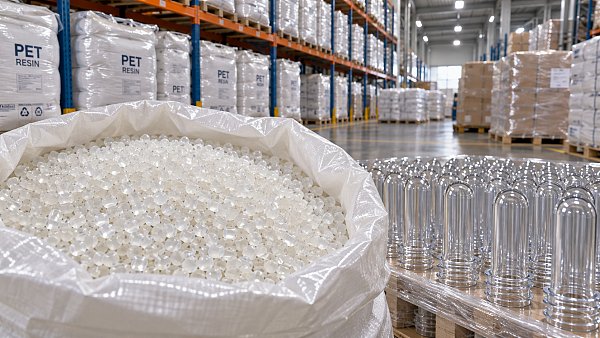
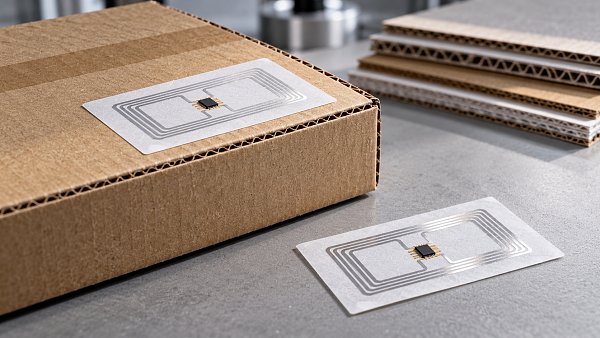
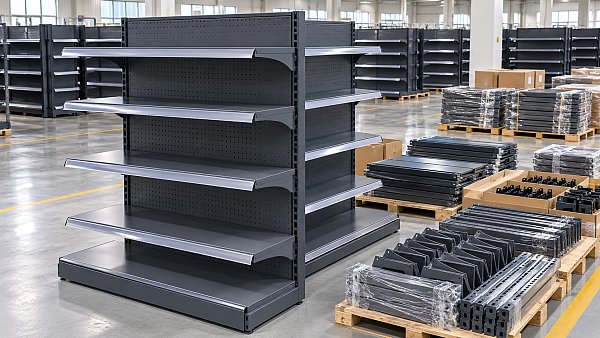
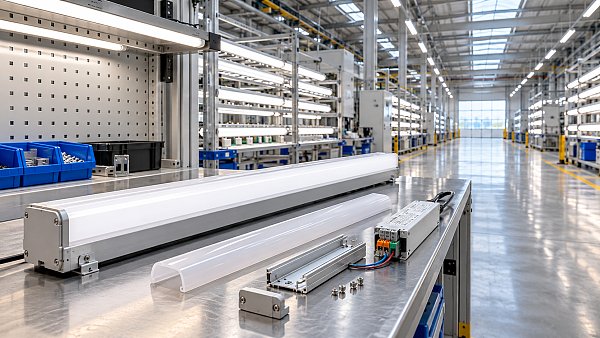
In commercial ecosystems, sectors also overlap. Smart retail technology influences consumer goods turnover. Sustainable packaging affects brand positioning and logistics efficiency. Commercial lighting, fixtures, and signage shape store productivity and customer experience.
Why sector behavior looks different in today’s market
The current market does not reward growth in the same way across all Economic Sectors. Capital is more selective. Buyers are more cost-aware. Regulatory expectations are broader, especially where energy use, materials, safety, and traceability are involved.
Three forces are reshaping sector performance.
- Demand has become less uniform. Premium, value, and convenience segments now move at different speeds.
- Supply chains face geopolitical, freight, and compliance friction that can change margins quickly.
- Technology and sustainability are no longer side themes. They now influence procurement, design, operations, and risk scoring.
As a result, two companies in the same sector can respond very differently to inflation, labor constraints, or inventory imbalance. Sector labels matter, but operating structure matters just as much.
The main drivers of growth across Economic Sectors
Growth usually comes from a mix of demand strength, pricing power, operating efficiency, and replacement cycles. The balance changes by sector, which is why broad comparisons often miss the real story.
Demand composition
Some sectors grow because consumption rises. Others grow because systems need modernization. In commercial interiors and retail hardware, replacement timing can be more important than headline economic expansion.
Capital intensity
High-capex sectors may scale slowly, but they can create stronger barriers to entry. Lower-capex segments may expand faster, though competition often compresses margins unless differentiation is clear.
Standards and performance requirements
Growth in many modern sectors depends on meeting technical expectations, not just shipping volume. Standards such as UL, CE, and BIFMA influence market access, product trust, and procurement acceptance.
Channel adaptation
Retail, commercial, and supply chain sectors increasingly grow through channel redesign. Physical spaces now depend on digital intelligence, connected devices, and data visibility to improve conversion and reduce waste.
Where market risk tends to build
Market risk does not appear only in falling demand. It often builds quietly inside cost structures, vendor concentration, outdated specifications, and delayed capital decisions.
A useful sector review looks at both external and internal risk signals.
In many Economic Sectors, the sharpest risk is not volatility itself. It is the false appearance of stability before a structural issue becomes visible in lead times, returns, or asset utilization.
A cross-sector view of commercial ecosystems
This is where a platform such as G-BCE becomes relevant. Cross-sector benchmarking makes it easier to compare performance drivers that standard financial summaries often hide.
Commercial furniture and fixtures, smart retail technology, consumer goods supply chains, lighting and signage, and sustainable packaging do not move independently. They influence one another through design cycles, installation timing, maintenance costs, and customer expectations.
For example, a store modernization program may appear to belong to one sector. In reality, it touches several Economic Sectors at once, including technology integration, sourcing reliability, materials compliance, and post-installation operating efficiency.
That broader view helps identify whether growth is being created by real capability or by temporary spending. It also helps distinguish premium specifications from unnecessary cost inflation.
How to apply sector analysis in practical decisions
Economic Sectors become most useful when they support a decision rather than a description. In practice, that means translating market signals into comparable criteria.
When comparing suppliers or platforms
Look beyond cost and delivery. Check standard alignment, lifecycle durability, integration readiness, and exposure to raw material or regional concentration risk.
When reviewing commercial projects
Separate demand-driven upgrades from image-driven spending. Projects linked to energy savings, throughput, safety, or measurable customer experience usually hold stronger long-term value.
When assessing resilience
Focus on how quickly a business can adapt specifications, vendors, or channels. Resilience often depends more on flexibility than on scale alone.
- Track whether growth comes from price increases or real volume expansion.
- Check whether compliance creates defensible advantage or extra cost burden.
- Test how dependent performance is on one market, one material, or one format.
- Review replacement cycles, not only quarterly movement.
Signals worth monitoring next
The next phase of sector analysis will be shaped by selective investment and tighter performance benchmarks. That is especially true where physical commerce must work harder, last longer, and connect better with digital systems.
Useful signals include specification upgrades, certification trends, inventory discipline, store retrofit activity, packaging redesign, and the adoption pace of connected retail infrastructure.
Across Economic Sectors, the strongest opportunities often sit where operational performance, compliance readiness, and customer-facing design improve together. Those areas tend to support more durable returns and lower hidden risk.
A sensible next step is to build a sector review framework around exposure, resilience, standards, and replacement logic. That makes future comparisons clearer and helps turn market noise into grounded commercial judgment.
News Recommendations
 Report: Global Kraft Paper Market Forecast to Reach $20.5 Billion by 2033
![51a6ab95581761cc26f4318be6520c15]()
Aris Katos
Future of Carbide Coatings
 How to verify Zigbee compatibility when sourcing lighting sensors
![51a6ab95581761cc26f4318be6520c15]()
Aris Katos
Future of Carbide Coatings
 How do packaging customization options affect minimum order quantities in Europe?
![51a6ab95581761cc26f4318be6520c15]()
Aris Katos
Future of Carbide Coatings
 Transom to Acquire Cree LED in Commercial Lighting Ownership Change
![51a6ab95581761cc26f4318be6520c15]()
Aris Katos
Future of Carbide Coatings
 How to plan customer flow in commercial design planning
![51a6ab95581761cc26f4318be6520c15]()
Aris Katos
Future of Carbide Coatings
 USTR Urged to Permanently Suspend Fees on China-Linked Ships
![51a6ab95581761cc26f4318be6520c15]()
Aris Katos
Future of Carbide Coatings
 How to choose comparable stores for retail benchmarking
![51a6ab95581761cc26f4318be6520c15]()
Aris Katos
Future of Carbide Coatings
 How does anchoring affect modular building wind load resistance?
![51a6ab95581761cc26f4318be6520c15]()
Aris Katos
Future of Carbide Coatings
 Amazon Raises European FBA Surcharge to 2% in Ten Markets From November 2
![51a6ab95581761cc26f4318be6520c15]()
Aris Katos
Future of Carbide Coatings
 How to verify a BPA-free test report for baby products
![51a6ab95581761cc26f4318be6520c15]()
Aris Katos
Future of Carbide Coatings
 China's Mandatory Classroom Lighting Standard GB 7793-2025 Takes Effect November 1
![51a6ab95581761cc26f4318be6520c15]()
Aris Katos
Future of Carbide Coatings
 How order volume affects the price of wholesale poly mailers
![51a6ab95581761cc26f4318be6520c15]()
Aris Katos
Future of Carbide Coatings
 US Imposes 50% Tariff on Certain Canadian PET Resin Imports
![51a6ab95581761cc26f4318be6520c15]()
Aris Katos
Future of Carbide Coatings
 How to read the maximum ratings in a semiconductor datasheet
![51a6ab95581761cc26f4318be6520c15]()
Aris Katos
Future of Carbide Coatings
 University of Maryland Develops Bio-Based Packaging to Extend Avocado and Cucumber Shelf Life
![51a6ab95581761cc26f4318be6520c15]()
Aris Katos
Future of Carbide Coatings
 How to verify a cookware manufacturer's induction compatibility claims
![51a6ab95581761cc26f4318be6520c15]()
Aris Katos
Future of Carbide Coatings
 Omdia Forecasts 11.6% Annual Growth in LED Display Revenue Through 2030
![51a6ab95581761cc26f4318be6520c15]()
Aris Katos
Future of Carbide Coatings
 How to verify a pulp molding packaging factory's production capacity
![51a6ab95581761cc26f4318be6520c15]()
Aris Katos
Future of Carbide Coatings
 Curion Survey: Half of Consumers Frustrated by Sustainable Packaging
![51a6ab95581761cc26f4318be6520c15]()
Aris Katos
Future of Carbide Coatings
 How to assess the credibility of market insight content
![51a6ab95581761cc26f4318be6520c15]()
Aris Katos
Future of Carbide Coatings
 US Removes 50% Additional Tariff on Selected Canadian Packaging Products
![51a6ab95581761cc26f4318be6520c15]()
Aris Katos
Future of Carbide Coatings
 Will a waterproof dimmable LED driver work with your existing dimmer?
![51a6ab95581761cc26f4318be6520c15]()
Aris Katos
Future of Carbide Coatings
 Charter Next Generation Raises Film PCR Use 30%, Advances Food-Grade Applications
![51a6ab95581761cc26f4318be6520c15]()
Aris Katos
Future of Carbide Coatings
 How to choose a dog harness and leash for a dog that pulls hard
![51a6ab95581761cc26f4318be6520c15]()
Aris Katos
Future of Carbide Coatings
 How to respect local customs when negotiating with overseas suppliers
![51a6ab95581761cc26f4318be6520c15]()
Aris Katos
Future of Carbide Coatings
 RFID Recycling Challenges Bring Paper-Based and Chipless Tags Into Focus
![51a6ab95581761cc26f4318be6520c15]()
Aris Katos
Future of Carbide Coatings
 How to choose commercial lighting for offices that reduces glare
![51a6ab95581761cc26f4318be6520c15]()
Aris Katos
Future of Carbide Coatings
 Queue Launches Fully Automated Robotic Pharmacy Kiosk for 30-Second Dispensing
![51a6ab95581761cc26f4318be6520c15]()
Aris Katos
Future of Carbide Coatings
 Can your supermarket store fixtures supplier meet your opening date?
![51a6ab95581761cc26f4318be6520c15]()
Aris Katos
Future of Carbide Coatings
 Shopify POS UI Extensions 2026-10 Adds Virtual Lists and Custom Row Templates
![51a6ab95581761cc26f4318be6520c15]()
Aris Katos
Future of Carbide Coatings
 How to assess smart office furniture suppliers’ North American support
![51a6ab95581761cc26f4318be6520c15]()
Aris Katos
Future of Carbide Coatings
 Aqara Launches Smart Lighting Range to Advance AI Spatial Intelligence
![51a6ab95581761cc26f4318be6520c15]()
Aris Katos
Future of Carbide Coatings
 How to assess demand forecasts in a lighting intelligence report
![51a6ab95581761cc26f4318be6520c15]()
Aris Katos
Future of Carbide Coatings
 Billerud推出PharmaKraft纤维基医药包装材料
![51a6ab95581761cc26f4318be6520c15]()
Aris Katos
Future of Carbide Coatings
 How to assess supplier reliability in global supply chain sourcing
![51a6ab95581761cc26f4318be6520c15]()
Aris Katos
Future of Carbide Coatings
 Omdia Forecasts 11.6% CAGR for Global LED Video Display Market in 2026–2030
![51a6ab95581761cc26f4318be6520c15]()
Aris Katos
Future of Carbide Coatings
 How to verify an LFGB testing laboratory's accreditation scope
![51a6ab95581761cc26f4318be6520c15]()
Aris Katos
Future of Carbide Coatings
 How to assess a workplace interior supplier's installation scope
![51a6ab95581761cc26f4318be6520c15]()
Aris Katos
Future of Carbide Coatings
 What records are needed for an ISO 9001 furniture factory audit?
![51a6ab95581761cc26f4318be6520c15]()
Aris Katos
Future of Carbide Coatings