Electric Vehicles: Total Cost vs Fuel Cars in 2026
Time
Click Count
Electric Vehicles in 2026: is the real cost finally lower than fuel cars?
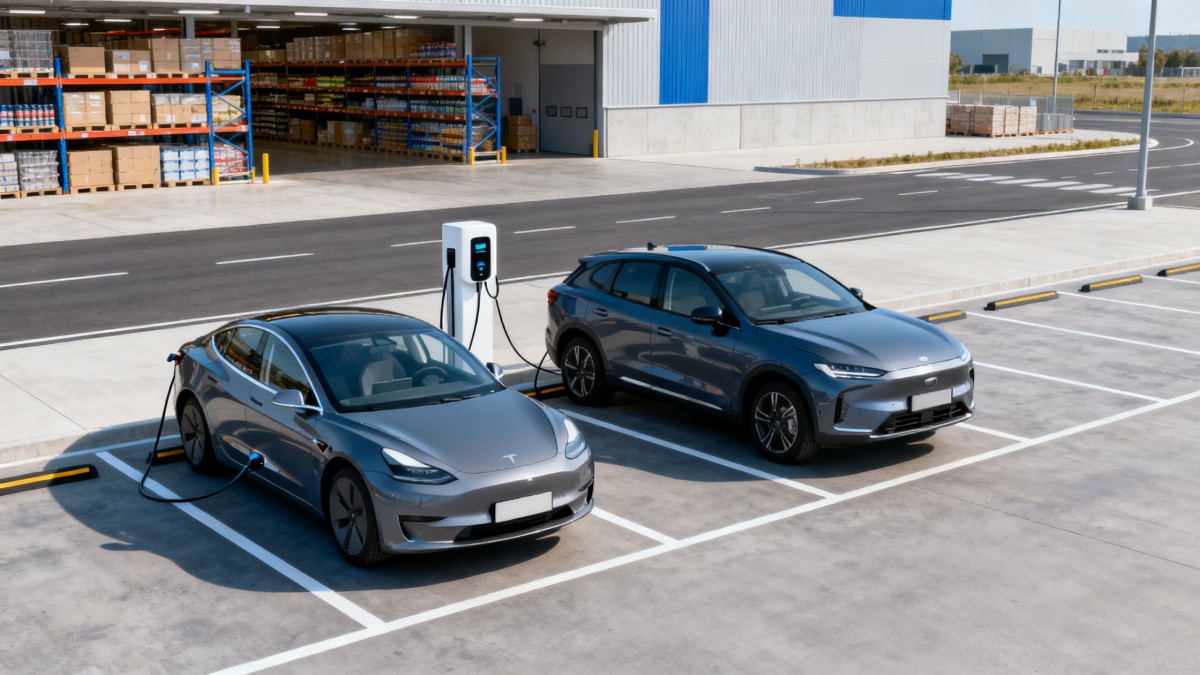
The short answer is: often yes, but not in every use case.
By 2026, Electric Vehicles are evaluated less by purchase price and more by lifetime economics.
That shift matters across retail fleets, service mobility, facility transport, and mixed commercial operations.
In practical terms, the debate is no longer EV versus gasoline at the showroom.
It is about total cost of ownership: energy, maintenance, downtime, depreciation, charging access, and policy exposure.
This broader view aligns with how modern commercial ecosystems are benchmarked.
Platforms such as G-BCE increasingly connect mobility decisions with infrastructure standards, digital operations, and sustainable supply chains.
So the useful question is not whether Electric Vehicles are cheaper in theory.
The better question is where the savings really appear, and where hidden costs still remain.
When people compare Electric Vehicles with fuel cars, what costs are they usually missing?
Most comparisons still stop at sticker price, financing, and fuel.
That leaves out several cost lines that shape the 2026 decision.
For Electric Vehicles, the main overlooked items are charger installation, charging time management, battery warranty conditions, and residual value uncertainty.
For fuel cars, the missed items are often maintenance intensity, oil-related servicing, brake wear patterns, and future regulatory costs.
Insurance also deserves attention.
Some Electric Vehicles still carry higher premiums, especially where parts supply and repair networks are uneven.
On the other hand, fuel cars may become more expensive to operate in low-emission zones or sustainability-led commercial districts.
That is especially relevant where mobility policy is tied to property modernization and urban retail redevelopment.
A more complete comparison looks like this:
This is where many headline comparisons become misleading.
Cheap charging can offset a higher vehicle price, but weak infrastructure can erase that advantage.
Do Electric Vehicles save money only at high mileage, or can normal use still justify them?
High mileage still improves the EV case, but it is no longer the only path to savings.
In 2026, normal urban and suburban use can also favor Electric Vehicles when charging is reliable and energy pricing is stable.
Short, repeatable routes are especially favorable.
That includes shuttle operations, site-to-site transport, daily store support, and scheduled service loops.
Why does this matter?
Because predictable mileage reduces charging risk and makes energy budgeting much more accurate.
Fuel cars remain stronger where routes are long, irregular, or remote.
They also stay practical where vehicles cannot sit long enough for low-cost overnight charging.
A simple rule helps.
- Choose Electric Vehicles when usage is repeatable, charging is controllable, and downtime has been planned.
- Favor fuel cars when route variability is high and infrastructure dependence creates operational risk.
In other words, mileage matters, but usage pattern matters more.
How much do charging infrastructure and facility upgrades change the equation?
Often, this is the deciding factor.
Electric Vehicles can look economical on paper, then become expensive if charging rollout is underestimated.
Site readiness includes more than buying chargers.
It may involve transformer capacity, load management software, permitting, cable routing, parking redesign, and safety compliance.
That is why EV planning increasingly overlaps with broader commercial modernization.
A facility already investing in smart retail technology, upgraded lighting, or energy monitoring may absorb EV infrastructure more efficiently.
This systems view is central to cross-sector benchmarking models like G-BCE.
Mobility decisions do not sit alone.
They connect with site design, digital controls, sustainability goals, and asset life planning.
Before assuming Electric Vehicles are lower-cost, check these points:
- Is overnight charging possible at predictable dwell times?
- Will charging trigger demand charges or peak tariff penalties?
- Can the site support future expansion without major rewiring?
- Are charger uptime and maintenance responsibilities clearly assigned?
If the answer to several of these is no, fuel cars may still carry lower operational friction.
What are the biggest mistakes in a 2026 EV cost comparison?
The most common mistake is treating all Electric Vehicles as one category.
Battery chemistry, software support, thermal efficiency, and charging speed create large ownership differences.
Another mistake is assuming incentives will remain unchanged.
Some tax credits, local grants, and emissions-related benefits may tighten, expire, or be limited by sourcing rules.
Residual value is also frequently guessed rather than modeled.
That can distort the comparison dramatically.
A final error is ignoring operational fit.
A technically efficient EV becomes financially weak if it disrupts schedules, loading patterns, or property access rules.
A better evaluation method is to score both options across real constraints.
So which option is more likely to win on total cost in real operations?
Electric Vehicles are more likely to win where operations are structured and infrastructure is planned early.
That includes controlled campuses, retail networks with fixed routes, and properties already moving toward electrified, data-driven facilities.
Fuel cars still hold an advantage where flexibility is the main value driver.
Long-distance travel, sparse charging, unpredictable schedules, and cold-weather extremes can still favor internal combustion.
The most balanced view is not ideological.
It is portfolio-based.
Some fleets or mobility programs will benefit from partial EV adoption first, then scale after utilization and charging data are proven.
That phased approach usually produces cleaner numbers than an all-at-once conversion.
For 2026, the most reliable next step is to build a comparison model using local tariffs, expected mileage, service intervals, charger capex, and resale assumptions.
Then test that model against actual site constraints, not generic averages.
If the goal is resilient investment rather than trend-following, Electric Vehicles should be judged the same way other modern commercial assets are judged:
- By lifecycle cost
- By infrastructure compatibility
- By standards and long-term support
- By how well they fit the wider operating ecosystem
That is where smarter decisions usually emerge.
News Recommendations
 How to assess supplier reliability in global supply chain sourcing
![51a6ab95581761cc26f4318be6520c15]()
Aris Katos
Future of Carbide Coatings
 Omdia Forecasts 11.6% CAGR for Global LED Video Display Market in 2026–2030
![51a6ab95581761cc26f4318be6520c15]()
Aris Katos
Future of Carbide Coatings
 How to verify an LFGB testing laboratory's accreditation scope
![51a6ab95581761cc26f4318be6520c15]()
Aris Katos
Future of Carbide Coatings
 How to assess a workplace interior supplier's installation scope
![51a6ab95581761cc26f4318be6520c15]()
Aris Katos
Future of Carbide Coatings
 What records are needed for an ISO 9001 furniture factory audit?
![51a6ab95581761cc26f4318be6520c15]()
Aris Katos
Future of Carbide Coatings
 How to choose AI marketing tools that work with your existing CRM
![51a6ab95581761cc26f4318be6520c15]()
Aris Katos
Future of Carbide Coatings
 Do freight costs erase savings when buying retail fixtures wholesale?
![51a6ab95581761cc26f4318be6520c15]()
Aris Katos
Future of Carbide Coatings
 How heat buildup affects OEM retail shelf LCD screen reliability
![51a6ab95581761cc26f4318be6520c15]()
Aris Katos
Future of Carbide Coatings
 How to check whether an OEM retail shelf screen fits existing shelving
![51a6ab95581761cc26f4318be6520c15]()
Aris Katos
Future of Carbide Coatings
 What brightness should an OEM shelf LCD screen have for retail use?
![51a6ab95581761cc26f4318be6520c15]()
Aris Katos
Future of Carbide Coatings
 Can smart retail IT solutions for CPG work with legacy POS systems?
![51a6ab95581761cc26f4318be6520c15]()
Aris Katos
Future of Carbide Coatings
 What permit approvals belong in a commercial fitout planning checklist?
![51a6ab95581761cc26f4318be6520c15]()
Aris Katos
Future of Carbide Coatings
 How Do You Apply Sustainability Standards to a Retail Renovation?
![51a6ab95581761cc26f4318be6520c15]()
Aris Katos
Future of Carbide Coatings
 Which Technical Factors Matter When Comparing Smart Retail Hardware?
![51a6ab95581761cc26f4318be6520c15]()
Aris Katos
Future of Carbide Coatings
 Does Data Transparency Matter When Selecting Consumer Goods Suppliers?
![51a6ab95581761cc26f4318be6520c15]()
Aris Katos
Future of Carbide Coatings
 How Does Commercial Design Differ from Interior Decoration?
![51a6ab95581761cc26f4318be6520c15]()
Aris Katos
Future of Carbide Coatings
 How Long Does It Take to Verify a Commercial Furniture Supplier?
![51a6ab95581761cc26f4318be6520c15]()
Aris Katos
Future of Carbide Coatings
 How to verify compostability claims from a bubble mailer manufacturer
![51a6ab95581761cc26f4318be6520c15]()
Aris Katos
Future of Carbide Coatings
 Will commercial smart infrastructure solutions work with legacy systems?
![51a6ab95581761cc26f4318be6520c15]()
Aris Katos
Future of Carbide Coatings
 How to verify a preschool furniture manufacturer's safety standards
![51a6ab95581761cc26f4318be6520c15]()
Aris Katos
Future of Carbide Coatings
 A technical comparison of semiconductor processes for power devices
![51a6ab95581761cc26f4318be6520c15]()
Aris Katos
Future of Carbide Coatings
 How to verify that a BIFMA ergonomic chair meets the standard
![51a6ab95581761cc26f4318be6520c15]()
Aris Katos
Future of Carbide Coatings
 How to use a CRI value chart when choosing LED lighting
![51a6ab95581761cc26f4318be6520c15]()
Aris Katos
Future of Carbide Coatings
 How to compare hotel aroma diffuser wholesale options by coverage area
![51a6ab95581761cc26f4318be6520c15]()
Aris Katos
Future of Carbide Coatings
 How to prevent O-rings and seals from failing in food equipment
![51a6ab95581761cc26f4318be6520c15]()
Aris Katos
Future of Carbide Coatings
 How to compare commercial linear light wholesale quotes accurately
![51a6ab95581761cc26f4318be6520c15]()
Aris Katos
Future of Carbide Coatings
 How to verify international standards compliance for Middle East exports
![51a6ab95581761cc26f4318be6520c15]()
Aris Katos
Future of Carbide Coatings
 How to select laboratory instruments for reproducible test results
![51a6ab95581761cc26f4318be6520c15]()
Aris Katos
Future of Carbide Coatings
 When does a sheet metal prototype reveal design flaws early?
![51a6ab95581761cc26f4318be6520c15]()
Aris Katos
Future of Carbide Coatings
 When PE air column bags reduce damage in e-commerce fulfillment
![51a6ab95581761cc26f4318be6520c15]()
Aris Katos
Future of Carbide Coatings
 How energy-efficient design reduces operating costs in retail lighting
![51a6ab95581761cc26f4318be6520c15]()
Aris Katos
Future of Carbide Coatings
 When commercial aluminum storefronts make sense for a retail renovation
![51a6ab95581761cc26f4318be6520c15]()
Aris Katos
Future of Carbide Coatings
 What makes LED lights durable in high-use commercial spaces?
![51a6ab95581761cc26f4318be6520c15]()
Aris Katos
Future of Carbide Coatings
 Which industry categories offer the strongest export potential in Latin America?
![51a6ab95581761cc26f4318be6520c15]()
Aris Katos
Future of Carbide Coatings
 How to choose an ultra bright waterproof window display for storefronts
![51a6ab95581761cc26f4318be6520c15]()
Aris Katos
Future of Carbide Coatings
 How to verify suppliers on a trade portal for global sourcing
![51a6ab95581761cc26f4318be6520c15]()
Aris Katos
Future of Carbide Coatings
 How RoHS requirements should be stated in product specifications
![51a6ab95581761cc26f4318be6520c15]()
Aris Katos
Future of Carbide Coatings
 What affects the lead time for custom retail counter displays?
![51a6ab95581761cc26f4318be6520c15]()
Aris Katos
Future of Carbide Coatings
 What consumer packaging USA importers need to verify before ordering
![51a6ab95581761cc26f4318be6520c15]()
Aris Katos
Future of Carbide Coatings