Ultraviolet Water Purification Systems: When UV Alone Is Not Enough
Time
Click Count
Where UV Delivers Value, and Where It Starts to Struggle
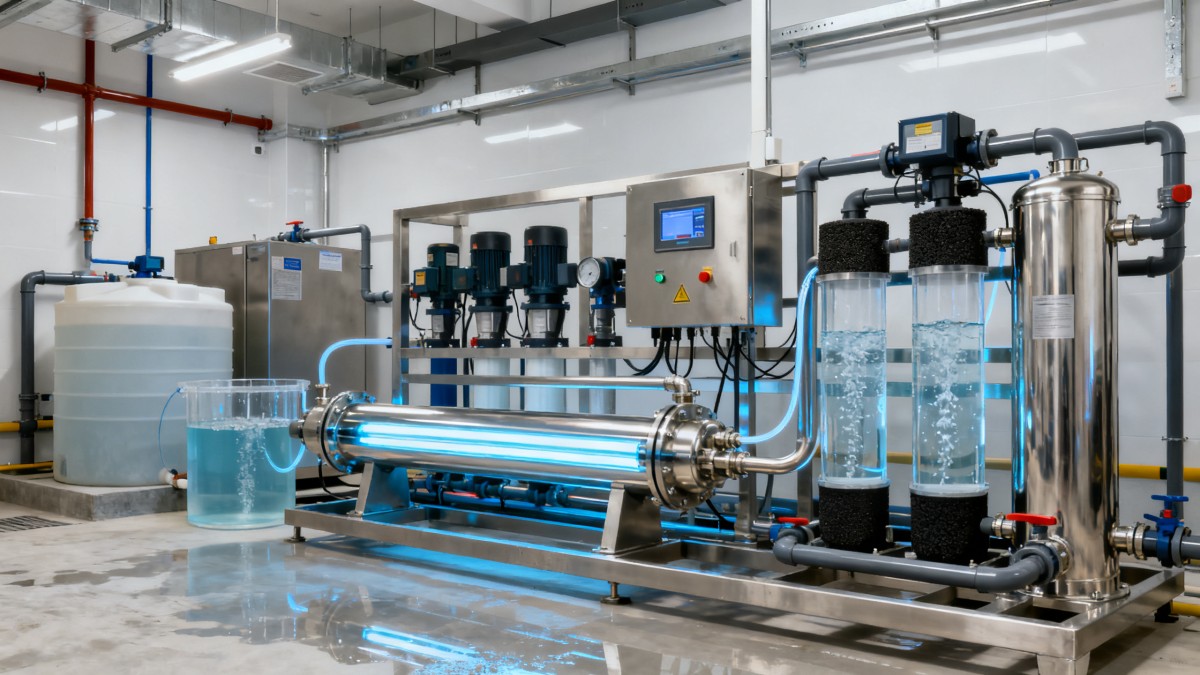
Ultraviolet water purification systems remain attractive because they disinfect fast, avoid chemical taste, and fit cleanly into modern commercial infrastructure.
That advantage matters across retail, hospitality, office, and mixed-use projects where water quality affects both operations and brand experience.
Yet the real question is not whether ultraviolet water purification systems work. It is whether they work reliably under actual site conditions.
In many projects, incoming water varies by season, occupancy shifts throughout the day, and maintenance routines are less consistent than design assumptions.
That is why UV alone can be enough in one setting and incomplete in another. The same rated unit behaves differently when turbidity rises or flow control drifts.
From a G-BCE perspective, the issue fits a broader pattern seen across commercial systems: benchmarked performance only matters when the full operating environment is understood.
For ultraviolet water purification systems, that means looking beyond lamp power to pretreatment, hydraulics, maintenance access, monitoring, and compliance expectations.
Actual site conditions shape the decision more than brochure data
UV disinfection is highly effective against many microorganisms, but it does not remove suspended solids, dissolved minerals, odors, or many chemical contaminants.
This creates an immediate difference between sites using polished municipal water and sites facing unstable source quality or long internal distribution networks.
In practice, the most important judgment is not the technology category. It is the treatment objective at that point of use or point of entry.
If the goal is final-stage microbial control after proper filtration, ultraviolet water purification systems can be efficient and compact.
If the goal includes sediment reduction, chlorine management, scale control, or taste improvement, UV must sit inside a broader treatment train.
A frequent mistake is treating all “clean water” applications as identical. Commercial coffee stations, ice machines, wash areas, and decorative water features do not share the same risk profile.
The same building can contain very different water priorities
Front-of-house usage often prioritizes taste, visual clarity, and brand consistency. Back-of-house usage may focus more on uptime, sanitation, and equipment protection.
That distinction matters because ultraviolet water purification systems solve only part of the problem, even when microbial reduction is the headline requirement.
In hospitality and foodservice, pretreatment usually determines UV success
Hotels, cafés, restaurants, and premium beverage counters often adopt ultraviolet water purification systems to avoid chemical dosing near guest-facing experiences.
That choice makes sense when operators want compact disinfection without altering taste profiles for ice, tea, coffee, or specialty drinks.
Still, these environments rarely fail because the UV concept is wrong. They fail because upstream filtration is underspecified or cartridge replacement slips.
When fine particles, hardness, or biofilm load are ignored, the UV chamber becomes the visible technology but not the decisive factor.
A more reliable layout pairs sediment filtration, carbon treatment where needed, and stable flow control before the UV stage.
Where beverage quality matters, scale mitigation may be just as important as disinfection. UV cannot protect heating elements or improve extraction consistency.
Why intermittent demand changes the equation
Hospitality sites often experience peaks during breakfast, events, or evening service. Flow spikes can reduce effective exposure time inside ultraviolet water purification systems.
This is why sizing by maximum rated capacity alone can be misleading. The better approach checks realistic peak flow, not average daily consumption.
Retail, offices, and mixed-use properties need a different balance
In office towers, lifestyle retail, and mixed-use developments, water systems serve a wider range of contact points and operating patterns.
Some outlets only need hygienic point-of-use treatment. Others need central protection because stagnation risk increases in complex branch piping.
Here, ultraviolet water purification systems often work best as part of a layered design, especially when occupancy changes between weekdays, weekends, and seasonal events.
Projects with digital building oversight are increasingly linking UV alarm status, lamp life, and flow data into broader facility dashboards.
That aligns with the G-BCE view of commercial modernization: performance should be visible, benchmarked, and manageable rather than assumed after installation.
Where monitoring is weak, teams may assume ultraviolet water purification systems are continuously protecting water even after sleeve fouling or lamp decline reduces actual dose.
Where UV is useful, but not sufficient, in supply chain environments
Consumer goods supply chains also create water quality demands, especially in light rinsing, packaging support areas, and hygiene-sensitive processing zones.
In these spaces, ultraviolet water purification systems are often selected because they avoid residual chemicals and support cleaner process control.
But process environments usually require tighter consistency than commercial occupancy spaces. Variations that seem minor can trigger larger downstream quality deviations.
If feedwater chemistry changes by supplier region or utility source, UV should be treated as one barrier, not the full assurance model.
This is especially relevant where facilities align with international compliance habits and documented validation. Performance must be demonstrated, not assumed from equipment presence.
The stronger practice is to define measurable acceptance points for turbidity, UV transmittance, flow stability, and maintenance verification before launch.
Common misreadings that lead to underperforming ultraviolet water purification systems
One common misreading is comparing only lamp wattage. Dose delivery depends on chamber design, transmittance, contact time, and real operating flow.
Another is assuming clear-looking water is UV-ready water. Optical clarity and microbiological risk do not always move together.
A third issue appears after handover. Ultraviolet water purification systems may be installed correctly, then lose reliability because access for cleaning and replacement is inconvenient.
There is also a budgeting mistake: low upfront cost can look efficient until cartridge changes, lamp replacement, and service interruptions are counted.
- Do not treat all municipal water feeds as equal across cities or seasons.
- Do not size ultraviolet water purification systems only by nominal demand.
- Do not ignore downstream pipe hygiene and stagnation zones.
- Do not separate UV decisions from maintenance planning and spare access.
A more resilient way to match the system to the scene
The most dependable ultraviolet water purification systems are selected as part of a use-case map rather than as isolated hardware.
Start by identifying where water directly affects consumption, equipment life, sanitation confidence, or guest perception. Those points rarely carry the same treatment priority.
Then confirm four conditions before specification: feedwater variability, peak flow behavior, pretreatment needs, and service discipline on site.
If any of these remain uncertain, ultraviolet water purification systems should be paired with monitoring and staged pretreatment rather than expected to compensate alone.
In cross-border commercial projects, it also helps to align technical choices with recognized certification logic and documented operating procedures.
That approach reflects the broader G-BCE standard of translating technical performance into dependable commercial outcomes across varied international environments.
Before moving forward, compare the actual scene, the target water outcome, the likely maintenance reality, and the cost of failure over time.
That comparison usually makes it clear whether UV is the right primary barrier, a final polishing step, or only one part of a stronger treatment strategy.
News Recommendations
 What consumer packaging USA importers need to verify before ordering
![51a6ab95581761cc26f4318be6520c15]()
Aris Katos
Future of Carbide Coatings
 How commercial spaces interiors shape customer dwell time
![51a6ab95581761cc26f4318be6520c15]()
Aris Katos
Future of Carbide Coatings
 How LED commercial lighting design reduces glare in retail spaces
![51a6ab95581761cc26f4318be6520c15]()
Aris Katos
Future of Carbide Coatings
 How industrial technology information improves RFID inventory accuracy
![51a6ab95581761cc26f4318be6520c15]()
Aris Katos
Future of Carbide Coatings
 When drip garden watering systems make more sense than sprinklers
![51a6ab95581761cc26f4318be6520c15]()
Aris Katos
Future of Carbide Coatings
 When category comparison improves sourcing for industrial applications
![51a6ab95581761cc26f4318be6520c15]()
Aris Katos
Future of Carbide Coatings
 Industrial application guidance for selecting the right LED lighting
![51a6ab95581761cc26f4318be6520c15]()
Aris Katos
Future of Carbide Coatings
 Which commercial architecture standards apply to European retail fit-outs?
![51a6ab95581761cc26f4318be6520c15]()
Aris Katos
Future of Carbide Coatings
 How to verify FDA requirements for maternity care products
![51a6ab95581761cc26f4318be6520c15]()
Aris Katos
Future of Carbide Coatings
 How to verify BPA-free claims for food-contact products
![51a6ab95581761cc26f4318be6520c15]()
Aris Katos
Future of Carbide Coatings
 When does a European wholesale supplier suit modular office projects?
![51a6ab95581761cc26f4318be6520c15]()
Aris Katos
Future of Carbide Coatings
 When consumer ecosystem solutions improve the in-store shopping journey
![51a6ab95581761cc26f4318be6520c15]()
Aris Katos
Future of Carbide Coatings
 How a commercial developers network can reduce site selection risk
![51a6ab95581761cc26f4318be6520c15]()
Aris Katos
Future of Carbide Coatings
 How clear purchasing specifications prevent costly supplier deviations
![51a6ab95581761cc26f4318be6520c15]()
Aris Katos
Future of Carbide Coatings
 What an ISTA drop test lab checks before your packaging ships
![51a6ab95581761cc26f4318be6520c15]()
Aris Katos
Future of Carbide Coatings
 Which commercial furniture standards apply to workplace seating?
![51a6ab95581761cc26f4318be6520c15]()
Aris Katos
Future of Carbide Coatings
 How to evaluate smart lighting module OEM compatibility before sampling
![51a6ab95581761cc26f4318be6520c15]()
Aris Katos
Future of Carbide Coatings
 How to assess whether sustainable technology delivers real impact
![51a6ab95581761cc26f4318be6520c15]()
Aris Katos
Future of Carbide Coatings
 How to assess an OEM supplier’s quality control before ordering
![51a6ab95581761cc26f4318be6520c15]()
Aris Katos
Future of Carbide Coatings
 How consumer ecosystem solutions data can improve retail personalization
![51a6ab95581761cc26f4318be6520c15]()
Aris Katos
Future of Carbide Coatings
 When does consumer packaging design justify a higher product price?
![51a6ab95581761cc26f4318be6520c15]()
Aris Katos
Future of Carbide Coatings
 Supermarket Fixture Installation: Planning Layouts, Wiring, and Handover
![51a6ab95581761cc26f4318be6520c15]()
Aris Katos
Future of Carbide Coatings
 Automated Lighting and Smart Lighting Control in Bergerac: Key Project Considerations
![51a6ab95581761cc26f4318be6520c15]()
Aris Katos
Future of Carbide Coatings
 Segment Streetlight Controllers: Choosing Control Modes for Urban Roads
![51a6ab95581761cc26f4318be6520c15]()
Aris Katos
Future of Carbide Coatings
 IEC 62471-2 Explained: How to Assess Photobiological Risks in LED Lighting
![51a6ab95581761cc26f4318be6520c15]()
Aris Katos
Future of Carbide Coatings
 Food Grade Packaging Requirements by Product Type, Temperature, and Contact Risk
![51a6ab95581761cc26f4318be6520c15]()
Aris Katos
Future of Carbide Coatings
 Food Packaging Compliance Checklist: Tests, Records, and Labeling Before Shipment
![51a6ab95581761cc26f4318be6520c15]()
Aris Katos
Future of Carbide Coatings
 NSF Food Packaging Standards: When Certification Matters for Commercial Food Use
![51a6ab95581761cc26f4318be6520c15]()
Aris Katos
Future of Carbide Coatings
 FDA Food Grade Compliance: Which Materials and Documents Do Buyers Need?
![51a6ab95581761cc26f4318be6520c15]()
Aris Katos
Future of Carbide Coatings
 What Should a Food Grade Declaration Include for Packaging Compliance?
![51a6ab95581761cc26f4318be6520c15]()
Aris Katos
Future of Carbide Coatings
 Housewares Importing: How to Evaluate Suppliers, Costs, and Compliance Risks
![51a6ab95581761cc26f4318be6520c15]()
Aris Katos
Future of Carbide Coatings
 Why Freeze-Dried Fruit Ingredients Lose Crispness—and How to Prevent It
![51a6ab95581761cc26f4318be6520c15]()
Aris Katos
Future of Carbide Coatings
 What industry veterans look for before choosing a new supplier
![51a6ab95581761cc26f4318be6520c15]()
Aris Katos
Future of Carbide Coatings
 How material fatigue can shorten the service life of retail shelving
![51a6ab95581761cc26f4318be6520c15]()
Aris Katos
Future of Carbide Coatings
 What makes a global sourcing platform reliable for supplier verification?
![51a6ab95581761cc26f4318be6520c15]()
Aris Katos
Future of Carbide Coatings
 When are double platinum spark plugs a better choice than iridium?
![51a6ab95581761cc26f4318be6520c15]()
Aris Katos
Future of Carbide Coatings
 How to assess a POS terminal manufacturer in Europe for long-term support
![51a6ab95581761cc26f4318be6520c15]()
Aris Katos
Future of Carbide Coatings
 How data transparency in retail helps prevent inventory discrepancies
![51a6ab95581761cc26f4318be6520c15]()
Aris Katos
Future of Carbide Coatings
 What makes a product comparison guide actually useful for buying decisions
![51a6ab95581761cc26f4318be6520c15]()
Aris Katos
Future of Carbide Coatings