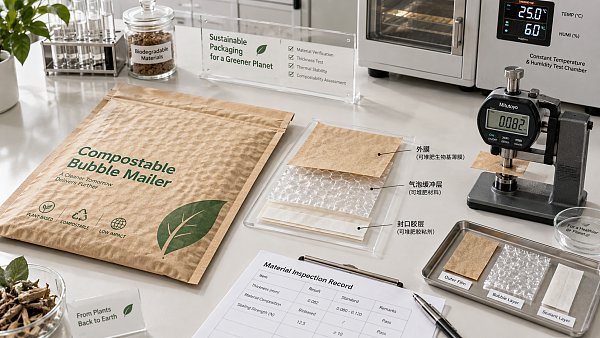
Sustainable Packaging Options That Reduce Shipping Waste
Time
Click Count
For quality control and safety managers, sustainable packaging has become a practical tool for reducing shipping waste and controlling risk.
It now shapes material compliance, transport durability, carbon reporting, and customer expectations across global commerce.
As retail, logistics, and product ecosystems converge, better packaging decisions influence damage rates, freight efficiency, and brand credibility at the same time.
This shift matters across the broader commercial landscape, especially where performance, certification, and supply chain visibility must work together.
Shipping waste is no longer a side issue in sustainable packaging strategy
The market has moved beyond simple recycled boxes and green marketing claims.
Today, sustainable packaging is evaluated by total lifecycle impact, transport efficiency, protective performance, and disposal outcomes.
Shipping waste has gained attention because it exposes hidden inefficiencies.
Oversized cartons, mixed materials, excess void fill, and low recovery rates all increase cost and environmental burden.
In parallel, global commercial environments demand packaging that supports safe handling, shelf presentation, digital tracking, and cross-border compliance.
That is why packaging choices are now reviewed alongside hardware standards, logistics performance, and consumer experience design.
Several trend signals show why sustainable packaging is accelerating
Multiple signals indicate that sustainable packaging is becoming a structural requirement rather than an optional improvement.
- Parcel networks are charging more for dimensional weight and inefficient packing formats.
- Retailers and platforms are tightening packaging guidelines for recyclability and waste reduction.
- Consumers increasingly notice overpackaging and associate it with poor environmental performance.
- Compliance teams face stronger scrutiny on restricted substances, labeling, and material traceability.
- Damage prevention remains critical, making material reduction impossible without proper testing.
These signals affect both premium consumer goods and commercial supply systems.
The result is a more technical view of eco-friendly packaging, where sustainability must be measured against operational reliability.
The strongest drivers behind sustainable packaging are practical, measurable, and global
The growth of sustainable packaging is not driven by one factor alone.
It is the result of cost pressure, material innovation, environmental regulation, and higher quality expectations.
Not all sustainable packaging options perform equally in shipping environments
Reducing shipping waste requires matching material choice to product risk, transit distance, and recovery infrastructure.
The best sustainable packaging option is rarely the lightest one.
It is the format that balances protection, recyclability, packing density, and consistency across routes.
High-value options gaining traction
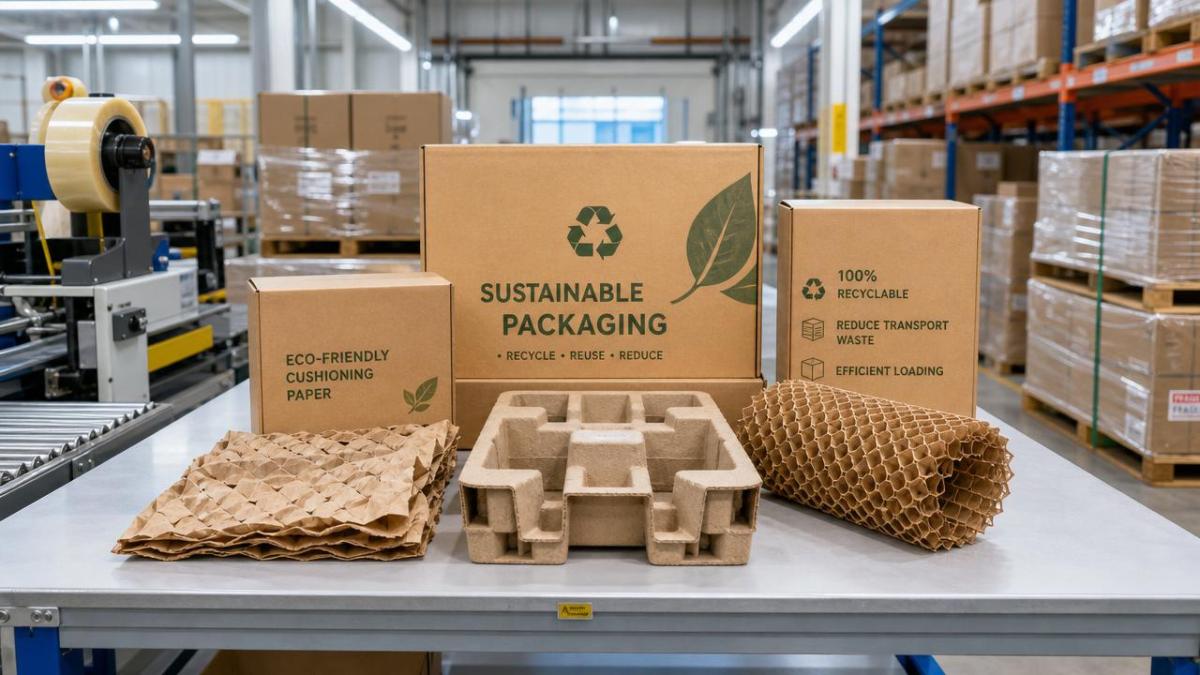
- Right-sized corrugated packaging: reduces void fill, lowers dimensional charges, and supports curbside recycling.
- Molded pulp inserts: replace expanded foam in many consumer and commercial categories.
- Mono-material flexible packaging: improves recyclability when barrier needs are moderate.
- Paper-based void fill: simplifies disposal and can perform well for moderate shock protection.
- Reusable transit packaging: works well in closed-loop distribution and inter-facility movement.
Common limitations to watch
- Recycled content may vary in stiffness or moisture resistance.
- Compostable materials may not fit real municipal waste systems.
- Lightweight structures can increase damage if testing is incomplete.
- Mixed-material laminates often complicate recovery and claims.
The impact of sustainable packaging extends across several business functions
A packaging change affects more than one department or business stage.
That is why sustainable packaging should be assessed as a system decision, not only a sourcing choice.
Effects across the value chain
- Product protection: Better fit and tested cushioning reduce breakage and claims.
- Warehouse efficiency: Standardized pack sizes improve storage density and picking accuracy.
- Transport performance: Lighter, smaller loads can improve cube utilization and route efficiency.
- Regulatory readiness: Cleaner material structures simplify declarations and audits.
- Customer experience: Easy-to-recycle packaging reduces frustration and reinforces quality perception.
For integrated commercial ecosystems, these gains support both financial resilience and environmental reporting goals.
The next wave of sustainable packaging decisions will center on verification
Claims around recyclable, reusable, or low-impact packaging are facing closer examination.
As a result, future-ready sustainable packaging programs will rely more on evidence-based selection.
This includes performance testing, material documentation, chain-of-custody records, and compatibility with destination waste systems.
Critical points that deserve attention
- Verify drop, vibration, compression, and humidity performance before reducing material weight.
- Check whether recyclability claims reflect actual local collection and sorting realities.
- Review adhesives, inks, coatings, and labels for their effect on recovery streams.
- Track packaging changes against return rates, product damage, and fill efficiency.
- Align packaging data with broader ESG, quality, and compliance reporting systems.
A practical response framework can reduce shipping waste without creating new risk
Decision-making works best when packaging is reviewed through a phased, measurable approach.
The goal is not merely to replace materials, but to improve total packaging performance.
Stronger sustainable packaging outcomes come from better benchmarking
Benchmarking helps separate attractive claims from proven performance.
In complex supply chains, sustainable packaging should be compared by test results, material transparency, and operational fit.
That is especially important when packaging must align with broader standards used in commercial hardware, retail environments, and international sourcing programs.
The most resilient strategy combines shipping protection, waste reduction, recyclability, and documentation discipline.
A useful next step is to review current shipping formats against damage data, cube efficiency, and disposal outcomes.
Then compare alternative sustainable packaging options through pilot testing, compliance checks, and lifecycle performance benchmarks.
When those decisions are guided by evidence, shipping waste falls, packaging integrity improves, and sustainability goals become operationally credible.
News Recommendations
 How to assess a workplace interior supplier's installation scope
![51a6ab95581761cc26f4318be6520c15]()
Aris Katos
Future of Carbide Coatings
 What records are needed for an ISO 9001 furniture factory audit?
![51a6ab95581761cc26f4318be6520c15]()
Aris Katos
Future of Carbide Coatings
 How to choose AI marketing tools that work with your existing CRM
![51a6ab95581761cc26f4318be6520c15]()
Aris Katos
Future of Carbide Coatings
 Do freight costs erase savings when buying retail fixtures wholesale?
![51a6ab95581761cc26f4318be6520c15]()
Aris Katos
Future of Carbide Coatings
 How to check whether an OEM retail shelf screen fits existing shelving
![51a6ab95581761cc26f4318be6520c15]()
Aris Katos
Future of Carbide Coatings
 What brightness should an OEM shelf LCD screen have for retail use?
![51a6ab95581761cc26f4318be6520c15]()
Aris Katos
Future of Carbide Coatings
 Can smart retail IT solutions for CPG work with legacy POS systems?
![51a6ab95581761cc26f4318be6520c15]()
Aris Katos
Future of Carbide Coatings
 What permit approvals belong in a commercial fitout planning checklist?
![51a6ab95581761cc26f4318be6520c15]()
Aris Katos
Future of Carbide Coatings
 Which Technical Factors Matter When Comparing Smart Retail Hardware?
![51a6ab95581761cc26f4318be6520c15]()
Aris Katos
Future of Carbide Coatings
 Does Data Transparency Matter When Selecting Consumer Goods Suppliers?
![51a6ab95581761cc26f4318be6520c15]()
Aris Katos
Future of Carbide Coatings
 How Does Commercial Design Differ from Interior Decoration?
![51a6ab95581761cc26f4318be6520c15]()
Aris Katos
Future of Carbide Coatings
 How Long Does It Take to Verify a Commercial Furniture Supplier?
![51a6ab95581761cc26f4318be6520c15]()
Aris Katos
Future of Carbide Coatings
 How to verify compostability claims from a bubble mailer manufacturer
![51a6ab95581761cc26f4318be6520c15]()
Aris Katos
Future of Carbide Coatings
 Will commercial smart infrastructure solutions work with legacy systems?
![51a6ab95581761cc26f4318be6520c15]()
Aris Katos
Future of Carbide Coatings
 How to verify a preschool furniture manufacturer's safety standards
![51a6ab95581761cc26f4318be6520c15]()
Aris Katos
Future of Carbide Coatings
 A technical comparison of semiconductor processes for power devices
![51a6ab95581761cc26f4318be6520c15]()
Aris Katos
Future of Carbide Coatings
 How to verify that a BIFMA ergonomic chair meets the standard
![51a6ab95581761cc26f4318be6520c15]()
Aris Katos
Future of Carbide Coatings
 How to use a CRI value chart when choosing LED lighting
![51a6ab95581761cc26f4318be6520c15]()
Aris Katos
Future of Carbide Coatings
 How to compare hotel aroma diffuser wholesale options by coverage area
![51a6ab95581761cc26f4318be6520c15]()
Aris Katos
Future of Carbide Coatings
 How to prevent O-rings and seals from failing in food equipment
![51a6ab95581761cc26f4318be6520c15]()
Aris Katos
Future of Carbide Coatings
 How to compare commercial linear light wholesale quotes accurately
![51a6ab95581761cc26f4318be6520c15]()
Aris Katos
Future of Carbide Coatings
 How to verify international standards compliance for Middle East exports
![51a6ab95581761cc26f4318be6520c15]()
Aris Katos
Future of Carbide Coatings
 How to select laboratory instruments for reproducible test results
![51a6ab95581761cc26f4318be6520c15]()
Aris Katos
Future of Carbide Coatings
 When does a sheet metal prototype reveal design flaws early?
![51a6ab95581761cc26f4318be6520c15]()
Aris Katos
Future of Carbide Coatings
 When PE air column bags reduce damage in e-commerce fulfillment
![51a6ab95581761cc26f4318be6520c15]()
Aris Katos
Future of Carbide Coatings
 How energy-efficient design reduces operating costs in retail lighting
![51a6ab95581761cc26f4318be6520c15]()
Aris Katos
Future of Carbide Coatings
 When commercial aluminum storefronts make sense for a retail renovation
![51a6ab95581761cc26f4318be6520c15]()
Aris Katos
Future of Carbide Coatings
 What makes LED lights durable in high-use commercial spaces?
![51a6ab95581761cc26f4318be6520c15]()
Aris Katos
Future of Carbide Coatings
 Which industry categories offer the strongest export potential in Latin America?
![51a6ab95581761cc26f4318be6520c15]()
Aris Katos
Future of Carbide Coatings
 How to choose an ultra bright waterproof window display for storefronts
![51a6ab95581761cc26f4318be6520c15]()
Aris Katos
Future of Carbide Coatings
 How to verify suppliers on a trade portal for global sourcing
![51a6ab95581761cc26f4318be6520c15]()
Aris Katos
Future of Carbide Coatings
 How RoHS requirements should be stated in product specifications
![51a6ab95581761cc26f4318be6520c15]()
Aris Katos
Future of Carbide Coatings
 What affects the lead time for custom retail counter displays?
![51a6ab95581761cc26f4318be6520c15]()
Aris Katos
Future of Carbide Coatings
 What consumer packaging USA importers need to verify before ordering
![51a6ab95581761cc26f4318be6520c15]()
Aris Katos
Future of Carbide Coatings
 How commercial spaces interiors shape customer dwell time
![51a6ab95581761cc26f4318be6520c15]()
Aris Katos
Future of Carbide Coatings
 How LED commercial lighting design reduces glare in retail spaces
![51a6ab95581761cc26f4318be6520c15]()
Aris Katos
Future of Carbide Coatings
 How industrial technology information improves RFID inventory accuracy
![51a6ab95581761cc26f4318be6520c15]()
Aris Katos
Future of Carbide Coatings
 When drip garden watering systems make more sense than sprinklers
![51a6ab95581761cc26f4318be6520c15]()
Aris Katos
Future of Carbide Coatings
 When category comparison improves sourcing for industrial applications
![51a6ab95581761cc26f4318be6520c15]()
Aris Katos
Future of Carbide Coatings