Hefei Rail Milestone Cuts LED Delivery Lead Times
Time
Click Count
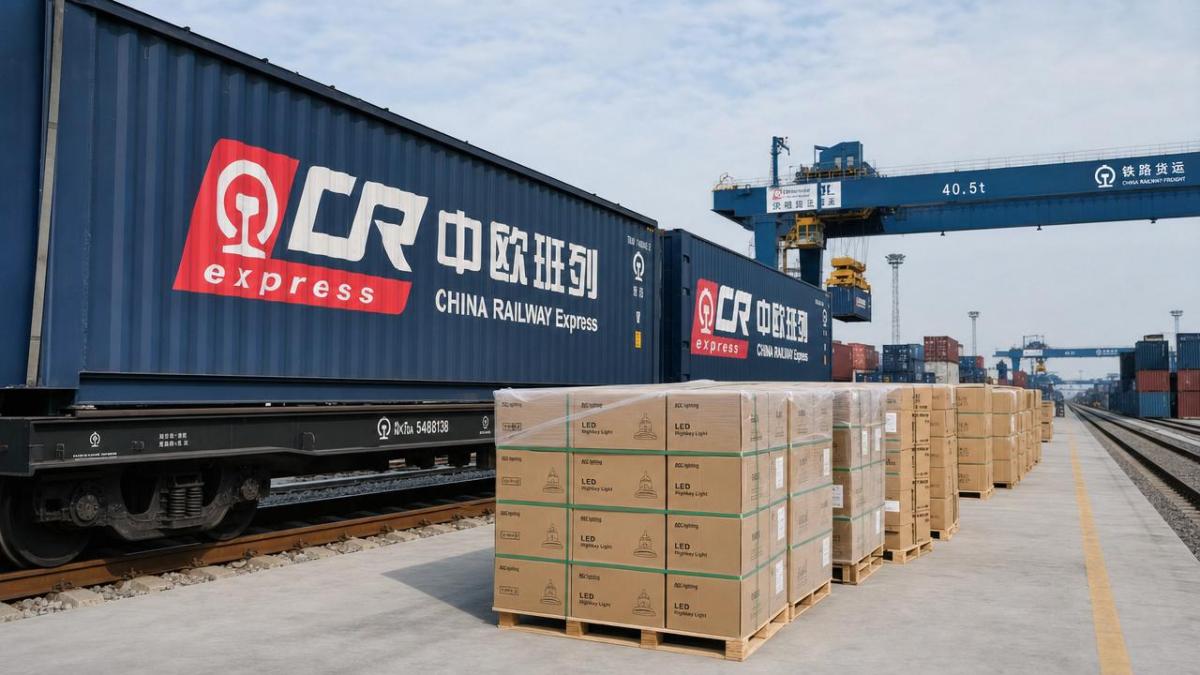
On June 3, 2026, the 6,000th China-Europe freight train from Hefei was dispatched, with the Hefei-Budapest and Hefei-Malaszewicze routes adding temperature-controlled compartments and priority less-than-container-load access. For Architectural LED Lighting and Retail Shelving & Fixtures, this is not just a transport update. From an industry perspective, it is a concrete execution signal that cross-border delivery rules and channel planning are being adjusted around rail-based service options, with likely implications for exporters, distributors, procurement teams, and supply chain operators that manage bulky but mid-value product categories.
What has been confirmed in the latest rail service update
The confirmed facts are limited but commercially relevant. As of June 3, 2026, China-Europe freight train services from Hefei had reached a cumulative total of 6,000 departures. Within that milestone, the Hefei-Budapest and Hefei-Malaszewicze routes introduced two operational changes: cold-chain temperature-controlled compartments and priority channels for consolidated shipments.
Measured data cited in the event summary indicates that, for product groups such as Architectural LED Lighting and Retail Shelving & Fixtures, transit time was reduced by 18 to 22 days compared with traditional sea freight, while logistics costs fell by 11%. The same summary also states that distributors in multiple markets have already begun Q3 stocking plans for rail-dedicated SKUs.
Why this matters across trade, purchasing, and delivery workflows
Export planning is becoming more route-specific
Analysis shows that exporters of bulky but moderately priced goods may be affected first because the newly highlighted service features change the commercial viability of rail for selected SKUs. The impact is likely to appear in shipment planning, customer promise dates, and the way companies allocate products between sea and rail. What deserves closer attention is whether existing export documentation, packing structures, and booking practices are suitable for priority consolidated shipment arrangements rather than standard sea-freight routines.
Distributors and channel buyers may reset replenishment rules
For distributors and purchasing teams, the confirmed start of Q3 rail-dedicated SKU stocking suggests that replenishment logic may shift from broad seasonal stocking toward more route-based allocation. Observably, this can affect purchase timing, inventory buffers, and model selection for categories such as Architectural LED Lighting and Retail Shelving & Fixtures. Companies in this part of the chain should pay attention to whether customer specifications, delivery commitments, and after-sales replacement planning need to reflect a different transport mode and shorter lead-time window.
Supply chain service providers face new execution checks
Freight coordinators, consolidation service providers, and warehouse operators may also be affected because priority less-than-container-load access introduces a more execution-sensitive environment. Analysis shows that the operational value of the new channel depends not only on transit time but also on document readiness, cargo classification consistency, and handoff discipline across booking, consolidation, and destination delivery stages. For temperature-sensitive or specification-sensitive goods, the addition of temperature-controlled capacity also raises the importance of matching shipment conditions with product requirements and customer expectations.
Compliance-related functions should not treat faster delivery as a standalone gain
For compliance, certification, and technical documentation teams, the event does not announce a new product regulation by itself, but it may still affect how products are prepared for export and acceptance in destination markets. From an industry perspective, once rail-dedicated SKUs are introduced, companies may need to review whether product files, labeling sets, packing lists, test records, and traceability materials remain aligned with revised delivery batches and channel-specific configurations. This is especially relevant where the sales unit, accessory set, or packaging method differs from sea-freight practice.
Operational points companies should watch now
Review whether rail-dedicated SKUs create documentation gaps
Analysis shows that once distributors begin stocking rail-specific SKUs, exporters should check whether the SKU definition affects technical files, packing declarations, commercial invoices, or product identification records. If rail allocation changes bundle size, accessories, or packaging format, document consistency becomes a practical issue rather than an administrative one.
Check product-condition fit before using temperature-controlled capacity
The event summary confirms the addition of temperature-controlled compartments, but it does not specify product-by-product operating rules. It is more appropriate to understand this as a service capability that requires further case-level verification. Companies should therefore confirm whether a given product actually requires temperature management, and whether internal quality, packaging, and customer acceptance documents reflect that transport condition.
Reassess lead-time promises in procurement and tender execution
For procurement teams, project sellers, and contract managers, the reported 18-22 day time reduction versus sea freight may affect delivery commitments and bid execution assumptions. Observably, the key issue is not to assume a universal new standard, but to determine where this timing advantage is stable enough to be reflected in purchase plans, replenishment cycles, or delivery clauses.
Track whether channel demand changes faster than internal approval flows
Because multiple distributors have already launched Q3 planning for rail-dedicated SKUs, internal response speed may become a practical constraint. Companies should pay attention to whether supplier qualification checks, shipment approvals, product file reviews, and after-sales arrangements can keep pace with a faster fulfillment model. Where internal procedures remain built around sea-freight timing, the operational benefit of rail may be diluted.
How this signal should be read at this stage
Observably, this development is better understood as an execution signal in logistics and channel practice rather than as a standalone regulatory change. The key rule-related significance lies in how transport options begin to shape trade behavior: route selection, SKU planning, documentation rhythm, and delivery commitments may all be recalibrated around a more viable rail service for specific categories.
At the same time, analysis shows that the current information does not yet establish a universal shift across all product groups or markets. The summary confirms service additions and measured logistics effects for certain categories, but it does not provide detailed implementation standards, formal compliance guidance, or destination-side acceptance rules tied to those changes. That is why continued observation remains necessary.
What the market can reasonably conclude for now
The dispatch of the 6,000th Hefei China-Europe freight train matters less as a symbolic milestone than as a practical sign that rail service design is becoming more relevant to trade execution for bulky, mid-value goods. For Architectural LED Lighting and Retail Shelving & Fixtures, the reported time and cost gains are enough to influence procurement scheduling and channel inventory decisions.
Still, it is more appropriate to understand this event as a confirmed operating change with downstream commercial and compliance implications, not as proof of a fully settled new trade norm. Companies should treat it as a live execution development: usable now in planning discussions, but still requiring verification through actual booking practice, customer requirements, and follow-up market feedback.
Basis of this article and what still needs verification
This article is based on the user-provided news title, event date, and event summary. For events of this kind, relevant source categories typically include official transport announcements, customs or trade authority updates, industry association releases, standards-related documents, and reporting by established business media. No specific official source link was provided in the input, so any formal policy wording, implementation detail, or route-level operating requirement still needs continued verification.
What deserves closer attention going forward includes any further official clarification on service conditions, documentation requirements, execution practices for consolidated shipment priority, channel procurement adjustments, tender-file changes, and market feedback from exporters and distributors using rail-dedicated SKUs.
News Recommendations
 How to assess a workplace interior supplier's installation scope
![51a6ab95581761cc26f4318be6520c15]()
Aris Katos
Future of Carbide Coatings
 What records are needed for an ISO 9001 furniture factory audit?
![51a6ab95581761cc26f4318be6520c15]()
Aris Katos
Future of Carbide Coatings
 How to choose AI marketing tools that work with your existing CRM
![51a6ab95581761cc26f4318be6520c15]()
Aris Katos
Future of Carbide Coatings
 Do freight costs erase savings when buying retail fixtures wholesale?
![51a6ab95581761cc26f4318be6520c15]()
Aris Katos
Future of Carbide Coatings
 How to check whether an OEM retail shelf screen fits existing shelving
![51a6ab95581761cc26f4318be6520c15]()
Aris Katos
Future of Carbide Coatings
 What brightness should an OEM shelf LCD screen have for retail use?
![51a6ab95581761cc26f4318be6520c15]()
Aris Katos
Future of Carbide Coatings
 Can smart retail IT solutions for CPG work with legacy POS systems?
![51a6ab95581761cc26f4318be6520c15]()
Aris Katos
Future of Carbide Coatings
 What permit approvals belong in a commercial fitout planning checklist?
![51a6ab95581761cc26f4318be6520c15]()
Aris Katos
Future of Carbide Coatings
 Which Technical Factors Matter When Comparing Smart Retail Hardware?
![51a6ab95581761cc26f4318be6520c15]()
Aris Katos
Future of Carbide Coatings
 Does Data Transparency Matter When Selecting Consumer Goods Suppliers?
![51a6ab95581761cc26f4318be6520c15]()
Aris Katos
Future of Carbide Coatings
 How Does Commercial Design Differ from Interior Decoration?
![51a6ab95581761cc26f4318be6520c15]()
Aris Katos
Future of Carbide Coatings
 How Long Does It Take to Verify a Commercial Furniture Supplier?
![51a6ab95581761cc26f4318be6520c15]()
Aris Katos
Future of Carbide Coatings
 How to verify compostability claims from a bubble mailer manufacturer
![51a6ab95581761cc26f4318be6520c15]()
Aris Katos
Future of Carbide Coatings
 Will commercial smart infrastructure solutions work with legacy systems?
![51a6ab95581761cc26f4318be6520c15]()
Aris Katos
Future of Carbide Coatings
 How to verify a preschool furniture manufacturer's safety standards
![51a6ab95581761cc26f4318be6520c15]()
Aris Katos
Future of Carbide Coatings
 A technical comparison of semiconductor processes for power devices
![51a6ab95581761cc26f4318be6520c15]()
Aris Katos
Future of Carbide Coatings
 How to verify that a BIFMA ergonomic chair meets the standard
![51a6ab95581761cc26f4318be6520c15]()
Aris Katos
Future of Carbide Coatings
 How to use a CRI value chart when choosing LED lighting
![51a6ab95581761cc26f4318be6520c15]()
Aris Katos
Future of Carbide Coatings
 How to compare hotel aroma diffuser wholesale options by coverage area
![51a6ab95581761cc26f4318be6520c15]()
Aris Katos
Future of Carbide Coatings
 How to prevent O-rings and seals from failing in food equipment
![51a6ab95581761cc26f4318be6520c15]()
Aris Katos
Future of Carbide Coatings
 How to compare commercial linear light wholesale quotes accurately
![51a6ab95581761cc26f4318be6520c15]()
Aris Katos
Future of Carbide Coatings
 How to verify international standards compliance for Middle East exports
![51a6ab95581761cc26f4318be6520c15]()
Aris Katos
Future of Carbide Coatings
 How to select laboratory instruments for reproducible test results
![51a6ab95581761cc26f4318be6520c15]()
Aris Katos
Future of Carbide Coatings
 When does a sheet metal prototype reveal design flaws early?
![51a6ab95581761cc26f4318be6520c15]()
Aris Katos
Future of Carbide Coatings
 When PE air column bags reduce damage in e-commerce fulfillment
![51a6ab95581761cc26f4318be6520c15]()
Aris Katos
Future of Carbide Coatings
 How energy-efficient design reduces operating costs in retail lighting
![51a6ab95581761cc26f4318be6520c15]()
Aris Katos
Future of Carbide Coatings
 When commercial aluminum storefronts make sense for a retail renovation
![51a6ab95581761cc26f4318be6520c15]()
Aris Katos
Future of Carbide Coatings
 What makes LED lights durable in high-use commercial spaces?
![51a6ab95581761cc26f4318be6520c15]()
Aris Katos
Future of Carbide Coatings
 Which industry categories offer the strongest export potential in Latin America?
![51a6ab95581761cc26f4318be6520c15]()
Aris Katos
Future of Carbide Coatings
 How to choose an ultra bright waterproof window display for storefronts
![51a6ab95581761cc26f4318be6520c15]()
Aris Katos
Future of Carbide Coatings
 How to verify suppliers on a trade portal for global sourcing
![51a6ab95581761cc26f4318be6520c15]()
Aris Katos
Future of Carbide Coatings
 How RoHS requirements should be stated in product specifications
![51a6ab95581761cc26f4318be6520c15]()
Aris Katos
Future of Carbide Coatings
 What affects the lead time for custom retail counter displays?
![51a6ab95581761cc26f4318be6520c15]()
Aris Katos
Future of Carbide Coatings
 What consumer packaging USA importers need to verify before ordering
![51a6ab95581761cc26f4318be6520c15]()
Aris Katos
Future of Carbide Coatings
 How commercial spaces interiors shape customer dwell time
![51a6ab95581761cc26f4318be6520c15]()
Aris Katos
Future of Carbide Coatings
 How LED commercial lighting design reduces glare in retail spaces
![51a6ab95581761cc26f4318be6520c15]()
Aris Katos
Future of Carbide Coatings
 How industrial technology information improves RFID inventory accuracy
![51a6ab95581761cc26f4318be6520c15]()
Aris Katos
Future of Carbide Coatings
 When drip garden watering systems make more sense than sprinklers
![51a6ab95581761cc26f4318be6520c15]()
Aris Katos
Future of Carbide Coatings
 When category comparison improves sourcing for industrial applications
![51a6ab95581761cc26f4318be6520c15]()
Aris Katos
Future of Carbide Coatings