Smart Appliances That Actually Cut Daily Energy Use
Time
Click Count
Why smart appliances matter when energy use happens in small daily moments
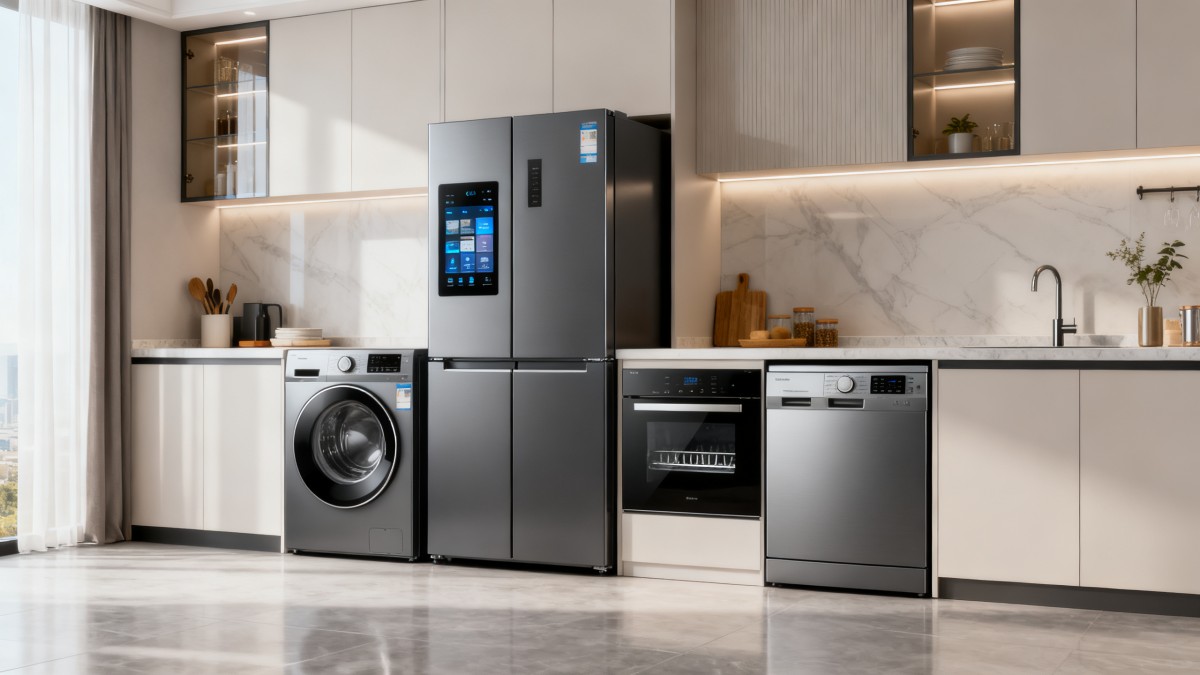
Smart appliances reduce energy use most effectively in ordinary routines, not dramatic one-time upgrades.
That matters across homes, serviced apartments, mixed-use retail, and hospitality settings where utility costs accumulate through repetition.
A connected washer that shifts cycles to off-peak hours, or a refrigerator that adjusts compressor behavior, can cut waste without disrupting comfort.
In practice, the value of smart appliances is not only lower bills.
It is also better visibility, more stable maintenance planning, and clearer benchmarking across sites with different operating patterns.
That wider view fits the logic behind G-BCE, where commercial modernization depends on measurable performance, standard alignment, and supply chain clarity.
For that reason, smart appliances should be judged by real usage conditions, not by app features alone.
Actual savings start with understanding where the load comes from
Different spaces consume energy in different rhythms, so the same smart appliance can deliver very different results.
A family kitchen usually has predictable peaks around mornings and evenings.
A short-stay apartment may face irregular occupancy, door openings, and frequent reset cycles.
A retail back-of-house pantry may prioritize reliability over advanced personalization.
This is why energy-saving claims should be tied to behavior patterns, ambient conditions, and control discipline.
Smart appliances work best when sensors, automation, and user settings respond to a clear operating context.
Without that context, connected features may look impressive while daily energy use barely changes.
Home kitchens and laundry rooms reward adaptive control
In a residential setting, savings often come from load matching rather than raw power reduction.
Smart appliances such as dishwashers, washers, dryers, and refrigerators perform better when they sense partial loads and adjust cycle intensity.
The practical question is simple: does the appliance avoid unnecessary runtime?
A washer that auto-doses detergent and calibrates water level often saves more than one with a crowded control panel.
Likewise, a refrigerator with precise zoning can reduce overcooling, especially in households that store mixed food categories.
Short-stay properties need smart appliances that recover quickly
In serviced apartments or rental units, occupancy shifts make static settings inefficient.
Here, smart appliances should restore comfort fast, then return to low-consumption operation without manual intervention.
Connected thermostats are useful, but so are smart water heaters and refrigerators with door-open alerts.
The stronger indicator is whether the system handles vacancy periods intelligently.
If standby use stays high between stays, the technology is underperforming where it should matter most.
In commercial-adjacent spaces, compatibility often matters more than novelty
Some environments sit between consumer and commercial use.
Show flats, premium retail lounges, staff kitchens, and experience centers all fit this category.
These spaces use smart appliances differently because uptime, aesthetics, and cross-system compatibility shape the decision.
An appliance that saves energy but cannot integrate with lighting, occupancy sensing, or site dashboards may create fragmented control.
That weakens long-term efficiency tracking.
This is also where benchmark thinking becomes useful.
Standards, component durability, and firmware support should be considered alongside energy labels.
Smart appliances are more convincing when they perform consistently across a portfolio, not just in a showroom demo.
The comparison shows why one specification sheet rarely tells the full story.
The better route is to compare smart appliances against the exact pattern of use they must support.
Features that cut energy use are usually quieter than the marketing headline
In actual application, the most useful smart appliance features are often the least theatrical.
Good scheduling matters.
Accurate sensors matter more.
Predictive maintenance can matter even more when neglected components force an appliance to draw extra power.
- Load sensing prevents oversized cycles for small washing or cooling tasks.
- Peak-hour scheduling shifts flexible usage away from expensive periods.
- Door-open or filter alerts reduce hidden waste that users rarely notice in time.
- Usage reports reveal whether promised savings appear in real conditions.
- Remote diagnostics shorten service delays that can keep inefficient equipment running.
These functions sound modest, yet they often separate genuinely efficient smart appliances from decorative connectivity.
The same principle appears across G-BCE benchmark categories.
Measured performance, not feature inflation, is what supports resilient operating environments.
Where smart appliances are often misjudged
One common mistake is treating all connected products as equally efficient.
Wi-Fi access alone does not reduce energy use.
Savings come from control logic, hardware quality, and the match between appliance behavior and daily routines.
Another misjudgment is focusing only on purchase price.
A cheaper unit with weak sensors, poor insulation, or unstable software can erase initial savings through higher energy draw and service calls.
There is also a compatibility trap.
Some smart appliances work well alone but create friction when paired with broader energy management platforms or building controls.
That issue becomes more visible in multi-unit properties and branded commercial environments.
Finally, usage data can be underused.
If reports are available but nobody reviews cycle frequency, standby hours, or fault alerts, efficiency gains stay theoretical.
Choosing the right fit means matching appliance intelligence to operating reality
A practical selection process starts by mapping where energy is actually being lost.
That may be excessive cooling, half-load laundry, idle heating, or appliances left in high-consumption standby.
From there, smart appliances should be filtered through a short set of operational questions.
- Does the appliance adjust automatically, or does it depend on perfect user behavior?
- Can settings be standardized across similar spaces?
- Are energy reports detailed enough to confirm real savings?
- Do local standards, repair access, and firmware support look stable over time?
- Will maintenance teams or operators understand the alerts without extra complexity?
When those answers are clear, smart appliances become easier to compare across brands and formats.
That is especially valuable in cross-border sourcing environments, where product claims must align with regional standards and long-term service expectations.
A better next step is to define the scenario before comparing the device
Smart appliances can cut daily energy use, but only when the selection process starts with the setting, not the slogan.
The strongest results usually come from small, repeatable improvements in cooling, washing, heating, and standby control.
Before choosing a model, it helps to document occupancy patterns, operating hours, utility pricing, maintenance limits, and integration needs.
Then compare smart appliances by adaptive performance, data quality, standards alignment, and service continuity.
That approach makes energy savings more believable, more measurable, and far easier to sustain across changing environments.
If the next step is evaluation, start by grouping usage scenarios, listing decision constraints, and checking which smart appliances solve the actual source of waste.
News Recommendations
 How to assess demand forecasts in a lighting intelligence report
![51a6ab95581761cc26f4318be6520c15]()
Aris Katos
Future of Carbide Coatings
 Billerud推出PharmaKraft纤维基医药包装材料
![51a6ab95581761cc26f4318be6520c15]()
Aris Katos
Future of Carbide Coatings
 How to assess supplier reliability in global supply chain sourcing
![51a6ab95581761cc26f4318be6520c15]()
Aris Katos
Future of Carbide Coatings
 Omdia Forecasts 11.6% CAGR for Global LED Video Display Market in 2026–2030
![51a6ab95581761cc26f4318be6520c15]()
Aris Katos
Future of Carbide Coatings
 How to verify an LFGB testing laboratory's accreditation scope
![51a6ab95581761cc26f4318be6520c15]()
Aris Katos
Future of Carbide Coatings
 How to assess a workplace interior supplier's installation scope
![51a6ab95581761cc26f4318be6520c15]()
Aris Katos
Future of Carbide Coatings
 What records are needed for an ISO 9001 furniture factory audit?
![51a6ab95581761cc26f4318be6520c15]()
Aris Katos
Future of Carbide Coatings
 How to choose AI marketing tools that work with your existing CRM
![51a6ab95581761cc26f4318be6520c15]()
Aris Katos
Future of Carbide Coatings
 Do freight costs erase savings when buying retail fixtures wholesale?
![51a6ab95581761cc26f4318be6520c15]()
Aris Katos
Future of Carbide Coatings
 Can OEM retail shelf display screens work with your existing CMS?
![51a6ab95581761cc26f4318be6520c15]()
Aris Katos
Future of Carbide Coatings
 How heat buildup affects OEM retail shelf LCD screen reliability
![51a6ab95581761cc26f4318be6520c15]()
Aris Katos
Future of Carbide Coatings
 How to check whether an OEM retail shelf screen fits existing shelving
![51a6ab95581761cc26f4318be6520c15]()
Aris Katos
Future of Carbide Coatings
 What brightness should an OEM shelf LCD screen have for retail use?
![51a6ab95581761cc26f4318be6520c15]()
Aris Katos
Future of Carbide Coatings
 Can smart retail IT solutions for CPG work with legacy POS systems?
![51a6ab95581761cc26f4318be6520c15]()
Aris Katos
Future of Carbide Coatings
 What permit approvals belong in a commercial fitout planning checklist?
![51a6ab95581761cc26f4318be6520c15]()
Aris Katos
Future of Carbide Coatings
 What Selection Criteria Matter Most for Commercial Lighting?
![51a6ab95581761cc26f4318be6520c15]()
Aris Katos
Future of Carbide Coatings
 How Do You Apply Sustainability Standards to a Retail Renovation?
![51a6ab95581761cc26f4318be6520c15]()
Aris Katos
Future of Carbide Coatings
 Which Technical Factors Matter When Comparing Smart Retail Hardware?
![51a6ab95581761cc26f4318be6520c15]()
Aris Katos
Future of Carbide Coatings
 Does Data Transparency Matter When Selecting Consumer Goods Suppliers?
![51a6ab95581761cc26f4318be6520c15]()
Aris Katos
Future of Carbide Coatings
 How Does Commercial Design Differ from Interior Decoration?
![51a6ab95581761cc26f4318be6520c15]()
Aris Katos
Future of Carbide Coatings
 How Long Does It Take to Verify a Commercial Furniture Supplier?
![51a6ab95581761cc26f4318be6520c15]()
Aris Katos
Future of Carbide Coatings
 How to verify compostability claims from a bubble mailer manufacturer
![51a6ab95581761cc26f4318be6520c15]()
Aris Katos
Future of Carbide Coatings
 Will commercial smart infrastructure solutions work with legacy systems?
![51a6ab95581761cc26f4318be6520c15]()
Aris Katos
Future of Carbide Coatings
 How to verify a preschool furniture manufacturer's safety standards
![51a6ab95581761cc26f4318be6520c15]()
Aris Katos
Future of Carbide Coatings
 A technical comparison of semiconductor processes for power devices
![51a6ab95581761cc26f4318be6520c15]()
Aris Katos
Future of Carbide Coatings
 How to verify that a BIFMA ergonomic chair meets the standard
![51a6ab95581761cc26f4318be6520c15]()
Aris Katos
Future of Carbide Coatings
 How to use a CRI value chart when choosing LED lighting
![51a6ab95581761cc26f4318be6520c15]()
Aris Katos
Future of Carbide Coatings
 How to compare hotel aroma diffuser wholesale options by coverage area
![51a6ab95581761cc26f4318be6520c15]()
Aris Katos
Future of Carbide Coatings
 How to prevent O-rings and seals from failing in food equipment
![51a6ab95581761cc26f4318be6520c15]()
Aris Katos
Future of Carbide Coatings
 How to compare commercial linear light wholesale quotes accurately
![51a6ab95581761cc26f4318be6520c15]()
Aris Katos
Future of Carbide Coatings
 How to verify international standards compliance for Middle East exports
![51a6ab95581761cc26f4318be6520c15]()
Aris Katos
Future of Carbide Coatings
 How to select laboratory instruments for reproducible test results
![51a6ab95581761cc26f4318be6520c15]()
Aris Katos
Future of Carbide Coatings
 When does a sheet metal prototype reveal design flaws early?
![51a6ab95581761cc26f4318be6520c15]()
Aris Katos
Future of Carbide Coatings
 When PE air column bags reduce damage in e-commerce fulfillment
![51a6ab95581761cc26f4318be6520c15]()
Aris Katos
Future of Carbide Coatings
 How energy-efficient design reduces operating costs in retail lighting
![51a6ab95581761cc26f4318be6520c15]()
Aris Katos
Future of Carbide Coatings
 When commercial aluminum storefronts make sense for a retail renovation
![51a6ab95581761cc26f4318be6520c15]()
Aris Katos
Future of Carbide Coatings
 What makes LED lights durable in high-use commercial spaces?
![51a6ab95581761cc26f4318be6520c15]()
Aris Katos
Future of Carbide Coatings
 Which industry categories offer the strongest export potential in Latin America?
![51a6ab95581761cc26f4318be6520c15]()
Aris Katos
Future of Carbide Coatings
 How to choose an ultra bright waterproof window display for storefronts
![51a6ab95581761cc26f4318be6520c15]()
Aris Katos
Future of Carbide Coatings