Choosing commercialicemakers is not just about matching daily ice output to peak demand—it is also about understanding lifecycle costs, installation constraints, energy efficiency, sanitation standards, and supplier reliability.
For procurement teams managing hotels, restaurants, healthcare facilities, or retail operations, the wrong capacity decision can lead to service disruptions, wasted utilities, and unnecessary maintenance expenses.
This guide breaks down the key capacity and cost factors to check before buying, helping sourcing professionals compare models with confidence and align equipment choices with long-term operational performance.
Start With Real Ice Demand, Not Brochure Capacity
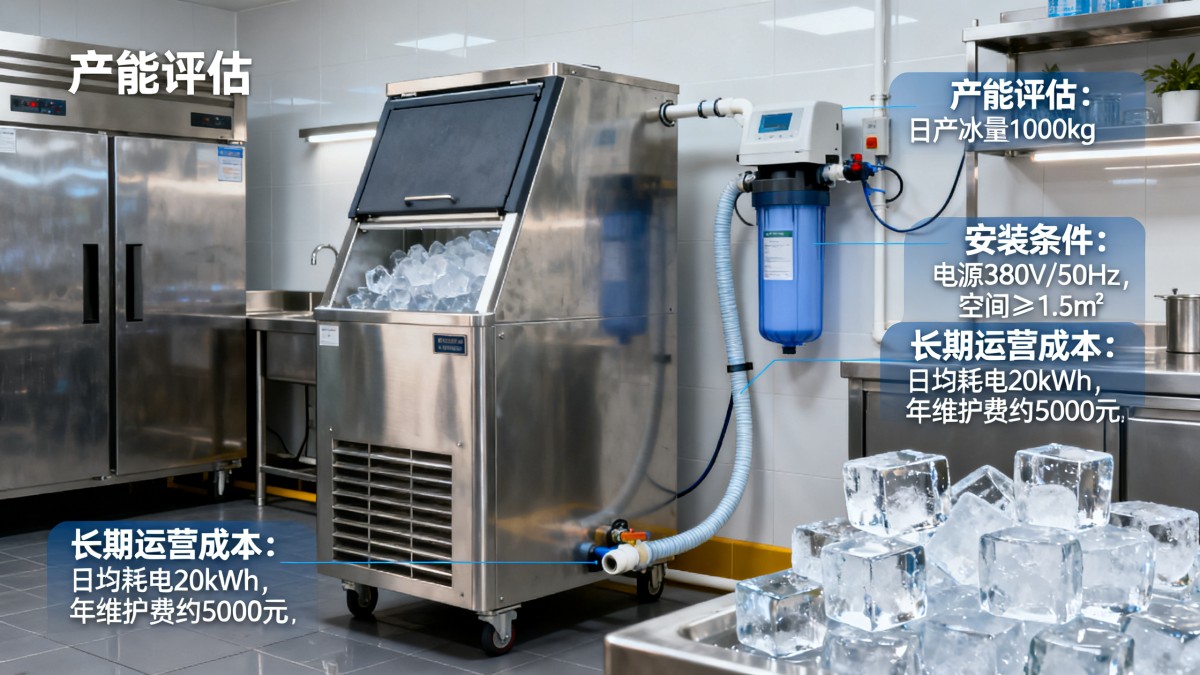
The most important buying question is not which machine looks powerful, but whether its usable output matches your actual operating pattern.
Commercial ice makers are often rated under controlled test conditions, commonly around ideal air and water temperatures. Real kitchens rarely operate that neatly.
A machine advertised at 500 pounds per day may produce meaningfully less in a hot back-of-house area or poorly ventilated service station.
Procurement teams should calculate demand by location, shift, beverage volume, food display needs, patient care requirements, and emergency reserve expectations.
Hotels may need ice peaks during check-in hours, banquets, and breakfast service. Restaurants may face demand spikes during lunch and dinner.
Healthcare and laboratory buyers must also consider sanitation protocols, backup supply, and whether ice is used for consumption, therapy, or cooling.
A practical rule is to size for peak-day demand plus a reasonable buffer, rather than average daily consumption alone.
Oversizing, however, can waste energy, increase water use, and create storage problems if ice sits too long before turnover.
Check the Type of Ice Before Comparing Prices
Capacity comparisons are misleading unless buyers first confirm what type of ice the operation needs and how that ice is used.
Cube ice is common for beverages because it melts slowly and presents well in hotels, bars, and quick-service restaurants.
Half-cube ice supports faster dispensing and blending, making it suitable for high-volume beverage programs or self-service drink stations.
Nugget ice is popular in healthcare, convenience stores, and premium beverage settings because it is chewable and absorbs flavors.
Flake ice is better for seafood displays, produce merchandising, medical cooling, and food processing where moldability matters more than clarity.
Each ice type affects machine cost, compressor workload, water consumption, storage needs, and maintenance requirements over the equipment lifecycle.
Procurement teams should avoid choosing the lowest unit price if the ice format reduces customer experience or increases operational handling.
The right specification begins with service outcomes, then moves to capacity, bin design, installation, and supplier evaluation.
Understand Installed Cost, Not Just Purchase Price
The purchase price is only one part of the investment. Installed cost often determines whether a model is truly economical.
Commercial ice makers may require dedicated water lines, drainage, filtration, electrical upgrades, ventilation clearance, and sometimes floor reinforcement.
Air-cooled models are generally easier to install, but they need enough airflow and may add heat to already crowded kitchens.
Water-cooled models can perform better in hot spaces, but they may increase water consumption and face regulatory restrictions in some regions.
Remote-cooled systems move condenser heat away from the production area, but installation complexity and service access must be evaluated carefully.
Procurement teams should request a full installation checklist before issuing a purchase order, especially for multi-site rollouts.
Hidden costs can include floor drains, backflow prevention, water treatment cartridges, clearance modifications, freight, lift-gate service, and commissioning labor.
A reliable comparison should include equipment price, installation labor, site preparation, accessories, warranty coverage, and expected annual utilities.
Energy and Water Efficiency Affect Long-Term ROI
Ice production is utility-intensive, so efficiency differences can create significant cost gaps across a hotel chain or restaurant portfolio.
Energy-efficient commercialicemakers may cost more initially, but lower electricity consumption can reduce total ownership cost within a few years.
Water efficiency is equally important because machines use water for ice formation, rinsing cycles, and sometimes condenser cooling.
Buyers should compare energy use per 100 pounds of ice and water use per 100 pounds of ice.
These metrics are more useful than daily production alone, because they reveal operational efficiency under standardized testing conditions.
Procurement teams should also check whether models meet recognized efficiency programs or relevant regional energy performance standards.
In sustainability-focused organizations, utility savings support ESG reporting, reduce operating budgets, and strengthen responsible sourcing decisions.
For multi-location buyers, a small per-machine efficiency advantage can become a substantial annual saving across the entire equipment base.
Storage Bin Capacity Can Make or Break Service
Many buying mistakes happen because teams focus on production capacity while underestimating the importance of bin storage.
A machine may produce enough ice daily, but inadequate storage can still cause shortages during service peaks.
Storage bins should be sized around peak usage timing, recovery speed, staff access, and the distance between production and service points.
Too little storage forces employees to ration ice or make repeated trips, slowing service and increasing labor friction.
Too much storage can reduce ice freshness, create sanitation concerns, and occupy valuable floor space in compact operations.
Buyers should ask whether the bin includes good insulation, easy cleaning access, ergonomic scoop placement, and sanitary door design.
In some facilities, distributed smaller machines may outperform one large central unit because they reduce transport time and backup risk.
The best configuration balances production capacity, storage volume, workflow design, hygiene control, and future expansion plans.
Sanitation, Filtration, and Maintenance Should Be Budgeted Early
Ice is often treated like a utility, but from a safety perspective it should be managed like a food product.
Commercial ice makers require regular cleaning, descaling, sanitizing, filter changes, and inspection of components exposed to water or ice.
Poor water quality can accelerate scale buildup, reduce ice clarity, damage components, and increase service calls over time.
Filtration systems protect the machine and improve ice quality, but replacement cartridges must be included in operating budgets.
Procurement teams should check cleaning cycle design, removable parts, antimicrobial surfaces, and whether maintenance can be performed by trained staff.
They should also confirm service intervals, required chemicals, warranty conditions, and whether neglecting maintenance voids manufacturer coverage.
For healthcare, hospitality, and foodservice environments, sanitation documentation may matter during audits, inspections, or brand quality reviews.
A lower-priced machine with difficult cleaning access can become expensive if it increases labor time or compliance risk.
Supplier Reliability Matters as Much as Machine Specifications
Commercial equipment procurement is not only a product decision. It is also a supplier performance and risk management decision.
Buyers should evaluate supplier history, certification documentation, spare parts availability, warranty response, and technical support coverage.
For international sourcing, verify compliance with applicable standards, including electrical safety, sanitation expectations, and market-specific certification requirements.
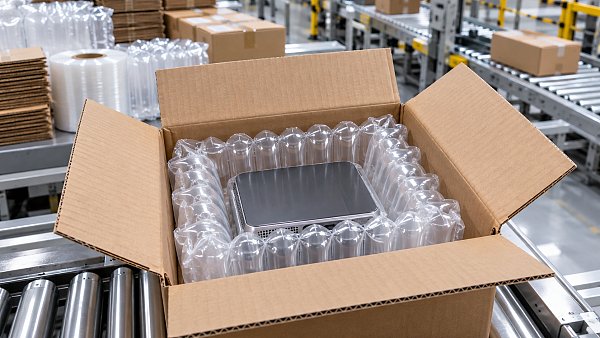
Global buyers should also assess packaging quality, shipping protection, lead times, customs documentation, and after-sales communication reliability.
A technically strong machine can still create operational problems if parts are unavailable or service instructions are poorly translated.
Procurement teams should request references, test reports, installation manuals, maintenance schedules, and sample warranty claim procedures.
For chain operators, supplier consistency across batches is critical because equipment variation complicates training, spare parts, and maintenance planning.
Benchmarking suppliers against operational standards helps buyers avoid decisions based only on catalog capacity and quoted price.
Build a Total Cost of Ownership Comparison
A useful procurement comparison should convert technical specifications into a total cost of ownership model.
This model should include purchase price, installation cost, electricity, water, filtration, cleaning supplies, maintenance labor, parts, downtime risk, and disposal.
It should also estimate the financial impact of shortages, including lost beverage sales, banquet disruption, patient service issues, or emergency ice purchases.
For each shortlisted machine, compare cost per pound of usable ice across a realistic operating period, such as five to seven years.
Include local utility rates, expected operating hours, ambient temperature conditions, and the machine’s likely derating in real environments.
Procurement teams should also calculate whether a premium model delivers payback through lower service calls, faster recovery, or reduced utilities.
The best choice is rarely the cheapest invoice. It is the model with the strongest fit between demand, reliability, compliance, and lifecycle cost.
For large organizations, standardized TCO templates improve decision quality and make approvals easier for finance and operations leaders.
Key Questions to Ask Before Issuing a Purchase Order
Before final selection, buyers should confirm that the equipment can perform under the site’s real operating conditions.
Ask suppliers what output is expected at your actual ambient temperature, inlet water temperature, and ventilation conditions.
Confirm whether the quoted model includes the bin, filter, drain pump, legs, installation kit, or required accessories.
Ask how often the machine must be cleaned, which parts are consumables, and how quickly replacement parts can be delivered.
Check whether warranty coverage includes labor, travel, compressor components, electronic boards, and damage caused by scale or poor installation.
For multi-site rollouts, ask whether the supplier can support consistent documentation, serial tracking, training materials, and scheduled delivery windows.
Also verify whether the machine’s dimensions allow safe placement, service clearance, door swing, ventilation, and staff access.
These questions help procurement teams expose hidden risks before the equipment arrives and becomes expensive to change.
Conclusion: Buy Capacity as an Operational Strategy
Commercial ice makers should be selected as operational infrastructure, not as simple kitchen appliances.
The right buying decision begins with real peak demand, ice type, storage design, installation feasibility, utility efficiency, and sanitation requirements.
Procurement teams should compare models through total cost of ownership instead of relying on brochure capacity or lowest purchase price.
Supplier reliability, documentation quality, service access, and parts availability are also essential to long-term performance.
When capacity and cost are evaluated together, buyers can reduce downtime, protect service quality, and make stronger equipment investments.
For hotels, restaurants, healthcare facilities, and retail operations, the best machine is the one that produces the right ice reliably, efficiently, and safely.