Supply Chain Risks Reshaping 2026 Sourcing Plans
Time
Click Count
As 2026 sourcing strategies take shape, supply chain volatility is no longer a short-term disruption but a board-level planning priority. From geopolitical shifts and compliance pressure to sustainability demands and supplier diversification, business decision-makers must rethink how they build resilient, cost-effective sourcing models. This article explores the risks redefining procurement priorities and what leaders can do now to stay competitive.
Why is supply chain risk now a strategic sourcing issue rather than an operational problem?

For enterprise decision-makers, the supply chain is no longer just a logistics function. It directly affects margin stability, launch timing, store development schedules, product quality consistency, and brand reputation across multiple markets.
In cross-border sourcing, disruption rarely comes from one source alone. A delayed component shipment can trigger certification bottlenecks, packaging redesign, installation rescheduling, and missed commercial opening windows. In 2026 planning, these links are becoming more visible at executive level.
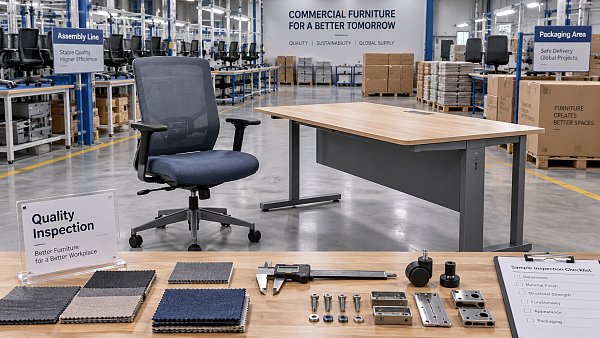
This is especially true in integrated commercial environments where furniture, fixtures, smart retail devices, lighting, signage, and consumer packaging must work as one ecosystem. A weak link in the supply chain can compromise both functional delivery and customer experience.
- Procurement cycles are longer because supplier qualification, lab testing, and sustainability reviews now happen earlier in the buying process.
- Risk exposure is broader because sourcing decisions affect compliance, retail rollout speed, aftermarket support, and regional inventory planning.
- Leadership teams need better benchmarking because cost alone no longer predicts total sourcing success in a volatile supply chain environment.
This is where a data-led platform such as G-BCE becomes useful. By connecting Asian manufacturing capability with global commercial standards and buyer expectations, it helps sourcing leaders compare suppliers and technical categories with more discipline and less guesswork.
Which supply chain risks are reshaping 2026 sourcing plans?
Most sourcing teams already expect disruption. The bigger challenge is understanding which risks deserve priority in category planning, supplier development, and capital allocation. The table below summarizes the main supply chain pressures influencing 2026 decisions.
The key takeaway is simple: supply chain risk is no longer measured only by freight delays. It now includes technical validation, documentation readiness, material traceability, and the ability to scale across commercial rollout programs.
Risk patterns vary by sourcing category
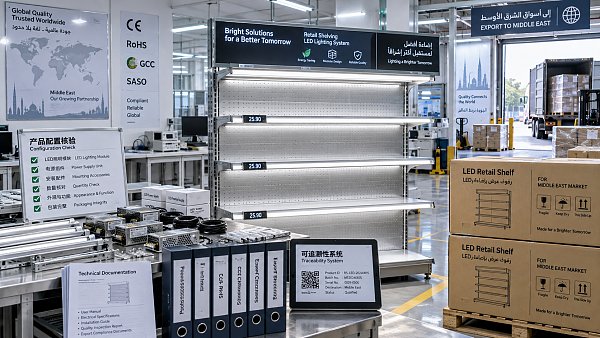
Different categories face different pressure points. Smart retail hardware often carries firmware, certification, and after-sales support risk. Fixtures and furniture may be more exposed to dimensional consistency, installation coordination, and materials compliance. Sustainable packaging introduces recyclability, print compatibility, and shelf-performance trade-offs.
That is why category-level benchmarking matters. G-BCE’s cross-sector perspective helps procurement leaders avoid using one risk model for every product family in the supply chain.
How should decision-makers evaluate supply chain resilience before signing suppliers?
A resilient sourcing strategy needs more than price comparison. Decision-makers should build a structured evaluation framework that combines technical, operational, and commercial factors. The following matrix is useful when comparing suppliers for commercial environment and consumer supply chain programs.
This type of supplier scorecard moves the conversation from “Who quoted lowest?” to “Who can support stable commercial execution?” That shift is central to better supply chain governance.
A practical pre-award checklist
- Request a breakdown of critical components or materials that have long replenishment times or single-source dependency.
- Check whether packaging, labeling, and product documentation are already aligned with destination-market requirements.
- Validate sample consistency against mass-production conditions, not only prototype appearance.
- Assess the supplier’s ability to support engineering changes during rollout, especially for commercial installations and retail technology integration.
For many enterprise buyers, the missing piece is independent comparison across categories and regions. G-BCE adds value by translating technical and sourcing complexity into actionable benchmarks that directors can use in investment and procurement meetings.
What does supplier diversification actually look like in a modern supply chain?
Diversification is often discussed, but poorly executed. Adding more suppliers without clear role definition can increase quality variance, communication overhead, and certification inconsistency. The smarter approach is tiered diversification.
Three diversification models to compare
The right model depends on category complexity, order volume, regional compliance needs, and launch urgency. For decision-makers, comparing these models helps balance resilience against management burden.
Diversification should not be a symbolic move. It should reduce critical dependency without creating uncontrolled complexity in the supply chain. The best sourcing leaders define which categories need redundancy, which need specialization, and which should remain consolidated for efficiency.
How are compliance and sustainability changing sourcing decisions?
In 2026, compliance and sustainability are becoming commercial filters, not optional enhancements. Buyers are under pressure to verify claims, document materials, and choose products that meet both regulatory and brand expectations.
For example, a commercial seating system may need performance alignment with recognized furniture expectations, while a retail device may require electrical conformity and labeling accuracy. Sustainable packaging may need practical recyclability, material disclosure, and performance integrity through shipping and shelf handling.
What procurement teams should ask suppliers
- Can the supplier provide current technical documentation that matches the exact shipped configuration rather than a similar reference item?
- Are recycled, low-impact, or alternative materials available without undermining durability, print quality, or installation performance?
- How are change notices handled when regulations, labels, or destination market requirements are updated?
- Does the supplier understand the difference between passing a test and supporting repeatable compliance in mass production?
G-BCE’s advantage in this area lies in benchmarking across furniture, retail technology, lighting, signage, consumer goods supply chain categories, and sustainable packaging. That cross-sector visibility helps buyers avoid a narrow decision that solves one requirement but creates another downstream problem.
Where do cost pressure and resilience conflict in supply chain planning?
Many organizations still treat resilience as an added cost. In reality, poor resilience often creates hidden expense through missed openings, emergency freight, redesign, stockouts, installation labor overruns, and reputational damage.
The more useful question is not whether resilience costs more. It is where to spend selectively. For high-impact categories, investing in better sourcing visibility and backup capacity can protect total project economics.
Common cost traps in 2026 sourcing plans
- Choosing the lowest unit price without modeling lead-time variability, defect risk, and compliance rework exposure.
- Switching materials for sustainability claims without testing conversion impact, shelf performance, or installation compatibility.
- Consolidating too aggressively with one supplier and losing leverage when demand spikes or quality issues emerge.
- Underfunding sampling, pilot runs, and pre-shipment validation in technically sensitive supply chain categories.
Executive teams should therefore review total landed value, not only quoted cost. In complex commercial ecosystems, a slightly higher sourcing price can be justified if it improves rollout certainty and reduces downstream disruption.
What implementation steps should sourcing leaders take now for 2026?
If 2026 sourcing plans are still being built mainly around annual negotiation cycles, the organization is likely underprepared. A stronger supply chain plan should start with category segmentation and scenario testing.
A practical action framework
- Map critical categories by revenue impact, replacement difficulty, technical complexity, and compliance sensitivity.
- Identify single points of failure across suppliers, subcomponents, materials, and destination-market approval steps.
- Build category-specific scorecards for supplier resilience, not just commercial terms.
- Pilot alternative suppliers or regions for categories with high geopolitical or lead-time exposure.
- Align procurement, quality, engineering, and operations around one common supply chain risk dashboard.
This is also the stage where benchmark intelligence matters most. G-BCE supports decision-makers by giving context to specifications, market norms, international standards, and cross-category sourcing trade-offs that can otherwise remain fragmented across departments.
FAQ: what do decision-makers ask most about supply chain planning for 2026?
How do we know if a supply chain category needs dual sourcing?
A category usually needs dual sourcing when disruption would materially affect revenue, launch timing, regulatory access, or customer experience. This is common in custom fixtures, retail technology interfaces, and packaging tied to a major product line. If switching suppliers would take months due to tooling, testing, or documentation, dependency risk is already high.
What should we prioritize first: cost reduction or resilience?
Prioritize resilience in categories where delays or non-compliance create expensive consequences. Prioritize cost optimization in stable, standardized categories with strong market availability. The right answer is rarely universal across the entire supply chain, which is why category segmentation is essential.
How important are standards such as UL, CE, or BIFMA in sourcing decisions?
They are highly important when products enter regulated or specification-driven markets. Even when a project does not require one exact standard, supplier familiarity with recognized frameworks often signals stronger engineering discipline, documentation habits, and readiness for international procurement requirements.
Can sustainable sourcing reduce risk, or does it only add complexity?
It can do both. Sustainable sourcing reduces future regulatory and brand risk when implemented with proper validation. It adds complexity when claims are not backed by technical performance, traceability, or conversion testing. The safest approach is to evaluate sustainability choices through the same supply chain rigor applied to quality and cost.
Why choose us for supply chain benchmarking and sourcing insight?
G-BCE is built for organizations that need more than supplier directories or general market commentary. We provide structured intelligence across commercial furniture and fixtures, smart retail technology, consumer goods supply chain, commercial lighting and signage, and sustainable packaging.
Our value lies in connecting manufacturing capability, technical performance, compliance expectations, and commercial rollout realities. For sourcing directors, architects, developers, and brand teams, that means better clarity before costly commitments are made.
- Consult us for parameter confirmation when comparing materials, hardware, packaging structures, or retail technology specifications.
- Engage us for product and supplier selection support when you need category benchmarking, risk screening, or regional sourcing comparison.
- Discuss delivery cycle planning if your project depends on phased rollout, sample approval timing, or multi-market launch coordination.
- Ask about certification requirements, documentation expectations, and specification alignment for international commercial environments.
- Request support for custom solutions, sample review, and quotation communication when standard sourcing options do not fit your operational goals.
If your 2026 sourcing plan needs stronger supply chain visibility, clearer trade-off analysis, and better alignment between Asian production capability and global commercial standards, G-BCE can help you evaluate options with greater confidence and sharper decision speed.
- commercial furniture
- smart retail
- supply chain
- consumer goods
- commercial lighting
- signage
- sustainable packaging
- retail technology
- consumer packaging
- commercial environments
- international standards
- consumer supply
- consumer goods supply chain
- smart retail systems
- smart retail technology
- supply chain benchmarking
News Recommendations
 What records are needed for an ISO 9001 furniture factory audit?
![51a6ab95581761cc26f4318be6520c15]()
Aris Katos
Future of Carbide Coatings
 How to choose AI marketing tools that work with your existing CRM
![51a6ab95581761cc26f4318be6520c15]()
Aris Katos
Future of Carbide Coatings
 Do freight costs erase savings when buying retail fixtures wholesale?
![51a6ab95581761cc26f4318be6520c15]()
Aris Katos
Future of Carbide Coatings
 What brightness should an OEM shelf LCD screen have for retail use?
![51a6ab95581761cc26f4318be6520c15]()
Aris Katos
Future of Carbide Coatings
 Can smart retail IT solutions for CPG work with legacy POS systems?
![51a6ab95581761cc26f4318be6520c15]()
Aris Katos
Future of Carbide Coatings
 What permit approvals belong in a commercial fitout planning checklist?
![51a6ab95581761cc26f4318be6520c15]()
Aris Katos
Future of Carbide Coatings
 Does Data Transparency Matter When Selecting Consumer Goods Suppliers?
![51a6ab95581761cc26f4318be6520c15]()
Aris Katos
Future of Carbide Coatings
 How Does Commercial Design Differ from Interior Decoration?
![51a6ab95581761cc26f4318be6520c15]()
Aris Katos
Future of Carbide Coatings
 How Long Does It Take to Verify a Commercial Furniture Supplier?
![51a6ab95581761cc26f4318be6520c15]()
Aris Katos
Future of Carbide Coatings
 How to verify compostability claims from a bubble mailer manufacturer
![51a6ab95581761cc26f4318be6520c15]()
Aris Katos
Future of Carbide Coatings
 Will commercial smart infrastructure solutions work with legacy systems?
![51a6ab95581761cc26f4318be6520c15]()
Aris Katos
Future of Carbide Coatings
 How to verify a preschool furniture manufacturer's safety standards
![51a6ab95581761cc26f4318be6520c15]()
Aris Katos
Future of Carbide Coatings
 A technical comparison of semiconductor processes for power devices
![51a6ab95581761cc26f4318be6520c15]()
Aris Katos
Future of Carbide Coatings
 How to verify that a BIFMA ergonomic chair meets the standard
![51a6ab95581761cc26f4318be6520c15]()
Aris Katos
Future of Carbide Coatings
 How to use a CRI value chart when choosing LED lighting
![51a6ab95581761cc26f4318be6520c15]()
Aris Katos
Future of Carbide Coatings
 How to compare hotel aroma diffuser wholesale options by coverage area
![51a6ab95581761cc26f4318be6520c15]()
Aris Katos
Future of Carbide Coatings
 How to prevent O-rings and seals from failing in food equipment
![51a6ab95581761cc26f4318be6520c15]()
Aris Katos
Future of Carbide Coatings
 How to compare commercial linear light wholesale quotes accurately
![51a6ab95581761cc26f4318be6520c15]()
Aris Katos
Future of Carbide Coatings
 How to verify international standards compliance for Middle East exports
![51a6ab95581761cc26f4318be6520c15]()
Aris Katos
Future of Carbide Coatings
 How to select laboratory instruments for reproducible test results
![51a6ab95581761cc26f4318be6520c15]()
Aris Katos
Future of Carbide Coatings
 When does a sheet metal prototype reveal design flaws early?
![51a6ab95581761cc26f4318be6520c15]()
Aris Katos
Future of Carbide Coatings
 When PE air column bags reduce damage in e-commerce fulfillment
![51a6ab95581761cc26f4318be6520c15]()
Aris Katos
Future of Carbide Coatings
 How energy-efficient design reduces operating costs in retail lighting
![51a6ab95581761cc26f4318be6520c15]()
Aris Katos
Future of Carbide Coatings
 When commercial aluminum storefronts make sense for a retail renovation
![51a6ab95581761cc26f4318be6520c15]()
Aris Katos
Future of Carbide Coatings
 What makes LED lights durable in high-use commercial spaces?
![51a6ab95581761cc26f4318be6520c15]()
Aris Katos
Future of Carbide Coatings
 Which industry categories offer the strongest export potential in Latin America?
![51a6ab95581761cc26f4318be6520c15]()
Aris Katos
Future of Carbide Coatings
 How to choose an ultra bright waterproof window display for storefronts
![51a6ab95581761cc26f4318be6520c15]()
Aris Katos
Future of Carbide Coatings
 How to verify suppliers on a trade portal for global sourcing
![51a6ab95581761cc26f4318be6520c15]()
Aris Katos
Future of Carbide Coatings
 How RoHS requirements should be stated in product specifications
![51a6ab95581761cc26f4318be6520c15]()
Aris Katos
Future of Carbide Coatings
 What affects the lead time for custom retail counter displays?
![51a6ab95581761cc26f4318be6520c15]()
Aris Katos
Future of Carbide Coatings
 What consumer packaging USA importers need to verify before ordering
![51a6ab95581761cc26f4318be6520c15]()
Aris Katos
Future of Carbide Coatings
 How commercial spaces interiors shape customer dwell time
![51a6ab95581761cc26f4318be6520c15]()
Aris Katos
Future of Carbide Coatings
 How LED commercial lighting design reduces glare in retail spaces
![51a6ab95581761cc26f4318be6520c15]()
Aris Katos
Future of Carbide Coatings
 How industrial technology information improves RFID inventory accuracy
![51a6ab95581761cc26f4318be6520c15]()
Aris Katos
Future of Carbide Coatings
 When drip garden watering systems make more sense than sprinklers
![51a6ab95581761cc26f4318be6520c15]()
Aris Katos
Future of Carbide Coatings
 When category comparison improves sourcing for industrial applications
![51a6ab95581761cc26f4318be6520c15]()
Aris Katos
Future of Carbide Coatings
 Industrial application guidance for selecting the right LED lighting
![51a6ab95581761cc26f4318be6520c15]()
Aris Katos
Future of Carbide Coatings
 Which commercial architecture standards apply to European retail fit-outs?
![51a6ab95581761cc26f4318be6520c15]()
Aris Katos
Future of Carbide Coatings
 How to verify FDA requirements for maternity care products
![51a6ab95581761cc26f4318be6520c15]()
Aris Katos
Future of Carbide Coatings