How to respect local customs when negotiating with overseas suppliers
Time
Click Count
A competitive quote can open a sourcing conversation, but understanding local customs helps procurement teams turn that conversation into a lasting supplier relationship. Expectations around introductions, decision-making, communication, and hospitality can influence how proposals are received. Respecting these differences does not mean accepting unclear terms or compromising compliance. It means adapting how you negotiate while remaining clear about what your business needs.
Imagine discussing a delivery delay during a factory visit. Your team wants an immediate commitment; the supplier’s representative keeps returning to the production schedule without agreeing to a date. Pushing harder might expose a genuine capacity problem—or embarrass someone who lacks approval authority. The useful response is not to guess which cultural rule applies. It is to ask better questions, identify who can decide, and create a practical route to agreement.
Research local customs, then verify how this supplier actually works
Country guides provide a starting point, not a script. A founder-led packaging factory, a multinational lighting manufacturer, and an export trading company may operate differently within the same city. Ownership, company size, export experience, and individual preferences can matter as much as national culture.
Before the first negotiation, check local business hours, public holidays, religious observances, forms of address, and common meeting conventions. Consider how your own calendar looks from the supplier’s side: an “urgent” request sent before a major holiday may be difficult to fulfill regardless of goodwill.
Then ask your contact a few practical questions:
- “Who should join when we discuss commercial terms and technical approvals?”
- “Would your team prefer a detailed proposal in advance or a discussion first?”
- “Are there any upcoming holidays or production shutdowns we should include in the timeline?”
- “What is the best way to raise an issue that needs management review?”
These questions show consideration without forcing anyone to represent an entire culture. They also reveal the supplier’s actual operating process—information that is far more useful than memorizing generalized etiquette rules.
Make the first meeting comfortable enough for an honest negotiation
Buyers often arrive with a tightly timed agenda. Suppliers may expect introductions, a facility tour, or a short conversation before discussing prices. Neither approach is inherently more professional. The friction comes from treating your preferred pace as the only legitimate one.
Allow some room for relationship-building, especially when evaluating a long-term manufacturing partner. Ask about production capabilities, recent process changes, or the team responsible for your product category. You can learn commercially useful information while giving the supplier space to establish credibility.
Use names and titles as introduced, and follow your host’s lead on greetings. If you are unsure about pronunciation or seating arrangements, ask politely rather than performing an unfamiliar custom with exaggerated confidence.
A short advance agenda can bridge different expectations:
“We would appreciate time to understand your production setup before reviewing the proposal. After that, could we cover specifications, pricing options, and the approval process? Please let us know who else should be involved.”
This keeps the meeting purposeful without making the introduction feel like an obstacle to the “real” business.
Find the decision path before requesting a concession
The person answering your emails may understand your requirements but have limited authority over pricing, tooling charges, credit terms, or production priorities. In some organizations, decisions are concentrated with an owner. Elsewhere, sales, engineering, finance, and operations must align before anyone can commit.
Do not interpret a delayed answer automatically as avoidance. Ask what needs to happen internally and offer information that helps the representative make the case.
For example, a request for a lower unit price becomes easier to evaluate when it includes order frequency, product variants, forecast assumptions, and the operational changes you can accept. A vague promise of “large future orders” gives the supplier little basis for approval.
A simple decision map prevents repeated negotiations with the wrong people:

Invite the necessary people without undermining your main contact. “Could we include your quality colleague to resolve the test method?” usually works better than demanding access to someone more senior.
Adapt your communication—not your acceptance criteria
Negotiating across cultures becomes risky when politeness is mistaken for agreement. “We will try,” “that may be possible,” and “we understand” can express willingness to explore an option rather than a confirmed commitment. This ambiguity can also arise from language differences or ordinary sales optimism; it is not evidence of a national trait.
Use plain language, short questions, and concrete reference points. Avoid idioms such as “sharpen your pencil” when asking for a revised price. Do not bundle price, lead time, packaging, and warranty into one question that can receive a single ambiguous “yes.”
Turn broad assurances into verifiable commitments
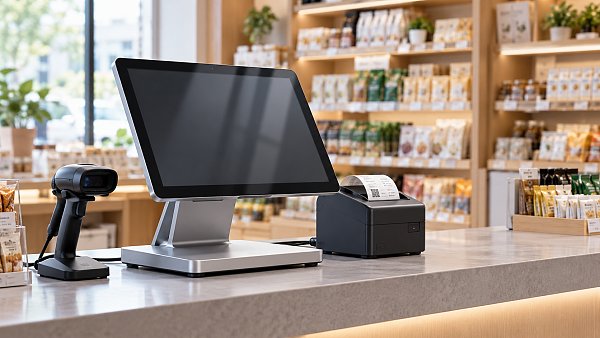
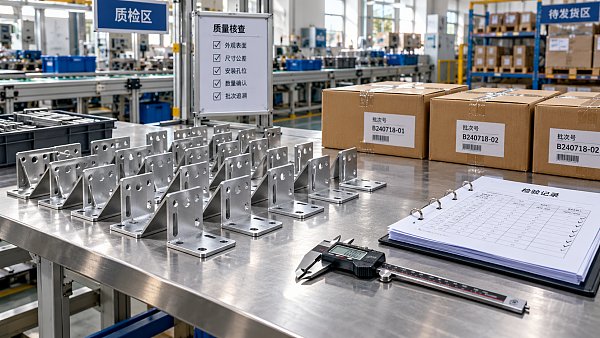
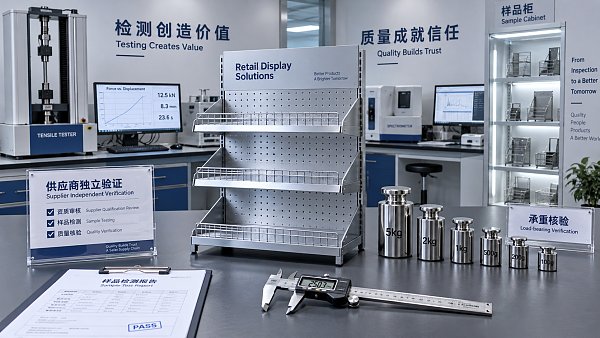
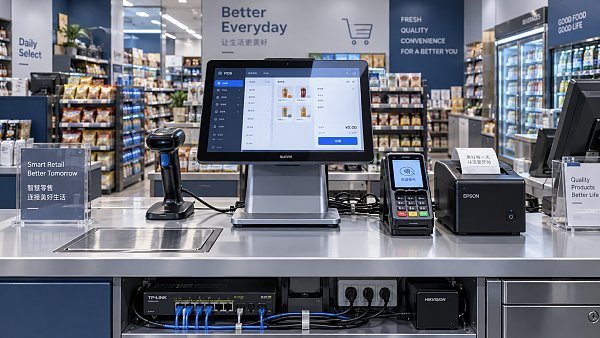
Instead of asking, “Can you meet our quality standard?” specify what meeting it means. For commercial furniture, that could involve agreed dimensions, finish references, load-testing requirements, and inspection criteria. For smart retail equipment, it might include interfaces, software support periods, and replacement procedures.
Similarly, “sustainable packaging” needs a defined material specification and evidence for any environmental claims. Cultural sensitivity cannot compensate for an unclear purchase specification.
After a discussion, send a short summary separating three categories: agreed points, proposals awaiting approval, and unresolved questions. Invite corrections explicitly. This gives the supplier a low-pressure opportunity to clarify misunderstandings before they become purchase-order disputes.
Give disagreement a constructive route
Public criticism can make a technical disagreement unnecessarily personal. Raise sensitive issues with the relevant contact first, describe the evidence, and ask for an explanation before assigning blame.
For example: “The sample finish differs from the approved reference under our inspection lighting. Could your technical team help identify the cause and propose a correction?” This is direct about the problem without suggesting incompetence or dishonesty.
If translation is needed for a consequential discussion, use a qualified interpreter with relevant technical vocabulary. Provide drawings and terminology in advance. For contracts or specifications in multiple languages, obtain appropriate legal review and clarify which version governs.
Negotiate trade-offs without turning the meeting into a contest
Aggressive bargaining can produce a visible discount while damaging the assumptions behind it. If a supplier accepts a lower price without discussing scope, procurement should check whether materials, inspection, packaging, or service expectations have changed.
Respectful negotiation makes the exchange explicit. Ask what cost drivers can be adjusted rather than insisting that the supplier “find a way.” Useful options might include consolidating finishes, standardizing components, increasing batch size, changing packaging dimensions, or allowing a wider production window.
Consider a hypothetical commercial lighting order with a strict opening date. A blanket price reduction may be less valuable than securing production capacity and a documented replacement-parts arrangement. Conversely, a furniture order with flexible installation timing may allow batch consolidation without changing performance requirements.
When offering a concession, state the condition clearly: “If we reduce the number of finish variants from six to three, what saving could you confirm?” Keep forecasts distinct from binding commitments, and do not imply guaranteed repeat business unless you are authorized to offer it.
Silence also deserves patience. Give the other party time to calculate, translate, or consult internally. If the pause becomes unclear, ask whether they need more information or a follow-up discussion rather than filling it with another concession.
Handle hospitality and gifts with warmth and clear boundaries
A shared meal or small gift may be a normal expression of welcome. It can also create policy, conflict-of-interest, or anti-bribery concerns. Local customs do not override applicable law or your organization’s rules.
Before traveling, confirm permitted gift values, approval requirements, disclosure procedures, and restrictions involving public officials or state-linked organizations. Check whether meals, transport, and accommodation receive different treatment under your policy.
If you need to decline, avoid criticizing the gesture:
“Thank you for thinking of us. Our procurement policy does not allow us to accept this, but we genuinely appreciate the welcome.”
Where permitted, suggest an alternative such as a modest working meal with each company covering its own team. Communicate dietary requirements discreetly in advance, and remember that alcohol should never become a test of relationship commitment.
Keep hospitality separate from award decisions. A friendly evening does not replace supplier due diligence, and an uncomfortable request should not be accepted simply to avoid offending a host.
Protect technical standards while allowing flexibility in the process
For cross-border sourcing, distinguish between how you reach an agreement and what the product must deliver. Meeting format, review sequence, and communication style can often be adapted. Safety requirements, truthful documentation, agreed specifications, and applicable legal obligations cannot be negotiated away.
In the commercial-space and consumer-supply-chain categories covered by G-BCE, this distinction is especially important. Furniture, lighting, retail technology, and packaging carry different performance and documentation needs. Relevant UL standards, CE-marking requirements, or BIFMA test standards should be assessed according to the product, intended use, destination market, and contract—not treated as interchangeable badges.
Explain the evidence required and who will review it. If a supplier cannot provide acceptable documentation, explore legitimate testing or verification options before approval. Do not accept an unsupported assurance because challenging it feels culturally awkward.
Close with a shared record, not just a positive atmosphere
A productive meeting should end with clarity about the next step. Before leaving, confirm who will issue the revised quotation, which specifications remain open, who approves samples, and when each action is due. Use explicit dates and time zones where relevant.
Follow up with a concise written record covering scope, price assumptions, currency, payment milestones, delivery responsibilities, inspection arrangements, and unresolved items. Where Incoterms apply, specify the rule, named place, and version rather than relying on shorthand.
Respect for local customs is ultimately a discipline of attention: noticing how people prefer to work, checking your assumptions, and making difficult conversations easier to navigate. The strongest supplier relationships do not avoid disagreement. They make it possible to discuss price, quality, delays, and risk honestly—without sacrificing either professional dignity or procurement control.
News Recommendations
 How to choose a dog harness and leash for a dog that pulls hard
![51a6ab95581761cc26f4318be6520c15]()
Aris Katos
Future of Carbide Coatings
 How to respect local customs when negotiating with overseas suppliers
![51a6ab95581761cc26f4318be6520c15]()
Aris Katos
Future of Carbide Coatings
 RFID Recycling Challenges Bring Paper-Based and Chipless Tags Into Focus
![51a6ab95581761cc26f4318be6520c15]()
Aris Katos
Future of Carbide Coatings
 How to choose commercial lighting for offices that reduces glare
![51a6ab95581761cc26f4318be6520c15]()
Aris Katos
Future of Carbide Coatings
 Queue Launches Fully Automated Robotic Pharmacy Kiosk for 30-Second Dispensing
![51a6ab95581761cc26f4318be6520c15]()
Aris Katos
Future of Carbide Coatings
 Can your supermarket store fixtures supplier meet your opening date?
![51a6ab95581761cc26f4318be6520c15]()
Aris Katos
Future of Carbide Coatings
 Shopify POS UI Extensions 2026-10 Adds Virtual Lists and Custom Row Templates
![51a6ab95581761cc26f4318be6520c15]()
Aris Katos
Future of Carbide Coatings
 How to assess smart office furniture suppliers’ North American support
![51a6ab95581761cc26f4318be6520c15]()
Aris Katos
Future of Carbide Coatings
 Aqara Launches Smart Lighting Range to Advance AI Spatial Intelligence
![51a6ab95581761cc26f4318be6520c15]()
Aris Katos
Future of Carbide Coatings
 How to assess demand forecasts in a lighting intelligence report
![51a6ab95581761cc26f4318be6520c15]()
Aris Katos
Future of Carbide Coatings
 Billerud推出PharmaKraft纤维基医药包装材料
![51a6ab95581761cc26f4318be6520c15]()
Aris Katos
Future of Carbide Coatings
 How to assess supplier reliability in global supply chain sourcing
![51a6ab95581761cc26f4318be6520c15]()
Aris Katos
Future of Carbide Coatings
 Omdia Forecasts 11.6% CAGR for Global LED Video Display Market in 2026–2030
![51a6ab95581761cc26f4318be6520c15]()
Aris Katos
Future of Carbide Coatings
 How to verify an LFGB testing laboratory's accreditation scope
![51a6ab95581761cc26f4318be6520c15]()
Aris Katos
Future of Carbide Coatings
 How to assess a workplace interior supplier's installation scope
![51a6ab95581761cc26f4318be6520c15]()
Aris Katos
Future of Carbide Coatings
 What records are needed for an ISO 9001 furniture factory audit?
![51a6ab95581761cc26f4318be6520c15]()
Aris Katos
Future of Carbide Coatings
 How to choose AI marketing tools that work with your existing CRM
![51a6ab95581761cc26f4318be6520c15]()
Aris Katos
Future of Carbide Coatings
 Do freight costs erase savings when buying retail fixtures wholesale?
![51a6ab95581761cc26f4318be6520c15]()
Aris Katos
Future of Carbide Coatings
 How to verify EMC reports from an OEM retail shelf LCD screen factory
![51a6ab95581761cc26f4318be6520c15]()
Aris Katos
Future of Carbide Coatings
 Who handles firmware updates for an OEM retail shelf screen?
![51a6ab95581761cc26f4318be6520c15]()
Aris Katos
Future of Carbide Coatings
 How to assess burn-in testing at an OEM retail shelf screen factory
![51a6ab95581761cc26f4318be6520c15]()
Aris Katos
Future of Carbide Coatings
 How custom tooling affects the cost of an OEM shelf LCD screen
![51a6ab95581761cc26f4318be6520c15]()
Aris Katos
Future of Carbide Coatings
 Can OEM retail shelf display screens work with your existing CMS?
![51a6ab95581761cc26f4318be6520c15]()
Aris Katos
Future of Carbide Coatings
 How heat buildup affects OEM retail shelf LCD screen reliability
![51a6ab95581761cc26f4318be6520c15]()
Aris Katos
Future of Carbide Coatings
 How to check whether an OEM retail shelf screen fits existing shelving
![51a6ab95581761cc26f4318be6520c15]()
Aris Katos
Future of Carbide Coatings
 What brightness should an OEM shelf LCD screen have for retail use?
![51a6ab95581761cc26f4318be6520c15]()
Aris Katos
Future of Carbide Coatings
 Can smart retail IT solutions for CPG work with legacy POS systems?
![51a6ab95581761cc26f4318be6520c15]()
Aris Katos
Future of Carbide Coatings
 What permit approvals belong in a commercial fitout planning checklist?
![51a6ab95581761cc26f4318be6520c15]()
Aris Katos
Future of Carbide Coatings
 What After-Sales Support Should Office Furniture Manufacturers Provide?
![51a6ab95581761cc26f4318be6520c15]()
Aris Katos
Future of Carbide Coatings
 How Can You Ensure Commercial Furniture Meets Local Safety Regulations?
![51a6ab95581761cc26f4318be6520c15]()
Aris Katos
Future of Carbide Coatings
 What Are the Most Common Mistakes When Sourcing Wholesale Office Furniture?
![51a6ab95581761cc26f4318be6520c15]()
Aris Katos
Future of Carbide Coatings
 Can You Trust G-BCE Supplier Ratings Without Independent Verification?
![51a6ab95581761cc26f4318be6520c15]()
Aris Katos
Future of Carbide Coatings
 What Selection Criteria Matter Most for Commercial Lighting?
![51a6ab95581761cc26f4318be6520c15]()
Aris Katos
Future of Carbide Coatings
 How Do You Apply Sustainability Standards to a Retail Renovation?
![51a6ab95581761cc26f4318be6520c15]()
Aris Katos
Future of Carbide Coatings
 Which Technical Factors Matter When Comparing Smart Retail Hardware?
![51a6ab95581761cc26f4318be6520c15]()
Aris Katos
Future of Carbide Coatings
 Does Data Transparency Matter When Selecting Consumer Goods Suppliers?
![51a6ab95581761cc26f4318be6520c15]()
Aris Katos
Future of Carbide Coatings
 How Does Commercial Design Differ from Interior Decoration?
![51a6ab95581761cc26f4318be6520c15]()
Aris Katos
Future of Carbide Coatings
 How Long Does It Take to Verify a Commercial Furniture Supplier?
![51a6ab95581761cc26f4318be6520c15]()
Aris Katos
Future of Carbide Coatings
 How to verify compostability claims from a bubble mailer manufacturer
![51a6ab95581761cc26f4318be6520c15]()
Aris Katos
Future of Carbide Coatings