How Can You Ensure Commercial Furniture Meets Local Safety Regulations?
Time
Click Count
How Can You Ensure Commercial Furniture Meets Local Safety Regulations?
How to ensure commercial furniture meets local safety regulations? For commercial developers, chain operators, and sourcing teams, the answer starts with understanding where and how each product will be used—not simply trusting a supplier’s compliance claim. Fire performance, structural stability, accessibility, and material requirements can vary by jurisdiction and occupancy type. Drawing on G-BCE’s approach to technical benchmarking, this guide explains how to identify applicable rules, verify relevant test reports, and document compliance before purchase and installation, helping you reduce procurement risk and create safer commercial environments.
The practical challenge is that furniture compliance rarely rests on one certificate. A chair may have credible durability testing but insufficient fire-performance evidence for its destination. A compliant reception counter can still create an accessibility problem if its installed configuration is wrong. You need to assess the product, its intended use, and the completed space together.
Start with the destination and occupancy—not the catalog
Before requesting quotations, prepare a short compliance brief for each project. Identify the country, state or province, municipality, building use, and furniture location. A hotel lobby, outpatient clinic, restaurant terrace, and ordinary office can present different requirements even when they use visually similar seating.
Record whether furniture is freestanding, fixed to the building, upholstered, electrically powered, or intended for outdoor use. Include foreseeable users and conditions: intensive public use, children, moisture, repeated cleaning, or unusually heavy loads. These details determine which questions the supplier and testing laboratory need to answer.
Have the project architect or appropriately qualified local adviser identify applicable legislation and adopted building and fire codes. Where interpretation is uncertain, seek clarification from the authority having jurisdiction. Landlord requirements, insurer conditions, and brand specifications should be recorded separately: they may exceed legal minimums, but they are not automatically law.
For multi-site programs, maintain a destination-specific requirements matrix. A global furniture specification can provide a common baseline, but it should not imply that acceptance in one market guarantees acceptance everywhere.
Separate legal obligations from standards and marketing claims
Standards are useful only when their scope matches your product and project. Some are referenced by regulation; others are voluntary benchmarks or contractual requirements. Ask suppliers to state which category applies rather than presenting every logo as equivalent evidence.
For US upholstered furniture within its scope, 16 CFR Part 1640 establishes a federal flammability standard incorporating California Technical Bulletin 117-2013. That does not settle every commercial fire-safety question. Confirm applicability, labeling obligations, and any additional local or project requirements through current official sources.
Check the risks that actually matter in the space
Fire performance depends on the construction
“Fire-resistant fabric” is not a complete specification. Upholstery performance can depend on the cover, filling, interliner, and construction assessed under the relevant method. Smoldering resistance and resistance to an open-flame ignition source are different properties. Evidence for one should not be described as evidence for the other.
A change of fabric, foam, or barrier material deserves review before production. Require the supplier to explain whether the proposed combination falls within existing test evidence or needs further evaluation. Treat upholstery substitutions as technical changes, not merely color selections.
Strength and stability must reflect intended use
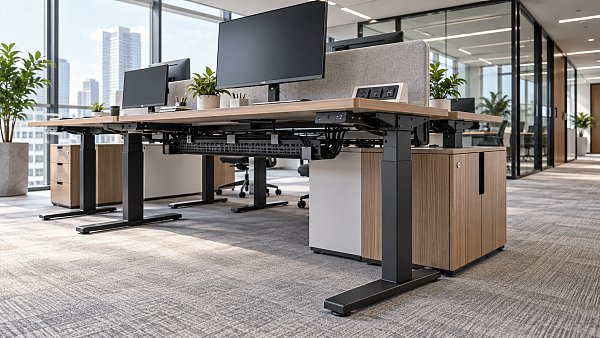
For seating, examine load capacity, stability, fatigue performance, and the tested configuration. For storage and display units, consider overturning, shelf loading, drawers, and anchorage. A residential product is not automatically suitable for repeated public use, even if its appearance fits the project.
Do not rely on a maximum-load claim without knowing how it was established. A static load statement alone says little about repeated loading, impact, or off-center forces. Confirm that the selected test standard is relevant to the furniture category and expected use.
Accessibility is partly an installation question
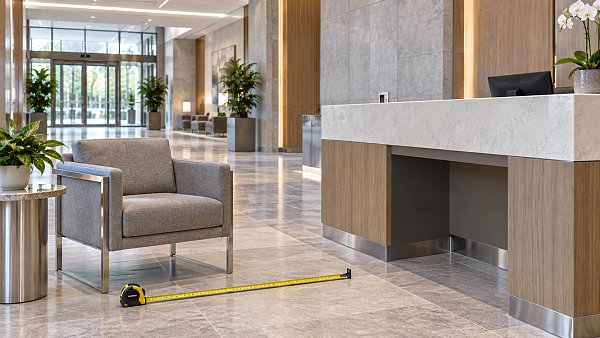
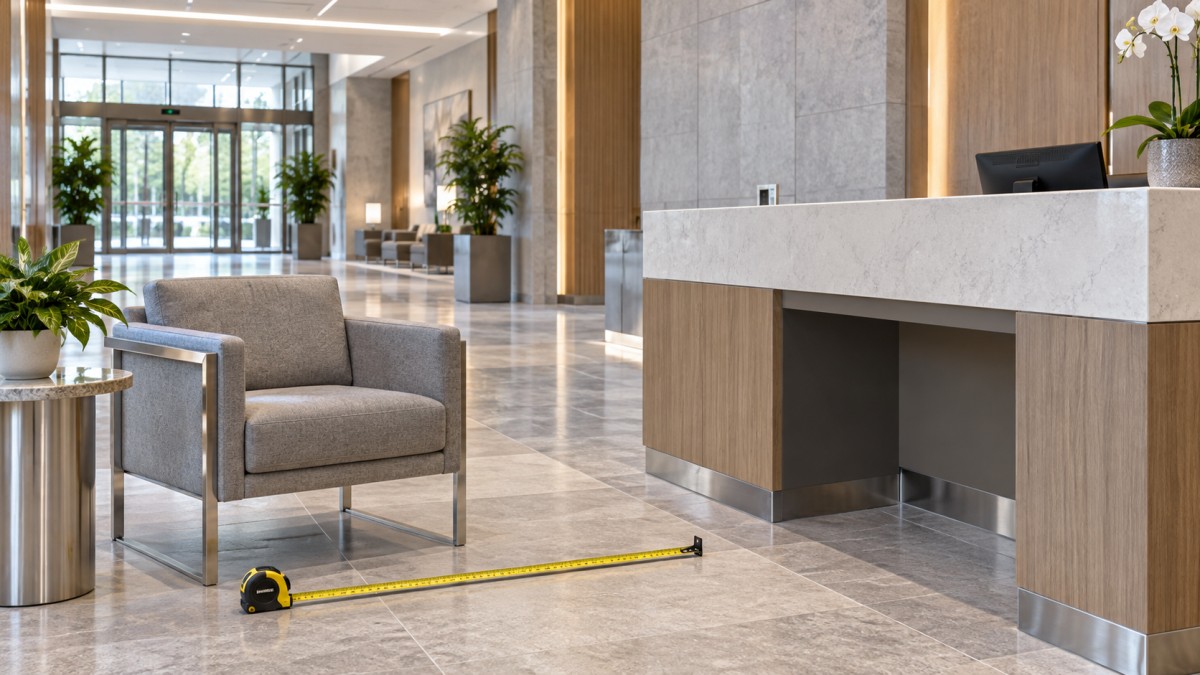
Accessible counters and work surfaces require more than an appropriate height. Depending on local rules, approach space, knee and toe clearance, reach ranges, and circulation may also matter. In US projects, consult applicable ADA requirements alongside relevant state and local provisions; other markets have their own frameworks.
Review furniture against the final layout, including chairs in use, open drawers, and movable displays. A compliant item can obstruct an exit route or accessible path when placed badly.
Materials and integrated technology add separate obligations
Composite wood, surface coatings, and upholstery may be subject to destination-specific chemical or emissions requirements. In the United States, TSCA Title VI addresses formaldehyde emissions from covered composite wood products. In the EU, relevant REACH restrictions require separate consideration. Sustainability claims do not replace evidence of chemical compliance.
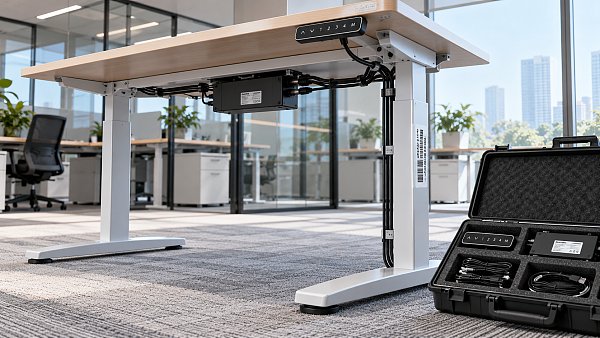
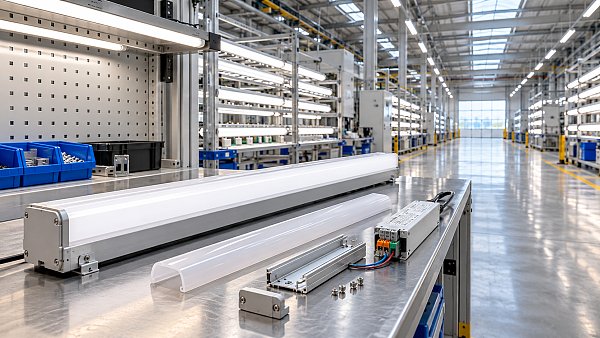
Powered desks, charging tables, and illuminated fixtures need an electrical review as well. Verify the supply rating, plugs, wiring protection, component approvals, and requirements for the complete assembly. Combining approved components does not automatically establish that the finished product is acceptable.
Read the report, not just the cover page
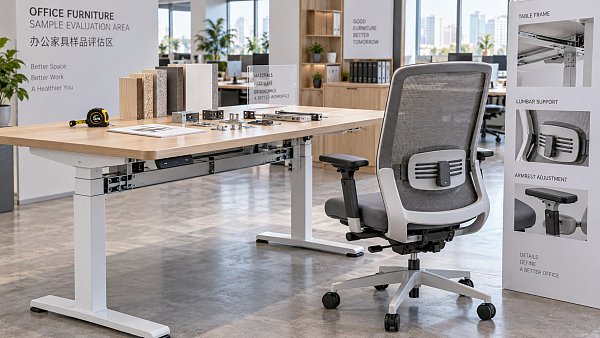
Request complete test reports rather than cropped certificates or catalog screenshots. The important question is whether the evidence applies to the exact furniture you will receive.
- Match model numbers, photographs, dimensions, materials, and construction details to the purchase specification.
- Check the test method and edition against the requirements identified for the destination.
- Read results, exclusions, deviations, and sample descriptions—not only the word “pass.”
- Verify the laboratory and, where required, its accreditation scope for the relevant testing.
- Confirm document authenticity with the issuing organization when there are discrepancies.
A report covering a standard chair may not cover a wider seat, different base, or altered frame. A family of products can sometimes share evidence, but the basis for coverage must be documented rather than inferred from similar appearance.
Age alone does not determine whether a report remains useful. Review changes to the product, standard, regulation, and certification status. Ask who is responsible for confirming continued applicability.
Make compliance part of purchasing and change control
Once requirements are settled, attach them to the purchase specification. Identify the approved construction, required evidence, labeling, installation instructions, and acceptance criteria. Avoid wording such as “meets all international standards”; it is too vague to guide production or resolve a dispute.
Require written approval for changes to foam, fabric, board substrate, adhesives, hardware, electrical parts, or manufacturing location where these could affect compliance. The supplier should explain the impact and provide updated evidence when necessary. This is especially important when sourcing across borders, where substitutions can otherwise remain invisible until delivery.
Set the evidence review before the production-release milestone. If a critical report is missing, keep that item unapproved rather than relying on a promise to provide paperwork after shipment. Prototype or pre-shipment checks can help verify construction, but they do not replace required laboratory testing.
Keep the evidence connected to the installed furniture
At delivery, compare product identifiers and labels with the approved records. Inspect assembly quality, damage, missing fasteners, sharp edges, and functioning mechanisms. Record discrepancies before the furniture enters service.
Installation checks should include anchorage, leveling, electrical connections, and required clearances. Where fixed furniture depends on wall or floor fixings, confirm compatibility with the actual substrate and approved installation design. Generic fasteners supplied in a box may not suit every building.</
News Recommendations
 Can your supermarket store fixtures supplier meet your opening date?
![51a6ab95581761cc26f4318be6520c15]()
Aris Katos
Future of Carbide Coatings
 Shopify POS UI Extensions 2026-10 Adds Virtual Lists and Custom Row Templates
![51a6ab95581761cc26f4318be6520c15]()
Aris Katos
Future of Carbide Coatings
 How to assess smart office furniture suppliers’ North American support
![51a6ab95581761cc26f4318be6520c15]()
Aris Katos
Future of Carbide Coatings
 Aqara Launches Smart Lighting Range to Advance AI Spatial Intelligence
![51a6ab95581761cc26f4318be6520c15]()
Aris Katos
Future of Carbide Coatings
 How to assess demand forecasts in a lighting intelligence report
![51a6ab95581761cc26f4318be6520c15]()
Aris Katos
Future of Carbide Coatings
 Billerud推出PharmaKraft纤维基医药包装材料
![51a6ab95581761cc26f4318be6520c15]()
Aris Katos
Future of Carbide Coatings
 How to assess supplier reliability in global supply chain sourcing
![51a6ab95581761cc26f4318be6520c15]()
Aris Katos
Future of Carbide Coatings
 Omdia Forecasts 11.6% CAGR for Global LED Video Display Market in 2026–2030
![51a6ab95581761cc26f4318be6520c15]()
Aris Katos
Future of Carbide Coatings
 How to verify an LFGB testing laboratory's accreditation scope
![51a6ab95581761cc26f4318be6520c15]()
Aris Katos
Future of Carbide Coatings
 How to assess a workplace interior supplier's installation scope
![51a6ab95581761cc26f4318be6520c15]()
Aris Katos
Future of Carbide Coatings
 What records are needed for an ISO 9001 furniture factory audit?
![51a6ab95581761cc26f4318be6520c15]()
Aris Katos
Future of Carbide Coatings
 How to choose AI marketing tools that work with your existing CRM
![51a6ab95581761cc26f4318be6520c15]()
Aris Katos
Future of Carbide Coatings
 Do freight costs erase savings when buying retail fixtures wholesale?
![51a6ab95581761cc26f4318be6520c15]()
Aris Katos
Future of Carbide Coatings
 Who handles firmware updates for an OEM retail shelf screen?
![51a6ab95581761cc26f4318be6520c15]()
Aris Katos
Future of Carbide Coatings
 How to assess burn-in testing at an OEM retail shelf screen factory
![51a6ab95581761cc26f4318be6520c15]()
Aris Katos
Future of Carbide Coatings
 How custom tooling affects the cost of an OEM shelf LCD screen
![51a6ab95581761cc26f4318be6520c15]()
Aris Katos
Future of Carbide Coatings
 Can OEM retail shelf display screens work with your existing CMS?
![51a6ab95581761cc26f4318be6520c15]()
Aris Katos
Future of Carbide Coatings
 How heat buildup affects OEM retail shelf LCD screen reliability
![51a6ab95581761cc26f4318be6520c15]()
Aris Katos
Future of Carbide Coatings
 How to check whether an OEM retail shelf screen fits existing shelving
![51a6ab95581761cc26f4318be6520c15]()
Aris Katos
Future of Carbide Coatings
 What brightness should an OEM shelf LCD screen have for retail use?
![51a6ab95581761cc26f4318be6520c15]()
Aris Katos
Future of Carbide Coatings
 Can smart retail IT solutions for CPG work with legacy POS systems?
![51a6ab95581761cc26f4318be6520c15]()
Aris Katos
Future of Carbide Coatings
 What permit approvals belong in a commercial fitout planning checklist?
![51a6ab95581761cc26f4318be6520c15]()
Aris Katos
Future of Carbide Coatings
 How Can You Ensure Commercial Furniture Meets Local Safety Regulations?
![51a6ab95581761cc26f4318be6520c15]()
Aris Katos
Future of Carbide Coatings
 What Are the Most Common Mistakes When Sourcing Wholesale Office Furniture?
![51a6ab95581761cc26f4318be6520c15]()
Aris Katos
Future of Carbide Coatings
 Can You Trust G-BCE Supplier Ratings Without Independent Verification?
![51a6ab95581761cc26f4318be6520c15]()
Aris Katos
Future of Carbide Coatings
 What Selection Criteria Matter Most for Commercial Lighting?
![51a6ab95581761cc26f4318be6520c15]()
Aris Katos
Future of Carbide Coatings
 How Do You Apply Sustainability Standards to a Retail Renovation?
![51a6ab95581761cc26f4318be6520c15]()
Aris Katos
Future of Carbide Coatings
 Which Technical Factors Matter When Comparing Smart Retail Hardware?
![51a6ab95581761cc26f4318be6520c15]()
Aris Katos
Future of Carbide Coatings
 Does Data Transparency Matter When Selecting Consumer Goods Suppliers?
![51a6ab95581761cc26f4318be6520c15]()
Aris Katos
Future of Carbide Coatings
 How Does Commercial Design Differ from Interior Decoration?
![51a6ab95581761cc26f4318be6520c15]()
Aris Katos
Future of Carbide Coatings
 How Long Does It Take to Verify a Commercial Furniture Supplier?
![51a6ab95581761cc26f4318be6520c15]()
Aris Katos
Future of Carbide Coatings
 How to verify compostability claims from a bubble mailer manufacturer
![51a6ab95581761cc26f4318be6520c15]()
Aris Katos
Future of Carbide Coatings
 Will commercial smart infrastructure solutions work with legacy systems?
![51a6ab95581761cc26f4318be6520c15]()
Aris Katos
Future of Carbide Coatings
 How to verify a preschool furniture manufacturer's safety standards
![51a6ab95581761cc26f4318be6520c15]()
Aris Katos
Future of Carbide Coatings
 A technical comparison of semiconductor processes for power devices
![51a6ab95581761cc26f4318be6520c15]()
Aris Katos
Future of Carbide Coatings
 How to verify that a BIFMA ergonomic chair meets the standard
![51a6ab95581761cc26f4318be6520c15]()
Aris Katos
Future of Carbide Coatings
 How to use a CRI value chart when choosing LED lighting
![51a6ab95581761cc26f4318be6520c15]()
Aris Katos
Future of Carbide Coatings
 How to compare hotel aroma diffuser wholesale options by coverage area
![51a6ab95581761cc26f4318be6520c15]()
Aris Katos
Future of Carbide Coatings
 How to prevent O-rings and seals from failing in food equipment
![51a6ab95581761cc26f4318be6520c15]()
Aris Katos
Future of Carbide Coatings