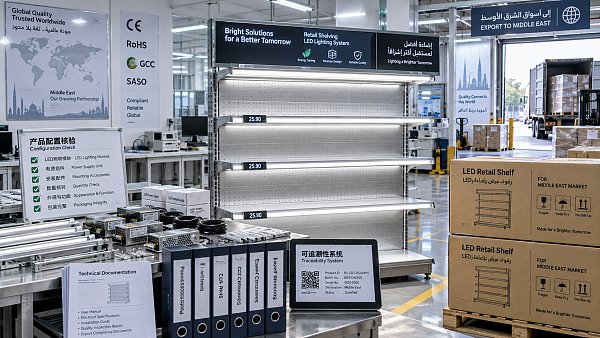
How to assess supplier reliability in global supply chain sourcing
Time
Click Count
A competitive quote can hide an unreliable supplier. The sample looks right, the sales team responds quickly, and the proposed lead time fits your rollout schedule. Then production starts—and the factory substitutes a component, misses a shipment, or cannot produce the compliance documents your destination market requires.
In global chain sourcing, reliability means more than the ability to manufacture a product once. It means delivering repeatable quality, meeting agreed schedules, maintaining traceable documentation, and responding honestly when conditions change. For procurement teams buying commercial fixtures, smart retail hardware, consumer goods, lighting, or sustainable packaging, the assessment must connect supplier claims with verifiable operating evidence.
The goal is not to eliminate every risk. It is to understand which risks you are accepting, which controls reduce them, and when a promising supplier should not receive an order.
Define reliability around the consequences of failure
Before evaluating suppliers, define what failure would mean for the purchase. A delayed decorative fixture and a noncompliant electrical assembly may both disrupt a store opening, but they require different controls. Applying the same questionnaire to both often produces plenty of paperwork and little useful insight.
Build a brief risk profile covering the product’s use, destination markets, installation requirements, replenishment needs, and available alternatives. Ask:
- How critical is the delivery date? A coordinated chain rollout may have almost no tolerance for late arrivals.
- What could fail in service? Consider structural safety, electrical performance, software compatibility, packaging integrity, and appearance.
- How easily could supply be replaced? Custom tooling, proprietary components, and lengthy approvals increase dependency.
- Which claims require proof? Recycled content, load capacity, energy performance, and connectivity claims need different evidence.
Use this profile to set non-negotiable requirements before comparing prices. A supplier that cannot satisfy a mandatory safety requirement should not compensate for that failure with a lower quote or faster delivery.
Verify who will actually make your order
The company issuing the quotation is not always the factory producing the goods. Trading companies can be capable sourcing partners, but undisclosed intermediaries make it harder to control quality, trace materials, and resolve disputes.
Confirm the legal contracting entity, production-site addresses, ownership relationships, and approved subcontractors. Check business registration through appropriate official sources where available. Bank beneficiary details should match the contractual arrangement; unexplained payment requests to unrelated entities deserve investigation.
Then establish which processes happen at each location. A furniture supplier may assemble products internally while outsourcing coating and metal fabrication. A retail technology vendor may integrate third-party boards, screens, and firmware. Those arrangements are not automatically weaknesses. The issue is whether the supplier controls them and tells you when they change.
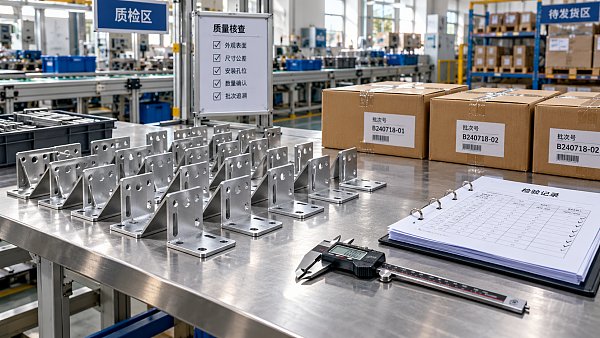
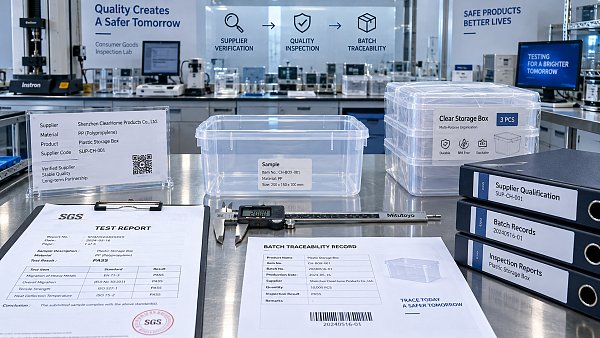
A useful verification exercise follows one recent order from incoming materials through production, inspection, and shipment. Ask to see connected records rather than isolated photographs. Material receipts, batch numbers, inspection reports, and shipping documents should tell a consistent story.
Build an evidence-based global chain sourcing scorecard
A scorecard makes comparisons more disciplined, provided it measures evidence rather than presentation quality. The following weights are an illustrative starting point, not a universal standard. Adjust them to your product risk and business priorities.
Score each category on a defined scale. For example, distinguish an unsupported claim from documented controls, and documented controls from independently verified performance. Record evidence confidence separately: missing records mean uncertainty, not necessarily proven poor performance.
Keep mandatory approval gates outside the weighted score. Unresolved product-safety issues, falsified documents, or refusal to disclose critical production arrangements should not disappear inside a favorable average.
Read production evidence, not just certificates
Can the quality system prevent repeat failures?
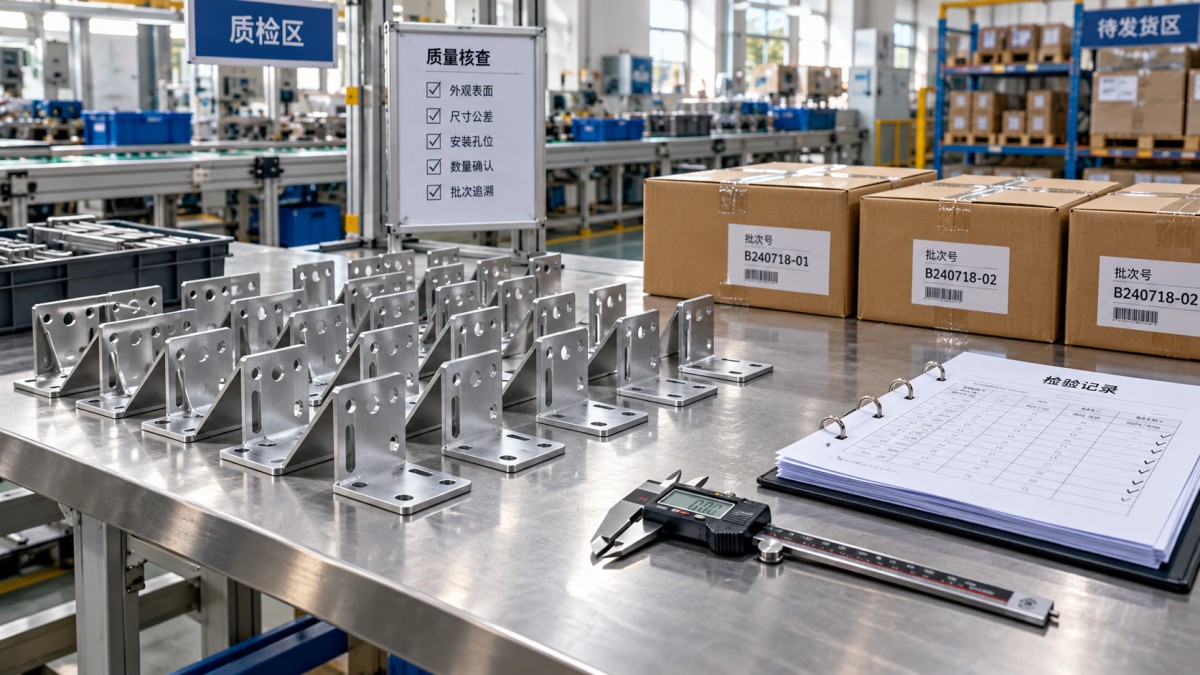
A quality-management certificate can support due diligence, but it does not establish that your specific product will meet requirements. Review the controls used on the actual production line: incoming inspection, work instructions, in-process checks, final acceptance, and segregation of nonconforming goods.
Ask for a recent corrective-action example. A credible response identifies the defect, contains affected stock, investigates the cause, changes the process, and checks whether the change worked. “We reminded the workers” is rarely enough for a recurring problem.
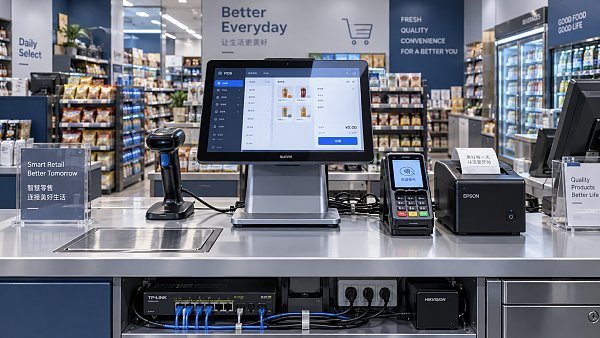
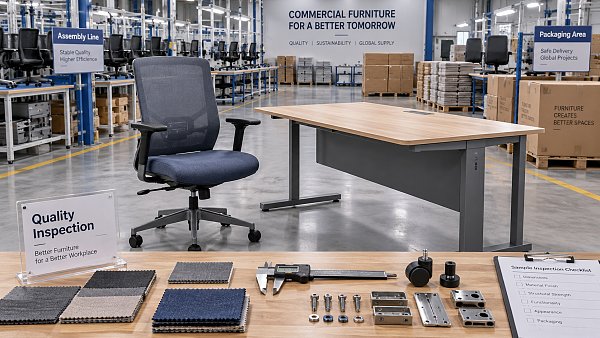
For commercial furniture, evidence might include joint-strength testing, finish consistency, and dimensional checks. For smart retail terminals, examine configuration control, connectivity testing, firmware versions, and repair procedures. Packaging assessments may focus on compression resistance, print consistency, material specifications, and performance under expected transport conditions.
Does compliance evidence match the product and market?
Do not treat UL, CE, and BIFMA as interchangeable credentials. UL standards and certification programs concern defined product categories and scopes. CE marking relates to applicable EU legislation and requires the relevant conformity assessment and documentation. BIFMA standards address particular furniture performance requirements; a test report is not automatically a broader certification.
Check the exact model, manufacturing location where relevant, report date, standard edition, test scope, and issuing organization. Verify records with the issuer or an official directory when possible. A report covering a similar model may not cover different electrical components, materials, or structural configurations.
For sustainable packaging, separate environmental claims from functional performance. Evidence of recycled content does not prove recyclability in every destination market, nor does it establish suitability for food contact. Ask which claim is being made, which rules apply, and what documentation supports it.
Test whether capacity survives a busy month
A factory tour can show equipment. It cannot, by itself, prove available capacity. The practical question is whether the supplier can produce your order alongside existing commitments without compromising quality or delivery.
Request a capacity explanation built around the bottleneck process. Available output depends on usable production hours, demonstrated throughput, yield, maintenance, changeovers, and competing orders—not simply machine count. Check whether the quoted lead time includes material purchasing, outsourced operations, inspection, and shipment preparation.
Seasonal peaks deserve particular attention. Ask what happened during the supplier’s last busy period: Were orders subcontracted? Did overtime increase defects? Which components constrained output? Specific answers are more useful than assurances that capacity can “always be expanded.”
Validate historical delivery performance using a consistent definition. On-time delivery should reference an agreed milestone, such as shipment readiness or arrival at a named location. On-time-in-full performance adds quantity completion. Request a representative order history, while allowing legitimate customer confidentiality protections.
Separate factory delays from freight and customs delays, but do not ignore logistics exposure. Review Incoterms, booking responsibilities, export-document accuracy, and realistic transit allowances. A reliable factory still needs a workable route to your receiving dock.
Check financial resilience without demanding impossible transparency
Financial pressure can appear operationally before it becomes obvious commercially: suppliers delay material purchases, request unexpected deposits, or struggle to retain key subcontractors. None of these signals proves distress alone, but several together warrant closer review.
Where accessible and appropriate, examine financial statements, credit information, insolvency records, and trade references. Smaller private manufacturers may disclose less than listed companies. In those cases, combine available financial evidence with payment behavior, order execution, and independently checked references.
Understand dependency in both directions. Your order may be too small to receive priority, or so large that the supplier lacks the working capital to fund production. Heavy reliance on one customer, one component source, or one production site also increases exposure.
Match commercial protection to the risk. Milestone payments, inspection-linked releases, appropriate trade-finance instruments, and clear tooling ownership can limit exposure, although each has costs and limitations. Contractual remedies help, but they do not replace operational verification.
Use a pilot order to expose execution gaps
A sample proves that something can be made. A controlled pilot provides better evidence that it can be made repeatedly under normal production conditions.
Use the intended materials, production site, tooling, packaging, and inspection criteria wherever practical. Define acceptance criteria before production, including critical dimensions, functional checks, appearance limits, labeling, and document requirements. If sampling inspection is used, specify the sampling plan and defect classifications; passing a sample does not guarantee a defect-free batch.
The pilot should test coordination as well as the product:
- Does the supplier flag an unavailable component before substituting it?
- Can production records connect finished goods to material or component batches?
- Do packing lists, labels, and shipment quantities agree?
- When a defect appears, does the team contain it and provide a credible recovery plan?
For a multi-location rollout, assess installation and replenishment too. Fixtures may need consistent dimensions across batches; retail hardware may require controlled software configurations; lighting may need matching performance across repeat orders. Acceptance should reflect the product’s life in the field, not only its condition at shipment.
Make approval conditional—and keep measuring
A sourcing decision is rarely just “approved” or “rejected.” A supplier may be suitable for standard products but not custom safety-critical assemblies, or for limited volumes but not a simultaneous international rollout.
Document the approved scope, unresolved risks, required corrective actions, and next review date. Where uncertainty remains, consider limited initial volume, additional inspections, or a qualified alternative source. Avoid creating dual-sourcing arrangements that still depend on the same upstream factory or component.
After onboarding, monitor a small set of comparable indicators: on-time-in-full delivery, incoming defects, field failures, corrective-action closure, and unauthorized changes. Set escalation thresholds according to product risk and operating needs. Review deterioration early rather than waiting for a major failure.
Cross-sector benchmarking, consistent with G-BCE’s focus on commercial hardware and consumer supply chains, helps procurement teams compare relevant technical requirements across furniture, retail technology, lighting, and packaging. It is most valuable when paired with supplier-specific evidence—not used as a substitute for it.
The strongest supplier decision is one you can explain clearly: what was verified, what remains uncertain, and which controls protect the business. A low quote may start the conversation. Evidence of repeatable execution should determine who earns the order.
News Recommendations
 How to assess supplier reliability in global supply chain sourcing
![51a6ab95581761cc26f4318be6520c15]()
Aris Katos
Future of Carbide Coatings
 Omdia Forecasts 11.6% CAGR for Global LED Video Display Market in 2026–2030
![51a6ab95581761cc26f4318be6520c15]()
Aris Katos
Future of Carbide Coatings
 How to verify an LFGB testing laboratory's accreditation scope
![51a6ab95581761cc26f4318be6520c15]()
Aris Katos
Future of Carbide Coatings
 How to assess a workplace interior supplier's installation scope
![51a6ab95581761cc26f4318be6520c15]()
Aris Katos
Future of Carbide Coatings
 What records are needed for an ISO 9001 furniture factory audit?
![51a6ab95581761cc26f4318be6520c15]()
Aris Katos
Future of Carbide Coatings
 How to choose AI marketing tools that work with your existing CRM
![51a6ab95581761cc26f4318be6520c15]()
Aris Katos
Future of Carbide Coatings
 Do freight costs erase savings when buying retail fixtures wholesale?
![51a6ab95581761cc26f4318be6520c15]()
Aris Katos
Future of Carbide Coatings
 How heat buildup affects OEM retail shelf LCD screen reliability
![51a6ab95581761cc26f4318be6520c15]()
Aris Katos
Future of Carbide Coatings
 How to check whether an OEM retail shelf screen fits existing shelving
![51a6ab95581761cc26f4318be6520c15]()
Aris Katos
Future of Carbide Coatings
 What brightness should an OEM shelf LCD screen have for retail use?
![51a6ab95581761cc26f4318be6520c15]()
Aris Katos
Future of Carbide Coatings
 Can smart retail IT solutions for CPG work with legacy POS systems?
![51a6ab95581761cc26f4318be6520c15]()
Aris Katos
Future of Carbide Coatings
 What permit approvals belong in a commercial fitout planning checklist?
![51a6ab95581761cc26f4318be6520c15]()
Aris Katos
Future of Carbide Coatings
 How Do You Apply Sustainability Standards to a Retail Renovation?
![51a6ab95581761cc26f4318be6520c15]()
Aris Katos
Future of Carbide Coatings
 Which Technical Factors Matter When Comparing Smart Retail Hardware?
![51a6ab95581761cc26f4318be6520c15]()
Aris Katos
Future of Carbide Coatings
 Does Data Transparency Matter When Selecting Consumer Goods Suppliers?
![51a6ab95581761cc26f4318be6520c15]()
Aris Katos
Future of Carbide Coatings
 How Does Commercial Design Differ from Interior Decoration?
![51a6ab95581761cc26f4318be6520c15]()
Aris Katos
Future of Carbide Coatings
 How Long Does It Take to Verify a Commercial Furniture Supplier?
![51a6ab95581761cc26f4318be6520c15]()
Aris Katos
Future of Carbide Coatings
 How to verify compostability claims from a bubble mailer manufacturer
![51a6ab95581761cc26f4318be6520c15]()
Aris Katos
Future of Carbide Coatings
 Will commercial smart infrastructure solutions work with legacy systems?
![51a6ab95581761cc26f4318be6520c15]()
Aris Katos
Future of Carbide Coatings
 How to verify a preschool furniture manufacturer's safety standards
![51a6ab95581761cc26f4318be6520c15]()
Aris Katos
Future of Carbide Coatings
 A technical comparison of semiconductor processes for power devices
![51a6ab95581761cc26f4318be6520c15]()
Aris Katos
Future of Carbide Coatings
 How to verify that a BIFMA ergonomic chair meets the standard
![51a6ab95581761cc26f4318be6520c15]()
Aris Katos
Future of Carbide Coatings
 How to use a CRI value chart when choosing LED lighting
![51a6ab95581761cc26f4318be6520c15]()
Aris Katos
Future of Carbide Coatings
 How to compare hotel aroma diffuser wholesale options by coverage area
![51a6ab95581761cc26f4318be6520c15]()
Aris Katos
Future of Carbide Coatings
 How to prevent O-rings and seals from failing in food equipment
![51a6ab95581761cc26f4318be6520c15]()
Aris Katos
Future of Carbide Coatings
 How to compare commercial linear light wholesale quotes accurately
![51a6ab95581761cc26f4318be6520c15]()
Aris Katos
Future of Carbide Coatings
 How to verify international standards compliance for Middle East exports
![51a6ab95581761cc26f4318be6520c15]()
Aris Katos
Future of Carbide Coatings
 How to select laboratory instruments for reproducible test results
![51a6ab95581761cc26f4318be6520c15]()
Aris Katos
Future of Carbide Coatings
 When does a sheet metal prototype reveal design flaws early?
![51a6ab95581761cc26f4318be6520c15]()
Aris Katos
Future of Carbide Coatings
 When PE air column bags reduce damage in e-commerce fulfillment
![51a6ab95581761cc26f4318be6520c15]()
Aris Katos
Future of Carbide Coatings
 How energy-efficient design reduces operating costs in retail lighting
![51a6ab95581761cc26f4318be6520c15]()
Aris Katos
Future of Carbide Coatings
 When commercial aluminum storefronts make sense for a retail renovation
![51a6ab95581761cc26f4318be6520c15]()
Aris Katos
Future of Carbide Coatings
 What makes LED lights durable in high-use commercial spaces?
![51a6ab95581761cc26f4318be6520c15]()
Aris Katos
Future of Carbide Coatings
 Which industry categories offer the strongest export potential in Latin America?
![51a6ab95581761cc26f4318be6520c15]()
Aris Katos
Future of Carbide Coatings
 How to choose an ultra bright waterproof window display for storefronts
![51a6ab95581761cc26f4318be6520c15]()
Aris Katos
Future of Carbide Coatings
 How to verify suppliers on a trade portal for global sourcing
![51a6ab95581761cc26f4318be6520c15]()
Aris Katos
Future of Carbide Coatings
 How RoHS requirements should be stated in product specifications
![51a6ab95581761cc26f4318be6520c15]()
Aris Katos
Future of Carbide Coatings
 What affects the lead time for custom retail counter displays?
![51a6ab95581761cc26f4318be6520c15]()
Aris Katos
Future of Carbide Coatings
 What consumer packaging USA importers need to verify before ordering
![51a6ab95581761cc26f4318be6520c15]()
Aris Katos
Future of Carbide Coatings