Commercial Materials Sourcing: Cost Risks Behind Low-Quote Supply
Time
Click Count
In commercial materials sourcing, the lowest quote often looks efficient on paper but performs poorly in practice. A cheap unit price can hide unstable raw material grades, incomplete compliance files, weak packaging control, and delivery uncertainty. Across fit-out programs, retail rollouts, fixture packages, lighting systems, and consumer-facing components, these hidden costs can quickly erase any initial savings.
For global projects, commercial materials sourcing also affects installation speed, maintenance frequency, warranty exposure, and brand consistency. When one supplier underquotes to win volume, the financial impact may surface later through change orders, rework, replacement cycles, and delayed openings. A structured review process is therefore essential.
Why a Checklist Matters in Commercial Materials Sourcing

Commercial materials sourcing rarely fails because of one obvious mistake. It usually fails through several small omissions that compound over time. A missing fire-rating report, a vague coating specification, or an unverified lead time can disrupt an entire commercial schedule.
A checklist creates a repeatable decision framework. It helps compare suppliers beyond price, standardizes technical review, and reduces subjective judgment. In complex international sourcing, that discipline protects both budget accuracy and long-term asset performance.
Core Checklist for Evaluating Low-Quote Supply
Use the following checklist before approving any unusually low quotation in commercial materials sourcing.
- Verify material grade against the approved specification, including substrate density, alloy composition, coating thickness, flame performance, and finish durability under actual commercial use conditions.
- Request certification files early, then confirm validity, scope, issuing body, expiration date, and whether the tested product exactly matches the quoted commercial materials sourcing item.
- Audit the bill of materials line by line to identify downgraded components, substituted hardware, reduced packaging protection, or omitted accessories hidden inside a low quote.
- Test sample consistency by comparing finish, dimensions, structural stability, color variation, and assembly details across more than one batch before final commercial materials sourcing approval.
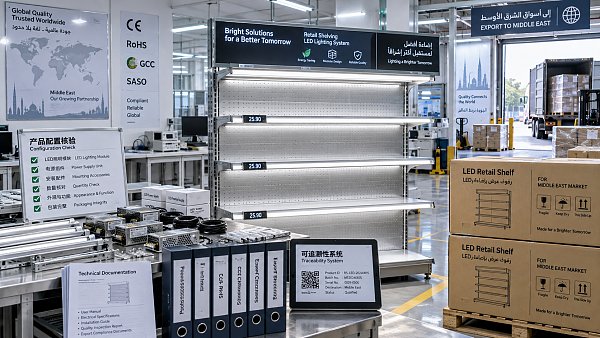
- Map lead time into production, consolidation, export handling, customs clearance, and site delivery so the quoted promise reflects the real logistics path, not factory optimism.
- Check tooling readiness and capacity allocation, especially for custom fixtures, branded displays, and multi-site programs where low pricing may depend on unrealistic throughput assumptions.
- Review quality control procedures, including incoming inspection, in-process checkpoints, final AQL standards, and defect escalation methods tied to commercial materials sourcing contracts.
- Calculate total landed cost by adding freight, duties, insurance, testing fees, storage, site delays, installation labor, warranty reserves, and replacement exposure.
- Confirm packaging design for stacking strength, moisture resistance, edge protection, labeling accuracy, and pallet configuration, especially for long-haul international commercial materials sourcing shipments.
- Define commercial terms carefully, covering Incoterms, payment milestones, defect liability, spare parts commitment, and response times for field failures after installation.
What Low Quotes Commonly Exclude
In many commercial materials sourcing cases, the low quote excludes testing, custom crating, mockups, engineering revisions, or on-site support. These omissions are not always deceptive. Sometimes they reflect different assumptions. However, if assumptions are not documented, comparison becomes unreliable.
The most expensive gap is often post-award clarification. Once schedules are committed, adding omitted requirements usually costs more than selecting a stronger supplier upfront. Clear scope alignment is therefore one of the highest-value controls in commercial materials sourcing.
Scenario-Based Guidance Across Commercial Environments
Retail Fit-Out and Chain Rollouts
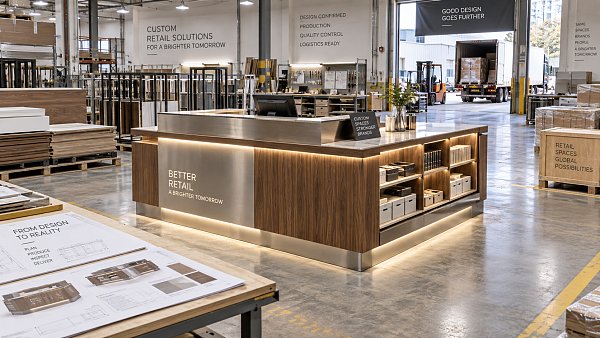
For retail rollouts, price pressure is intense because repetition suggests economies of scale. Yet in commercial materials sourcing, repeated defects multiply faster than repeated savings. A minor finish inconsistency across hundreds of stores becomes a visible brand problem.
Focus on batch consistency, replacement part availability, and packaging survivability. Opening dates matter more than nominal discounts when every late fixture delays merchandising, signage, or electrical integration.
Office, Hospitality, and Shared Commercial Spaces
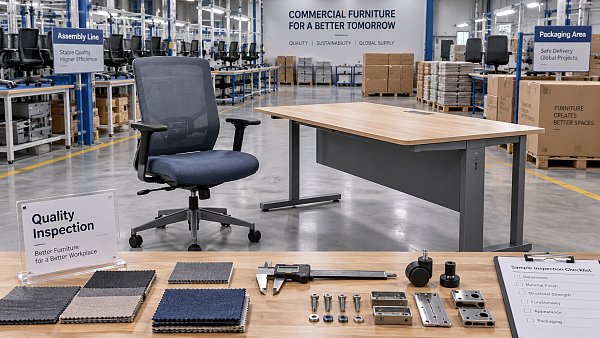
In office and hospitality environments, commercial materials sourcing must balance aesthetics with durability. Low-quote veneer, upholstery, laminates, and metal finishes may pass visual review initially but fail under cleaning chemicals, abrasion, and daily contact.
Here, mockups and performance data are critical. Surface wear, acoustic behavior, ergonomic compliance, and fire performance affect both user experience and operational risk over the asset lifecycle.
Consumer Goods Packaging and Display Supply
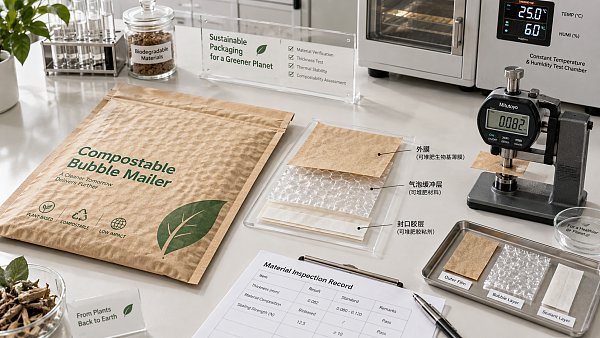
Commercial materials sourcing for packaging and display systems often appears straightforward because the unit cost is low. However, weak substrate selection, print instability, or sustainability claim issues can create product damage, compliance concerns, or reputational loss.
Evaluate compression strength, transit testing, ink performance, recyclability documentation, and retail presentation consistency. In this category, low quote risk frequently appears after the goods reach distribution or point of sale.
Overlooked Risks That Distort Commercial Materials Sourcing Decisions
Certification Mismatch
A certificate may be real but irrelevant. Reports sometimes apply to another configuration, thickness, factory, or test date. In commercial materials sourcing, document authenticity is not enough; technical applicability must also be checked.
Prototype Bias
A good sample does not guarantee stable production. Suppliers may build a hand-finished prototype that cannot be reproduced at quoted cost. Batch validation is more informative than a single showroom-quality sample.
Logistics Underestimation
Low-price offers often assume ideal freight conditions. Port congestion, oversized packaging, route changes, and local delivery constraints can turn attractive commercial materials sourcing quotes into budget exceptions within weeks.
Warranty Ambiguity
Warranty language may sound generous while excluding labor, transport, finish aging, or misuse definitions that are too broad. If the remedy path is unclear, warranty value is largely theoretical.
Practical Execution Steps Before Award
- Build a comparison sheet that separates unit price from testing, packaging, freight assumptions, tooling, and warranty obligations.
- Issue a technical clarification list before negotiation so all suppliers quote the same scope and compliance basis.
- Approve benchmark samples only after reviewing repeatability, not just appearance, and record measurable acceptance criteria.
- Use milestone inspections for pilot production, mass production, and pre-shipment review on critical commercial materials sourcing orders.
- Reserve contingency for replacement stock, certification rechecks, and schedule recovery where the project opening date is inflexible.
A Better Way to Compare Suppliers
The strongest sourcing decisions combine price, compliance, quality stability, lead time confidence, and service responsiveness. This multi-factor approach is especially relevant to global commercial environments where technical standards and visual expectations are both high.
Platforms such as G-BCE support this process by connecting commercial materials sourcing decisions to benchmarking logic, international standards awareness, and cross-category visibility. That broader perspective reduces the chance of choosing a quote that only looks competitive.
Conclusion and Next Action
Commercial materials sourcing should never be judged by price alone. The real question is whether the quote can deliver consistent performance, verified compliance, dependable logistics, and acceptable lifecycle cost across the full commercial application.
Start with a documented checklist, validate assumptions early, and compare total risk rather than headline savings. In a market where low-quote supply can hide expensive surprises, disciplined commercial materials sourcing is one of the clearest ways to protect project outcomes.
News Recommendations
 What records are needed for an ISO 9001 furniture factory audit?
![51a6ab95581761cc26f4318be6520c15]()
Aris Katos
Future of Carbide Coatings
 How to choose AI marketing tools that work with your existing CRM
![51a6ab95581761cc26f4318be6520c15]()
Aris Katos
Future of Carbide Coatings
 Do freight costs erase savings when buying retail fixtures wholesale?
![51a6ab95581761cc26f4318be6520c15]()
Aris Katos
Future of Carbide Coatings
 Can smart retail IT solutions for CPG work with legacy POS systems?
![51a6ab95581761cc26f4318be6520c15]()
Aris Katos
Future of Carbide Coatings
 What permit approvals belong in a commercial fitout planning checklist?
![51a6ab95581761cc26f4318be6520c15]()
Aris Katos
Future of Carbide Coatings
 How Does Commercial Design Differ from Interior Decoration?
![51a6ab95581761cc26f4318be6520c15]()
Aris Katos
Future of Carbide Coatings
 How Long Does It Take to Verify a Commercial Furniture Supplier?
![51a6ab95581761cc26f4318be6520c15]()
Aris Katos
Future of Carbide Coatings
 How to verify compostability claims from a bubble mailer manufacturer
![51a6ab95581761cc26f4318be6520c15]()
Aris Katos
Future of Carbide Coatings
 Will commercial smart infrastructure solutions work with legacy systems?
![51a6ab95581761cc26f4318be6520c15]()
Aris Katos
Future of Carbide Coatings
 How to verify a preschool furniture manufacturer's safety standards
![51a6ab95581761cc26f4318be6520c15]()
Aris Katos
Future of Carbide Coatings
 A technical comparison of semiconductor processes for power devices
![51a6ab95581761cc26f4318be6520c15]()
Aris Katos
Future of Carbide Coatings
 How to verify that a BIFMA ergonomic chair meets the standard
![51a6ab95581761cc26f4318be6520c15]()
Aris Katos
Future of Carbide Coatings
 How to use a CRI value chart when choosing LED lighting
![51a6ab95581761cc26f4318be6520c15]()
Aris Katos
Future of Carbide Coatings
 How to compare hotel aroma diffuser wholesale options by coverage area
![51a6ab95581761cc26f4318be6520c15]()
Aris Katos
Future of Carbide Coatings
 How to prevent O-rings and seals from failing in food equipment
![51a6ab95581761cc26f4318be6520c15]()
Aris Katos
Future of Carbide Coatings
 How to compare commercial linear light wholesale quotes accurately
![51a6ab95581761cc26f4318be6520c15]()
Aris Katos
Future of Carbide Coatings
 How to verify international standards compliance for Middle East exports
![51a6ab95581761cc26f4318be6520c15]()
Aris Katos
Future of Carbide Coatings
 How to select laboratory instruments for reproducible test results
![51a6ab95581761cc26f4318be6520c15]()
Aris Katos
Future of Carbide Coatings
 When does a sheet metal prototype reveal design flaws early?
![51a6ab95581761cc26f4318be6520c15]()
Aris Katos
Future of Carbide Coatings
 When PE air column bags reduce damage in e-commerce fulfillment
![51a6ab95581761cc26f4318be6520c15]()
Aris Katos
Future of Carbide Coatings
 How energy-efficient design reduces operating costs in retail lighting
![51a6ab95581761cc26f4318be6520c15]()
Aris Katos
Future of Carbide Coatings
 When commercial aluminum storefronts make sense for a retail renovation
![51a6ab95581761cc26f4318be6520c15]()
Aris Katos
Future of Carbide Coatings
 What makes LED lights durable in high-use commercial spaces?
![51a6ab95581761cc26f4318be6520c15]()
Aris Katos
Future of Carbide Coatings
 Which industry categories offer the strongest export potential in Latin America?
![51a6ab95581761cc26f4318be6520c15]()
Aris Katos
Future of Carbide Coatings
 How to choose an ultra bright waterproof window display for storefronts
![51a6ab95581761cc26f4318be6520c15]()
Aris Katos
Future of Carbide Coatings
 How to verify suppliers on a trade portal for global sourcing
![51a6ab95581761cc26f4318be6520c15]()
Aris Katos
Future of Carbide Coatings
 How RoHS requirements should be stated in product specifications
![51a6ab95581761cc26f4318be6520c15]()
Aris Katos
Future of Carbide Coatings
 What affects the lead time for custom retail counter displays?
![51a6ab95581761cc26f4318be6520c15]()
Aris Katos
Future of Carbide Coatings
 What consumer packaging USA importers need to verify before ordering
![51a6ab95581761cc26f4318be6520c15]()
Aris Katos
Future of Carbide Coatings
 How commercial spaces interiors shape customer dwell time
![51a6ab95581761cc26f4318be6520c15]()
Aris Katos
Future of Carbide Coatings
 How LED commercial lighting design reduces glare in retail spaces
![51a6ab95581761cc26f4318be6520c15]()
Aris Katos
Future of Carbide Coatings
 How industrial technology information improves RFID inventory accuracy
![51a6ab95581761cc26f4318be6520c15]()
Aris Katos
Future of Carbide Coatings
 When drip garden watering systems make more sense than sprinklers
![51a6ab95581761cc26f4318be6520c15]()
Aris Katos
Future of Carbide Coatings
 When category comparison improves sourcing for industrial applications
![51a6ab95581761cc26f4318be6520c15]()
Aris Katos
Future of Carbide Coatings
 Industrial application guidance for selecting the right LED lighting
![51a6ab95581761cc26f4318be6520c15]()
Aris Katos
Future of Carbide Coatings
 Which commercial architecture standards apply to European retail fit-outs?
![51a6ab95581761cc26f4318be6520c15]()
Aris Katos
Future of Carbide Coatings
 How to verify FDA requirements for maternity care products
![51a6ab95581761cc26f4318be6520c15]()
Aris Katos
Future of Carbide Coatings
 How to verify BPA-free claims for food-contact products
![51a6ab95581761cc26f4318be6520c15]()
Aris Katos
Future of Carbide Coatings
 When does a European wholesale supplier suit modular office projects?
![51a6ab95581761cc26f4318be6520c15]()
Aris Katos
Future of Carbide Coatings