Chinese Aluminum Producers Expand in Indonesia, Reshaping Global Shelving & LED Lighting Supply Chains
Time
Click Count
On May 29, 2026, a strategic shift in global aluminum supply infrastructure became evident as major Chinese aluminum enterprises accelerated overseas production capacity deployment—particularly in Indonesia—marking a pivotal response to trade barriers affecting exports to North America and the EU. This development directly impacts manufacturers and distributors in the retail shelving, fixtures, and architectural LED lighting sectors, where precision aluminum extrusions are mission-critical components.
Confirmed Expansion Activities in Indonesia
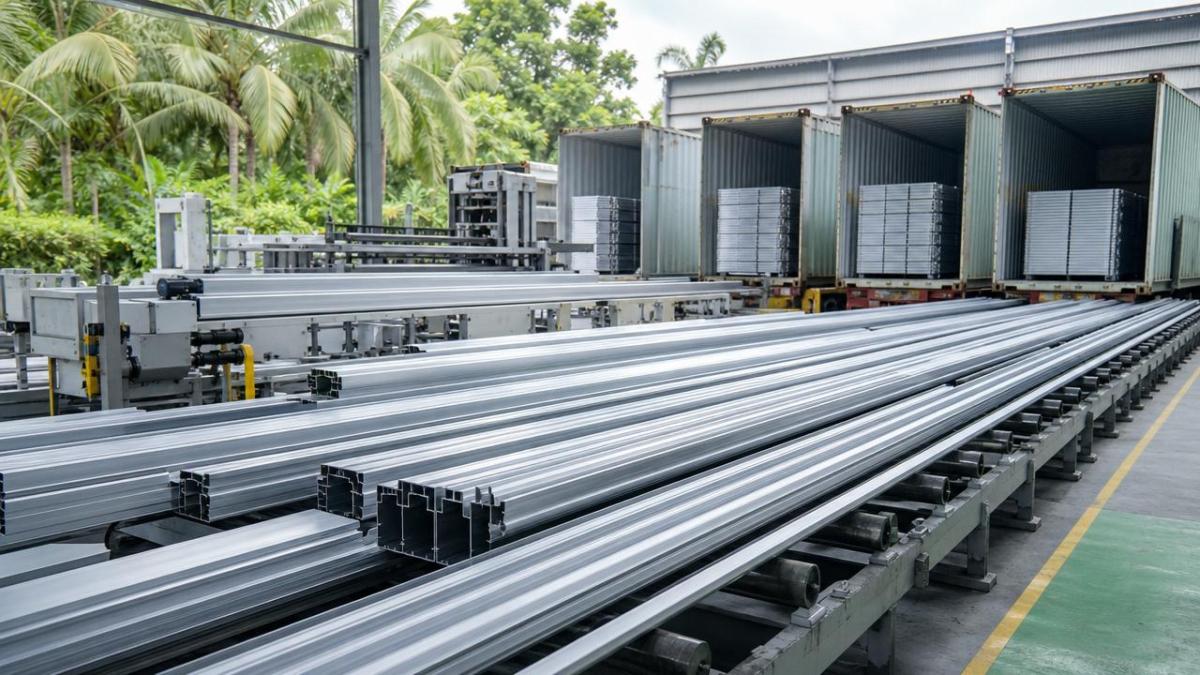
Since the beginning of 2026, leading Chinese aluminum producers—including Nanshan Aluminum and Innovation Group—have launched multiple integrated projects in Indonesia. These initiatives span the full value chain: from alumina refining through electrolytic aluminum smelting to high-end aluminum alloy extrusion for custom profiles. All projects are operational or under active commissioning as of mid-2026. The expansion is explicitly designed to mitigate supply constraints caused by tariffs imposed by the United States and European Union on aluminum products originating solely from mainland China.
Impact Across Supply Chain Roles
Direct Exporters and Trading Firms
Exporters facing tariff-driven cost inflation and customs scrutiny now have access to alternative origin certification. Products manufactured in Indonesian facilities—and meeting local value-add thresholds—qualify for preferential trade treatment under ASEAN-related agreements, reducing landed costs and improving competitiveness in key Western markets.
Raw Material Procurement Teams
Purchasing departments must reassess sourcing strategies: alumina and primary aluminum inputs may increasingly originate from Indonesian refineries and smelters, requiring updated quality documentation, traceability protocols, and logistics coordination across dual geographies (China + Southeast Asia).
Contract Manufacturers and Fabricators
Fabricators serving Retail Shelving & Fixtures and Architectural LED Lighting clients must verify whether their aluminum suppliers hold dual-base (China + Indonesia) production capability. Dual-site qualification affects lead time reliability, compliance with regional content rules, and responsiveness to urgent customization requests.
Supply Chain Service Providers
Logistics, customs brokerage, and certification support providers need to expand expertise in Indonesia’s export control framework, including its aluminum product classification, origin verification procedures, and conformity assessment pathways for structural aluminum components destined for regulated end-use applications.
Strategic Priorities for Enterprise Action
Evaluate Supplier Dual-Base Certification Status
Verify whether current or prospective aluminum extrusion suppliers operate certified production lines in both China and Indonesia—and confirm that facility-specific process controls, material certifications (e.g., EN 755, ASTM B221), and quality management systems (ISO 9001) are independently validated at each site.
Align Technical Specifications with Regional Production Capabilities
Custom extrusion profiles for architectural lighting and retail fixtures often require tight tolerances, surface finish standards (e.g., anodizing Class AA per ISO 8229), and mechanical property validation. Ensure technical bid documents reflect capabilities available at Indonesian plants—not just legacy Chinese lines—to avoid specification mismatch or delayed approvals.
Adjust Procurement Timelines and Inventory Planning
While Indonesian capacity alleviates tariff pressure, initial ramp-up phases may involve longer lead times for complex profiles. Integrate dual-source planning into procurement calendars and assess buffer stock requirements for critical SKUs tied to lighting and shelving assembly lines.
Review Export Documentation and Origin Compliance Protocols
Confirm that suppliers can issue legally valid Certificate of Origin (Form A or Form D), supported by auditable production records demonstrating sufficient regional value addition—especially where aluminum billets, dies, or finishing processes cross borders between China and Indonesia.
Industry Perspective: Beyond Tariff Arbitrage
Analysis shows this shift extends well beyond short-term tariff optimization. It signals a structural recalibration: aluminum-intensive industrial design sectors—including commercial lighting and retail infrastructure—are increasingly factoring in geopolitical resilience alongside performance and cost. What deserves closer attention is how rapidly downstream OEMs adopt dual-origin qualification as a formal procurement prerequisite—not just a commercial advantage. From an industry perspective, the ability to validate consistent material properties, surface treatments, and dimensional repeatability across geographically dispersed production sites will become a de facto technical barrier to entry for Tier-2 and Tier-3 suppliers.
Key Takeaway for Stakeholders
This expansion does not replace China’s role in the aluminum value chain—but reconfigures it within a multi-hub architecture. For stakeholders in retail shelving, architectural lighting, and related B2B manufacturing segments, the decisive competitive advantage lies not in choosing ‘China vs. Indonesia,’ but in partnering with suppliers who demonstrate seamless integration, certified consistency, and regulatory agility across both bases.
Source Information and Verification Notes
This article was generated exclusively from the user-provided information: title, event date (2026-05-29), and summary text. Specific official source links were not provided in the input and should be verified continuously. Readers are advised to monitor updates from Indonesia’s Ministry of Industry, ASEAN Secretariat trade bulletins, EU Commission TARIC database revisions, and U.S. International Trade Commission (USITC) tariff modification notices. Further observation is warranted regarding final implementation guidelines for origin rules, third-party audit requirements for dual-site compliance, and sector-specific feedback from lighting and retail fixture OEMs on real-world delivery performance.
News Recommendations
 What records are needed for an ISO 9001 furniture factory audit?
![51a6ab95581761cc26f4318be6520c15]()
Aris Katos
Future of Carbide Coatings
 How to choose AI marketing tools that work with your existing CRM
![51a6ab95581761cc26f4318be6520c15]()
Aris Katos
Future of Carbide Coatings
 Do freight costs erase savings when buying retail fixtures wholesale?
![51a6ab95581761cc26f4318be6520c15]()
Aris Katos
Future of Carbide Coatings
 Can smart retail IT solutions for CPG work with legacy POS systems?
![51a6ab95581761cc26f4318be6520c15]()
Aris Katos
Future of Carbide Coatings
 What permit approvals belong in a commercial fitout planning checklist?
![51a6ab95581761cc26f4318be6520c15]()
Aris Katos
Future of Carbide Coatings
 How Does Commercial Design Differ from Interior Decoration?
![51a6ab95581761cc26f4318be6520c15]()
Aris Katos
Future of Carbide Coatings
 How Long Does It Take to Verify a Commercial Furniture Supplier?
![51a6ab95581761cc26f4318be6520c15]()
Aris Katos
Future of Carbide Coatings
 How to verify compostability claims from a bubble mailer manufacturer
![51a6ab95581761cc26f4318be6520c15]()
Aris Katos
Future of Carbide Coatings
 Will commercial smart infrastructure solutions work with legacy systems?
![51a6ab95581761cc26f4318be6520c15]()
Aris Katos
Future of Carbide Coatings
 How to verify a preschool furniture manufacturer's safety standards
![51a6ab95581761cc26f4318be6520c15]()
Aris Katos
Future of Carbide Coatings
 A technical comparison of semiconductor processes for power devices
![51a6ab95581761cc26f4318be6520c15]()
Aris Katos
Future of Carbide Coatings
 How to verify that a BIFMA ergonomic chair meets the standard
![51a6ab95581761cc26f4318be6520c15]()
Aris Katos
Future of Carbide Coatings
 How to use a CRI value chart when choosing LED lighting
![51a6ab95581761cc26f4318be6520c15]()
Aris Katos
Future of Carbide Coatings
 How to compare hotel aroma diffuser wholesale options by coverage area
![51a6ab95581761cc26f4318be6520c15]()
Aris Katos
Future of Carbide Coatings
 How to prevent O-rings and seals from failing in food equipment
![51a6ab95581761cc26f4318be6520c15]()
Aris Katos
Future of Carbide Coatings
 How to compare commercial linear light wholesale quotes accurately
![51a6ab95581761cc26f4318be6520c15]()
Aris Katos
Future of Carbide Coatings
 How to verify international standards compliance for Middle East exports
![51a6ab95581761cc26f4318be6520c15]()
Aris Katos
Future of Carbide Coatings
 How to select laboratory instruments for reproducible test results
![51a6ab95581761cc26f4318be6520c15]()
Aris Katos
Future of Carbide Coatings
 When does a sheet metal prototype reveal design flaws early?
![51a6ab95581761cc26f4318be6520c15]()
Aris Katos
Future of Carbide Coatings
 When PE air column bags reduce damage in e-commerce fulfillment
![51a6ab95581761cc26f4318be6520c15]()
Aris Katos
Future of Carbide Coatings
 How energy-efficient design reduces operating costs in retail lighting
![51a6ab95581761cc26f4318be6520c15]()
Aris Katos
Future of Carbide Coatings
 When commercial aluminum storefronts make sense for a retail renovation
![51a6ab95581761cc26f4318be6520c15]()
Aris Katos
Future of Carbide Coatings
 What makes LED lights durable in high-use commercial spaces?
![51a6ab95581761cc26f4318be6520c15]()
Aris Katos
Future of Carbide Coatings
 Which industry categories offer the strongest export potential in Latin America?
![51a6ab95581761cc26f4318be6520c15]()
Aris Katos
Future of Carbide Coatings
 How to choose an ultra bright waterproof window display for storefronts
![51a6ab95581761cc26f4318be6520c15]()
Aris Katos
Future of Carbide Coatings
 How to verify suppliers on a trade portal for global sourcing
![51a6ab95581761cc26f4318be6520c15]()
Aris Katos
Future of Carbide Coatings
 How RoHS requirements should be stated in product specifications
![51a6ab95581761cc26f4318be6520c15]()
Aris Katos
Future of Carbide Coatings
 What affects the lead time for custom retail counter displays?
![51a6ab95581761cc26f4318be6520c15]()
Aris Katos
Future of Carbide Coatings
 What consumer packaging USA importers need to verify before ordering
![51a6ab95581761cc26f4318be6520c15]()
Aris Katos
Future of Carbide Coatings
 How commercial spaces interiors shape customer dwell time
![51a6ab95581761cc26f4318be6520c15]()
Aris Katos
Future of Carbide Coatings
 How LED commercial lighting design reduces glare in retail spaces
![51a6ab95581761cc26f4318be6520c15]()
Aris Katos
Future of Carbide Coatings
 How industrial technology information improves RFID inventory accuracy
![51a6ab95581761cc26f4318be6520c15]()
Aris Katos
Future of Carbide Coatings
 When drip garden watering systems make more sense than sprinklers
![51a6ab95581761cc26f4318be6520c15]()
Aris Katos
Future of Carbide Coatings
 When category comparison improves sourcing for industrial applications
![51a6ab95581761cc26f4318be6520c15]()
Aris Katos
Future of Carbide Coatings
 Industrial application guidance for selecting the right LED lighting
![51a6ab95581761cc26f4318be6520c15]()
Aris Katos
Future of Carbide Coatings
 Which commercial architecture standards apply to European retail fit-outs?
![51a6ab95581761cc26f4318be6520c15]()
Aris Katos
Future of Carbide Coatings
 How to verify FDA requirements for maternity care products
![51a6ab95581761cc26f4318be6520c15]()
Aris Katos
Future of Carbide Coatings
 How to verify BPA-free claims for food-contact products
![51a6ab95581761cc26f4318be6520c15]()
Aris Katos
Future of Carbide Coatings
 When does a European wholesale supplier suit modular office projects?
![51a6ab95581761cc26f4318be6520c15]()
Aris Katos
Future of Carbide Coatings