Commercial Refrigerators: Key Specs That Affect Running Costs
Time
Click Count
Why do running costs matter so much when choosing commercialrefrigerators?
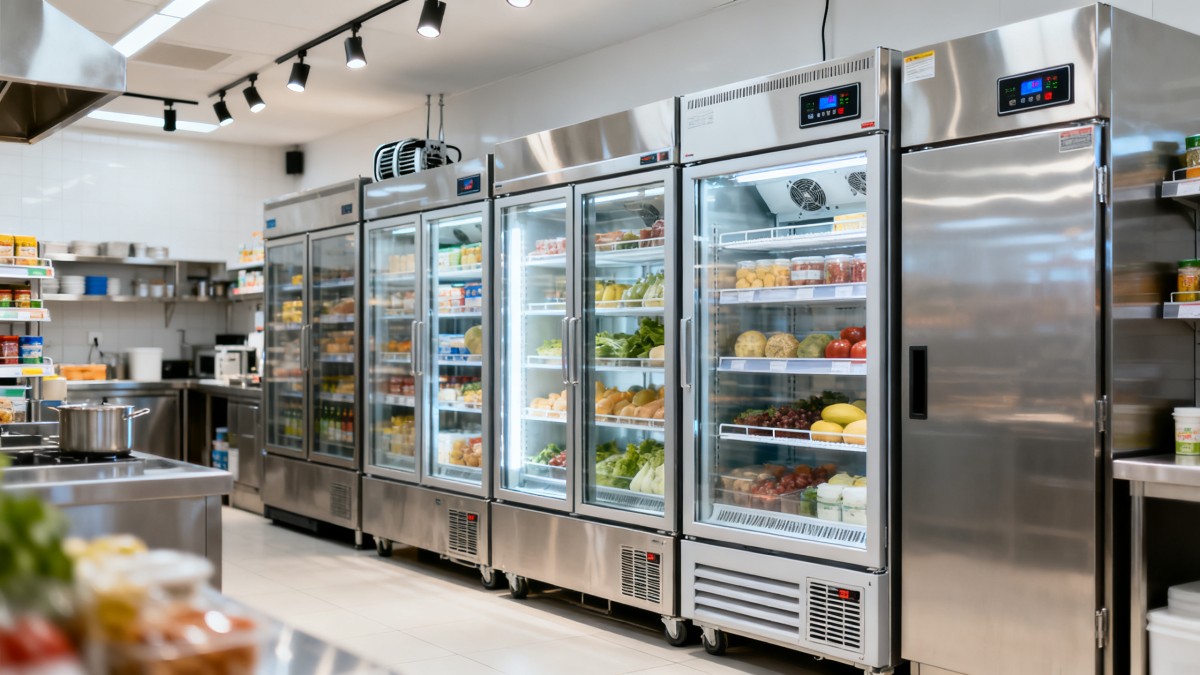
The purchase price is only the visible part of the decision.
For commercialrefrigerators, electricity, servicing, temperature stability, and downtime usually shape the real cost over years of use.
That is why many buyers now compare lifecycle value, not just cabinet size or upfront discounts.
In food retail, hospitality, convenience stores, and mixed-use commercial spaces, one inefficient unit can quietly increase utility bills every month.
The bigger issue is that higher running costs rarely come from one single flaw.
They usually come from a combination of compressor load, insulation quality, door opening frequency, poor ventilation, and weak control systems.
Within modern commercial environments, that broader view matters more than ever.
Platforms such as G-BCE have made cross-sector benchmarking more practical by linking equipment performance with compliance, sustainability, and real operating conditions.
So the useful question is not simply, “Which model is cheaper?”
A better question is, “Which commercialrefrigerators will still be cost-efficient after installation, daily use, and routine maintenance?”
Which specifications have the strongest effect on energy bills?
Energy use starts with the refrigeration system itself, but it does not end there.
Several technical specifications directly affect how hard the unit works every day.
The most important ones are usually:
- Compressor type and efficiency, especially inverter-driven systems.
- Insulation thickness and cabinet sealing quality.
- Door design, including glass type, self-closing hinges, and gasket durability.
- Evaporator and condenser performance under real ambient temperatures.
- Defrost method and frequency control.
- Digital thermostats and load-responsive temperature management.
In actual use, compressor efficiency often gets the most attention, but insulation can be just as decisive.
A lower-cost cabinet with weaker insulation may force longer compressor cycles, especially in hot kitchens or high-traffic retail aisles.
Door openings also change the equation.
If a unit is opened constantly, air loss and temperature recovery speed become major cost factors.
That is why display coolers and back-of-house storage should not be judged by the same spec priorities.
It also helps to check whether test data aligns with recognized standards and realistic installation conditions.
Benchmarking against UL or CE-related performance expectations gives a more reliable basis for comparing commercialrefrigerators across suppliers.
How can you tell if a lower-priced unit will cost more over time?
This is where many purchasing mistakes begin.
A lower quote can look attractive, yet the long-term numbers may say something very different.
One practical way to compare commercialrefrigerators is to review the hidden cost drivers side by side.
The useful takeaway is simple.
Cheap commercialrefrigerators often become expensive when energy data is vague, service parts are hard to source, or cleaning access is poorly designed.
This is especially relevant in multi-site operations, where a small inefficiency repeats across dozens of locations.
A disciplined comparison sheet usually reveals more than a price list ever will.
Does application type change which commercialrefrigerators are most cost-efficient?
Very much so, and this point is often underestimated.
A model that performs well in a quiet storeroom may struggle in a busy front-of-house display setting.
In practical terms, running costs depend on how the unit is used, not only how it is built.
For example, glass-door merchandisers support product visibility, but they often face more heat gain and more frequent door openings.
Solid-door storage units may consume less energy for the same volume, especially in controlled backroom areas.
Undercounter units save space, yet restricted ventilation can hurt efficiency if installation clearances are ignored.
Remote-condensing systems may reduce indoor heat load, though installation complexity and service planning become more important.
More broadly, the commercial space itself matters.
Retail modernization now connects refrigeration with lighting, digital monitoring, store layout, and broader supply chain performance.
That ecosystem view is one reason intelligence platforms like G-BCE are useful.
They encourage decisions based on fit, interoperability, and operational resilience rather than isolated specifications.
When comparing commercialrefrigerators, the right question is not only “How efficient is it?”
It is also “How efficient will it remain in this exact setting?”
What maintenance and compliance details are easy to miss?
Running costs rise quickly when maintenance is treated as an afterthought.
The most common oversight is assuming that all compliant units are equally easy to maintain.
They are not.
It helps to review a few details before final selection:
- Access to filters, coils, fans, and drain paths for routine cleaning.
- Availability of replacement parts across your operating regions.
- Refrigerant compliance with current and likely future environmental requirements.
- Electrical compatibility, especially for global rollouts across different markets.
- Alarm systems or monitoring functions that prevent unnoticed temperature drift.
A unit can look efficient on paper and still create high ownership costs if technicians need excessive time for basic servicing.
The same applies to compliance.
Certifications such as UL or CE are not just formalities.
They can affect installation approval, risk exposure, and long-term sourcing flexibility.
In many organizations, the best-performing commercialrefrigerators are the ones that reduce operational surprises, not merely energy numbers.
What is a sensible way to compare options before placing an order?
A useful decision process is usually shorter and more disciplined than people expect.
Start by defining the real operating profile.
That means ambient temperature, opening frequency, product load, cleaning routine, and expected service life.
Then compare commercialrefrigerators against a consistent checklist, not against sales claims alone.
A practical shortlist often includes these checks:
- Review annual energy data and test conditions.
- Confirm insulation, gasket quality, and door recovery performance.
- Check service access and spare-part lead times.
- Verify applicable standards and market compliance.
- Estimate total cost over three to five years, not just purchase cost.
Where possible, compare data from independent benchmarks or structured technical repositories.
That reduces the risk of choosing a model that looks efficient in theory but performs poorly in daily trade conditions.
For many commercial spaces, the winning option is rarely the cheapest or the most feature-heavy.
It is usually the model with the strongest balance of energy control, maintainability, compliance, and fit for use.
If the next step is unclear, build a comparison sheet around operating hours, utility rates, service assumptions, and environmental conditions.
That approach makes discussions around commercialrefrigerators more objective and far less reactive.
In the end, better specification reading leads to better cost control.
And better cost control usually starts before the order is placed, not after the equipment is installed.
News Recommendations
 What consumer packaging USA importers need to verify before ordering
![51a6ab95581761cc26f4318be6520c15]()
Aris Katos
Future of Carbide Coatings
 How commercial spaces interiors shape customer dwell time
![51a6ab95581761cc26f4318be6520c15]()
Aris Katos
Future of Carbide Coatings
 How LED commercial lighting design reduces glare in retail spaces
![51a6ab95581761cc26f4318be6520c15]()
Aris Katos
Future of Carbide Coatings
 How industrial technology information improves RFID inventory accuracy
![51a6ab95581761cc26f4318be6520c15]()
Aris Katos
Future of Carbide Coatings
 When drip garden watering systems make more sense than sprinklers
![51a6ab95581761cc26f4318be6520c15]()
Aris Katos
Future of Carbide Coatings
 When category comparison improves sourcing for industrial applications
![51a6ab95581761cc26f4318be6520c15]()
Aris Katos
Future of Carbide Coatings
 Industrial application guidance for selecting the right LED lighting
![51a6ab95581761cc26f4318be6520c15]()
Aris Katos
Future of Carbide Coatings
 Which commercial architecture standards apply to European retail fit-outs?
![51a6ab95581761cc26f4318be6520c15]()
Aris Katos
Future of Carbide Coatings
 How to verify FDA requirements for maternity care products
![51a6ab95581761cc26f4318be6520c15]()
Aris Katos
Future of Carbide Coatings
 How to verify BPA-free claims for food-contact products
![51a6ab95581761cc26f4318be6520c15]()
Aris Katos
Future of Carbide Coatings
 When does a European wholesale supplier suit modular office projects?
![51a6ab95581761cc26f4318be6520c15]()
Aris Katos
Future of Carbide Coatings
 When consumer ecosystem solutions improve the in-store shopping journey
![51a6ab95581761cc26f4318be6520c15]()
Aris Katos
Future of Carbide Coatings
 How a commercial developers network can reduce site selection risk
![51a6ab95581761cc26f4318be6520c15]()
Aris Katos
Future of Carbide Coatings
 How clear purchasing specifications prevent costly supplier deviations
![51a6ab95581761cc26f4318be6520c15]()
Aris Katos
Future of Carbide Coatings
 What an ISTA drop test lab checks before your packaging ships
![51a6ab95581761cc26f4318be6520c15]()
Aris Katos
Future of Carbide Coatings
 Which commercial furniture standards apply to workplace seating?
![51a6ab95581761cc26f4318be6520c15]()
Aris Katos
Future of Carbide Coatings
 How to evaluate smart lighting module OEM compatibility before sampling
![51a6ab95581761cc26f4318be6520c15]()
Aris Katos
Future of Carbide Coatings
 How to assess whether sustainable technology delivers real impact
![51a6ab95581761cc26f4318be6520c15]()
Aris Katos
Future of Carbide Coatings
 How to assess an OEM supplier’s quality control before ordering
![51a6ab95581761cc26f4318be6520c15]()
Aris Katos
Future of Carbide Coatings
 How consumer ecosystem solutions data can improve retail personalization
![51a6ab95581761cc26f4318be6520c15]()
Aris Katos
Future of Carbide Coatings
 When does consumer packaging design justify a higher product price?
![51a6ab95581761cc26f4318be6520c15]()
Aris Katos
Future of Carbide Coatings
 Supermarket Fixture Installation: Planning Layouts, Wiring, and Handover
![51a6ab95581761cc26f4318be6520c15]()
Aris Katos
Future of Carbide Coatings
 Automated Lighting and Smart Lighting Control in Bergerac: Key Project Considerations
![51a6ab95581761cc26f4318be6520c15]()
Aris Katos
Future of Carbide Coatings
 Segment Streetlight Controllers: Choosing Control Modes for Urban Roads
![51a6ab95581761cc26f4318be6520c15]()
Aris Katos
Future of Carbide Coatings
 IEC 62471-2 Explained: How to Assess Photobiological Risks in LED Lighting
![51a6ab95581761cc26f4318be6520c15]()
Aris Katos
Future of Carbide Coatings
 Food Grade Packaging Requirements by Product Type, Temperature, and Contact Risk
![51a6ab95581761cc26f4318be6520c15]()
Aris Katos
Future of Carbide Coatings
 Food Packaging Compliance Checklist: Tests, Records, and Labeling Before Shipment
![51a6ab95581761cc26f4318be6520c15]()
Aris Katos
Future of Carbide Coatings
 NSF Food Packaging Standards: When Certification Matters for Commercial Food Use
![51a6ab95581761cc26f4318be6520c15]()
Aris Katos
Future of Carbide Coatings
 FDA Food Grade Compliance: Which Materials and Documents Do Buyers Need?
![51a6ab95581761cc26f4318be6520c15]()
Aris Katos
Future of Carbide Coatings
 What Should a Food Grade Declaration Include for Packaging Compliance?
![51a6ab95581761cc26f4318be6520c15]()
Aris Katos
Future of Carbide Coatings
 Housewares Importing: How to Evaluate Suppliers, Costs, and Compliance Risks
![51a6ab95581761cc26f4318be6520c15]()
Aris Katos
Future of Carbide Coatings
 Why Freeze-Dried Fruit Ingredients Lose Crispness—and How to Prevent It
![51a6ab95581761cc26f4318be6520c15]()
Aris Katos
Future of Carbide Coatings
 What industry veterans look for before choosing a new supplier
![51a6ab95581761cc26f4318be6520c15]()
Aris Katos
Future of Carbide Coatings
 How material fatigue can shorten the service life of retail shelving
![51a6ab95581761cc26f4318be6520c15]()
Aris Katos
Future of Carbide Coatings
 What makes a global sourcing platform reliable for supplier verification?
![51a6ab95581761cc26f4318be6520c15]()
Aris Katos
Future of Carbide Coatings
 When are double platinum spark plugs a better choice than iridium?
![51a6ab95581761cc26f4318be6520c15]()
Aris Katos
Future of Carbide Coatings
 How to assess a POS terminal manufacturer in Europe for long-term support
![51a6ab95581761cc26f4318be6520c15]()
Aris Katos
Future of Carbide Coatings
 How data transparency in retail helps prevent inventory discrepancies
![51a6ab95581761cc26f4318be6520c15]()
Aris Katos
Future of Carbide Coatings
 What makes a product comparison guide actually useful for buying decisions
![51a6ab95581761cc26f4318be6520c15]()
Aris Katos
Future of Carbide Coatings