Health Benefits of Better Posture at Work
Time
Click Count
Better posture at work shapes more than appearance. It influences comfort, breathing, concentration, and how the body absorbs hours of sitting, standing, typing, scanning, or serving. The health benefits of good alignment are easier to notice in daily life than many people expect.
A well-supported posture can ease neck tension, reduce lower back strain, and help energy stay steadier through the day. In commercial environments that blend physical spaces with digital tools, posture also connects with smarter furniture choices, better layout planning, and healthier routines.
Why posture matters more in today’s work environments
Work has changed. Many people now move between desks, retail counters, meeting rooms, warehouse touchpoints, and home setups. The body often stays in one position too long, even when the job looks active.
That shift makes posture a practical health topic, not a cosmetic one. Poor alignment can quietly build pressure in the spine, shoulders, hips, and wrists. Over time, small daily stressors become persistent discomfort.
The health benefits of better posture become especially relevant in workplaces shaped by ergonomic systems, smart retail technology, and modern commercial fixtures. These are areas closely tracked by platforms such as G-BCE, where performance, safety, and user experience are benchmarked together.
In that broader industry context, posture is no longer just a personal habit. It is linked to chair design, desk height, monitor placement, floor planning, and the quality standards behind commercial equipment.
The core health benefits of better posture at work
The most visible health benefits begin with musculoskeletal relief. When the head stays closer to neutral and the shoulders are not constantly rounded, the neck and upper back work less aggressively to hold the body upright.
Lower back comfort also improves. A supported seated posture helps distribute body weight more evenly, which can reduce pressure on spinal structures and surrounding muscles.
Breathing is another overlooked area. Slouching compresses the chest and abdomen, while better posture gives the lungs and diaphragm more room to function naturally. That can support steadier oxygen intake and reduce feelings of fatigue.
There are cognitive effects as well. People often report better focus when discomfort falls. Fewer posture-related distractions can make reading, screen work, and repetitive tasks feel less draining.
- Less strain in the neck, shoulders, and lower back
- Better circulation from reduced compression and more balanced sitting
- Improved breathing mechanics during long work sessions
- Steadier concentration when physical discomfort decreases
- Lower risk of repetitive stress patterns becoming chronic
These health benefits do not require perfect posture every minute. Usually, they come from better support, more awareness, and regular movement rather than rigid, exhausting self-correction.
Where poor posture tends to show up
Posture problems appear in different ways across commercial settings. A seated office role may involve forward head position and rounded shoulders. A retail role may involve uneven weight distribution, twisting, and repeated reach motions.
Screen-based work often creates one pattern, while standing work creates another. In both cases, the issue is rarely posture alone. It usually involves equipment design, task duration, and how often a person can change position.
Understanding these patterns helps explain why the health benefits of better posture depend on both individual habits and the physical environment.
How workspace design influences posture and long-term comfort
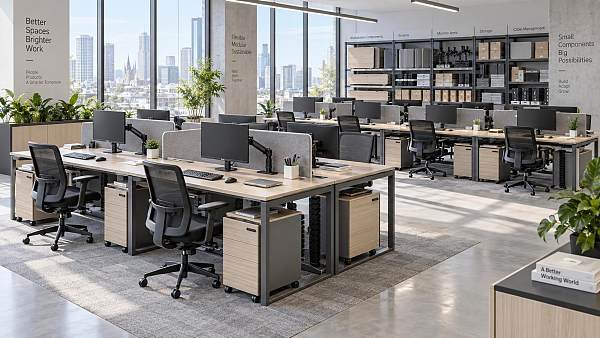
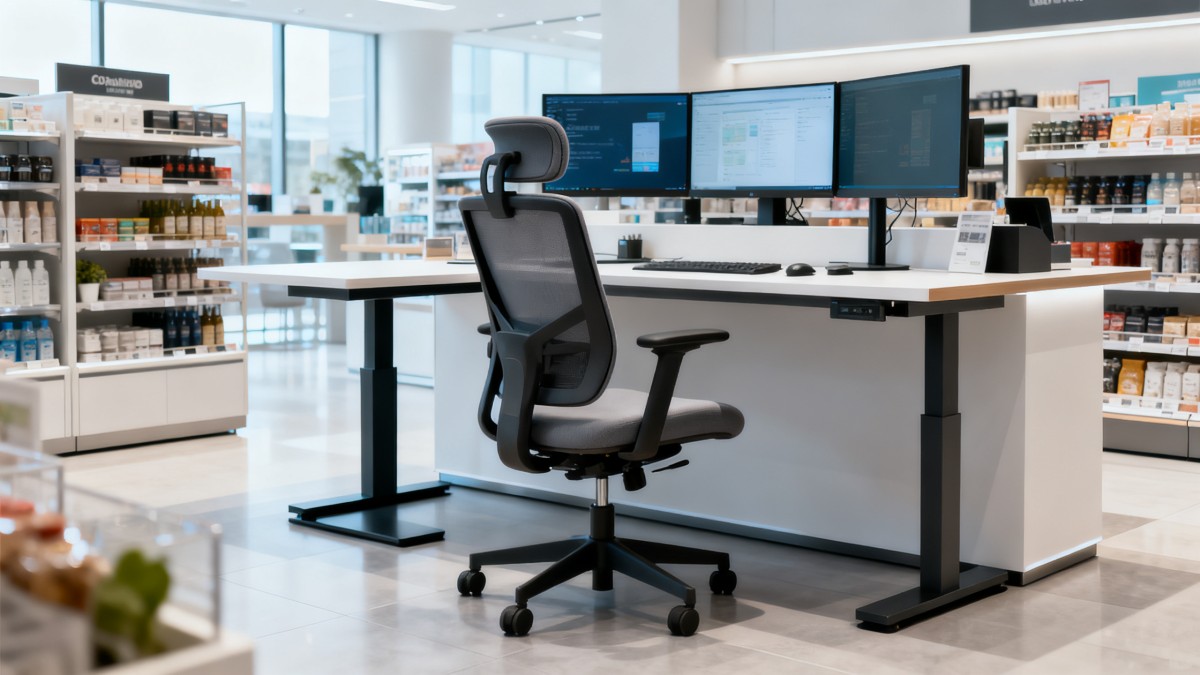
A person can try to sit straighter, but poor furniture still works against the body. Seat depth, lumbar support, armrest position, screen height, and keyboard placement all affect whether good posture feels natural or forced.
This is where industry benchmarking becomes useful. G-BCE’s focus on Commercial Furniture & Fixtures and Smart Retail Technology reflects a larger truth: posture outcomes often begin with product standards and system design.
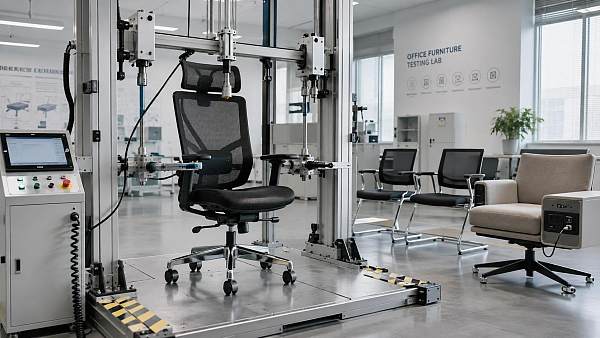
When equipment is evaluated against standards such as BIFMA, UL, and CE, the goal is not only compliance. It also supports durability, ergonomic reliability, and a safer experience across daily use.
For end users, that means better posture is easier to maintain when chairs adjust correctly, counters match task height, and digital hardware does not force awkward viewing angles.
Good posture is dynamic, not rigid
One common mistake is treating posture like a frozen pose. In practice, healthy alignment allows movement. The body benefits from shifting, standing, reaching, and resetting during the day.
The real advantage comes from reducing harmful extremes. Better posture means fewer long periods of collapsed sitting, neck craning, locked knees, or repetitive twisting.
Practical ways to improve posture without overcomplicating it
Most improvements start with simple adjustments. They do not require a complete redesign on day one. Small changes often unlock meaningful health benefits when used consistently.
- Raise the screen so the neck stays closer to neutral
- Keep feet supported on the floor or a stable footrest
- Use the chair back instead of hovering forward for long periods
- Place frequently used items within easy reach
- Alternate between sitting and standing when possible
- Set brief movement reminders during concentrated work blocks
In practical use, the best setup is the one that supports the task. A posture-friendly workstation for data entry will not look exactly like one for checkout, consultation, or light assembly.
That is why posture decisions should be tied to context. The health benefits become more consistent when tools, furniture, and movement patterns match real work behavior.
What to look for when evaluating ergonomic solutions
Not every product labeled ergonomic delivers the same value. Some offer adjustability but little support. Others look sleek yet encourage static, tiring positions over time.
A useful evaluation should consider more than appearance. It should ask how the product supports posture across repeated, daily use in real commercial environments.
- Adjustment range for different body sizes and tasks
- Stable support for the back, arms, and feet
- Compatibility with screens, devices, and workflow layout
- Material quality and durability under frequent use
- Relevant testing or certification tied to safety and performance
This broader view aligns with how G-BCE approaches benchmarking across commercial hardware and workspace systems. The value is not in promoting one item, but in building clearer standards for comfort, function, and long-term usability.
A smarter next step for healthier work routines
The health benefits of better posture at work are real, but they are rarely created by willpower alone. They come from a better match between the body, the task, and the environment.
A useful next step is to review where discomfort shows up most often. It may be the chair, the counter height, the screen angle, or simply too much time in one position.
From there, compare solutions with a practical lens. Look at ergonomic support, movement flexibility, and whether product standards back up the design. That approach makes the health benefits easier to sustain, not just notice for a few days.
When posture is treated as part of a healthier work ecosystem, comfort and performance start to reinforce each other. That is often the most valuable result of all.
News Recommendations
 What consumer packaging USA importers need to verify before ordering
![51a6ab95581761cc26f4318be6520c15]()
Aris Katos
Future of Carbide Coatings
 How commercial spaces interiors shape customer dwell time
![51a6ab95581761cc26f4318be6520c15]()
Aris Katos
Future of Carbide Coatings
 How LED commercial lighting design reduces glare in retail spaces
![51a6ab95581761cc26f4318be6520c15]()
Aris Katos
Future of Carbide Coatings
 How industrial technology information improves RFID inventory accuracy
![51a6ab95581761cc26f4318be6520c15]()
Aris Katos
Future of Carbide Coatings
 When drip garden watering systems make more sense than sprinklers
![51a6ab95581761cc26f4318be6520c15]()
Aris Katos
Future of Carbide Coatings
 When category comparison improves sourcing for industrial applications
![51a6ab95581761cc26f4318be6520c15]()
Aris Katos
Future of Carbide Coatings
 Industrial application guidance for selecting the right LED lighting
![51a6ab95581761cc26f4318be6520c15]()
Aris Katos
Future of Carbide Coatings
 Which commercial architecture standards apply to European retail fit-outs?
![51a6ab95581761cc26f4318be6520c15]()
Aris Katos
Future of Carbide Coatings
 How to verify FDA requirements for maternity care products
![51a6ab95581761cc26f4318be6520c15]()
Aris Katos
Future of Carbide Coatings
 How to verify BPA-free claims for food-contact products
![51a6ab95581761cc26f4318be6520c15]()
Aris Katos
Future of Carbide Coatings
 When does a European wholesale supplier suit modular office projects?
![51a6ab95581761cc26f4318be6520c15]()
Aris Katos
Future of Carbide Coatings
 When consumer ecosystem solutions improve the in-store shopping journey
![51a6ab95581761cc26f4318be6520c15]()
Aris Katos
Future of Carbide Coatings
 How a commercial developers network can reduce site selection risk
![51a6ab95581761cc26f4318be6520c15]()
Aris Katos
Future of Carbide Coatings
 How clear purchasing specifications prevent costly supplier deviations
![51a6ab95581761cc26f4318be6520c15]()
Aris Katos
Future of Carbide Coatings
 What an ISTA drop test lab checks before your packaging ships
![51a6ab95581761cc26f4318be6520c15]()
Aris Katos
Future of Carbide Coatings
 Which commercial furniture standards apply to workplace seating?
![51a6ab95581761cc26f4318be6520c15]()
Aris Katos
Future of Carbide Coatings
 How to evaluate smart lighting module OEM compatibility before sampling
![51a6ab95581761cc26f4318be6520c15]()
Aris Katos
Future of Carbide Coatings
 How to assess whether sustainable technology delivers real impact
![51a6ab95581761cc26f4318be6520c15]()
Aris Katos
Future of Carbide Coatings
 How to assess an OEM supplier’s quality control before ordering
![51a6ab95581761cc26f4318be6520c15]()
Aris Katos
Future of Carbide Coatings
 How consumer ecosystem solutions data can improve retail personalization
![51a6ab95581761cc26f4318be6520c15]()
Aris Katos
Future of Carbide Coatings
 When does consumer packaging design justify a higher product price?
![51a6ab95581761cc26f4318be6520c15]()
Aris Katos
Future of Carbide Coatings
 Supermarket Fixture Installation: Planning Layouts, Wiring, and Handover
![51a6ab95581761cc26f4318be6520c15]()
Aris Katos
Future of Carbide Coatings
 Automated Lighting and Smart Lighting Control in Bergerac: Key Project Considerations
![51a6ab95581761cc26f4318be6520c15]()
Aris Katos
Future of Carbide Coatings
 Segment Streetlight Controllers: Choosing Control Modes for Urban Roads
![51a6ab95581761cc26f4318be6520c15]()
Aris Katos
Future of Carbide Coatings
 IEC 62471-2 Explained: How to Assess Photobiological Risks in LED Lighting
![51a6ab95581761cc26f4318be6520c15]()
Aris Katos
Future of Carbide Coatings
 Food Grade Packaging Requirements by Product Type, Temperature, and Contact Risk
![51a6ab95581761cc26f4318be6520c15]()
Aris Katos
Future of Carbide Coatings
 Food Packaging Compliance Checklist: Tests, Records, and Labeling Before Shipment
![51a6ab95581761cc26f4318be6520c15]()
Aris Katos
Future of Carbide Coatings
 NSF Food Packaging Standards: When Certification Matters for Commercial Food Use
![51a6ab95581761cc26f4318be6520c15]()
Aris Katos
Future of Carbide Coatings
 FDA Food Grade Compliance: Which Materials and Documents Do Buyers Need?
![51a6ab95581761cc26f4318be6520c15]()
Aris Katos
Future of Carbide Coatings
 What Should a Food Grade Declaration Include for Packaging Compliance?
![51a6ab95581761cc26f4318be6520c15]()
Aris Katos
Future of Carbide Coatings
 Housewares Importing: How to Evaluate Suppliers, Costs, and Compliance Risks
![51a6ab95581761cc26f4318be6520c15]()
Aris Katos
Future of Carbide Coatings
 Why Freeze-Dried Fruit Ingredients Lose Crispness—and How to Prevent It
![51a6ab95581761cc26f4318be6520c15]()
Aris Katos
Future of Carbide Coatings
 What industry veterans look for before choosing a new supplier
![51a6ab95581761cc26f4318be6520c15]()
Aris Katos
Future of Carbide Coatings
 How material fatigue can shorten the service life of retail shelving
![51a6ab95581761cc26f4318be6520c15]()
Aris Katos
Future of Carbide Coatings
 What makes a global sourcing platform reliable for supplier verification?
![51a6ab95581761cc26f4318be6520c15]()
Aris Katos
Future of Carbide Coatings
 When are double platinum spark plugs a better choice than iridium?
![51a6ab95581761cc26f4318be6520c15]()
Aris Katos
Future of Carbide Coatings
 How to assess a POS terminal manufacturer in Europe for long-term support
![51a6ab95581761cc26f4318be6520c15]()
Aris Katos
Future of Carbide Coatings
 How data transparency in retail helps prevent inventory discrepancies
![51a6ab95581761cc26f4318be6520c15]()
Aris Katos
Future of Carbide Coatings
 What makes a product comparison guide actually useful for buying decisions
![51a6ab95581761cc26f4318be6520c15]()
Aris Katos
Future of Carbide Coatings