SEA Tightens Biodegradable Import Checks
Time
Click Count
On June 13, 2026, Thailand, Vietnam, and Malaysia jointly moved to tighten import control over products marketed as biodegradable, placing immediate attention on exporters of packaging and household goods, testing service providers, and supply chain teams handling PLA- and PBAT-based products. For companies shipping into Southeast Asia, the update matters not only because it changes entry documentation requirements, but also because it can directly affect tax treatment, customs handling, testing costs, and delivery timing.
What the new import rule requires
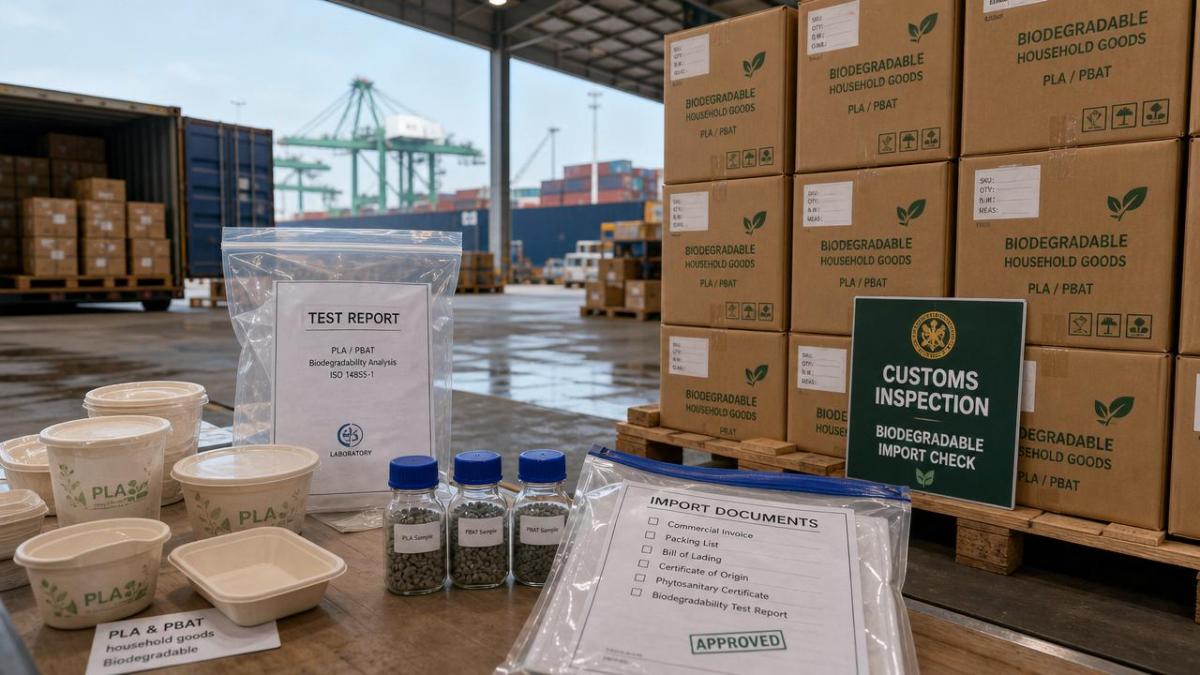
According to the information provided, the three countries jointly issued a coordinated import supervision guideline for degradable materials on June 13, 2026. The requirement applies to packaging and household products declared as biodegradable, including products based on PLA and PBAT materials.
At import, these products must be accompanied by a report issued by a laboratory certified under ISO 14855-2, showing a measured soil burial degradation rate of at least 90% within 60 days. If the report is not provided, the products will be treated as ordinary plastics for tax purposes and may be detained for inspection.
The same information indicates that this requirement is expected to significantly raise testing costs and extend delivery cycles for exporters of Biodegradable Materials products.
Where the pressure is likely to appear first
Exporters declaring biodegradable claims
From an industry perspective, direct trading companies are likely to feel the impact first because the rule is tied to how products are declared at import. The main pressure point is documentation readiness: if a product is sold or declared as biodegradable, the supporting test report becomes central to customs clearance, tax classification, and shipment timing.
Manufacturers using PLA or PBAT inputs
For processors and finished goods manufacturers, the issue is not only material selection but also whether the final product can be backed by the required degradation test documentation. What deserves closer attention is the link between production planning and compliance timing, since testing requirements may affect batch release, shipment scheduling, and customer commitments.
Supply chain and logistics coordination
Supply chain service providers may be affected through customs preparation, document review, and detention risk management. Analysis shows that the practical impact is likely to concentrate around pre-shipment paperwork, customs communication, and contingency planning for cargo that may be reclassified as ordinary plastic when supporting reports are missing.
Buyers and downstream application companies
Importers, distributors, and end-use buyers in these markets may need to pay closer attention to supplier document completeness and delivery reliability. The key concern is whether biodegradable product claims can still translate into smooth import handling under the new inspection standard.
What companies should review now
Check whether product claims match available evidence
Companies shipping relevant goods should first review which packaging and household items are being declared or marketed as biodegradable, especially where PLA or PBAT is involved. The immediate business issue is whether each claimed product already has supporting test evidence that matches the new import requirement.
Reconfirm laboratory and report suitability
The rule, as described in the provided information, points specifically to reports issued by laboratories certified under ISO 14855-2 and to a measured result of at least 90% degradation within 60 days of soil burial. Companies should therefore pay close attention to whether existing reports fit that exact requirement rather than assuming any degradability document will be accepted.
Prepare for longer lead times in contracts and shipments
Observably, the operational issue is not limited to compliance cost. Delivery schedules, booking arrangements, and customer communication may all need adjustment if testing lead times become part of the export process. This is especially relevant for orders moving on tight shipping windows or fixed launch schedules.
Watch for further clarification in implementation
What deserves closer attention is the difference between the policy signal and its on-the-ground execution. Businesses should continue monitoring how customs authorities in Thailand, Vietnam, and Malaysia describe document review, detention procedures, and practical filing expectations in follow-up communications.
Why this matters beyond a single filing requirement
Analysis shows that this is more than a narrow paperwork change. It signals that biodegradable claims in cross-border trade are being tied more closely to measurable test evidence at the point of entry. That does not by itself confirm how broadly enforcement will develop over time, but it does indicate a stricter compliance threshold for companies using degradability as part of product positioning.
It is more appropriate to understand this as both an immediate operational change and a longer-term regulatory signal worth tracking. The immediate effect lies in documentation, tax treatment, and customs detention risk. The longer-term significance lies in how product claims may increasingly need to align with standardized test proof in actual trade practice.
How the market may need to read this stage
At this stage, the update is best understood as a concrete rule change with direct short-term consequences for affected shipments, while its broader regional impact still requires continued observation. A measured reading is more useful than a dramatic one: the rule already changes compliance expectations for relevant imports, but the full extent of business adjustment will depend on how consistently it is implemented and whether related guidance continues to evolve.
Basis of this article and points for follow-up
This article is based on the user-provided news title, event date, and event summary. For this type of development, commonly relevant source categories may include official government notices, customs guidance, company disclosures, industry association updates, authoritative media reporting, and standard-related documents.
No specific official source link was provided in the input, so the exact original publication path still requires ongoing verification. Follow-up attention should focus on any additional official wording, implementation details, and market-side clarification affecting documentation scope, customs handling, and timing for biodegradable product imports.
News Recommendations
 What consumer packaging USA importers need to verify before ordering
![51a6ab95581761cc26f4318be6520c15]()
Aris Katos
Future of Carbide Coatings
 How commercial spaces interiors shape customer dwell time
![51a6ab95581761cc26f4318be6520c15]()
Aris Katos
Future of Carbide Coatings
 How LED commercial lighting design reduces glare in retail spaces
![51a6ab95581761cc26f4318be6520c15]()
Aris Katos
Future of Carbide Coatings
 How industrial technology information improves RFID inventory accuracy
![51a6ab95581761cc26f4318be6520c15]()
Aris Katos
Future of Carbide Coatings
 When drip garden watering systems make more sense than sprinklers
![51a6ab95581761cc26f4318be6520c15]()
Aris Katos
Future of Carbide Coatings
 When category comparison improves sourcing for industrial applications
![51a6ab95581761cc26f4318be6520c15]()
Aris Katos
Future of Carbide Coatings
 Industrial application guidance for selecting the right LED lighting
![51a6ab95581761cc26f4318be6520c15]()
Aris Katos
Future of Carbide Coatings
 Which commercial architecture standards apply to European retail fit-outs?
![51a6ab95581761cc26f4318be6520c15]()
Aris Katos
Future of Carbide Coatings
 How to verify FDA requirements for maternity care products
![51a6ab95581761cc26f4318be6520c15]()
Aris Katos
Future of Carbide Coatings
 How to verify BPA-free claims for food-contact products
![51a6ab95581761cc26f4318be6520c15]()
Aris Katos
Future of Carbide Coatings
 When does a European wholesale supplier suit modular office projects?
![51a6ab95581761cc26f4318be6520c15]()
Aris Katos
Future of Carbide Coatings
 When consumer ecosystem solutions improve the in-store shopping journey
![51a6ab95581761cc26f4318be6520c15]()
Aris Katos
Future of Carbide Coatings
 How a commercial developers network can reduce site selection risk
![51a6ab95581761cc26f4318be6520c15]()
Aris Katos
Future of Carbide Coatings
 How clear purchasing specifications prevent costly supplier deviations
![51a6ab95581761cc26f4318be6520c15]()
Aris Katos
Future of Carbide Coatings
 What an ISTA drop test lab checks before your packaging ships
![51a6ab95581761cc26f4318be6520c15]()
Aris Katos
Future of Carbide Coatings
 Which commercial furniture standards apply to workplace seating?
![51a6ab95581761cc26f4318be6520c15]()
Aris Katos
Future of Carbide Coatings
 How to evaluate smart lighting module OEM compatibility before sampling
![51a6ab95581761cc26f4318be6520c15]()
Aris Katos
Future of Carbide Coatings
 How to assess whether sustainable technology delivers real impact
![51a6ab95581761cc26f4318be6520c15]()
Aris Katos
Future of Carbide Coatings
 How to assess an OEM supplier’s quality control before ordering
![51a6ab95581761cc26f4318be6520c15]()
Aris Katos
Future of Carbide Coatings
 How consumer ecosystem solutions data can improve retail personalization
![51a6ab95581761cc26f4318be6520c15]()
Aris Katos
Future of Carbide Coatings
 When does consumer packaging design justify a higher product price?
![51a6ab95581761cc26f4318be6520c15]()
Aris Katos
Future of Carbide Coatings
 Supermarket Fixture Installation: Planning Layouts, Wiring, and Handover
![51a6ab95581761cc26f4318be6520c15]()
Aris Katos
Future of Carbide Coatings
 Automated Lighting and Smart Lighting Control in Bergerac: Key Project Considerations
![51a6ab95581761cc26f4318be6520c15]()
Aris Katos
Future of Carbide Coatings
 Segment Streetlight Controllers: Choosing Control Modes for Urban Roads
![51a6ab95581761cc26f4318be6520c15]()
Aris Katos
Future of Carbide Coatings
 IEC 62471-2 Explained: How to Assess Photobiological Risks in LED Lighting
![51a6ab95581761cc26f4318be6520c15]()
Aris Katos
Future of Carbide Coatings
 Food Grade Packaging Requirements by Product Type, Temperature, and Contact Risk
![51a6ab95581761cc26f4318be6520c15]()
Aris Katos
Future of Carbide Coatings
 Food Packaging Compliance Checklist: Tests, Records, and Labeling Before Shipment
![51a6ab95581761cc26f4318be6520c15]()
Aris Katos
Future of Carbide Coatings
 NSF Food Packaging Standards: When Certification Matters for Commercial Food Use
![51a6ab95581761cc26f4318be6520c15]()
Aris Katos
Future of Carbide Coatings
 FDA Food Grade Compliance: Which Materials and Documents Do Buyers Need?
![51a6ab95581761cc26f4318be6520c15]()
Aris Katos
Future of Carbide Coatings
 What Should a Food Grade Declaration Include for Packaging Compliance?
![51a6ab95581761cc26f4318be6520c15]()
Aris Katos
Future of Carbide Coatings
 Housewares Importing: How to Evaluate Suppliers, Costs, and Compliance Risks
![51a6ab95581761cc26f4318be6520c15]()
Aris Katos
Future of Carbide Coatings
 Why Freeze-Dried Fruit Ingredients Lose Crispness—and How to Prevent It
![51a6ab95581761cc26f4318be6520c15]()
Aris Katos
Future of Carbide Coatings
 What industry veterans look for before choosing a new supplier
![51a6ab95581761cc26f4318be6520c15]()
Aris Katos
Future of Carbide Coatings
 How material fatigue can shorten the service life of retail shelving
![51a6ab95581761cc26f4318be6520c15]()
Aris Katos
Future of Carbide Coatings
 What makes a global sourcing platform reliable for supplier verification?
![51a6ab95581761cc26f4318be6520c15]()
Aris Katos
Future of Carbide Coatings
 When are double platinum spark plugs a better choice than iridium?
![51a6ab95581761cc26f4318be6520c15]()
Aris Katos
Future of Carbide Coatings
 How to assess a POS terminal manufacturer in Europe for long-term support
![51a6ab95581761cc26f4318be6520c15]()
Aris Katos
Future of Carbide Coatings
 How data transparency in retail helps prevent inventory discrepancies
![51a6ab95581761cc26f4318be6520c15]()
Aris Katos
Future of Carbide Coatings
 What makes a product comparison guide actually useful for buying decisions
![51a6ab95581761cc26f4318be6520c15]()
Aris Katos
Future of Carbide Coatings