Conveyor Systems Selection for Fulfillment Efficiency
Time
Click Count
Selecting the right conveyor systems is a critical decision for improving fulfillment efficiency, reducing operational bottlenecks, and future-proofing warehouse or retail logistics environments.
As supply chains become faster, more automated, and more data-driven, conveyor design directly influences throughput, labor allocation, and long-term ROI.
This guide explains how to match conveyor systems with practical fulfillment scenarios, operational risks, scalability needs, and compliance expectations.
Why Conveyor Systems Selection Depends on Fulfillment Scenarios

Fulfillment environments rarely fail because one machine is too slow. They fail when the flow design does not match real operating conditions.
Conveyor systems must support order profiles, carton sizes, SKU volatility, labor models, and upstream automation. Each factor changes the ideal layout.
A high-speed e-commerce hub needs different conveyor systems from a retail replenishment center or a premium consumer goods facility.
The right choice starts with scene judgment. Volume, handling sensitivity, data visibility, and expansion pressure should guide every technical decision.
G-BCE emphasizes benchmarking across commercial hardware, smart retail technology, sustainable packaging, and supply chain infrastructure. Conveyor systems sit at this intersection.
Scenario 1: High-Volume E-Commerce Fulfillment
E-commerce fulfillment demands rapid item movement, short cut-off windows, and flexible routing. Conveyor systems must absorb peaks without creating downstream congestion.
In this scenario, the main judgment point is not maximum speed alone. Stable accumulation and intelligent diverts are equally important.
Zone-controlled conveyor systems can reduce collisions, improve carton spacing, and support automated scanning or weighing stations.
When order profiles change daily, modular conveyor sections help operations adjust routes, add sort points, or reconfigure packing lines.
Key Selection Checks
- Match belt speed with scanner read rates and packing capacity.
- Use accumulation zones before labeling, sortation, and shipping confirmation.
- Confirm carton stability at transfers, curves, inclines, and merges.
- Plan controls integration with WMS, WCS, and machine safety systems.
Scenario 2: Retail Replenishment and Store Distribution
Retail replenishment often involves mixed cartons, seasonal promotions, and store-ready sequencing. Conveyor systems must support accuracy and predictable dispatch timing.
The primary requirement is controlled flow. Excessive speed can damage packaging, overload staging lanes, or create mis-sorted shipments.
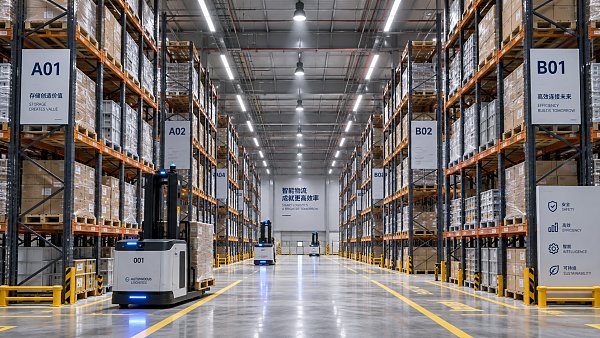
For chain retail logistics, conveyor systems should connect receiving, decanting, picking, packing, and route staging with minimal manual relifting.
Sortation design should consider store grouping, delivery sequence, and returns handling. These details influence labor efficiency more than headline throughput.
Practical Fit Indicators
- Frequent store waves require flexible routing logic.
- Fragile display cartons need gentle transitions and low-drop transfers.
- Return flows should not interfere with outbound replenishment.
- Label visibility must remain consistent across conveyor angles.
Scenario 3: Consumer Goods and Sustainable Packaging Lines
Consumer goods supply chains increasingly use lightweight cartons, recycled paperboard, molded pulp, and reusable totes. Conveyor systems must adapt to these materials.
Packaging sustainability can reduce weight but also lower rigidity. Poor conveyor selection may cause scuffing, deformation, or tracking instability.
For eco-friendly packaging, conveyor systems should provide smooth starts, controlled braking, and suitable surface friction.
Belt material, roller spacing, side guides, and transfer geometry become critical when handling premium branded packaging.
Material-Sensitive Decisions
- Use dense roller spacing for flexible cartons or soft-bottom packages.
- Select surfaces that balance grip, hygiene, and cleanability.
- Avoid aggressive side pressure on printed retail packs.
- Validate recycled packaging under humidity and load variation.
Scenario 4: Smart Retail Backrooms and Micro-Fulfillment
Urban retail spaces increasingly combine storefront sales, online pickup, and local delivery. Conveyor systems must operate within tighter footprints.
Noise, safety, power consumption, and maintainability become as important as throughput in compact backroom environments.
Compact conveyor systems can connect storage modules, packing benches, POS-adjacent pickup points, and returns stations.
The best configuration usually favors modularity, low noise, and software visibility rather than oversized industrial capacity.
Small-Site Design Priorities
- Choose compact curves, vertical lifts, or short powered sections.
- Specify low-noise motors for customer-adjacent operations.
- Ensure safe access around aisles, doors, and service counters.
- Connect status data to inventory and order management tools.
Scenario 5: Heavy, Bulky, or Irregular Commercial Products
Commercial fixtures, office systems, lighting assemblies, and display hardware can be bulky or irregular. Conveyor systems require stronger mechanical margins.
The central question is load control. Weight, center of gravity, edge contact, and package stiffness determine system reliability.
Heavy-duty roller conveyor systems may outperform belts when loads have rigid bases and require accumulation before palletizing.
For fragile fixtures, however, a belt or slat design may provide better support and reduce vibration during movement.
Engineering Questions to Confirm
- What is the true maximum load, including packaging and pallets?
- Will products overhang, rotate, or shift during transfers?
- Are manual lift points still required at exceptions?
- Does the structure meet local safety and anchoring expectations?
Different Fulfillment Scenarios Require Different Conveyor Systems
A clear comparison helps avoid overengineering or under-specifying. Conveyor systems should be evaluated against the dominant operating pattern.
This comparison also supports supplier evaluation. Conveyor systems should be justified by scenario evidence, not only equipment catalogs.
Scenario-Based Adaptation Advice for Conveyor Systems
Effective selection combines layout planning, data integration, compliance, and lifecycle cost. The cheapest system is rarely the most efficient one.
- Map actual flows before choosing conveyor systems or specifying motor types.
- Separate peak volume, average volume, and exception volume in capacity calculations.
- Test representative cartons, totes, fragile packs, and oversized products.
- Confirm controls compatibility with WMS, WCS, barcode systems, and safety PLCs.
- Benchmark electrical safety, machine guarding, and documentation against regional standards.
- Plan maintenance access before finalizing mezzanines, walls, or storage zones.
Conveyor systems also need future capacity buffers. Expansion should be planned through spare I/O, available floor space, and modular mechanical interfaces.
Data visibility is another selection factor. Sensors, dashboards, alarms, and performance logs make conveyor systems easier to optimize after installation.
Common Misjudgments When Choosing Conveyor Systems
One frequent error is buying for theoretical maximum speed. Real fulfillment efficiency depends on balanced flow across every station.
Another misjudgment is ignoring packaging variation. A line tested with perfect cartons may fail with soft, damp, or overfilled packages.
Some facilities underestimate exception handling. Damaged labels, rejected scans, and non-conveyable items require dedicated paths or manual recovery points.
Controls are also overlooked. Mechanical conveyor systems without strong software logic may simply move bottlenecks to another location.
Compliance should not be treated as an afterthought. Guarding, emergency stops, lockout points, and electrical documentation affect approval and operation.
Energy consumption deserves attention. Motorized roller zones, sleep modes, and right-sized drives can reduce operating cost across long shifts.
Building a More Efficient Fulfillment Roadmap
A strong conveyor roadmap begins with scenario classification, then moves into engineering validation, supplier benchmarking, and phased implementation.
Document current pain points, including congestion, rework, damaged goods, missed dispatch times, and labor-intensive handoffs.
Next, define success metrics. Useful measures include throughput per hour, scan accuracy, labor touches, downtime, energy use, and damage rate.
Then compare conveyor systems against those metrics. Include mechanical design, controls architecture, safety features, service capability, and expansion options.
For global commercial environments, technical benchmarking should include UL, CE, BIFMA-related facility expectations, and applicable local safety rules.
This approach aligns conveyor investment with fulfillment performance, commercial space modernization, and consumer supply chain resilience.
Action Guide: Turning Conveyor Systems Evaluation into Execution
Start with a flow audit. Capture item dimensions, order profiles, packaging types, peak waves, route logic, and manual intervention points.
Create a shortlist of conveyor systems based on scenario fit, not brand familiarity alone. Request layout simulations and reference performance data.
Run physical handling tests before final approval. Use real cartons, sustainable packaging, irregular loads, and representative labels.
Validate controls early. The best mechanical layout still needs reliable scanning, routing, diagnostics, and safe recovery from exceptions.
Finally, build a phased deployment plan. Conveyor systems should improve today’s fulfillment while leaving space for automation growth tomorrow.
With scenario-driven selection, conveyor systems become more than transport equipment. They become the operating backbone of efficient, intelligent fulfillment.
News Recommendations
 What records are needed for an ISO 9001 furniture factory audit?
![51a6ab95581761cc26f4318be6520c15]()
Aris Katos
Future of Carbide Coatings
 How to choose AI marketing tools that work with your existing CRM
![51a6ab95581761cc26f4318be6520c15]()
Aris Katos
Future of Carbide Coatings
 Do freight costs erase savings when buying retail fixtures wholesale?
![51a6ab95581761cc26f4318be6520c15]()
Aris Katos
Future of Carbide Coatings
 Can smart retail IT solutions for CPG work with legacy POS systems?
![51a6ab95581761cc26f4318be6520c15]()
Aris Katos
Future of Carbide Coatings
 What permit approvals belong in a commercial fitout planning checklist?
![51a6ab95581761cc26f4318be6520c15]()
Aris Katos
Future of Carbide Coatings
 How Does Commercial Design Differ from Interior Decoration?
![51a6ab95581761cc26f4318be6520c15]()
Aris Katos
Future of Carbide Coatings
 How Long Does It Take to Verify a Commercial Furniture Supplier?
![51a6ab95581761cc26f4318be6520c15]()
Aris Katos
Future of Carbide Coatings
 How to verify compostability claims from a bubble mailer manufacturer
![51a6ab95581761cc26f4318be6520c15]()
Aris Katos
Future of Carbide Coatings
 Will commercial smart infrastructure solutions work with legacy systems?
![51a6ab95581761cc26f4318be6520c15]()
Aris Katos
Future of Carbide Coatings
 How to verify a preschool furniture manufacturer's safety standards
![51a6ab95581761cc26f4318be6520c15]()
Aris Katos
Future of Carbide Coatings
 A technical comparison of semiconductor processes for power devices
![51a6ab95581761cc26f4318be6520c15]()
Aris Katos
Future of Carbide Coatings
 How to verify that a BIFMA ergonomic chair meets the standard
![51a6ab95581761cc26f4318be6520c15]()
Aris Katos
Future of Carbide Coatings
 How to use a CRI value chart when choosing LED lighting
![51a6ab95581761cc26f4318be6520c15]()
Aris Katos
Future of Carbide Coatings
 How to compare hotel aroma diffuser wholesale options by coverage area
![51a6ab95581761cc26f4318be6520c15]()
Aris Katos
Future of Carbide Coatings
 How to prevent O-rings and seals from failing in food equipment
![51a6ab95581761cc26f4318be6520c15]()
Aris Katos
Future of Carbide Coatings
 How to compare commercial linear light wholesale quotes accurately
![51a6ab95581761cc26f4318be6520c15]()
Aris Katos
Future of Carbide Coatings
 How to verify international standards compliance for Middle East exports
![51a6ab95581761cc26f4318be6520c15]()
Aris Katos
Future of Carbide Coatings
 How to select laboratory instruments for reproducible test results
![51a6ab95581761cc26f4318be6520c15]()
Aris Katos
Future of Carbide Coatings
 When does a sheet metal prototype reveal design flaws early?
![51a6ab95581761cc26f4318be6520c15]()
Aris Katos
Future of Carbide Coatings
 When PE air column bags reduce damage in e-commerce fulfillment
![51a6ab95581761cc26f4318be6520c15]()
Aris Katos
Future of Carbide Coatings
 How energy-efficient design reduces operating costs in retail lighting
![51a6ab95581761cc26f4318be6520c15]()
Aris Katos
Future of Carbide Coatings
 When commercial aluminum storefronts make sense for a retail renovation
![51a6ab95581761cc26f4318be6520c15]()
Aris Katos
Future of Carbide Coatings
 What makes LED lights durable in high-use commercial spaces?
![51a6ab95581761cc26f4318be6520c15]()
Aris Katos
Future of Carbide Coatings
 Which industry categories offer the strongest export potential in Latin America?
![51a6ab95581761cc26f4318be6520c15]()
Aris Katos
Future of Carbide Coatings
 How to choose an ultra bright waterproof window display for storefronts
![51a6ab95581761cc26f4318be6520c15]()
Aris Katos
Future of Carbide Coatings
 How to verify suppliers on a trade portal for global sourcing
![51a6ab95581761cc26f4318be6520c15]()
Aris Katos
Future of Carbide Coatings
 How RoHS requirements should be stated in product specifications
![51a6ab95581761cc26f4318be6520c15]()
Aris Katos
Future of Carbide Coatings
 What affects the lead time for custom retail counter displays?
![51a6ab95581761cc26f4318be6520c15]()
Aris Katos
Future of Carbide Coatings
 What consumer packaging USA importers need to verify before ordering
![51a6ab95581761cc26f4318be6520c15]()
Aris Katos
Future of Carbide Coatings
 How commercial spaces interiors shape customer dwell time
![51a6ab95581761cc26f4318be6520c15]()
Aris Katos
Future of Carbide Coatings
 How LED commercial lighting design reduces glare in retail spaces
![51a6ab95581761cc26f4318be6520c15]()
Aris Katos
Future of Carbide Coatings
 How industrial technology information improves RFID inventory accuracy
![51a6ab95581761cc26f4318be6520c15]()
Aris Katos
Future of Carbide Coatings
 When drip garden watering systems make more sense than sprinklers
![51a6ab95581761cc26f4318be6520c15]()
Aris Katos
Future of Carbide Coatings
 When category comparison improves sourcing for industrial applications
![51a6ab95581761cc26f4318be6520c15]()
Aris Katos
Future of Carbide Coatings
 Industrial application guidance for selecting the right LED lighting
![51a6ab95581761cc26f4318be6520c15]()
Aris Katos
Future of Carbide Coatings
 Which commercial architecture standards apply to European retail fit-outs?
![51a6ab95581761cc26f4318be6520c15]()
Aris Katos
Future of Carbide Coatings
 How to verify FDA requirements for maternity care products
![51a6ab95581761cc26f4318be6520c15]()
Aris Katos
Future of Carbide Coatings
 How to verify BPA-free claims for food-contact products
![51a6ab95581761cc26f4318be6520c15]()
Aris Katos
Future of Carbide Coatings
 When does a European wholesale supplier suit modular office projects?
![51a6ab95581761cc26f4318be6520c15]()
Aris Katos
Future of Carbide Coatings