Solid-State Battery Breakthroughs: What Matters for Commercial Use
Time
Click Count
Solid-state battery breakthroughs are no longer judged by laboratory headlines alone. For commercial use, the real test is whether higher energy density, improved safety, and longer cycle life can survive certification, scale-up, cost pressure, and integration into existing products and spaces.
That is why the topic now matters far beyond automotive headlines. In retail technology, connected devices, premium consumer goods, and resilient supply networks, battery decisions increasingly shape uptime, design freedom, maintenance planning, and sustainability claims.
From the perspective of G-BCE, the issue fits a broader commercial shift. Modern marketplaces rely on hardware that is safer, smarter, easier to benchmark, and better aligned with international standards and cross-border sourcing realities.
What solid-state batteries actually change
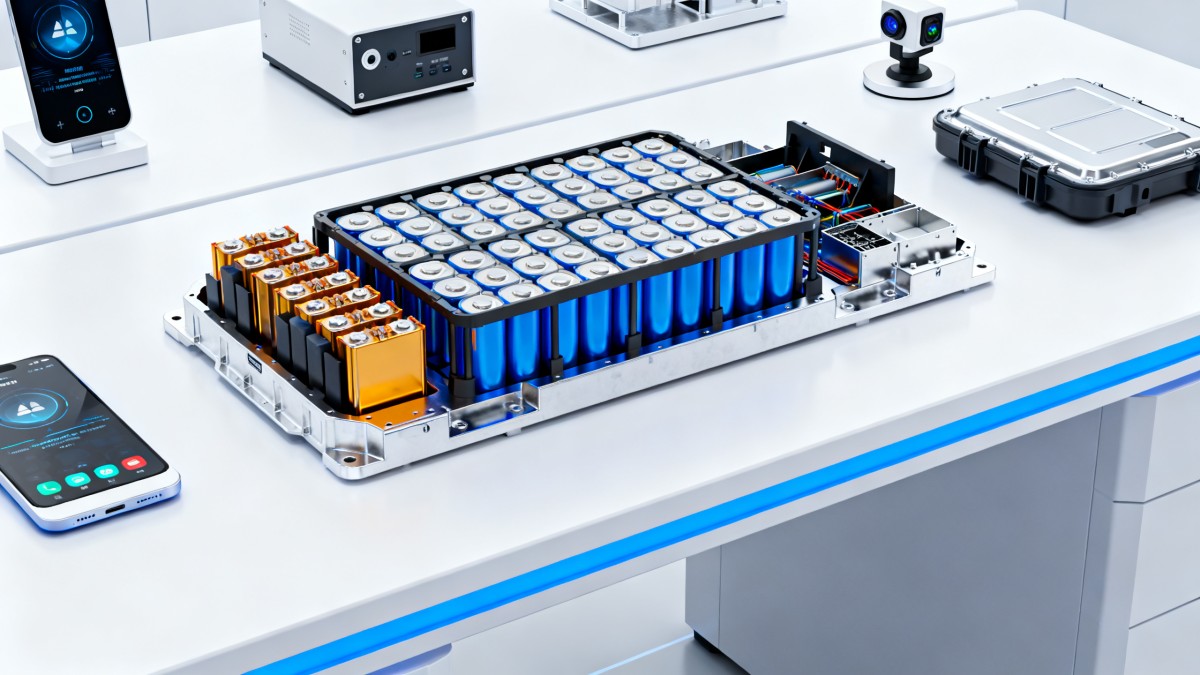
The core distinction is simple. A solid-state battery replaces the flammable liquid electrolyte found in conventional lithium-ion cells with a solid electrolyte, or with a hybrid structure that moves in that direction.
That change can unlock several benefits at once. It may support higher-voltage chemistries, reduce leakage risk, improve thermal stability, and enable cell architectures that use space more efficiently.
Still, not every announcement represents the same level of maturity. Some Solid-state battery breakthroughs involve materials science. Others focus on interface engineering, manufacturing methods, packaging design, or better performance under pressure and temperature variation.
In commercial assessment, the important question is not whether the chemistry is exciting. It is whether the full battery system can deliver repeatable performance under normal abuse, field cycling, transport rules, and cost constraints.
Why commercial interest is accelerating
Several market forces are converging. Devices are becoming thinner, smarter, and more power-hungry. At the same time, regulators and buyers expect better safety documentation, lower environmental risk, and more transparent sourcing.
This combination creates space for Solid-state battery breakthroughs to matter in practical business terms. A safer battery pack can reduce enclosure complexity. Longer life can improve service economics. Better temperature tolerance can expand deployment options.
These advantages matter across sectors that G-BCE tracks closely. Smart retail terminals, sensor networks, digital signage backups, portable commercial electronics, and premium consumer devices all depend on reliable energy storage that fits compact, branded, regulation-sensitive environments.
More importantly, battery performance now affects the total customer experience. Downtime, swelling, overheating concerns, replacement frequency, and shipping restrictions all influence how a product is perceived long after first installation.
The metrics that matter more than headline density
Energy density remains important, but it should not dominate the evaluation. Commercial adoption usually rises or falls on a broader set of operational metrics.
In other words, Solid-state battery breakthroughs become meaningful when they improve system-level economics, not only cell-level laboratory performance. That distinction is crucial when comparing vendor claims.
Where the toughest barriers still sit
The biggest obstacles are often hidden inside interfaces and production lines. Solid electrolytes may solve one safety problem while creating another challenge at the boundary between electrolyte and electrode.
Mechanical brittleness is another concern. Some solid materials perform well in controlled conditions but react poorly to vibration, expansion stress, or repeated temperature cycling. That matters in portable products and hardware exposed to long service hours.
Yield is equally decisive. A chemistry may look promising at pilot scale, yet still be difficult to coat, laminate, seal, or inspect consistently. For commercial buyers, this can translate into long lead times, variable quality, and delayed launches.
Then there is the certification pathway. Depending on product category, battery adoption may require updated testing for transport, electrical safety, thermal management, and end-product compliance. That process can outweigh the chemistry story.
Signals of stronger readiness
- Third-party validation under recognized safety and transport frameworks
- Stable performance data from multi-batch production runs
- Clear disclosure on operating temperature windows and degradation limits
- Documented compatibility with existing battery management systems
- Visible sourcing strategy for critical materials and processing equipment
Commercial use cases are broader than electric vehicles
Electric vehicles still drive public attention, but Solid-state battery breakthroughs have wider commercial relevance. Many opportunities sit in products where safety, compactness, and lifecycle predictability matter more than extreme range.
In smart retail technology, backup power for intelligent terminals, mobile checkout units, and edge devices benefits from safer form factors and longer service intervals. Less maintenance can be more valuable than maximum capacity.
In premium consumer goods, battery reliability influences brand trust. Slim products with strict thermal limits need storage systems that support design ambition without raising recall risk or shipping complexity.
In commercial interiors, energy storage also supports a growing ecosystem of wireless sensors, adaptive controls, illuminated fixtures, and modular equipment. Here, integration quality often matters more than chemistry novelty.
That cross-sector view aligns with G-BCE’s benchmarking role. The most useful comparisons connect battery innovation with real hardware environments, compliance expectations, and sourcing realities across multiple product classes.
How to evaluate claims in a practical way
A useful starting point is to separate breakthrough language from deployment language. Some vendors emphasize laboratory milestones. Others provide evidence tied to manufacturability, quality control, and end-use integration. The second group usually offers stronger commercial signals.
When reviewing Solid-state battery breakthroughs, it helps to structure the assessment around a few linked questions.
- Does the performance data come from coin cells, prototype packs, or volume-relevant formats?
- Are cycle tests conducted under realistic temperature, depth-of-discharge, and charging conditions?
- What redesign work is needed for enclosures, charging logic, and thermal management?
- How dependent is the solution on scarce materials, specialized tooling, or single-source processing?
- Can the supplier support documentation needed for UL, CE, transport, and product-level approvals?
This approach reduces the risk of overvaluing one specification. It also helps compare batteries against the operational context they will actually serve.
Cost, supply chain, and timing are part of the technology story
Commercial use is never only about chemistry. It is also about when a component can be sourced consistently, how quality is audited across regions, and whether total installed cost makes sense over the product lifecycle.
That is where broader ecosystem intelligence becomes useful. G-BCE’s cross-sector perspective reflects a simple reality: component decisions affect packaging, logistics, service models, compliance workflows, and the commercial experience of the final environment.
For example, a battery with superior intrinsic safety may reduce protective material usage, influence product dimensions, or simplify some shipping conditions. On the other hand, limited production maturity may offset those advantages through cost volatility or delivery uncertainty.
Timing also matters. Some Solid-state battery breakthroughs are best treated as near-term pilots for premium or specialized hardware. Others may be more suitable for a watch list until process maturity, standards alignment, and supplier depth improve.
A sensible next step for decision making
The most effective way to assess Solid-state battery breakthroughs is to build a comparison framework before choosing a chemistry story. Start with use conditions, safety thresholds, product architecture, and service expectations.
Then compare candidate solutions across readiness, certification burden, integration effort, and supply resilience. In many cases, the strongest option will be the one that balances performance ambition with fewer hidden adoption risks.
For organizations tracking modernization across commercial hardware and consumer ecosystems, battery evaluation should sit inside a wider benchmarking process. That means looking at standards, sourcing geography, end-user experience, and lifecycle economics together.
Solid-state battery breakthroughs deserve attention, but practical value comes from disciplined screening. A clear matrix for safety, manufacturability, compliance, and application fit will reveal which advances are ready to move from promising news to reliable commercial use.
News Recommendations
 What consumer packaging USA importers need to verify before ordering
![51a6ab95581761cc26f4318be6520c15]()
Aris Katos
Future of Carbide Coatings
 How commercial spaces interiors shape customer dwell time
![51a6ab95581761cc26f4318be6520c15]()
Aris Katos
Future of Carbide Coatings
 How LED commercial lighting design reduces glare in retail spaces
![51a6ab95581761cc26f4318be6520c15]()
Aris Katos
Future of Carbide Coatings
 How industrial technology information improves RFID inventory accuracy
![51a6ab95581761cc26f4318be6520c15]()
Aris Katos
Future of Carbide Coatings
 When drip garden watering systems make more sense than sprinklers
![51a6ab95581761cc26f4318be6520c15]()
Aris Katos
Future of Carbide Coatings
 When category comparison improves sourcing for industrial applications
![51a6ab95581761cc26f4318be6520c15]()
Aris Katos
Future of Carbide Coatings
 Industrial application guidance for selecting the right LED lighting
![51a6ab95581761cc26f4318be6520c15]()
Aris Katos
Future of Carbide Coatings
 Which commercial architecture standards apply to European retail fit-outs?
![51a6ab95581761cc26f4318be6520c15]()
Aris Katos
Future of Carbide Coatings
 How to verify FDA requirements for maternity care products
![51a6ab95581761cc26f4318be6520c15]()
Aris Katos
Future of Carbide Coatings
 How to verify BPA-free claims for food-contact products
![51a6ab95581761cc26f4318be6520c15]()
Aris Katos
Future of Carbide Coatings
 When does a European wholesale supplier suit modular office projects?
![51a6ab95581761cc26f4318be6520c15]()
Aris Katos
Future of Carbide Coatings
 When consumer ecosystem solutions improve the in-store shopping journey
![51a6ab95581761cc26f4318be6520c15]()
Aris Katos
Future of Carbide Coatings
 How a commercial developers network can reduce site selection risk
![51a6ab95581761cc26f4318be6520c15]()
Aris Katos
Future of Carbide Coatings
 How clear purchasing specifications prevent costly supplier deviations
![51a6ab95581761cc26f4318be6520c15]()
Aris Katos
Future of Carbide Coatings
 What an ISTA drop test lab checks before your packaging ships
![51a6ab95581761cc26f4318be6520c15]()
Aris Katos
Future of Carbide Coatings
 Which commercial furniture standards apply to workplace seating?
![51a6ab95581761cc26f4318be6520c15]()
Aris Katos
Future of Carbide Coatings
 How to evaluate smart lighting module OEM compatibility before sampling
![51a6ab95581761cc26f4318be6520c15]()
Aris Katos
Future of Carbide Coatings
 How to assess whether sustainable technology delivers real impact
![51a6ab95581761cc26f4318be6520c15]()
Aris Katos
Future of Carbide Coatings
 How to assess an OEM supplier’s quality control before ordering
![51a6ab95581761cc26f4318be6520c15]()
Aris Katos
Future of Carbide Coatings
 How consumer ecosystem solutions data can improve retail personalization
![51a6ab95581761cc26f4318be6520c15]()
Aris Katos
Future of Carbide Coatings
 When does consumer packaging design justify a higher product price?
![51a6ab95581761cc26f4318be6520c15]()
Aris Katos
Future of Carbide Coatings
 Supermarket Fixture Installation: Planning Layouts, Wiring, and Handover
![51a6ab95581761cc26f4318be6520c15]()
Aris Katos
Future of Carbide Coatings
 Automated Lighting and Smart Lighting Control in Bergerac: Key Project Considerations
![51a6ab95581761cc26f4318be6520c15]()
Aris Katos
Future of Carbide Coatings
 Segment Streetlight Controllers: Choosing Control Modes for Urban Roads
![51a6ab95581761cc26f4318be6520c15]()
Aris Katos
Future of Carbide Coatings
 IEC 62471-2 Explained: How to Assess Photobiological Risks in LED Lighting
![51a6ab95581761cc26f4318be6520c15]()
Aris Katos
Future of Carbide Coatings
 Food Grade Packaging Requirements by Product Type, Temperature, and Contact Risk
![51a6ab95581761cc26f4318be6520c15]()
Aris Katos
Future of Carbide Coatings
 Food Packaging Compliance Checklist: Tests, Records, and Labeling Before Shipment
![51a6ab95581761cc26f4318be6520c15]()
Aris Katos
Future of Carbide Coatings
 NSF Food Packaging Standards: When Certification Matters for Commercial Food Use
![51a6ab95581761cc26f4318be6520c15]()
Aris Katos
Future of Carbide Coatings
 FDA Food Grade Compliance: Which Materials and Documents Do Buyers Need?
![51a6ab95581761cc26f4318be6520c15]()
Aris Katos
Future of Carbide Coatings
 What Should a Food Grade Declaration Include for Packaging Compliance?
![51a6ab95581761cc26f4318be6520c15]()
Aris Katos
Future of Carbide Coatings
 Housewares Importing: How to Evaluate Suppliers, Costs, and Compliance Risks
![51a6ab95581761cc26f4318be6520c15]()
Aris Katos
Future of Carbide Coatings
 Why Freeze-Dried Fruit Ingredients Lose Crispness—and How to Prevent It
![51a6ab95581761cc26f4318be6520c15]()
Aris Katos
Future of Carbide Coatings
 What industry veterans look for before choosing a new supplier
![51a6ab95581761cc26f4318be6520c15]()
Aris Katos
Future of Carbide Coatings
 How material fatigue can shorten the service life of retail shelving
![51a6ab95581761cc26f4318be6520c15]()
Aris Katos
Future of Carbide Coatings
 What makes a global sourcing platform reliable for supplier verification?
![51a6ab95581761cc26f4318be6520c15]()
Aris Katos
Future of Carbide Coatings
 When are double platinum spark plugs a better choice than iridium?
![51a6ab95581761cc26f4318be6520c15]()
Aris Katos
Future of Carbide Coatings
 How to assess a POS terminal manufacturer in Europe for long-term support
![51a6ab95581761cc26f4318be6520c15]()
Aris Katos
Future of Carbide Coatings
 How data transparency in retail helps prevent inventory discrepancies
![51a6ab95581761cc26f4318be6520c15]()
Aris Katos
Future of Carbide Coatings
 What makes a product comparison guide actually useful for buying decisions
![51a6ab95581761cc26f4318be6520c15]()
Aris Katos
Future of Carbide Coatings