ADIC Screens 112 Chinese Robotics Firms Amid Gulf Interest in Smart Retail Hardware
Time
Click Count
On May 29, 2026, at BEYOND Expo 2026, the Abu Dhabi Investment Council (ADIC) announced it had preliminarily identified 112 Chinese robotics companies — with a strategic focus on smart retail shelves and self-service kiosks for hospitality and transportation venues. This development signals growing Gulf sovereign capital interest in China’s intelligent commercial hardware supply chain, particularly in categories enabling automated replenishment, RFID-based inventory tracking, and multilingual passenger guidance. Retail technology integrators, POS hardware manufacturers, and supply chain service providers serving GCC markets should monitor implications for localization, certification, and channel partnerships.
Event Overview
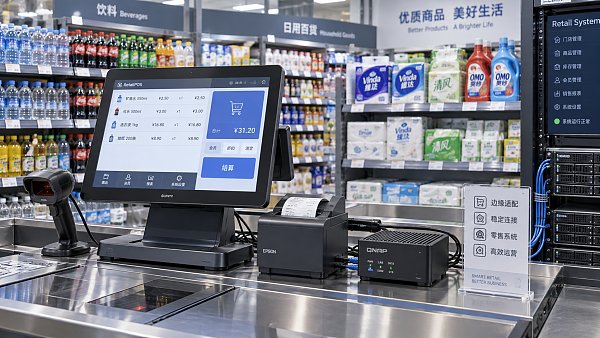
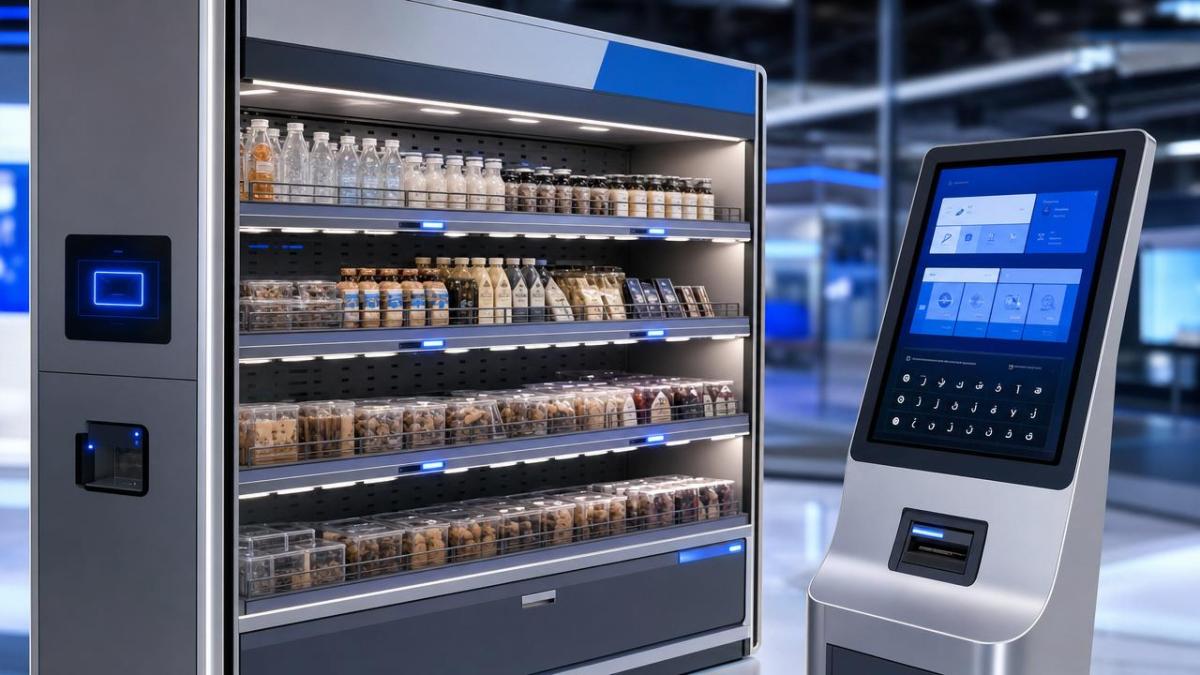
On May 29, 2026, during BEYOND Expo 2026, the Abu Dhabi Investment Council (ADIC) disclosed that it had completed an initial screening of 112 Chinese robotics enterprises. ADIC stated it is now shortlisting approximately 10 firms for potential equity investment. Among the highlighted technologies were intelligent retail shelf systems integrating RFID recognition and automated restocking functionality, as well as self-service POS and wayfinding terminals designed for hotels and airports. No further details regarding investment criteria, timelines, or due diligence status have been publicly released.
Industries Affected
Commercial Hardware Manufacturers
Manufacturers producing smart retail shelves, self-service kiosks, or embedded modules (e.g., RFID readers, touch displays, thermal printers) are directly affected. ADIC’s focus suggests increased demand visibility for products meeting Gulf-specific requirements — including Arabic language UI, local payment integration (e.g., STC Pay, Apple Pay UAE), and compliance with UAE’s ESMA and TDRA regulations. Impact may manifest in RFP volume, pre-certification inquiries, and requests for regional firmware variants.
Systems Integrators & Solution Providers
Firms deploying turnkey retail automation or airport/hotel digital concierge solutions face shifting client expectations. Gulf-based operators may prioritize vendors with demonstrated ADIC engagement or alignment with UAE’s National Strategy for Artificial Intelligence. Impact includes longer sales cycles (to accommodate localization validation), higher upfront documentation requirements, and pressure to co-develop GCC-specific use cases.
Supply Chain & Localization Service Providers
Logistics partners, testing labs accredited by UAE authorities (e.g., ESMA-certified EMC/EMI labs), and Arabic-language localization agencies may see rising inbound inquiries. The signal implies near-term demand for services supporting GCC market entry — such as UAE Type Approval support, GCC Standardization Organization (GSO) conformity assessments, and Arabic UI/UX adaptation — especially for hardware intended for public-facing environments.
What Relevant Companies or Practitioners Should Monitor and Do Now
Track official ADIC communications and BEYOND Expo follow-up announcements
ADIC has not published a list of the 112 firms or clarified whether screening was open-application or invitation-only. Monitoring ADIC’s official channels and BEYOND Expo’s post-event reporting will clarify selection methodology and whether future outreach is planned.
Assess readiness for GCC-specific technical and regulatory requirements
Current product documentation, firmware architecture, and hardware certifications should be audited against UAE ESMA, GSO, and TDRA standards — particularly for devices involving wireless communication (e.g., Bluetooth/Wi-Fi modules), power supplies, and user interface accessibility. Prioritizing ESMA Type Approval for high-potential SKUs may shorten time-to-market if selected for pilot deployment.
Distinguish between strategic signaling and near-term procurement impact
Analysis shows this initiative functions primarily as a strategic pipeline scan rather than an immediate tender process. Equity screening does not guarantee purchase orders or joint ventures. Companies should avoid reallocating core R&D or production capacity solely based on this announcement, but may allocate modest resources to prepare localized demo units or Arabic-language technical collateral.
Prepare for early-stage dialogue with Gulf-based channel partners
Observably, ADIC’s involvement may accelerate interest from UAE-based system integrators and distributors seeking to align with sovereign-backed initiatives. Proactively engaging existing or prospective GCC partners on localization roadmaps — especially firmware update mechanisms and Arabic content maintenance — strengthens positioning ahead of formal partnership discussions.
Editorial Perspective / Industry Observation
This announcement is best understood as a strategic signal — not an operational milestone. From an industry perspective, it reflects growing institutional confidence in China’s capability to deliver mission-critical commercial robotics hardware, particularly where reliability, multilingual UX, and rapid iteration matter more than pure AI model sophistication. It does not indicate imminent large-scale procurement, nor does it replace existing GCC market-entry pathways. However, it elevates the visibility of certain subsegments — notably RFID-enabled retail infrastructure and regulated public-space kiosks — and may catalyze follow-on activity from other Gulf sovereign funds or national industrial programs. Continued observation is warranted over the next 6–12 months for evidence of actual investments, pilot deployments, or policy alignment (e.g., UAE’s AI Strategy 2031 referencing ‘smart commerce infrastructure’).
Concluding, this event underscores a maturing phase in China-GCC technology collaboration: moving beyond consumer electronics trade toward targeted, infrastructure-grade hardware partnerships. For stakeholders, it is less a trigger for immediate action and more a marker of evolving long-term opportunity — one that rewards preparation over reaction, and specificity over generalization. Current interpretation should emphasize measured responsiveness: validating readiness, clarifying scope, and aligning with verified market gateways — not speculative expansion.
Source: Official announcement by Abu Dhabi Investment Council (ADIC) at BEYOND Expo 2026, May 29, 2026.
Note: The identities of the 112 screened companies, investment terms, and timeline for shortlist finalization remain unconfirmed and are subject to ongoing observation.
News Recommendations
 What records are needed for an ISO 9001 furniture factory audit?
![51a6ab95581761cc26f4318be6520c15]()
Aris Katos
Future of Carbide Coatings
 How to choose AI marketing tools that work with your existing CRM
![51a6ab95581761cc26f4318be6520c15]()
Aris Katos
Future of Carbide Coatings
 Do freight costs erase savings when buying retail fixtures wholesale?
![51a6ab95581761cc26f4318be6520c15]()
Aris Katos
Future of Carbide Coatings
 Can smart retail IT solutions for CPG work with legacy POS systems?
![51a6ab95581761cc26f4318be6520c15]()
Aris Katos
Future of Carbide Coatings
 What permit approvals belong in a commercial fitout planning checklist?
![51a6ab95581761cc26f4318be6520c15]()
Aris Katos
Future of Carbide Coatings
 How Does Commercial Design Differ from Interior Decoration?
![51a6ab95581761cc26f4318be6520c15]()
Aris Katos
Future of Carbide Coatings
 How Long Does It Take to Verify a Commercial Furniture Supplier?
![51a6ab95581761cc26f4318be6520c15]()
Aris Katos
Future of Carbide Coatings
 How to verify compostability claims from a bubble mailer manufacturer
![51a6ab95581761cc26f4318be6520c15]()
Aris Katos
Future of Carbide Coatings
 Will commercial smart infrastructure solutions work with legacy systems?
![51a6ab95581761cc26f4318be6520c15]()
Aris Katos
Future of Carbide Coatings
 How to verify a preschool furniture manufacturer's safety standards
![51a6ab95581761cc26f4318be6520c15]()
Aris Katos
Future of Carbide Coatings
 A technical comparison of semiconductor processes for power devices
![51a6ab95581761cc26f4318be6520c15]()
Aris Katos
Future of Carbide Coatings
 How to verify that a BIFMA ergonomic chair meets the standard
![51a6ab95581761cc26f4318be6520c15]()
Aris Katos
Future of Carbide Coatings
 How to use a CRI value chart when choosing LED lighting
![51a6ab95581761cc26f4318be6520c15]()
Aris Katos
Future of Carbide Coatings
 How to compare hotel aroma diffuser wholesale options by coverage area
![51a6ab95581761cc26f4318be6520c15]()
Aris Katos
Future of Carbide Coatings
 How to prevent O-rings and seals from failing in food equipment
![51a6ab95581761cc26f4318be6520c15]()
Aris Katos
Future of Carbide Coatings
 How to compare commercial linear light wholesale quotes accurately
![51a6ab95581761cc26f4318be6520c15]()
Aris Katos
Future of Carbide Coatings
 How to verify international standards compliance for Middle East exports
![51a6ab95581761cc26f4318be6520c15]()
Aris Katos
Future of Carbide Coatings
 How to select laboratory instruments for reproducible test results
![51a6ab95581761cc26f4318be6520c15]()
Aris Katos
Future of Carbide Coatings
 When does a sheet metal prototype reveal design flaws early?
![51a6ab95581761cc26f4318be6520c15]()
Aris Katos
Future of Carbide Coatings
 When PE air column bags reduce damage in e-commerce fulfillment
![51a6ab95581761cc26f4318be6520c15]()
Aris Katos
Future of Carbide Coatings
 How energy-efficient design reduces operating costs in retail lighting
![51a6ab95581761cc26f4318be6520c15]()
Aris Katos
Future of Carbide Coatings
 When commercial aluminum storefronts make sense for a retail renovation
![51a6ab95581761cc26f4318be6520c15]()
Aris Katos
Future of Carbide Coatings
 What makes LED lights durable in high-use commercial spaces?
![51a6ab95581761cc26f4318be6520c15]()
Aris Katos
Future of Carbide Coatings
 Which industry categories offer the strongest export potential in Latin America?
![51a6ab95581761cc26f4318be6520c15]()
Aris Katos
Future of Carbide Coatings
 How to choose an ultra bright waterproof window display for storefronts
![51a6ab95581761cc26f4318be6520c15]()
Aris Katos
Future of Carbide Coatings
 How to verify suppliers on a trade portal for global sourcing
![51a6ab95581761cc26f4318be6520c15]()
Aris Katos
Future of Carbide Coatings
 How RoHS requirements should be stated in product specifications
![51a6ab95581761cc26f4318be6520c15]()
Aris Katos
Future of Carbide Coatings
 What affects the lead time for custom retail counter displays?
![51a6ab95581761cc26f4318be6520c15]()
Aris Katos
Future of Carbide Coatings
 What consumer packaging USA importers need to verify before ordering
![51a6ab95581761cc26f4318be6520c15]()
Aris Katos
Future of Carbide Coatings
 How commercial spaces interiors shape customer dwell time
![51a6ab95581761cc26f4318be6520c15]()
Aris Katos
Future of Carbide Coatings
 How LED commercial lighting design reduces glare in retail spaces
![51a6ab95581761cc26f4318be6520c15]()
Aris Katos
Future of Carbide Coatings
 How industrial technology information improves RFID inventory accuracy
![51a6ab95581761cc26f4318be6520c15]()
Aris Katos
Future of Carbide Coatings
 When drip garden watering systems make more sense than sprinklers
![51a6ab95581761cc26f4318be6520c15]()
Aris Katos
Future of Carbide Coatings
 When category comparison improves sourcing for industrial applications
![51a6ab95581761cc26f4318be6520c15]()
Aris Katos
Future of Carbide Coatings
 Industrial application guidance for selecting the right LED lighting
![51a6ab95581761cc26f4318be6520c15]()
Aris Katos
Future of Carbide Coatings
 Which commercial architecture standards apply to European retail fit-outs?
![51a6ab95581761cc26f4318be6520c15]()
Aris Katos
Future of Carbide Coatings
 How to verify FDA requirements for maternity care products
![51a6ab95581761cc26f4318be6520c15]()
Aris Katos
Future of Carbide Coatings
 How to verify BPA-free claims for food-contact products
![51a6ab95581761cc26f4318be6520c15]()
Aris Katos
Future of Carbide Coatings
 When does a European wholesale supplier suit modular office projects?
![51a6ab95581761cc26f4318be6520c15]()
Aris Katos
Future of Carbide Coatings