Procurement Cost Control: 7 Risks Hidden in Low Quotes
Time
Click Count
Why does the lowest procurement quote deserve a second look?

In procurement, a low quote often appears to protect budget discipline. On paper, the math looks simple. In practice, the cheapest offer can move risk into operations, compliance, and replacement costs.
That matters across commercial interiors, smart retail hardware, lighting systems, consumer packaging, and fixture programs. A small pricing gap at award stage can become a much larger cost gap after installation or rollout.
The more complex the supply chain, the less useful unit price becomes as a standalone decision tool. A quote needs context: standards, durability, lead time, warranty, installation risk, and supplier execution history.
This is why procurement reviews increasingly rely on benchmarking, not just price comparison. Platforms such as G-BCE make that easier by connecting sourcing decisions with technical standards, commercial performance, and cross-sector supplier intelligence.
So what usually hides behind a very low quote? The answer is rarely one issue. More often, it is a cluster of seven risks that look manageable individually but become expensive together.
What are the seven risks most often hidden in low quotes?
Some risks appear before the contract is signed. Others only surface during delivery, installation, or store operation. That delay is exactly why low-price procurement can pass approval too easily.
The most common hidden risks include:
- Material downgrades that reduce service life or finish consistency.
- Compliance gaps involving UL, CE, BIFMA, fire ratings, or local packaging rules.
- Understated logistics and tooling costs that appear later as change orders.
- Longer lead times caused by weak planning or unstable upstream sourcing.
- Higher defect rates that increase inspection, rework, and return handling.
- Limited after-sales support, spare parts, or warranty response capacity.
- Poor system compatibility, especially in smart retail and multi-vendor environments.
Notice that none of these risks are theoretical. In commercial projects, they affect opening schedules, asset uptime, visual consistency, and audit exposure. Procurement savings disappear quickly when a rollout stalls.
How can a low quote increase total cost instead of reducing it?
The key issue is total cost of ownership. A cheaper line item may trigger higher costs in transport, installation, maintenance, energy use, replacement, or field service.
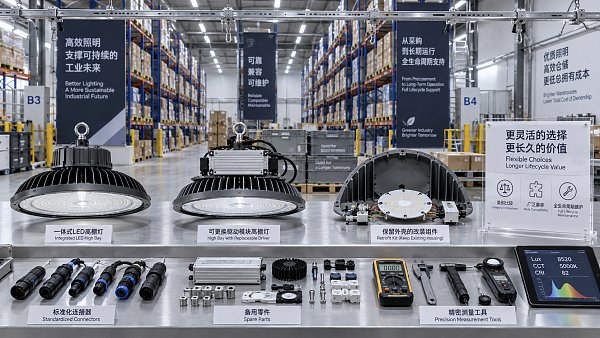
Take commercial lighting as an example. A lower fixture price may hide shorter driver life, weaker lumen stability, or incomplete certification. The initial procurement looks efficient, but operating cost rises through failures and labor.
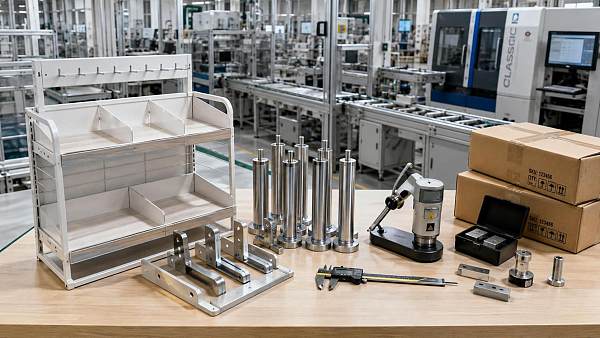
The same pattern appears in store fixtures and furniture. If tolerances are inconsistent, installers spend more time adjusting parts. If coatings fail early, visual quality drops and replacement cycles shorten.
Packaging procurement works similarly. A lower-cost material may save cents per unit while increasing damage rates, returns, or sustainability nonconformance. The cheaper option is no longer cheaper once downstream losses are counted.
A practical procurement review asks one simple question: what will this quote cost after six, twelve, and twenty-four months? That time-based view often changes the decision.
A quick screening table for low-price offers
Before approving a quote, it helps to compare the visible saving against likely hidden exposure. A short decision table can reveal where procurement risk is accumulating.
Where do finance-focused approvals usually miss procurement risk?
The most common blind spot is treating all quotes as technically equivalent. They rarely are. Two suppliers may appear to offer the same item while using different structures, finishes, control systems, or testing methods.
Another weak point is document depth. If the approval pack includes only price, lead time, and a product image, the decision is being made with limited procurement intelligence.
A stronger review usually checks five things together:
- Whether the technical specification is fully matched.
- Whether certifications are current and project-relevant.
- Whether lifecycle cost is modeled beyond purchase price.
- Whether supplier performance has been benchmarked externally.
- Whether contingency cost has been estimated realistically.
This is where cross-sector benchmarking becomes valuable. G-BCE’s intelligence model is useful because it compares hardware, materials, and supply chain performance across commercial categories rather than reviewing price in isolation.
For procurement teams handling store development, technology upgrades, or packaging transitions, that wider view reduces the chance of approving a quote that only looks efficient in a spreadsheet.
How do you tell a competitive quote from a risky one?
A competitive quote is not simply low. It is transparent. The supplier can explain why the price works, what assumptions sit behind it, and how quality is maintained at that level.
In real procurement practice, a reliable offer usually shows consistency across specification, compliance, manufacturing capability, and service support. The price may still be attractive, but it does not depend on hidden omissions.
Useful questions include:
- What exactly is excluded from the quote?
- Which test reports apply to this model and production batch?
- How stable are the supplier’s raw material sources?
- What failure rate was recorded on similar projects?
- How quickly can replacements ship if defects appear?
If the answers are vague, procurement risk is higher than the quote suggests. Low visibility often signals low control. That is especially risky when projects span countries, standards, and multiple installation partners.
What should be checked before approving a low procurement quote?
A good approval process does not reject low pricing automatically. It tests whether the price is sustainable, compliant, and operationally workable. That distinction protects both budget and delivery reliability.
Before sign-off, it helps to confirm the following:
- Full bill of materials and any approved substitutions.
- Test reports, certifications, and market-specific requirements.
- Packaging method, shipping terms, and damage control measures.
- Pilot sample results or reference project evidence.
- Warranty scope, spare parts plan, and escalation path.
- Total landed cost, including duties, installation, and replacement assumptions.
This review is especially important when procurement spans furniture, digital hardware, signage, and sustainable packaging at the same time. One weak supplier decision can disrupt the whole commercial ecosystem.
The smarter approach is not to chase the lowest number. It is to understand why a number is low, whether the supplier can prove performance, and how much hidden cost remains outside the quote.
So what is the practical next step?
Low quotes are not the problem by themselves. Unexamined low quotes are. Procurement decisions improve when price is reviewed alongside technical fit, compliance evidence, rollout risk, and lifecycle cost.
A practical next step is to build a simple approval checklist for every major procurement category. Use it to compare quotes against standards, lead time realism, support capacity, and total cost exposure.
Where categories are technically demanding, external benchmarking adds clarity. G-BCE is relevant here because it links Asian manufacturing capability with international commercial requirements, helping sourcing decisions stay measurable rather than speculative.
If a quote looks unusually attractive, pause before approving it. Ask what has been removed, deferred, downgraded, or left untested. In procurement, that short pause often saves the larger correction later.
News Recommendations
 What consumer packaging USA importers need to verify before ordering
![51a6ab95581761cc26f4318be6520c15]()
Aris Katos
Future of Carbide Coatings
 How commercial spaces interiors shape customer dwell time
![51a6ab95581761cc26f4318be6520c15]()
Aris Katos
Future of Carbide Coatings
 How LED commercial lighting design reduces glare in retail spaces
![51a6ab95581761cc26f4318be6520c15]()
Aris Katos
Future of Carbide Coatings
 How industrial technology information improves RFID inventory accuracy
![51a6ab95581761cc26f4318be6520c15]()
Aris Katos
Future of Carbide Coatings
 When drip garden watering systems make more sense than sprinklers
![51a6ab95581761cc26f4318be6520c15]()
Aris Katos
Future of Carbide Coatings
 When category comparison improves sourcing for industrial applications
![51a6ab95581761cc26f4318be6520c15]()
Aris Katos
Future of Carbide Coatings
 Industrial application guidance for selecting the right LED lighting
![51a6ab95581761cc26f4318be6520c15]()
Aris Katos
Future of Carbide Coatings
 Which commercial architecture standards apply to European retail fit-outs?
![51a6ab95581761cc26f4318be6520c15]()
Aris Katos
Future of Carbide Coatings
 How to verify FDA requirements for maternity care products
![51a6ab95581761cc26f4318be6520c15]()
Aris Katos
Future of Carbide Coatings
 How to verify BPA-free claims for food-contact products
![51a6ab95581761cc26f4318be6520c15]()
Aris Katos
Future of Carbide Coatings
 When does a European wholesale supplier suit modular office projects?
![51a6ab95581761cc26f4318be6520c15]()
Aris Katos
Future of Carbide Coatings
 When consumer ecosystem solutions improve the in-store shopping journey
![51a6ab95581761cc26f4318be6520c15]()
Aris Katos
Future of Carbide Coatings
 How a commercial developers network can reduce site selection risk
![51a6ab95581761cc26f4318be6520c15]()
Aris Katos
Future of Carbide Coatings
 How clear purchasing specifications prevent costly supplier deviations
![51a6ab95581761cc26f4318be6520c15]()
Aris Katos
Future of Carbide Coatings
 What an ISTA drop test lab checks before your packaging ships
![51a6ab95581761cc26f4318be6520c15]()
Aris Katos
Future of Carbide Coatings
 Which commercial furniture standards apply to workplace seating?
![51a6ab95581761cc26f4318be6520c15]()
Aris Katos
Future of Carbide Coatings
 How to evaluate smart lighting module OEM compatibility before sampling
![51a6ab95581761cc26f4318be6520c15]()
Aris Katos
Future of Carbide Coatings
 How to assess whether sustainable technology delivers real impact
![51a6ab95581761cc26f4318be6520c15]()
Aris Katos
Future of Carbide Coatings
 How to assess an OEM supplier’s quality control before ordering
![51a6ab95581761cc26f4318be6520c15]()
Aris Katos
Future of Carbide Coatings
 How consumer ecosystem solutions data can improve retail personalization
![51a6ab95581761cc26f4318be6520c15]()
Aris Katos
Future of Carbide Coatings
 When does consumer packaging design justify a higher product price?
![51a6ab95581761cc26f4318be6520c15]()
Aris Katos
Future of Carbide Coatings
 Supermarket Fixture Installation: Planning Layouts, Wiring, and Handover
![51a6ab95581761cc26f4318be6520c15]()
Aris Katos
Future of Carbide Coatings
 Automated Lighting and Smart Lighting Control in Bergerac: Key Project Considerations
![51a6ab95581761cc26f4318be6520c15]()
Aris Katos
Future of Carbide Coatings
 Segment Streetlight Controllers: Choosing Control Modes for Urban Roads
![51a6ab95581761cc26f4318be6520c15]()
Aris Katos
Future of Carbide Coatings
 IEC 62471-2 Explained: How to Assess Photobiological Risks in LED Lighting
![51a6ab95581761cc26f4318be6520c15]()
Aris Katos
Future of Carbide Coatings
 Food Grade Packaging Requirements by Product Type, Temperature, and Contact Risk
![51a6ab95581761cc26f4318be6520c15]()
Aris Katos
Future of Carbide Coatings
 Food Packaging Compliance Checklist: Tests, Records, and Labeling Before Shipment
![51a6ab95581761cc26f4318be6520c15]()
Aris Katos
Future of Carbide Coatings
 NSF Food Packaging Standards: When Certification Matters for Commercial Food Use
![51a6ab95581761cc26f4318be6520c15]()
Aris Katos
Future of Carbide Coatings
 FDA Food Grade Compliance: Which Materials and Documents Do Buyers Need?
![51a6ab95581761cc26f4318be6520c15]()
Aris Katos
Future of Carbide Coatings
 What Should a Food Grade Declaration Include for Packaging Compliance?
![51a6ab95581761cc26f4318be6520c15]()
Aris Katos
Future of Carbide Coatings
 Housewares Importing: How to Evaluate Suppliers, Costs, and Compliance Risks
![51a6ab95581761cc26f4318be6520c15]()
Aris Katos
Future of Carbide Coatings
 Why Freeze-Dried Fruit Ingredients Lose Crispness—and How to Prevent It
![51a6ab95581761cc26f4318be6520c15]()
Aris Katos
Future of Carbide Coatings
 What industry veterans look for before choosing a new supplier
![51a6ab95581761cc26f4318be6520c15]()
Aris Katos
Future of Carbide Coatings
 How material fatigue can shorten the service life of retail shelving
![51a6ab95581761cc26f4318be6520c15]()
Aris Katos
Future of Carbide Coatings
 What makes a global sourcing platform reliable for supplier verification?
![51a6ab95581761cc26f4318be6520c15]()
Aris Katos
Future of Carbide Coatings
 When are double platinum spark plugs a better choice than iridium?
![51a6ab95581761cc26f4318be6520c15]()
Aris Katos
Future of Carbide Coatings
 How to assess a POS terminal manufacturer in Europe for long-term support
![51a6ab95581761cc26f4318be6520c15]()
Aris Katos
Future of Carbide Coatings
 How data transparency in retail helps prevent inventory discrepancies
![51a6ab95581761cc26f4318be6520c15]()
Aris Katos
Future of Carbide Coatings
 What makes a product comparison guide actually useful for buying decisions
![51a6ab95581761cc26f4318be6520c15]()
Aris Katos
Future of Carbide Coatings