
A Commercial Developers Guide to Site Risk
Time
Click Count
For project managers and engineering leads, this commercial developers guide to site risk explains how hidden threats shape cost, delivery, compliance, and asset durability.
In modern commercial environments, site risk is no longer limited to soil reports or structural loading.
It now includes supply chain reliability, digital infrastructure, safety performance, environmental exposure, and product standard alignment.
A practical commercial developers guide helps teams identify weak points early, compare options consistently, and protect long-term operating value.
Across retail, office, hospitality, mixed-use, and logistics-adjacent projects, site risk assessment supports resilient and future-ready decision making.
Site Risk in Commercial Development
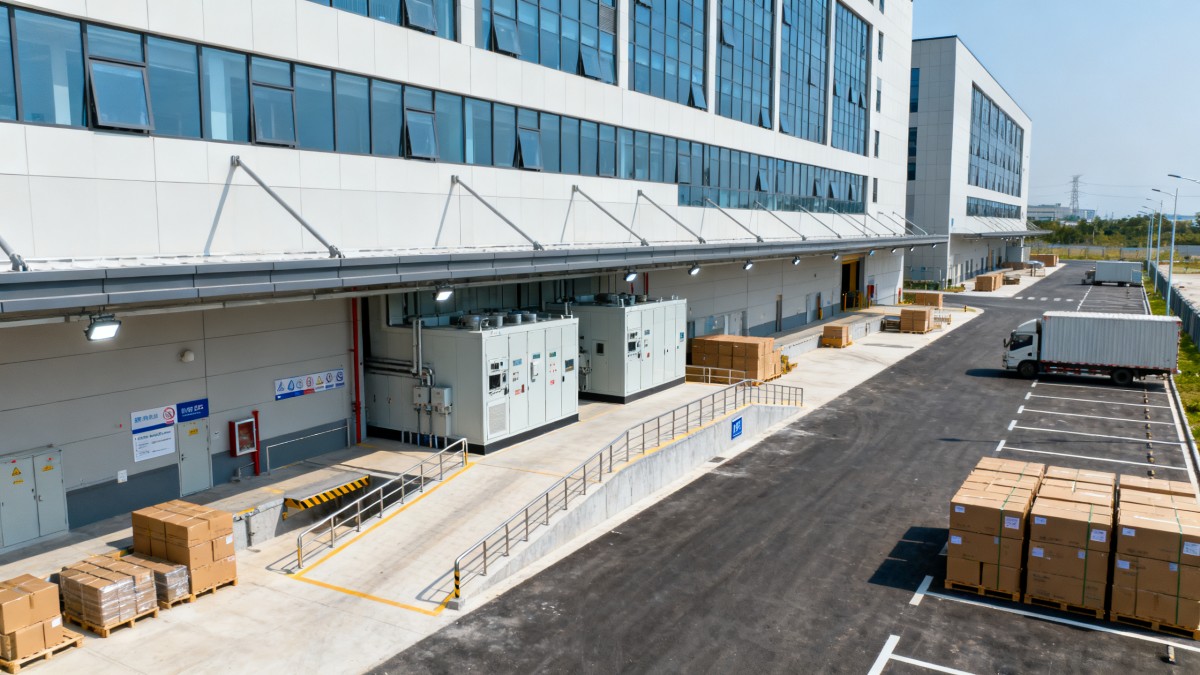
In this commercial developers guide, site risk means any condition that can reduce project certainty or operational performance.
Some risks are visible during surveys, such as access constraints, drainage problems, utility conflicts, or weak surrounding infrastructure.
Others stay hidden until procurement, commissioning, or occupancy, when corrections become slower and far more expensive.
These risks often affect several systems at once, including fixtures, lighting, signage, smart devices, packaging flows, and maintenance routines.
A strong commercial developers guide therefore treats site risk as a cross-functional issue rather than a single engineering checklist.
The goal is not to eliminate uncertainty completely.
The goal is to identify priority exposure, rank consequences, and build control measures before schedules lock in.
Core Risk Categories
- Physical risk: ground conditions, moisture, traffic access, loading paths, vibration, and weather exposure.
- Compliance risk: zoning gaps, fire code conflicts, accessibility issues, and certification mismatches.
- Material risk: durability shortfalls, finish failures, corrosion, poor ergonomics, and low-performance hardware.
- Technology risk: unstable connectivity, incompatible systems, weak data security, and poor device integration.
- Supply risk: lead time volatility, inconsistent quality, missing documentation, and single-source dependency.
- Operational risk: inefficient servicing, unsafe user flows, high energy loads, and maintenance complexity.
Industry Signals Shaping Risk Priorities
Commercial site risk is changing because commercial spaces now combine physical performance with digital experience and sustainability targets.
That shift has expanded the number of failure points that must be reviewed during planning and specification.
The commercial developers guide approach is most useful when it reflects current market signals, not only legacy construction habits.
These signals show why a commercial developers guide must connect design intent with product evidence and site-specific constraints.
Why Early Risk Mapping Creates Business Value
Site risk review is often treated as defensive work, yet its strongest contribution is better commercial performance.
When risks are mapped early, teams can reduce rework, avoid specification drift, and improve coordination between construction and operations.
This commercial developers guide emphasizes value across the full asset lifecycle, not only the delivery phase.
Business Impacts of Better Site Risk Control
- More reliable budget forecasting through fewer late design changes.
- Faster approvals because documentation matches code and certification expectations.
- Longer service life for fixtures, finishes, devices, and lighting components.
- Safer user experience with improved access, circulation, and emergency readiness.
- Lower operational friction through maintainable layouts and compatible systems.
- Stronger brand consistency across multiple sites and regional rollouts.
For mixed portfolios, the commercial developers guide method also supports benchmarking between locations.
That makes future projects easier to standardize without ignoring local constraints.
Typical Risk Scenarios Across Commercial Environments
Not every project faces the same risk profile.
A useful commercial developers guide translates general principles into common commercial scenarios.
Across these settings, risk grows when design ambition exceeds verified site capability.
That is why a commercial developers guide should connect concept planning with technical validation.
A Practical Framework for Site Risk Assessment
The most effective approach is structured, evidence-based, and repeatable across different regions and suppliers.
This commercial developers guide recommends six working stages.
- Define site objectives, performance thresholds, and non-negotiable standards.
- Collect baseline site data, including utilities, climate, access, and regulatory conditions.
- Map system dependencies across furniture, lighting, signage, devices, and packaging movement.
- Score risks by likelihood, cost impact, operational impact, and recovery difficulty.
- Assign controls, owners, documentation needs, and trigger dates.
- Review the register at design freeze, procurement, installation, and handover.
Questions That Improve Assessment Quality
- Can each specified product prove performance under actual site conditions?
- Are international standards supported by current documentation, not assumptions?
- What happens if one critical supplier misses a shipping window?
- How easy is replacement, maintenance, or software updating after occupancy?
- Will user traffic patterns create stress points or safety conflicts?
These questions keep the commercial developers guide grounded in measurable project realities.
Common Oversights and How to Avoid Them
Many site risk failures come from small assumptions that go unchallenged for too long.
The following oversights appear frequently in commercial development.
- Assuming compliance because a similar product passed on another project.
- Prioritizing unit price over durability, service life, and installation risk.
- Ignoring packaging design, which can affect damage rates and on-site handling.
- Underestimating moisture, heat, dust, or UV exposure in semi-open spaces.
- Treating smart hardware as plug-and-play without integration testing.
- Waiting too long to create contingency options for critical materials.
A disciplined commercial developers guide reduces these oversights by requiring verification at each decision gate.
That discipline is especially valuable when projects rely on global sourcing and compressed timelines.
Next-Step Actions for Stronger Commercial Site Decisions
A commercial developers guide is most useful when converted into a routine process, not a one-time document.
Start by building a live site risk register that combines technical, compliance, operational, and supply chain findings.
Then align every major specification with evidence, including test data, standard references, and maintenance implications.
Use benchmark comparisons for commercial furniture, smart retail technology, lighting, signage, and packaging systems.
Finally, review the highest-risk assumptions before procurement commitments and before final installation begins.
By following this commercial developers guide, commercial projects can improve resilience, reduce hidden cost, and protect long-term asset performance.
Better site decisions begin with better evidence, clearer risk ownership, and earlier cross-functional coordination.
News Recommendations
 How to compare hotel aroma diffuser wholesale options by coverage area
![51a6ab95581761cc26f4318be6520c15]()
Aris Katos
Future of Carbide Coatings
 How to prevent O-rings and seals from failing in food equipment
![51a6ab95581761cc26f4318be6520c15]()
Aris Katos
Future of Carbide Coatings
 How to compare commercial linear light wholesale quotes accurately
![51a6ab95581761cc26f4318be6520c15]()
Aris Katos
Future of Carbide Coatings
 How to verify international standards compliance for Middle East exports
![51a6ab95581761cc26f4318be6520c15]()
Aris Katos
Future of Carbide Coatings
 How to select laboratory instruments for reproducible test results
![51a6ab95581761cc26f4318be6520c15]()
Aris Katos
Future of Carbide Coatings
 When does a sheet metal prototype reveal design flaws early?
![51a6ab95581761cc26f4318be6520c15]()
Aris Katos
Future of Carbide Coatings
 When PE air column bags reduce damage in e-commerce fulfillment
![51a6ab95581761cc26f4318be6520c15]()
Aris Katos
Future of Carbide Coatings
 How energy-efficient design reduces operating costs in retail lighting
![51a6ab95581761cc26f4318be6520c15]()
Aris Katos
Future of Carbide Coatings
 When commercial aluminum storefronts make sense for a retail renovation
![51a6ab95581761cc26f4318be6520c15]()
Aris Katos
Future of Carbide Coatings
 What makes LED lights durable in high-use commercial spaces?
![51a6ab95581761cc26f4318be6520c15]()
Aris Katos
Future of Carbide Coatings
 Which industry categories offer the strongest export potential in Latin America?
![51a6ab95581761cc26f4318be6520c15]()
Aris Katos
Future of Carbide Coatings
 How to choose an ultra bright waterproof window display for storefronts
![51a6ab95581761cc26f4318be6520c15]()
Aris Katos
Future of Carbide Coatings
 How to verify suppliers on a trade portal for global sourcing
![51a6ab95581761cc26f4318be6520c15]()
Aris Katos
Future of Carbide Coatings
 How RoHS requirements should be stated in product specifications
![51a6ab95581761cc26f4318be6520c15]()
Aris Katos
Future of Carbide Coatings
 What affects the lead time for custom retail counter displays?
![51a6ab95581761cc26f4318be6520c15]()
Aris Katos
Future of Carbide Coatings
 What consumer packaging USA importers need to verify before ordering
![51a6ab95581761cc26f4318be6520c15]()
Aris Katos
Future of Carbide Coatings
 How commercial spaces interiors shape customer dwell time
![51a6ab95581761cc26f4318be6520c15]()
Aris Katos
Future of Carbide Coatings
 How LED commercial lighting design reduces glare in retail spaces
![51a6ab95581761cc26f4318be6520c15]()
Aris Katos
Future of Carbide Coatings
 How industrial technology information improves RFID inventory accuracy
![51a6ab95581761cc26f4318be6520c15]()
Aris Katos
Future of Carbide Coatings
 When drip garden watering systems make more sense than sprinklers
![51a6ab95581761cc26f4318be6520c15]()
Aris Katos
Future of Carbide Coatings
 When category comparison improves sourcing for industrial applications
![51a6ab95581761cc26f4318be6520c15]()
Aris Katos
Future of Carbide Coatings
 Industrial application guidance for selecting the right LED lighting
![51a6ab95581761cc26f4318be6520c15]()
Aris Katos
Future of Carbide Coatings
 Which commercial architecture standards apply to European retail fit-outs?
![51a6ab95581761cc26f4318be6520c15]()
Aris Katos
Future of Carbide Coatings
 How to verify FDA requirements for maternity care products
![51a6ab95581761cc26f4318be6520c15]()
Aris Katos
Future of Carbide Coatings
 How to verify BPA-free claims for food-contact products
![51a6ab95581761cc26f4318be6520c15]()
Aris Katos
Future of Carbide Coatings
 When does a European wholesale supplier suit modular office projects?
![51a6ab95581761cc26f4318be6520c15]()
Aris Katos
Future of Carbide Coatings
 When consumer ecosystem solutions improve the in-store shopping journey
![51a6ab95581761cc26f4318be6520c15]()
Aris Katos
Future of Carbide Coatings
 How a commercial developers network can reduce site selection risk
![51a6ab95581761cc26f4318be6520c15]()
Aris Katos
Future of Carbide Coatings
 How clear purchasing specifications prevent costly supplier deviations
![51a6ab95581761cc26f4318be6520c15]()
Aris Katos
Future of Carbide Coatings
 What an ISTA drop test lab checks before your packaging ships
![51a6ab95581761cc26f4318be6520c15]()
Aris Katos
Future of Carbide Coatings
 Which commercial furniture standards apply to workplace seating?
![51a6ab95581761cc26f4318be6520c15]()
Aris Katos
Future of Carbide Coatings
 How to evaluate smart lighting module OEM compatibility before sampling
![51a6ab95581761cc26f4318be6520c15]()
Aris Katos
Future of Carbide Coatings
 How to assess whether sustainable technology delivers real impact
![51a6ab95581761cc26f4318be6520c15]()
Aris Katos
Future of Carbide Coatings
 How to assess an OEM supplier’s quality control before ordering
![51a6ab95581761cc26f4318be6520c15]()
Aris Katos
Future of Carbide Coatings
 How consumer ecosystem solutions data can improve retail personalization
![51a6ab95581761cc26f4318be6520c15]()
Aris Katos
Future of Carbide Coatings
 When does consumer packaging design justify a higher product price?
![51a6ab95581761cc26f4318be6520c15]()
Aris Katos
Future of Carbide Coatings
 Supermarket Fixture Installation: Planning Layouts, Wiring, and Handover
![51a6ab95581761cc26f4318be6520c15]()
Aris Katos
Future of Carbide Coatings
 Automated Lighting and Smart Lighting Control in Bergerac: Key Project Considerations
![51a6ab95581761cc26f4318be6520c15]()
Aris Katos
Future of Carbide Coatings
 Segment Streetlight Controllers: Choosing Control Modes for Urban Roads
![51a6ab95581761cc26f4318be6520c15]()
Aris Katos
Future of Carbide Coatings