Retail Intelligence Platform: 2026 ROI Metrics That Matter
Time
Click Count
As physical retail converges with digital intelligence, choosing the right retail intelligence platform has become a strategic priority for enterprise leaders. In 2026, ROI will be measured not only by sales uplift, but also by operational efficiency, supply chain visibility, shopper experience, and sustainability performance. This article highlights the metrics that matter most for decision-makers seeking resilient, data-driven growth.
Why does a retail intelligence platform matter more in 2026?
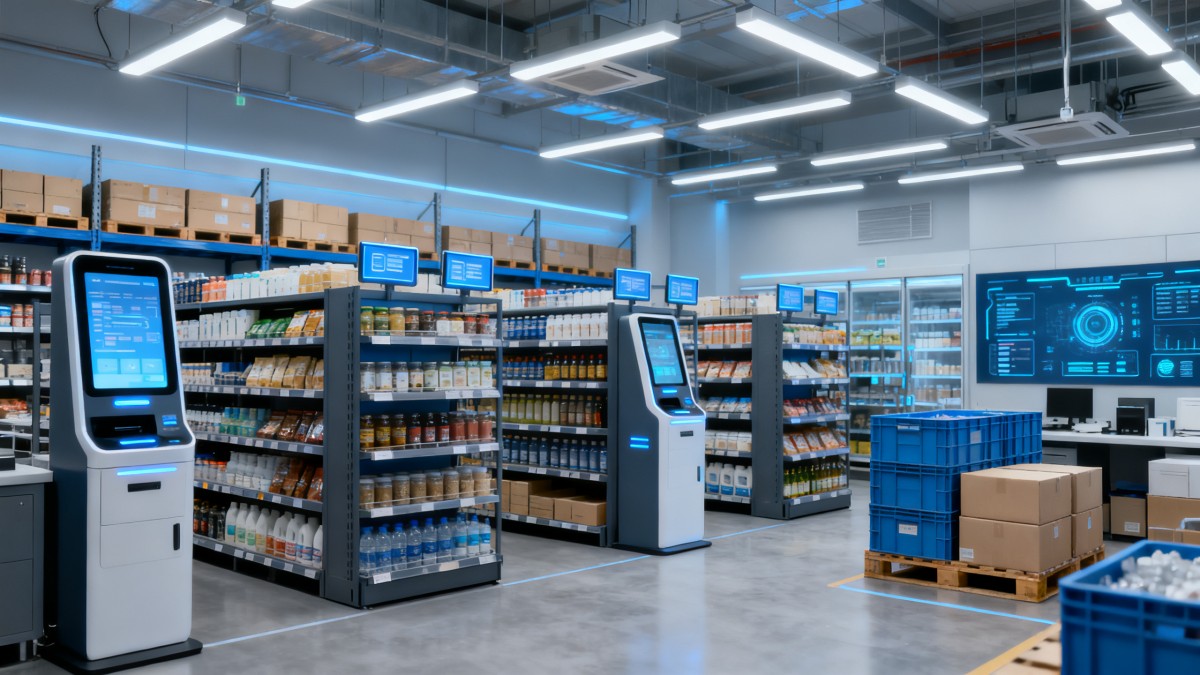
A retail intelligence platform is no longer a reporting layer attached to POS data. For enterprise decision-makers, it has become a cross-functional system that connects store operations, shopper behavior, fixtures performance, supply chain signals, compliance requirements, and sustainability targets.
This shift matters because physical retail now operates under tighter margins, faster replenishment cycles, and more scrutiny on store experience. Leadership teams must justify every capital decision, from AI-enabled terminals to signage upgrades and packaging changes, with measurable business outcomes.
In a global environment, the problem is rarely a lack of data. The real issue is fragmented data across vendors, regions, and hardware categories. A strong retail intelligence platform creates decision clarity by benchmarking technical performance, operational risk, and lifecycle value in one view.
- It helps sourcing leaders compare commercial hardware and digital systems on measurable criteria, not sales claims.
- It supports chain operators who need store-level visibility across layouts, labor, traffic, energy use, and service bottlenecks.
- It gives architects and commercial developers a way to align aesthetic requirements with operational durability and international standards.
For organizations operating across categories, G-BCE is especially relevant because it links five decision areas that are often treated separately: commercial furniture and fixtures, smart retail technology, consumer goods supply chain, commercial lighting and signage, and sustainable packaging.
Which ROI metrics actually matter for a retail intelligence platform?
Many buying teams still over-focus on dashboard features and under-evaluate business impact. In 2026, the right retail intelligence platform should be assessed against a broader ROI framework that reflects enterprise priorities, not just analytics usage.
The table below summarizes the metrics that matter most when comparing platforms for multi-site retail, commercial spaces, and consumer supply chain modernization.
A useful interpretation is this: if your retail intelligence platform cannot connect sales outcomes with asset performance and sourcing reliability, it is only partially useful. The strongest ROI comes from linking store experience data with physical infrastructure and supplier execution.
What enterprises often overlook
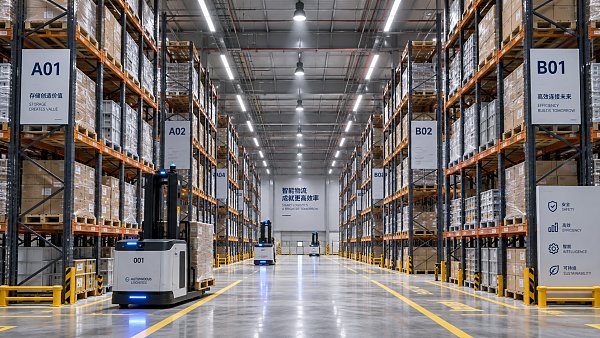
Leaders often approve technology investment based on software functionality alone. Yet in real commercial environments, underperforming fixtures, poor signage visibility, inconsistent packaging, or non-standard hardware can distort results and slow rollout value.
That is why platform ROI should include the performance of the built environment. G-BCE’s benchmarking approach is valuable here because it evaluates the structural and experiential foundations behind retail outcomes, not just the digital layer.
How should enterprise buyers compare retail intelligence platform options?
Selection becomes difficult when procurement teams, IT leaders, operations managers, and designers use different success criteria. A practical comparison framework helps align stakeholders before budget is committed.
Use the following table to compare a retail intelligence platform on the dimensions that influence enterprise rollout quality and long-term value.
This comparison shows why enterprise teams increasingly favor platforms that combine operational intelligence with technical benchmarking. The broader the decision context, the stronger the platform’s strategic value.
A practical procurement checklist
- Define whether the platform must support only reporting, or also sourcing, rollout planning, standards review, and supplier comparison.
- Map the categories involved. A chain renovation project may require data across fixtures, POS hardware, lighting, signage, and packaging.
- Set measurable success thresholds such as lead time reduction, device uptime, service speed, and packaging material savings.
- Check whether the platform supports international reference points such as UL, CE, or BIFMA where relevant to the asset category.
Which application scenarios create the clearest ROI?
Not every company uses a retail intelligence platform in the same way. ROI becomes clearer when the use case is tied to a concrete business problem rather than a broad digital transformation slogan.
Chain store modernization
For chain operators, the platform can compare store formats, monitor equipment consistency, identify maintenance-heavy assets, and improve rollout sequencing. This is especially useful when regional execution quality varies.
Commercial development and fit-out planning
Developers and architects need to balance visual impact with durability, code alignment, and operational practicality. A retail intelligence platform supports that balance by benchmarking technical and experiential criteria together.
Supply chain optimization for consumer brands
Consumer brands benefit when packaging, display assets, and replenishment data are connected. The result is better shelf availability, lower damage risk, and stronger consistency between brand standards and store execution.
Sustainability-led procurement
Sustainability goals often fail because teams cannot compare alternatives on lifecycle performance. A strong retail intelligence platform helps quantify material choices, replacement cycles, and energy implications before procurement decisions are finalized.
What technical and compliance signals should buyers review?
Enterprise buyers rarely need raw engineering detail for every component, but they do need a disciplined way to review technical risk. This becomes critical when sourcing spans multiple markets, suppliers, and installation environments.
The table below highlights a practical review structure for buyers using a retail intelligence platform to assess technical readiness and compliance alignment.
This review process helps enterprise teams move beyond price-led buying. It also reduces the risk of hidden costs that appear later through maintenance, failed approvals, delayed openings, or inconsistent customer experience.
How can leaders avoid common buying mistakes?
A retail intelligence platform can disappoint when buyers define success too narrowly. Most failures come from process gaps, not from the concept itself.
- Mistake one: measuring only sales uplift. This ignores downtime, maintenance cost, and supply disruption that may erase margin gains.
- Mistake two: separating store technology from physical environment decisions. Poor fixture quality or signage design can weaken digital investment returns.
- Mistake three: choosing vendors without a standards and documentation review. Cross-border projects often slow down here.
- Mistake four: underestimating lifecycle cost. A lower purchase price may lead to shorter replacement cycles and higher labor burden.
Decision-makers can reduce these risks by using a platform and knowledge base that combines operational metrics with technical benchmarking. That is where G-BCE offers strategic value across commercial and consumer ecosystem decisions.
FAQ: what do enterprise buyers ask before selecting a retail intelligence platform?
How do we know whether a retail intelligence platform fits our business model?
Start with business complexity. If your organization manages multiple stores, cross-border sourcing, commercial fit-out decisions, or packaging and display coordination, a broader retail intelligence platform usually creates more value than a narrow analytics tool.
What should we prioritize first: shopper analytics or supply chain visibility?
Prioritize the area causing the greatest margin leakage. If stockouts and lead time instability are hurting availability, supply chain visibility may deliver faster ROI. If traffic is healthy but conversion is weak, shopper and in-store experience analytics may deserve priority.
How important are standards such as UL, CE, or BIFMA in platform-related decisions?
They matter whenever the platform informs sourcing or deployment of physical assets. Standards do not guarantee commercial success, but they help reduce compliance uncertainty and support more disciplined vendor evaluation.
Can a retail intelligence platform support sustainability goals without slowing procurement?
Yes, if sustainability data is integrated into normal evaluation criteria rather than treated as a separate reporting exercise. Material efficiency, lifecycle durability, and packaging reduction should be compared alongside cost, lead time, and performance.
Why choose us for retail intelligence platform evaluation and sourcing insight?
G-BCE helps enterprise leaders make better decisions where retail technology, commercial hardware, and supply chain modernization intersect. Our value is not limited to market commentary. We provide structured benchmarking across furniture and fixtures, smart retail technology, consumer goods supply chains, lighting and signage, and sustainable packaging.
This matters when your team must compare suppliers, validate technical assumptions, align with standards, and defend ROI across multiple departments. Instead of reviewing isolated data points, you gain a more complete perspective on how commercial spaces actually perform.
- Consult us for parameter confirmation when comparing fixtures, POS-related hardware, signage systems, or packaging options.
- Discuss product selection if you need to balance aesthetics, durability, standards alignment, and operational efficiency.
- Ask about delivery cycle considerations for multi-region sourcing and rollout planning.
- Request support for customized solution evaluation, certification expectations, sample coordination, and quotation discussions.
If your next investment requires more than software selection, and you need a retail intelligence platform perspective grounded in commercial environment performance, supply chain transparency, and technical benchmarking, G-BCE is a practical starting point for informed decision-making.
- commercial furniture
- smart retail
- supply chain
- consumer goods
- commercial lighting
- signage
- sustainable packaging
- commercial hardware
- retail technology
- commercial spaces
- commercial developers
- commercial environments
- international standards
- technical benchmarking
- consumer supply
- retail intelligence
- consumer goods supply chain
- supply chain optimization
- smart retail technology
- retail intelligence platform
- consumer ecosystem
News Recommendations
 How to use a CRI value chart when choosing LED lighting
![51a6ab95581761cc26f4318be6520c15]()
Aris Katos
Future of Carbide Coatings
 How to compare hotel aroma diffuser wholesale options by coverage area
![51a6ab95581761cc26f4318be6520c15]()
Aris Katos
Future of Carbide Coatings
 How to prevent O-rings and seals from failing in food equipment
![51a6ab95581761cc26f4318be6520c15]()
Aris Katos
Future of Carbide Coatings
 How to compare commercial linear light wholesale quotes accurately
![51a6ab95581761cc26f4318be6520c15]()
Aris Katos
Future of Carbide Coatings
 How to verify international standards compliance for Middle East exports
![51a6ab95581761cc26f4318be6520c15]()
Aris Katos
Future of Carbide Coatings
 How to select laboratory instruments for reproducible test results
![51a6ab95581761cc26f4318be6520c15]()
Aris Katos
Future of Carbide Coatings
 When does a sheet metal prototype reveal design flaws early?
![51a6ab95581761cc26f4318be6520c15]()
Aris Katos
Future of Carbide Coatings
 When PE air column bags reduce damage in e-commerce fulfillment
![51a6ab95581761cc26f4318be6520c15]()
Aris Katos
Future of Carbide Coatings
 How energy-efficient design reduces operating costs in retail lighting
![51a6ab95581761cc26f4318be6520c15]()
Aris Katos
Future of Carbide Coatings
 When commercial aluminum storefronts make sense for a retail renovation
![51a6ab95581761cc26f4318be6520c15]()
Aris Katos
Future of Carbide Coatings
 What makes LED lights durable in high-use commercial spaces?
![51a6ab95581761cc26f4318be6520c15]()
Aris Katos
Future of Carbide Coatings
 Which industry categories offer the strongest export potential in Latin America?
![51a6ab95581761cc26f4318be6520c15]()
Aris Katos
Future of Carbide Coatings
 How to choose an ultra bright waterproof window display for storefronts
![51a6ab95581761cc26f4318be6520c15]()
Aris Katos
Future of Carbide Coatings
 How to verify suppliers on a trade portal for global sourcing
![51a6ab95581761cc26f4318be6520c15]()
Aris Katos
Future of Carbide Coatings
 How RoHS requirements should be stated in product specifications
![51a6ab95581761cc26f4318be6520c15]()
Aris Katos
Future of Carbide Coatings
 What affects the lead time for custom retail counter displays?
![51a6ab95581761cc26f4318be6520c15]()
Aris Katos
Future of Carbide Coatings
 What consumer packaging USA importers need to verify before ordering
![51a6ab95581761cc26f4318be6520c15]()
Aris Katos
Future of Carbide Coatings
 How commercial spaces interiors shape customer dwell time
![51a6ab95581761cc26f4318be6520c15]()
Aris Katos
Future of Carbide Coatings
 How LED commercial lighting design reduces glare in retail spaces
![51a6ab95581761cc26f4318be6520c15]()
Aris Katos
Future of Carbide Coatings
 How industrial technology information improves RFID inventory accuracy
![51a6ab95581761cc26f4318be6520c15]()
Aris Katos
Future of Carbide Coatings
 When drip garden watering systems make more sense than sprinklers
![51a6ab95581761cc26f4318be6520c15]()
Aris Katos
Future of Carbide Coatings
 When category comparison improves sourcing for industrial applications
![51a6ab95581761cc26f4318be6520c15]()
Aris Katos
Future of Carbide Coatings
 Industrial application guidance for selecting the right LED lighting
![51a6ab95581761cc26f4318be6520c15]()
Aris Katos
Future of Carbide Coatings
 Which commercial architecture standards apply to European retail fit-outs?
![51a6ab95581761cc26f4318be6520c15]()
Aris Katos
Future of Carbide Coatings
 How to verify FDA requirements for maternity care products
![51a6ab95581761cc26f4318be6520c15]()
Aris Katos
Future of Carbide Coatings
 How to verify BPA-free claims for food-contact products
![51a6ab95581761cc26f4318be6520c15]()
Aris Katos
Future of Carbide Coatings
 When does a European wholesale supplier suit modular office projects?
![51a6ab95581761cc26f4318be6520c15]()
Aris Katos
Future of Carbide Coatings
 When consumer ecosystem solutions improve the in-store shopping journey
![51a6ab95581761cc26f4318be6520c15]()
Aris Katos
Future of Carbide Coatings
 How a commercial developers network can reduce site selection risk
![51a6ab95581761cc26f4318be6520c15]()
Aris Katos
Future of Carbide Coatings
 How clear purchasing specifications prevent costly supplier deviations
![51a6ab95581761cc26f4318be6520c15]()
Aris Katos
Future of Carbide Coatings
 What an ISTA drop test lab checks before your packaging ships
![51a6ab95581761cc26f4318be6520c15]()
Aris Katos
Future of Carbide Coatings
 Which commercial furniture standards apply to workplace seating?
![51a6ab95581761cc26f4318be6520c15]()
Aris Katos
Future of Carbide Coatings
 How to evaluate smart lighting module OEM compatibility before sampling
![51a6ab95581761cc26f4318be6520c15]()
Aris Katos
Future of Carbide Coatings
 How to assess whether sustainable technology delivers real impact
![51a6ab95581761cc26f4318be6520c15]()
Aris Katos
Future of Carbide Coatings
 How to assess an OEM supplier’s quality control before ordering
![51a6ab95581761cc26f4318be6520c15]()
Aris Katos
Future of Carbide Coatings
 How consumer ecosystem solutions data can improve retail personalization
![51a6ab95581761cc26f4318be6520c15]()
Aris Katos
Future of Carbide Coatings
 When does consumer packaging design justify a higher product price?
![51a6ab95581761cc26f4318be6520c15]()
Aris Katos
Future of Carbide Coatings
 Supermarket Fixture Installation: Planning Layouts, Wiring, and Handover
![51a6ab95581761cc26f4318be6520c15]()
Aris Katos
Future of Carbide Coatings
 Automated Lighting and Smart Lighting Control in Bergerac: Key Project Considerations
![51a6ab95581761cc26f4318be6520c15]()
Aris Katos
Future of Carbide Coatings