Revised Maritime Code Shifts Unclaimed Cargo Liability to Shipper
Time
Click Count
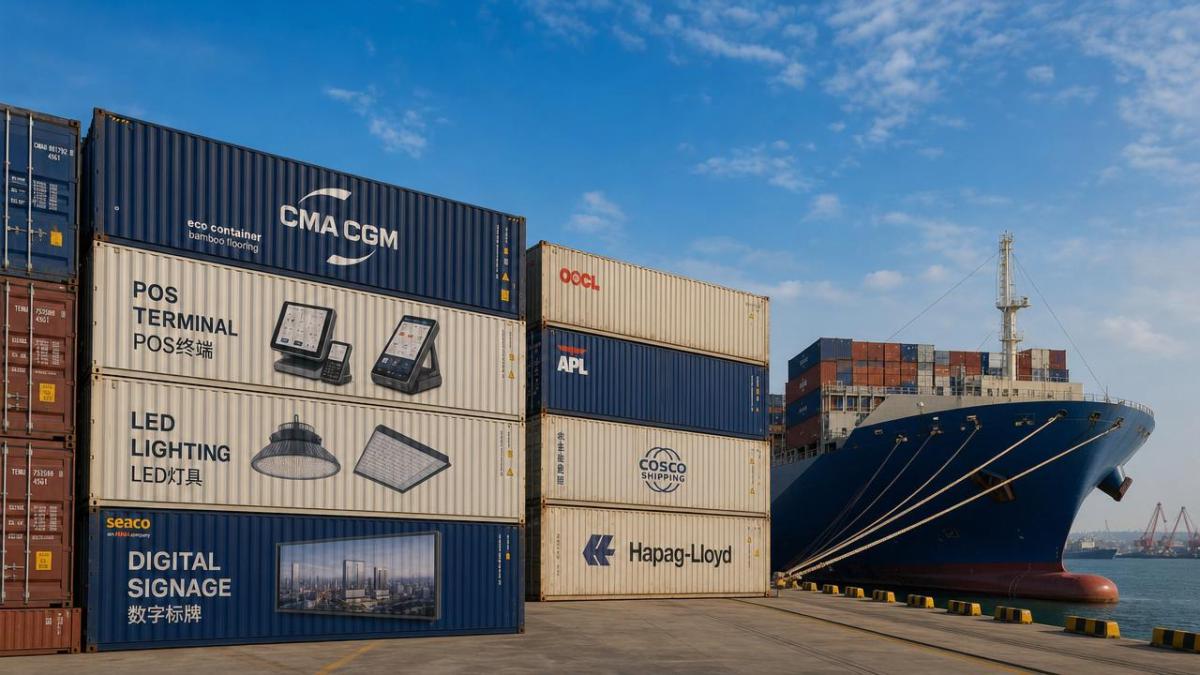
Starting May 1, 2026, the newly revised People’s Republic of China Maritime Code introduces a fundamental shift in liability for unclaimed cargo at discharge ports—moving from consignee-first responsibility to shipper-first liability under Article 93. This change directly affects global importers, distributors, and overseas buyers operating under FOB or CIF trade terms, particularly those handling high-value, multi-batch export categories such as POS terminals, digital signage, LED lighting, and home & gift products.
Event Overview
The revised Maritime Code of the People’s Republic of China enters into force on May 1, 2026. Article 93 has been substantially amended to replace the long-standing ‘consignee bears primary liability’ principle—which had applied for over 30 years—with a new ‘shipper bears primary liability’ rule for cargo remaining unclaimed at the port of discharge. This revision is publicly confirmed and officially scheduled for implementation on the stated date.
Industries Affected by the Change
Direct Trading Enterprises
Exporters and international traders acting as shippers under FOB or CIF contracts will now bear first legal and financial responsibility for demurrage, storage fees, and disposal costs if consignees fail to take delivery. This alters traditional risk allocation in commercial negotiations and contract drafting—especially where buyer insolvency, customs delays, or market shifts lead to non-acceptance.
Channel Distribution Enterprises
Distributors and import agents—particularly those managing regional fulfillment for branded electronics or consumer goods—face heightened exposure when downstream retail partners or end customers decline shipments. Under the revised rule, their upstream contractual status as ‘shipper’ (e.g., when named on the bill of lading) may trigger direct liability, even if they act solely as intermediaries.
Manufacturing Exporters (OEM/ODM)
Producers shipping finished goods under their own name—or issuing bills of lading listing themselves as shipper—will be exposed to port charges and cargo abandonment risks previously assumed by overseas buyers. This is especially relevant for sectors like LED lighting and digital signage, where product specifications, certifications, or tariff classifications may cause unexpected clearance delays abroad.
Supply Chain Service Providers
Freight forwarders and logistics integrators that issue house bills of lading naming themselves as shipper (a common practice in consolidated shipments) may inadvertently assume statutory liability under the revised Article 93. Their role as contractual shipper—not just service provider—now carries enforceable legal consequences at Chinese discharge ports.
Key Considerations and Recommended Actions for Affected Entities
Review and revise standard trading terms and bill-of-lading clauses
Entities currently using FOB/CIF terms should assess whether existing contracts explicitly allocate post-discharge responsibilities—and whether supplementary clauses (e.g., ‘shipper liability limitation’, ‘consignee acceptance warranties’) are needed. Legal review of bill-of-lading issuance practices is advised, especially where forwarders or exporters appear as shipper of record.
Reassess insurance coverage scope and limits
Marine cargo policies typically exclude liabilities arising from delay, abandonment, or demurrage unless specifically endorsed. Affected parties should verify whether their current marine liability or trade credit insurance covers statutory shipper obligations under the revised Maritime Code—and consider adding targeted endorsements ahead of May 2026.
Update internal risk protocols for high-risk product categories
For exporters of POS terminals, digital signage, LED lighting, and home & gift items—categories highlighted in the official summary—proactive coordination with overseas consignees on pre-arrival documentation, customs readiness, and contingency plans for non-takeover is now operationally critical. Pre-shipment confirmation of consignee capacity and local regulatory compliance is recommended.
Monitor official guidance and judicial interpretation
No implementing regulations or Supreme People’s Court interpretations have yet been issued. Entities should track announcements from the Ministry of Transport and China Maritime Arbitration Commission for clarifications on scope (e.g., applicability to multimodal transport, definition of ‘shipper’ in subcontracted logistics), which may affect enforcement posture after May 1, 2026.
Editorial Perspective / Industry Observation
Observably, this amendment signals a structural recalibration of risk allocation in China’s maritime trade regime—not merely a technical update. It reflects growing emphasis on supply chain accountability anchored at the origin point, rather than relying on downstream actors whose solvency or responsiveness may be outside the carrier’s or port authority’s control. Analysis shows the rule shift is likely to accelerate contractual due diligence among shippers and encourage more precise alignment between trade terms, documentary practices, and liability assumptions. However, it remains uncertain how uniformly courts and arbitration bodies will apply the new provision—particularly in cross-border disputes involving foreign consignees or complex logistics chains. The provision is best understood not as an immediate operational disruption, but as a binding legal signal requiring proactive alignment across documentation, insurance, and partner engagement.
This development marks a material evolution in how maritime cargo risk is assigned under Chinese law. While the rule takes effect on May 1, 2026, its practical impact will depend heavily on implementation consistency, supporting guidance, and real-world enforcement patterns. For affected enterprises, the revision is better interpreted as a catalyst for documented risk reassessment—not a standalone operational event.
Source: Official promulgation notice of the revised Maritime Code of the People’s Republic of China, effective May 1, 2026; Article 93 text as published in the State Council Gazette. Note: Judicial interpretations, administrative guidelines, and enforcement precedents remain pending and are subject to ongoing observation.
News Recommendations
 How to prevent O-rings and seals from failing in food equipment
![51a6ab95581761cc26f4318be6520c15]()
Aris Katos
Future of Carbide Coatings
 How to compare commercial linear light wholesale quotes accurately
![51a6ab95581761cc26f4318be6520c15]()
Aris Katos
Future of Carbide Coatings
 How to verify international standards compliance for Middle East exports
![51a6ab95581761cc26f4318be6520c15]()
Aris Katos
Future of Carbide Coatings
 How to select laboratory instruments for reproducible test results
![51a6ab95581761cc26f4318be6520c15]()
Aris Katos
Future of Carbide Coatings
 When does a sheet metal prototype reveal design flaws early?
![51a6ab95581761cc26f4318be6520c15]()
Aris Katos
Future of Carbide Coatings
 When PE air column bags reduce damage in e-commerce fulfillment
![51a6ab95581761cc26f4318be6520c15]()
Aris Katos
Future of Carbide Coatings
 How energy-efficient design reduces operating costs in retail lighting
![51a6ab95581761cc26f4318be6520c15]()
Aris Katos
Future of Carbide Coatings
 When commercial aluminum storefronts make sense for a retail renovation
![51a6ab95581761cc26f4318be6520c15]()
Aris Katos
Future of Carbide Coatings
 What makes LED lights durable in high-use commercial spaces?
![51a6ab95581761cc26f4318be6520c15]()
Aris Katos
Future of Carbide Coatings
 Which industry categories offer the strongest export potential in Latin America?
![51a6ab95581761cc26f4318be6520c15]()
Aris Katos
Future of Carbide Coatings
 How to choose an ultra bright waterproof window display for storefronts
![51a6ab95581761cc26f4318be6520c15]()
Aris Katos
Future of Carbide Coatings
 How to verify suppliers on a trade portal for global sourcing
![51a6ab95581761cc26f4318be6520c15]()
Aris Katos
Future of Carbide Coatings
 How RoHS requirements should be stated in product specifications
![51a6ab95581761cc26f4318be6520c15]()
Aris Katos
Future of Carbide Coatings
 What affects the lead time for custom retail counter displays?
![51a6ab95581761cc26f4318be6520c15]()
Aris Katos
Future of Carbide Coatings
 What consumer packaging USA importers need to verify before ordering
![51a6ab95581761cc26f4318be6520c15]()
Aris Katos
Future of Carbide Coatings
 How commercial spaces interiors shape customer dwell time
![51a6ab95581761cc26f4318be6520c15]()
Aris Katos
Future of Carbide Coatings
 How LED commercial lighting design reduces glare in retail spaces
![51a6ab95581761cc26f4318be6520c15]()
Aris Katos
Future of Carbide Coatings
 How industrial technology information improves RFID inventory accuracy
![51a6ab95581761cc26f4318be6520c15]()
Aris Katos
Future of Carbide Coatings
 When drip garden watering systems make more sense than sprinklers
![51a6ab95581761cc26f4318be6520c15]()
Aris Katos
Future of Carbide Coatings
 When category comparison improves sourcing for industrial applications
![51a6ab95581761cc26f4318be6520c15]()
Aris Katos
Future of Carbide Coatings
 Industrial application guidance for selecting the right LED lighting
![51a6ab95581761cc26f4318be6520c15]()
Aris Katos
Future of Carbide Coatings
 Which commercial architecture standards apply to European retail fit-outs?
![51a6ab95581761cc26f4318be6520c15]()
Aris Katos
Future of Carbide Coatings
 How to verify FDA requirements for maternity care products
![51a6ab95581761cc26f4318be6520c15]()
Aris Katos
Future of Carbide Coatings
 How to verify BPA-free claims for food-contact products
![51a6ab95581761cc26f4318be6520c15]()
Aris Katos
Future of Carbide Coatings
 When does a European wholesale supplier suit modular office projects?
![51a6ab95581761cc26f4318be6520c15]()
Aris Katos
Future of Carbide Coatings
 When consumer ecosystem solutions improve the in-store shopping journey
![51a6ab95581761cc26f4318be6520c15]()
Aris Katos
Future of Carbide Coatings
 How a commercial developers network can reduce site selection risk
![51a6ab95581761cc26f4318be6520c15]()
Aris Katos
Future of Carbide Coatings
 How clear purchasing specifications prevent costly supplier deviations
![51a6ab95581761cc26f4318be6520c15]()
Aris Katos
Future of Carbide Coatings
 What an ISTA drop test lab checks before your packaging ships
![51a6ab95581761cc26f4318be6520c15]()
Aris Katos
Future of Carbide Coatings
 Which commercial furniture standards apply to workplace seating?
![51a6ab95581761cc26f4318be6520c15]()
Aris Katos
Future of Carbide Coatings
 How to evaluate smart lighting module OEM compatibility before sampling
![51a6ab95581761cc26f4318be6520c15]()
Aris Katos
Future of Carbide Coatings
 How to assess whether sustainable technology delivers real impact
![51a6ab95581761cc26f4318be6520c15]()
Aris Katos
Future of Carbide Coatings
 How to assess an OEM supplier’s quality control before ordering
![51a6ab95581761cc26f4318be6520c15]()
Aris Katos
Future of Carbide Coatings
 How consumer ecosystem solutions data can improve retail personalization
![51a6ab95581761cc26f4318be6520c15]()
Aris Katos
Future of Carbide Coatings
 When does consumer packaging design justify a higher product price?
![51a6ab95581761cc26f4318be6520c15]()
Aris Katos
Future of Carbide Coatings
 Supermarket Fixture Installation: Planning Layouts, Wiring, and Handover
![51a6ab95581761cc26f4318be6520c15]()
Aris Katos
Future of Carbide Coatings
 Automated Lighting and Smart Lighting Control in Bergerac: Key Project Considerations
![51a6ab95581761cc26f4318be6520c15]()
Aris Katos
Future of Carbide Coatings
 Segment Streetlight Controllers: Choosing Control Modes for Urban Roads
![51a6ab95581761cc26f4318be6520c15]()
Aris Katos
Future of Carbide Coatings
 IEC 62471-2 Explained: How to Assess Photobiological Risks in LED Lighting
![51a6ab95581761cc26f4318be6520c15]()
Aris Katos
Future of Carbide Coatings