Retail Integration Services: Common POS Rollout Risks
Time
Click Count
Retail integration services can speed up a POS rollout, but speed alone does not reduce risk. For project managers and engineering leads, the real challenge is controlling dependencies across stores, vendors, networks, data, hardware, and training.
Most rollout failures are not caused by a single technical issue. They usually come from weak site readiness, unrealistic schedules, poor governance, incomplete testing, or underestimating how different each store environment can be.
When these risks are addressed early, deployments become more predictable, support costs drop, and store teams gain confidence faster. That is why rollout planning must be treated as an operational transformation, not just a hardware installation project.
What project managers need to know first about POS rollout risk
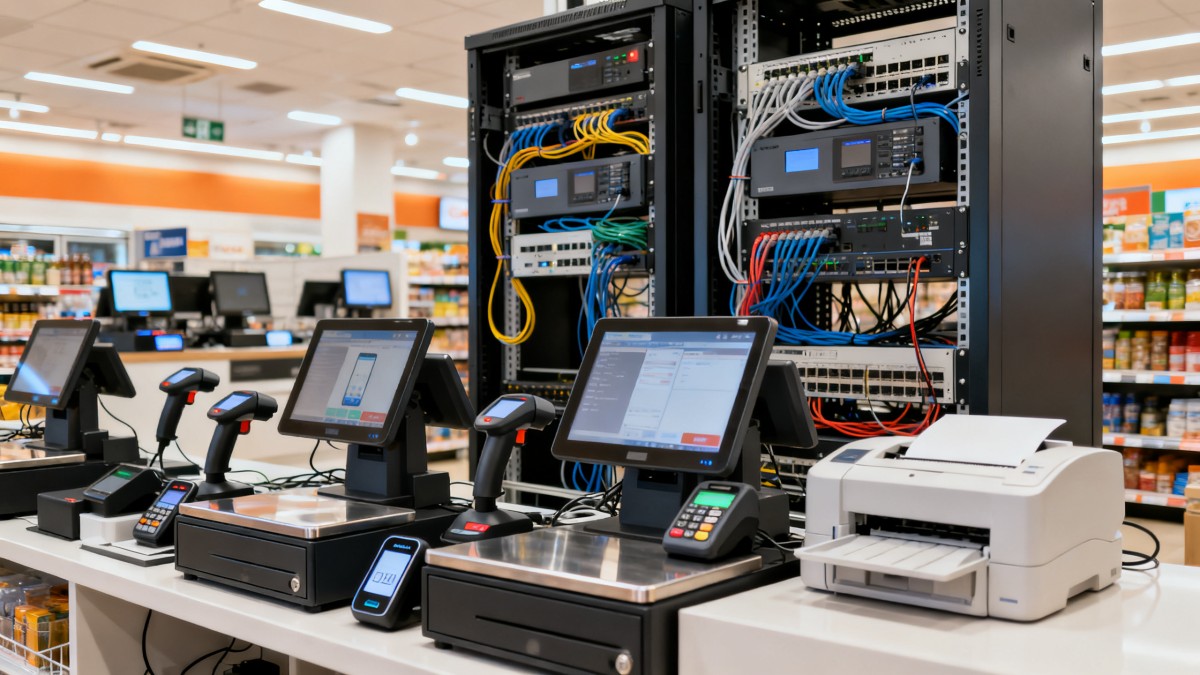
The core search intent behind retail integration services and POS rollout risk is practical: readers want to know what commonly goes wrong, what warning signs to watch, and how to prevent delays, rework, and store disruption.
For project managers, the biggest concern is not whether a POS solution works in theory. It is whether the rollout can be delivered consistently across many sites without budget escalation, downtime, compliance gaps, or poor user adoption.
That means the most useful guidance is not a generic overview of POS technology. What matters is a field-level view of rollout dependencies, governance methods, sequencing decisions, and measurable controls that reduce failure during deployment.
Why even well-funded POS programs still fail
Many organizations assume that budget, brand scale, or a strong software provider will protect the project. In practice, large programs fail because complexity multiplies across locations, contractors, timelines, and legacy systems.
A rollout may look simple at headquarters, yet each store has different power conditions, network quality, fixture dimensions, staffing patterns, tax settings, and integration needs. If the plan does not reflect this variation, exceptions quickly become the norm.
Retail integration services are often brought in to coordinate these moving parts. Their value is highest when they create structure around site surveys, installation standards, vendor handoffs, cutover windows, and issue escalation.
Without that control layer, teams can end up chasing symptoms rather than root causes. A missing cable, delayed permit, outdated firmware, or incorrect product mapping can affect launch readiness more than the core POS application itself.
The most common rollout risks in multi-site POS deployments
The first major risk is incomplete site readiness. Stores may lack sufficient power outlets, stable connectivity, mounting provisions, counter space, environmental protection, or secure back-office access needed for smooth installation and support.
Second, data migration is frequently underestimated. Product catalogs, pricing, promotions, customer records, tax rules, and payment configurations often contain inconsistencies that only surface during pilot testing or after go-live.
Third, integration dependencies are a common point of failure. POS systems rarely operate alone. They must connect with ERP, inventory, loyalty, e-commerce, payment gateways, fiscal devices, reporting tools, and sometimes kitchen or queue systems.
Fourth, timeline compression creates hidden quality problems. When the deployment calendar is driven mainly by commercial pressure, teams may reduce testing cycles, skip remediation, or overlap tasks that should remain sequential.
Fifth, vendor coordination can break down. Hardware suppliers, software teams, network providers, payment partners, local installers, and store operations may all work from different assumptions unless one party owns final integration accountability.
Sixth, change management is often treated as secondary. Even a technically successful rollout can underperform if cashiers, supervisors, and store managers are not trained on workflows, exception handling, and escalation procedures.
How site readiness becomes a hidden source of budget overrun
Site readiness issues rarely attract enough attention during early planning because they seem minor compared with software configuration. Yet they are one of the biggest causes of truck rolls, installation delays, and unplanned field labor.
A store may pass a basic readiness checklist but still fail during deployment because cable routes are blocked, counters are not built to drawing, lighting causes scanner issues, or local ISP performance is unstable at peak hours.
For engineering leads, the lesson is clear: readiness should be validated through standardized surveys, photo documentation, exception tagging, and acceptance criteria tied to actual device and network requirements.
In global or regional programs, site readiness also intersects with local building practices and compliance conditions. Fixture tolerances, electrical standards, signage constraints, and back-room layouts can all influence POS deployment feasibility.
This is where a disciplined retail integration services partner can add value. The right team does not simply install endpoints; it translates prototype assumptions into repeatable field conditions across diverse store formats.
Data migration and configuration errors often surface too late
Data-related failures are especially damaging because they may not stop installation, but they can disrupt live trading. Incorrect pricing, duplicate SKUs, broken promotions, tax mismatches, or loyalty errors quickly damage store confidence.
These problems usually begin upstream. Master data may be inconsistent across legacy systems, business rules may vary by region, and exception cases are often poorly documented before migration scripts are finalized.
Project teams should treat data readiness as a separate workstream with clear ownership, validation cycles, rollback logic, and store-level signoff for critical functions such as returns, discounts, refunds, and tender handling.
Pilot stores are essential here, but only if they reflect real operational complexity. A low-volume flagship test is not enough when the wider estate includes kiosks, concessions, high-traffic branches, or sites with local compliance requirements.
Vendor coordination is where governance either works or collapses
In many deployments, no single failure is catastrophic on its own. The problem is that multiple small failures occur across different vendors, and nobody has the authority or process to resolve them before the cutover date.
One partner may deliver hardware on time, another may configure images, another may handle payment certification, and another may install network services. If milestones are not integrated, each supplier can claim success while the store remains unready.
Project managers need a governance model that links contractual scope to operational dependencies. That includes an integrated master schedule, RAID tracking, escalation thresholds, weekly readiness reviews, and a single source of truth for site status.
It also means defining acceptance more carefully. “Installed” is not the same as “ready for trade.” Readiness should include working peripherals, successful transactions, synchronized data, user access, and support handoff completion.
Why pilot success does not guarantee rollout success at scale
Pilots often create false confidence because they receive extra attention, top-tier resources, and favorable store conditions. A rollout becomes harder when the same quality must be repeated across dozens or hundreds of locations.
Scale exposes weaknesses in documentation, imaging control, spare stock, logistics sequencing, technician capability, and issue triage. If the pilot did not produce standardized runbooks, scaling will amplify inconsistency.
The most effective pilots are designed to surface failure modes, not just demonstrate functionality. They should test difficult environments, regional differences, support readiness, and fallback procedures under realistic trading pressure.
After the pilot, teams should freeze a repeatable deployment package. That package typically includes site standards, device baselines, cutover steps, training assets, acceptance scripts, and a formal lessons-learned update to the rollout plan.
How to build a lower-risk deployment strategy
A lower-risk rollout starts with segmentation. Not all stores should be deployed in the same wave. Group sites by format, complexity, geography, connectivity risk, and business criticality so the schedule reflects operational reality.
Second, create a stage-gate model. Each wave should pass defined checkpoints for site readiness, hardware availability, data validation, integration testing, training completion, and hypercare planning before installation begins.
Third, use controlled standardization. Standard device kits, mounting methods, image versions, and test scripts reduce variability. At the same time, documented exception handling is necessary for stores that cannot meet the standard model.
Fourth, protect the cutover window. Go-live should include command-center support, rollback criteria, field escalation paths, and clear ownership for software, payment, network, and store operations issues during the first trading period.
Fifth, measure what matters. Useful KPIs include first-time installation success, site readiness pass rate, transaction success at go-live, incident volume per store, time to resolution, and post-launch support load by wave.
What to look for in retail integration services partners
Not every provider offering retail integration services is equipped for complex POS transformation. Some are strong in field installation but weak in program governance, integration testing, or multi-vendor coordination.
Project leaders should evaluate partners on several dimensions: survey methodology, deployment playbooks, data discipline, network and payment experience, issue reporting, quality assurance, and ability to support regional compliance variations.
It is also important to assess whether the partner understands the physical retail environment. POS rollout quality is influenced by counters, fixtures, power access, cable management, lighting, and customer flow as much as by software.
Organizations like G-BCE add perspective by connecting smart retail technology with broader commercial infrastructure benchmarks. That cross-sector view matters when rollout decisions affect hardware durability, store design consistency, and long-term maintainability.
Conclusion: control the rollout, not just the launch date
POS modernization can improve transaction speed, reporting visibility, and omnichannel coordination, but only when rollout execution is tightly managed. The biggest risks are usually operational and organizational, not purely technical.
For project managers and engineering leads, the priority should be early risk identification, realistic wave planning, strong vendor governance, and rigorous validation of sites, data, and support readiness before each go-live.
Retail integration services deliver the most value when they reduce uncertainty across the entire deployment chain. If your program is judged only by launch speed, risk will rise. If it is judged by repeatable store performance, better decisions follow.
In short, successful POS rollout is not about installing terminals everywhere as fast as possible. It is about building a controlled, scalable deployment model that protects uptime, customer experience, and long-term operational consistency.
News Recommendations
 How to use a CRI value chart when choosing LED lighting
![51a6ab95581761cc26f4318be6520c15]()
Aris Katos
Future of Carbide Coatings
 How to compare hotel aroma diffuser wholesale options by coverage area
![51a6ab95581761cc26f4318be6520c15]()
Aris Katos
Future of Carbide Coatings
 How to prevent O-rings and seals from failing in food equipment
![51a6ab95581761cc26f4318be6520c15]()
Aris Katos
Future of Carbide Coatings
 How to compare commercial linear light wholesale quotes accurately
![51a6ab95581761cc26f4318be6520c15]()
Aris Katos
Future of Carbide Coatings
 How to verify international standards compliance for Middle East exports
![51a6ab95581761cc26f4318be6520c15]()
Aris Katos
Future of Carbide Coatings
 How to select laboratory instruments for reproducible test results
![51a6ab95581761cc26f4318be6520c15]()
Aris Katos
Future of Carbide Coatings
 When does a sheet metal prototype reveal design flaws early?
![51a6ab95581761cc26f4318be6520c15]()
Aris Katos
Future of Carbide Coatings
 When PE air column bags reduce damage in e-commerce fulfillment
![51a6ab95581761cc26f4318be6520c15]()
Aris Katos
Future of Carbide Coatings
 How energy-efficient design reduces operating costs in retail lighting
![51a6ab95581761cc26f4318be6520c15]()
Aris Katos
Future of Carbide Coatings
 When commercial aluminum storefronts make sense for a retail renovation
![51a6ab95581761cc26f4318be6520c15]()
Aris Katos
Future of Carbide Coatings
 What makes LED lights durable in high-use commercial spaces?
![51a6ab95581761cc26f4318be6520c15]()
Aris Katos
Future of Carbide Coatings
 Which industry categories offer the strongest export potential in Latin America?
![51a6ab95581761cc26f4318be6520c15]()
Aris Katos
Future of Carbide Coatings
 How to choose an ultra bright waterproof window display for storefronts
![51a6ab95581761cc26f4318be6520c15]()
Aris Katos
Future of Carbide Coatings
 How to verify suppliers on a trade portal for global sourcing
![51a6ab95581761cc26f4318be6520c15]()
Aris Katos
Future of Carbide Coatings
 How RoHS requirements should be stated in product specifications
![51a6ab95581761cc26f4318be6520c15]()
Aris Katos
Future of Carbide Coatings
 What affects the lead time for custom retail counter displays?
![51a6ab95581761cc26f4318be6520c15]()
Aris Katos
Future of Carbide Coatings
 What consumer packaging USA importers need to verify before ordering
![51a6ab95581761cc26f4318be6520c15]()
Aris Katos
Future of Carbide Coatings
 How commercial spaces interiors shape customer dwell time
![51a6ab95581761cc26f4318be6520c15]()
Aris Katos
Future of Carbide Coatings
 How LED commercial lighting design reduces glare in retail spaces
![51a6ab95581761cc26f4318be6520c15]()
Aris Katos
Future of Carbide Coatings
 How industrial technology information improves RFID inventory accuracy
![51a6ab95581761cc26f4318be6520c15]()
Aris Katos
Future of Carbide Coatings
 When drip garden watering systems make more sense than sprinklers
![51a6ab95581761cc26f4318be6520c15]()
Aris Katos
Future of Carbide Coatings
 When category comparison improves sourcing for industrial applications
![51a6ab95581761cc26f4318be6520c15]()
Aris Katos
Future of Carbide Coatings
 Industrial application guidance for selecting the right LED lighting
![51a6ab95581761cc26f4318be6520c15]()
Aris Katos
Future of Carbide Coatings
 Which commercial architecture standards apply to European retail fit-outs?
![51a6ab95581761cc26f4318be6520c15]()
Aris Katos
Future of Carbide Coatings
 How to verify FDA requirements for maternity care products
![51a6ab95581761cc26f4318be6520c15]()
Aris Katos
Future of Carbide Coatings
 How to verify BPA-free claims for food-contact products
![51a6ab95581761cc26f4318be6520c15]()
Aris Katos
Future of Carbide Coatings
 When does a European wholesale supplier suit modular office projects?
![51a6ab95581761cc26f4318be6520c15]()
Aris Katos
Future of Carbide Coatings
 When consumer ecosystem solutions improve the in-store shopping journey
![51a6ab95581761cc26f4318be6520c15]()
Aris Katos
Future of Carbide Coatings
 How a commercial developers network can reduce site selection risk
![51a6ab95581761cc26f4318be6520c15]()
Aris Katos
Future of Carbide Coatings
 How clear purchasing specifications prevent costly supplier deviations
![51a6ab95581761cc26f4318be6520c15]()
Aris Katos
Future of Carbide Coatings
 What an ISTA drop test lab checks before your packaging ships
![51a6ab95581761cc26f4318be6520c15]()
Aris Katos
Future of Carbide Coatings
 Which commercial furniture standards apply to workplace seating?
![51a6ab95581761cc26f4318be6520c15]()
Aris Katos
Future of Carbide Coatings
 How to evaluate smart lighting module OEM compatibility before sampling
![51a6ab95581761cc26f4318be6520c15]()
Aris Katos
Future of Carbide Coatings
 How to assess whether sustainable technology delivers real impact
![51a6ab95581761cc26f4318be6520c15]()
Aris Katos
Future of Carbide Coatings
 How to assess an OEM supplier’s quality control before ordering
![51a6ab95581761cc26f4318be6520c15]()
Aris Katos
Future of Carbide Coatings
 How consumer ecosystem solutions data can improve retail personalization
![51a6ab95581761cc26f4318be6520c15]()
Aris Katos
Future of Carbide Coatings
 When does consumer packaging design justify a higher product price?
![51a6ab95581761cc26f4318be6520c15]()
Aris Katos
Future of Carbide Coatings
 Supermarket Fixture Installation: Planning Layouts, Wiring, and Handover
![51a6ab95581761cc26f4318be6520c15]()
Aris Katos
Future of Carbide Coatings
 Automated Lighting and Smart Lighting Control in Bergerac: Key Project Considerations
![51a6ab95581761cc26f4318be6520c15]()
Aris Katos
Future of Carbide Coatings