China Issues AI Device Compliance Guidelines for Office Hardware and POS Systems
Time
Click Count
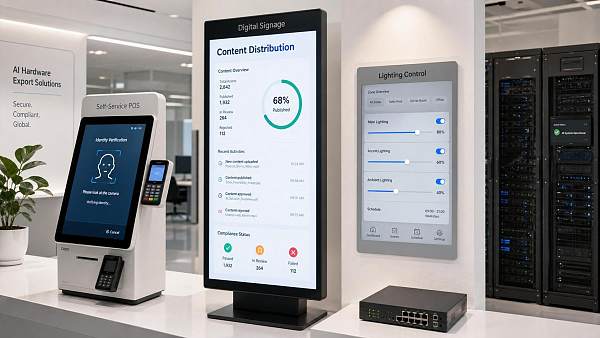
On May 20, 2026, China’s Cyberspace Administration, National Development and Reform Commission, and Ministry of Industry and Information Technology jointly released the Implementation Opinions on Standardized Application and Innovative Development of Intelligent Entities. The policy marks a pivotal regulatory shift—explicitly classifying AI-powered office hardware, smart POS terminals, and digital signage as ‘intelligent entities’ subject to unified oversight. Its requirements are expected to reshape global supply chain expectations, particularly for exporters serving EU and U.S. markets.
Event Overview
In May 2026, the Cyberspace Administration of China, the National Development and Reform Commission, and the Ministry of Industry and Information Technology jointly issued the Implementation Opinions on Standardized Application and Innovative Development of Intelligent Entities. For the first time, AI-driven office hardware, self-service terminals, and digital signage were formally designated as ‘intelligent entities’ under focused regulatory scrutiny. The document mandates that such devices must adopt secure and controllable architectures, implement interpretable algorithmic logic, and ensure local data storage capabilities. Export-oriented manufacturers are required to complete algorithm registration prior to product shipment and provide overseas customers with a bilingual (Chinese–English) Intelligent Entity Security White Paper.
Industries Affected
Direct Export Enterprises
Export enterprises supplying AI-enabled office hardware or smart POS systems to international markets—including those in Europe and North America—are directly impacted. Compliance is no longer optional: algorithm registration and bilingual white paper delivery are mandatory pre-shipment conditions. Failure to meet these may result in customs delays, buyer contract renegotiation, or loss of procurement eligibility in regulated public-sector tenders.
Raw Material Procurement Enterprises
Suppliers of core components—including AI accelerators, secure enclaves (e.g., TPM 2.0 modules), and certified memory chips—face new demand signals. Buyers increasingly require traceable, domestically compliant component pedigrees to substantiate end-product architecture claims. Procurement teams must now verify supplier documentation against the ‘secure and controllable’ criteria—not just technical specs.
Contract Manufacturing and OEM Enterprises
OEMs and EMS providers assembling AI terminals must adapt their design-for-compliance workflows. This includes embedding explainability hooks into firmware, enabling local data residency mode by default, and maintaining version-controlled algorithm logs. Engineering change orders (ECOs) will now require concurrent compliance review—not just functional validation.
Supply Chain Service Providers
Logistics integrators, certification labs, and technical documentation agencies are seeing rising demand for bilingual compliance packaging, algorithm audit support, and cross-border regulatory translation services. Notably, third-party labs accredited for algorithm registration verification remain limited—creating near-term capacity bottlenecks for fast-mover exporters.
Key Focus Areas and Recommended Actions
Complete Algorithm Registration Before Shipment
Manufacturers must submit algorithm models—including training data scope, inference logic flowcharts, and bias mitigation measures—to designated national platforms. Registration is tied to specific hardware SKUs; reusing algorithms across device families requires separate filings.
Prepare Bilingual Security White Papers
The Intelligent Entity Security White Paper must include architecture diagrams, data flow maps, localization settings instructions, and explanations of decision logic—translated verbatim, not summarized. English versions must be legally reviewed for consistency with Chinese originals to avoid contractual ambiguity.
Verify Component-Level Compliance Traceability
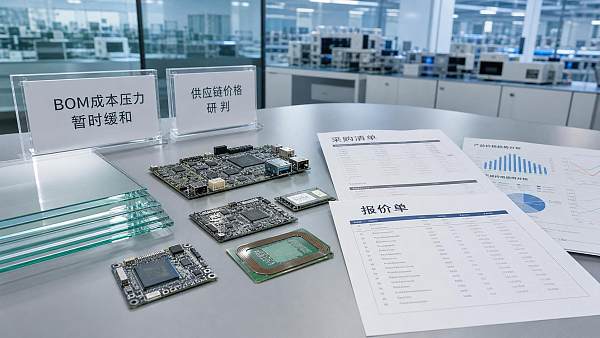
Downstream buyers are beginning to request bills of materials (BOMs) annotated with compliance status per component (e.g., ‘TPM module: certified under GB/T 39786–2021’). Procurement contracts should now explicitly assign responsibility for component-level attestation.
Engage Accredited Third-Party Labs Early
Only labs authorized by the Cyberspace Administration may perform algorithm registration verification. Lead times currently exceed eight weeks; early engagement—ideally during prototype stage—is strongly advised to avoid production delays.
Editorial Perspective / Industry Observation
Analysis shows this policy is less about restricting AI adoption and more about institutionalizing export-grade trust infrastructure. Observably, it mirrors EU’s AI Act risk-tiering logic—but applies it upstream, at the hardware layer. From an industry perspective, the requirement for ‘interpretable algorithm logic’ does not mandate open-source models; rather, it expects documented, auditable decision pathways—making model distillation and rule-layer augmentation newly valuable engineering practices. Current more noteworthy is how quickly multinational buyers are referencing the white paper as a de facto due diligence artifact—even before formal alignment with their own national frameworks.
Conclusion
This regulation does not represent a barrier to trade so much as a recalibration of compliance maturity expectations. It signals a transition from ‘AI-enabled’ to ‘AI-accountable’ hardware—where transparency, control, and localization are baseline commercial attributes, not differentiators. For global suppliers, treating these requirements as interoperability standards—not just regulatory checkboxes—offers the clearest path to sustained market access.
Source Attribution
Official text published on the websites of the Cyberspace Administration of China (www.ica.gov.cn), National Development and Reform Commission (www.ndrc.gov.cn), and Ministry of Industry and Information Technology (www.miit.gov.cn), May 2026. Implementation details—including approved registration platforms and lab accreditation lists—are still being finalized and will be updated through official notices. Ongoing monitoring of provincial-level enforcement guidance and EU/US regulatory reciprocity developments is recommended.
News Recommendations
 Industrial Sourcing for Aerospace Industry: Supplier Risks to Check First
![51a6ab95581761cc26f4318be6520c15]()
Aris Katos
Future of Carbide Coatings
 Aluminum Composite Panels Bulk: How to Compare Cost, MOQ, and Quality
![51a6ab95581761cc26f4318be6520c15]()
Aris Katos
Future of Carbide Coatings
 Next-Gen Wireless Charging Fast Charging: Key Specs That Matter Most
![51a6ab95581761cc26f4318be6520c15]()
Aris Katos
Future of Carbide Coatings
 Medical Aesthetics Trends in 2026: What’s Changing in Treatment Demand
![51a6ab95581761cc26f4318be6520c15]()
Aris Katos
Future of Carbide Coatings
 Health Improvements at Work: Small Changes That Deliver Measurable Results
![51a6ab95581761cc26f4318be6520c15]()
Aris Katos
Future of Carbide Coatings
 Ecuador Cuts Security Tariff on Colombian Goods to 75%
![51a6ab95581761cc26f4318be6520c15]()
Aris Katos
Future of Carbide Coatings
 Brazil Ends 20% Import Tax on Low-Value Parcels
![51a6ab95581761cc26f4318be6520c15]()
Aris Katos
Future of Carbide Coatings
 Finland Ends Low-Value Relief for Small Parcels
![51a6ab95581761cc26f4318be6520c15]()
Aris Katos
Future of Carbide Coatings
 U.S. Ends Duty-Free Entry for China Low-Value Parcels
![51a6ab95581761cc26f4318be6520c15]()
Aris Katos
Future of Carbide Coatings
 EU Ends €150 Small Parcel Duty Exemption in July
![51a6ab95581761cc26f4318be6520c15]()
Aris Katos
Future of Carbide Coatings
 How to Evaluate an LCD Advertising Display Manufacturer Before Ordering
![51a6ab95581761cc26f4318be6520c15]()
Aris Katos
Future of Carbide Coatings
 Trade Insights 2026: Supply Chain Shifts Reshaping Export Margins
![51a6ab95581761cc26f4318be6520c15]()
Aris Katos
Future of Carbide Coatings
 Car Electronics Failure Points in Hot and High-Vibration Environments
![51a6ab95581761cc26f4318be6520c15]()
Aris Katos
Future of Carbide Coatings
 Lighting OEM vs ODM: Which Model Lowers Cost and Lead Time?
![51a6ab95581761cc26f4318be6520c15]()
Aris Katos
Future of Carbide Coatings
 Pillow Block Bearings: Key Load and Housing Factors to Compare
![51a6ab95581761cc26f4318be6520c15]()
Aris Katos
Future of Carbide Coatings
 EU Eyes ESPR Rules for E-commerce Pack
![51a6ab95581761cc26f4318be6520c15]()
Aris Katos
Future of Carbide Coatings
 EU Moves Toward Carbon Labels for Commercial LED Lighting
![51a6ab95581761cc26f4318be6520c15]()
Aris Katos
Future of Carbide Coatings
 China Mandates New Energy Label for Road LED Luminaires
![51a6ab95581761cc26f4318be6520c15]()
Aris Katos
Future of Carbide Coatings
 EPBD Rule Takes Effect for Smart Commercial Lighting
![51a6ab95581761cc26f4318be6520c15]()
Aris Katos
Future of Carbide Coatings
 EU Battery Rule Takes Effect for 2kWh+ Industrial Batteries
![51a6ab95581761cc26f4318be6520c15]()
Aris Katos
Future of Carbide Coatings
 Global Logistics Trends in 2026: Costs, Delays, and Sourcing Impact
![51a6ab95581761cc26f4318be6520c15]()
Aris Katos
Future of Carbide Coatings
 Surgical Instruments Sourcing: Cost, Compliance, and Supplier Risk
![51a6ab95581761cc26f4318be6520c15]()
Aris Katos
Future of Carbide Coatings
 Car Audio Systems: What Matters Most for Sound Quality and Upgrade Value
![51a6ab95581761cc26f4318be6520c15]()
Aris Katos
Future of Carbide Coatings
 Pigments and Dyes: Key Performance Differences That Affect End Use
![51a6ab95581761cc26f4318be6520c15]()
Aris Katos
Future of Carbide Coatings
 How to Choose Wall Coverings for High-Traffic Commercial Spaces
![51a6ab95581761cc26f4318be6520c15]()
Aris Katos
Future of Carbide Coatings
 EU Draft Rule Signals Carbon Labeling for Commercial LED Products
![51a6ab95581761cc26f4318be6520c15]()
Aris Katos
Future of Carbide Coatings
 China Signals Stronger Support for AI-Ready Commercial Terminals
![51a6ab95581761cc26f4318be6520c15]()
Aris Katos
Future of Carbide Coatings
 Risk Alerts Cool BOM Pressure for POS and RFID
![51a6ab95581761cc26f4318be6520c15]()
Aris Katos
Future of Carbide Coatings
 Fed Dot Plot Tightens Pricing Room for RMB Exports
![51a6ab95581761cc26f4318be6520c15]()
Aris Katos
Future of Carbide Coatings
 Hormuz Strait Reopens as Ceasefire Takes Effect
![51a6ab95581761cc26f4318be6520c15]()
Aris Katos
Future of Carbide Coatings
 Blockchain in Supply Chain: Practical Use Cases and Adoption Risks
![51a6ab95581761cc26f4318be6520c15]()
Aris Katos
Future of Carbide Coatings
 Offset Printing Services: When the Unit Cost Beats Digital Printing
![51a6ab95581761cc26f4318be6520c15]()
Aris Katos
Future of Carbide Coatings
 Commercial LED Lighting Energy-Saving Solutions That Cut Operating Costs
![51a6ab95581761cc26f4318be6520c15]()
Aris Katos
Future of Carbide Coatings
 How to Choose Breastpumps for Comfort, Output, and Daily Use
![51a6ab95581761cc26f4318be6520c15]()
Aris Katos
Future of Carbide Coatings
 Commercial Environment Planning: 7 Layout Mistakes That Raise Fit-Out Costs
![51a6ab95581761cc26f4318be6520c15]()
Aris Katos
Future of Carbide Coatings
 10sqm AI Retail Stations Lift Demand for POS and RFID Modules
![51a6ab95581761cc26f4318be6520c15]()
Aris Katos
Future of Carbide Coatings
 Epoxy Resin Price Rise Extends PCB Lead Times
![51a6ab95581761cc26f4318be6520c15]()
Aris Katos
Future of Carbide Coatings
 Computex 2026 Signals New Buying Rules for AI Hardware
![51a6ab95581761cc26f4318be6520c15]()
Aris Katos
Future of Carbide Coatings
 New Content Rules Raise AI Hardware Compliance Focus
![51a6ab95581761cc26f4318be6520c15]()
Aris Katos
Future of Carbide Coatings